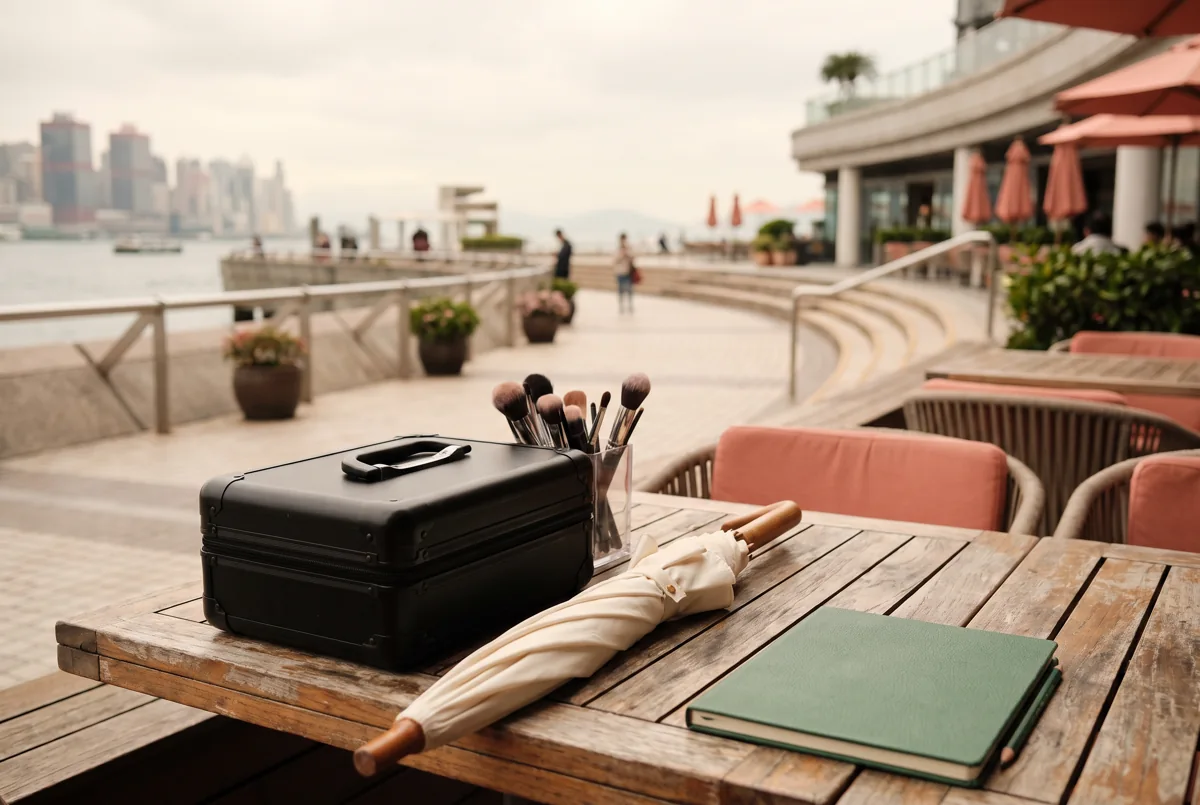
A useful destination-wedding makeup enquiry states the facts that affect scope, timing, communication and safe working conditions before it asks for an arrangement. Check those facts against the ceremony, venue access, photography schedule, transport plan and the people who need styling, so one reply does not quietly create conflicting assumptions elsewhere in the day.
A destination wedding can mean a couple travelling to Hong Kong, a Hong Kong couple travelling elsewhere, or families coordinating across cities. The location changes the questions, not the need for a clear process. Before comparing replies, build one short planning note that separates what is already decided from what needs confirmation. It gives a makeup artist usable information without pretending that travel, staffing, products or venue access are already agreed.
This is also a better way to keep a wedding plan joined up. The makeup conversation may touch the photographer’s first-look time, the planner’s access window, a parent’s readiness time and a hotel’s visitor rules. None of those details should be inferred from a mood board. BigDeal Make Up can be part of that enquiry process, but the actual service scope and arrangements still need written confirmation for the particular booking.
What belongs in a destination enquiry?
Start with a compact factual brief rather than a long introduction. State the wedding date and the city or cities involved; identify every location that matters; give the ceremony and photography milestones; and say who requires styling. Include the number of people only as an estimate to be confirmed if the party is still changing. Name the person who can make day-of decisions and the person who will consolidate questions. This helps a supplier respond to a plan, rather than to fragments arriving in separate messages.
The enquiry should distinguish a requested look from a promised result. You can attach reference images and explain the finish, coverage preference, hair considerations, dress changes or cultural elements that matter to you. Do not turn a reference image into an assumption that the same products, lighting, face, hair texture or time allowance apply. Ask what information is needed to discuss a suitable scope, and ask for that scope in writing before treating it as settled.
Here is a hypothetical planning example, not a real client booking. A couple holding a ceremony in one city and a dinner in another hotel might write: “Our ceremony venue, dinner venue and preparation room are different locations. We have a preliminary first-look window, two outfit changes, and a small family group whose readiness order is not final. One partner will coordinate timing; our planner will confirm access. We need to understand what information you require before discussing an arrangement.” The note communicates dependencies without inventing a route, fee, team size or availability.
Use the first table as a decision boundary, not as a price comparison. It shows where a makeup enquiry ends and another wedding owner’s confirmation begins.
| Option or decision area | Known condition | Ceremony or supplier affected | Question still to confirm | Owner |
|---|---|---|---|---|
| Preparation location | Hotel room is preferred; access is not yet confirmed | Venue, planner, makeup artist | Who may enter, when, and where work can be set up? | Planner or venue contact |
| Styling group | Couple plus a provisional family list | Makeup artist, photographer, family coordinator | Final names, readiness order and any separate styling needs | Couple’s designated coordinator |
| Visual direction | Reference images show a soft finish and one outfit change | Makeup artist, wardrobe helper, photographer | What consultation details and timing are needed to discuss the requested scope? | Couple and makeup artist |
| Travel between locations | A move may be needed after preparation | Transport contact, planner, photographer | Who confirms route, parking, luggage and the latest departure point? | Transport or planner contact |
| Outdoor portrait plan | Outdoor images are preferred if conditions allow | Photographer, venue, planner | What is the indoor alternative and who calls the change? | Photographer and planner |
When you are ready to check how the service enquiry relates to a destination plan, the internal guide on a Hong Kong destination wedding makeup artist provides a relevant next discussion point. Treat it as a guide to questions, not as an assurance that any travel arrangement, staffing plan or date can be supplied.
Which travel details must not be assumed?
“Destination” is not enough information. Say where preparation happens, where the ceremony happens, whether there are separate photo locations, and whether anyone must move with bags, outfits or touch-up items. State whether the venue is a hotel, private home, event space or outdoor site only if you know it; otherwise, label it as provisional. A supplier should not have to guess which address determines access, loading, security, stairs, lifts, parking or a working surface.
Build a weather alternative into the schedule rather than asking cosmetics to solve a safety problem. For an outdoor segment in Hong Kong, decide in advance who monitors official alerts, where people move if the plan changes, and which indoor location can take the photographs. During thunderstorms, the Hong Kong Observatory advises people outdoors to seek safe shelter promptly and to keep away from high ground, trees and conductive objects. 2 Waterproof products do not make an exposed outdoor photo session safe, and the planner or venue should own the change decision.
If work could involve another jurisdiction, do not assume that arrival, equipment transport, local permissions, entry documents or accommodation can be arranged in a particular way. Ask which travel facts are needed before an arrangement is discussed, and let the couple or planner verify venue and travel logistics with the relevant providers.

How should language needs be stated?
Language is a practical planning detail, not an afterthought. State the preferred language for the initial discussion, written proposal, day-of instructions and the person receiving updates. If different family members speak different languages, say which messages need to be understood by whom. This allows the conversation to identify whether bilingual communication, an interpreter, or a single coordinating contact may be needed—without assuming that any of those arrangements are automatically included.
Give essential terms in plain language. A concise bilingual note can list names as they should appear on the schedule, venue addresses exactly as the venue supplied them, the ceremony type if it changes attire or timing, and any terms that could be misunderstood. Avoid relying on a voice note, a relative’s memory or a screenshot with no version date. Write down the authoritative version and make clear who will translate any later change.
What hygiene questions are reasonable?
Reasonable questions are specific, neutral and connected to the appointment. Ask how brushes and tools are prepared between clients, when single-use applicators are used, how creams or liquids are taken from containers, and how items are handled if several people are styled. Ask what will actually be brought or supplied for your proposed arrangement. A clear question is more useful than an assumption that a named method or product is included at every location.
For eye makeup, the U.S. Food and Drug Administration advises not sharing eye cosmetics, using clean instruments around the eye, avoiding eye cosmetics when there is an eye infection or inflammation, and stopping use if irritation occurs; persistent irritation warrants medical advice. 1 This is general safety information from a U.S. authority, not a statement of Hong Kong law or a certification of any provider. It is enough reason to raise eye-area hygiene early and to keep the agreed handling practices in the written plan.
If you want to explore a product preference, describe a limited product try-out accurately: which item is being considered, what you want to observe, and whether the artist is able to discuss it. Do not call that a medical patch test or treat it as a diagnosis of sensitivity. If someone has a known allergy, active irritation, an eye concern or a history of a serious reaction, they should obtain individual advice from an appropriate healthcare professional rather than asking a wedding supplier to make a medical judgement.
The setting matters too. Ask whether a clean, well-lit work area can be provided, whether the venue can offer a stable surface, and how moving between locations changes the plan. Do not apply or remove eye makeup while travelling in a moving vehicle; a sudden movement can cause injury. 1 That detail belongs in the timeline and transport handoff, not in a last-minute message from the car.
Who confirms local timing and access?
No single supplier can confirm every part of a destination schedule. The couple should nominate one decision-maker and one current run sheet. The venue confirms access, room rules and operational limits. The planner or designated coordinator confirms arrivals, room changes and contact routes. The photographer confirms photography milestones. The transport contact confirms movement plans. The makeup artist confirms only the scope and logistics they agree to provide. Where responsibilities overlap, record the answer under one owner rather than asking everybody to assume somebody else has it.
The second table is an action and handoff plan. Unlike the first table, it is not for comparing choices; it shows what must move from an early enquiry into an accountable, written working version before proposals are compared.
| Action | Latest confirmation point | Handoff recipient | Written evidence or version | Fallback handling |
|---|---|---|---|---|
| Send one factual enquiry note | At first contact | Makeup artist | Dated enquiry with locations, preliminary schedule and group list | Mark undecided facts as provisional rather than guessing |
| Confirm preparation-room access | Before a schedule is treated as final | Planner or venue contact | Venue email or updated run sheet | Identify an approved alternative room or setup area |
| Set the first required ready time | Before photographer’s plan is locked | Photographer and coordinator | Shared timeline with version date | Reorder non-essential photographs or use indoor sequence |
| Confirm movement between locations | Before finalising the morning order | Transport contact and planner | Route note with collection points | Name the person who can call the alternative route or venue |
| Record language and contact protocol | Before day-of group messaging | All core suppliers | Contact list stating preferred written language | Use one authorised coordinator and keep changes in writing |
| Confirm agreed service scope | Before choosing between proposals | Makeup artist and couple | Supplier’s written reply or proposal | Ask what must be revised if numbers, locations or timing change |
Before comparing proposals, take these practical steps:
- [ ] Put the wedding date, every known location and each location’s status—confirmed or provisional—into one note.
- [ ] Name the person who approves the running order and the person who can answer the venue door or access call.
- [ ] Write the latest time each priority person must be ready, then let the photographer and coordinator check it against their own requirements.
- [ ] Send the current group list and describe any outfit changes without presenting estimates as final bookings.
- [ ] Ask for the actual service scope, communication approach and logistics to be confirmed in writing before you rely on them.
- [ ] Record any hygiene questions and the answers given; keep eye-related concerns separate from general styling preferences.
- [ ] Put a weather and indoor-photo fallback on the shared run sheet, with a named person to activate it.
- [ ] Update one dated version of the timeline and tell every affected supplier when it changes.
This is the point at which selection becomes more disciplined. For a framework that focuses on portfolio fit, written scope, trial discussions and day-of logistics, see how to choose bridal makeup artist Hong Kong. The useful comparison is not a universal “best” claim; it is whether each written response addresses the facts of your particular plan.
What is a respectful written follow-up?
A respectful follow-up is short, dated and easy to answer. Restate the wedding date, the current locations, the people requiring styling and the one or two items that changed. Then ask the provider to confirm whether the earlier written scope remains applicable or what needs to be revised. Do not send a revised itinerary as though it were already accepted, and do not ask the artist to infer which of several chat messages is current.
A simple structure works: thank the recipient; identify the version date; list changed facts; ask targeted questions; and state when a reply would help your planning. For example, a hypothetical planning example, not a real booking, could say: “Thank you for your earlier reply. Our planning note is now dated 14 May. The preparation location is confirmed, but the family styling list remains provisional. Could you let us know which details you need to review the scope, and whether the language and timing points below require any change? Our coordinator will share the final venue-access note once issued.” This is courteous because it gives facts and leaves confirmation with the person who must give it.
Keep changes proportional. A corrected room number may need a simple acknowledgement; a revised city, added group members, altered ceremony time or new access restriction may affect the whole discussion. If several people are copied, say who will consolidate the answer. After a call, send a neutral written recap: what was discussed, what remains unconfirmed, who owns each next step and which schedule version applies. Written clarity protects everyone from a well-meant but inaccurate memory.
For focused prompts on sanitation, disposable applicators, product handling and tools to ask about, the related internal guide on makeup artist hygiene Hong Kong can support your written checklist. It does not replace confirmation of what is supplied or practised for a specific booking and location.
A destination wedding enquiry is successful when it helps the right people make the next decision—not when it creates the impression that every operational detail has been guaranteed. Keep the current plan factual, keep the owner of each dependency visible, and request the latest written confirmation from the relevant provider as the date and venue details settle.