
Choose further diving learning around a question you want answered, not a badge you feel obliged to add. If photography, hiking and diving all matter to you, the useful question is which learning commitment deserves attention now. A course can be worthwhile without being your next priority, and another hobby can take precedence without making diving a failure.
Use a hobby-portfolio priority map to connect each goal with evidence, missing learning and a competing commitment. Its output is an enquiry priority: what to ask a provider first, what remains uncertain and what to defer. It is not a recommendation to skip prerequisites or a judgement that you are ready for particular diving activities.
Define the hobby question that further learning would serve
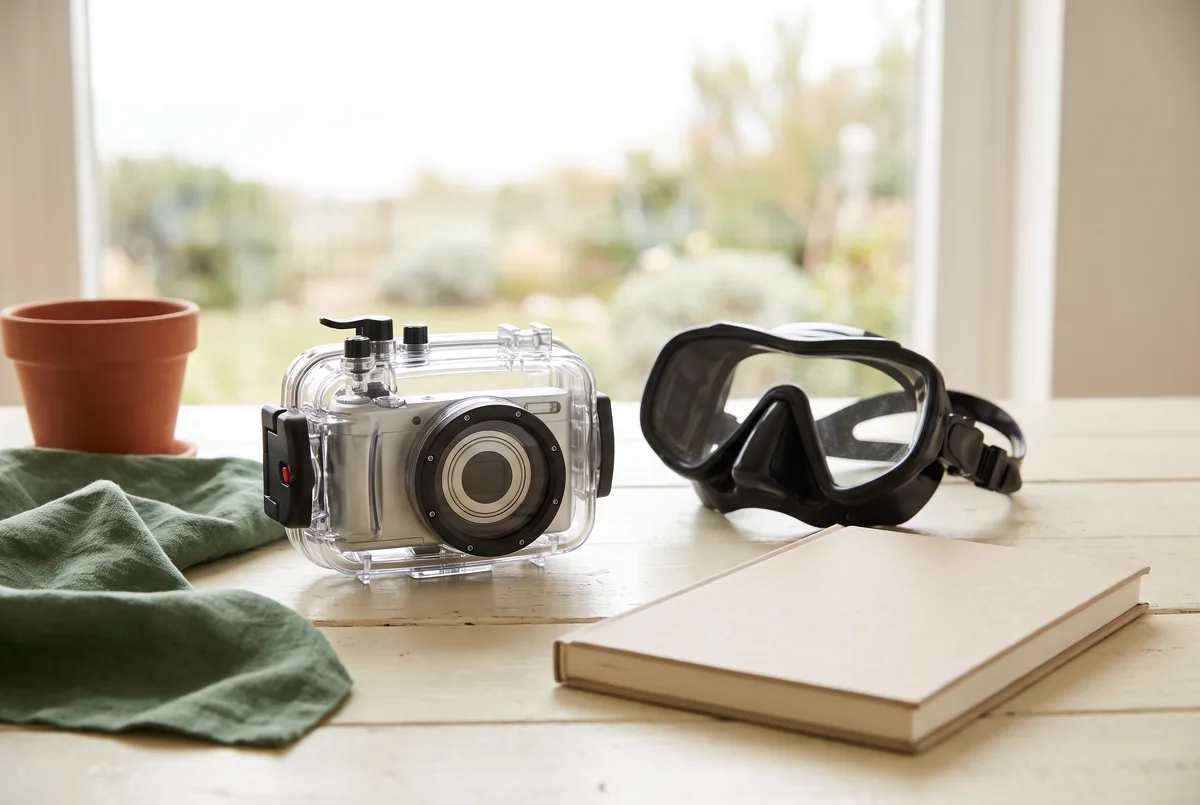
Start with a question specific enough that someone can explain whether their teaching addresses it. “I want to become advanced” gives a provider little to work with. “I want to understand what further learning would support my interest in underwater photography, given my existing training” identifies both a purpose and an unresolved issue. It does not presume that photography tuition and diver training are interchangeable.
Separate the creative outcome from the diving learning involved. A wish to produce a coherent photo series might involve reviewing composition, organising images or understanding the limits of your present training. These are different questions. Write down which one is actually stopping progress; otherwise a broadly appealing course title can become a substitute for identifying the problem.
The Advanced Open Water Diver course Hong Kong page can be an enquiry starting point once that question is clear. Ask the provider which currently offered elements relate to your goal and which do not. A title alone cannot establish that a course includes the photography instruction, individual feedback or specific learning outcome you have in mind.
For a hypothetical learner building a coastal photography project, the immediate question might be about image selection rather than further diving certification. Identifying that distinction early prevents booking training for a problem it was never designed to solve.
Separate badge collection from useful learning
Collecting certificates is not inherently wrong, but it is not a complete learning plan. A badge records a defined achievement within a training system; your hobby question concerns what you want to understand or improve. Treat the credential as one possible result of suitable learning, rather than proof that every interest attached to the word “advanced” has been addressed.
Try a simple test: if the course awarded no shareable badge, would its described learning still matter to you? Then ask the reverse question: if the badge stayed the same but the relevant teaching disappeared, would you still want to enrol? These questions expose whether the attraction is learning, recognition or a mixture. They do not require you to dismiss recognition; they require you to name it honestly.
Define an observable learning outcome without inventing a guaranteed result. You might want clearer feedback on an identified gap or an explanation of an appropriate learning pathway. “I will be able to do everything my friends do” is neither a useful course objective nor something a certificate can establish. Keep social motivation separate from the evidence used to choose training.
Describe current training limitations and evidence
Your starting point needs more detail than “already certified.” Record the exact certification you hold, the training organisation and the circumstances covered by your learning. Keep any available training records and instructor feedback together. Distinguish documented experience from activities you have only watched, discussed or hoped to try. This makes a provider enquiry more precise without asking you to assess your own eligibility.
NAUI describes its entry-level certification as teaching basic knowledge and skills, with subsequent activity bounded by conditions similar to training, including the environment, activities and equipment involved. That is a reason to describe your actual background, not to treat entry-level certification as unrestricted competence. It also does not establish another agency’s prerequisites or confirm admission to a local course. 2
SSI’s official learning structure includes entry-level, further recreational and professional pathways, alongside a training-centre search. Those categories help frame progression questions, but an international organisation’s name does not verify a particular Hong Kong provider’s current authorisation, an individual instructor’s credentials or automatic transfer between programmes. 1
Use evidence as context, not as an argument for bypassing checks. If records are incomplete, say so. If your experience is unlike the learning you now seek, make that difference explicit. The provider should explain what its current standards require and whether further assessment or preparation is needed; a hobby map cannot supply that answer.
Compare advanced and other training descriptions carefully
Compare descriptions at the level of what will be taught and assessed. “Advanced,” “specialty,” “workshop” and “review” are not interchangeable promises. Ask for the exact programme name and training organisation, then separate stated content from your interpretation. Two options can both sound relevant to photography while addressing different learning needs.
A page about advanced diver training Hong Kong is useful for gathering questions about the options being described. Ask which option is currently available, what its prerequisites are and what evidence of completion it provides. Do not assume that similarly named options carry equivalent scope, assessment or recognition, or that an option listed online is suitable for your particular background.
The table below compares kinds of descriptions, not verified local offers. Use it to locate missing information in a reply rather than rank programmes by their labels.
| Description being considered | What to establish | Why it matters to the hobby question |
|---|---|---|
| An advanced course title | Exact programme, current content and completion criteria | A broad progression label may not answer your particular creative question |
| Focused training on a named topic | Whether that topic is taught, practised and assessed | Mentioning an interest is different from providing meaningful instruction in it |
| A skills review or preparation option | Purpose, entry expectations and documented outcome | Revisiting existing learning serves a different purpose from adding new scope |
| A photography workshop outside diving | Subject matter, feedback and expected prior knowledge | Your immediate gap may be creative rather than a diving qualification gap |
If a description omits something central to your goal, mark it “not confirmed.” Do not fill the gap with assumptions about what a course normally includes. A provider’s written clarification is more useful than a comparison built from attractive but incomplete headings.
Align quoted scope with competing hobby commitments
Bring the actual course description or written quote back to your hobby goal. Highlight the wording that directly addresses the learning you want. Put your inferred benefits in a separate note. This prevents a general reference to further training from quietly becoming a promise of detailed photography coaching. If there is no direct match, ask a targeted question before treating the course as a solution.
Use the Hong Kong AOW diving course price page to prepare a request for a current itemised quote, not to populate a comparison with guessed figures. Ask what the quote includes, which relevant items are separate and what terms apply. Compare verified scope alongside the quoted total; without that information, a lower-looking figure says little about the learning you would receive.
Competing commitments include attention and continuity, not just expenditure. A photography project may need uninterrupted editing time. An outdoor interest may involve a shared commitment that matters to you. Name what would be displaced by further training. “I can fit it in somehow” hides a trade-off; “I would postpone my ongoing photo project” makes that trade-off discussable.
For a wider view of land-based interests, explore FlintHub’s outdoor adventure resources alongside your diving enquiry. This is not a substitute for checking any activity’s requirements. It helps you avoid treating diving as the only worthwhile form of outdoor learning when your interests are genuinely broader.
Use the priority map to decide what not to pursue
Give each hobby goal one row with five inputs: the creative or outdoor goal, existing evidence, desired learning, competing commitment and provider query. Add an enquiry-priority column only after those inputs are visible. Keep entries concrete enough that a provider can respond or you can explain why the question should wait.
These are hypothetical examples, not learner cases or recommendations for certification. The table shows how the same person could have several legitimate interests without needing to advance all of them at once.
| Creative or outdoor goal | Existing evidence | Desired learning | Competing commitment | Provider query | Enquiry priority |
|---|---|---|---|---|---|
| Develop an underwater photo project | Existing certification record; selected images for review | Clarify the relevant diving-learning gap | An unfinished editing project | Which taught elements address this goal, given these records? | Clarify scope before considering enrolment |
| Finish a coastal photo essay | A draft image sequence and notes | Better selection and visual sequencing | Time proposed for diving study | Does the photography option provide critique of a sequence? | Compare creative learning first |
| Maintain an outdoor hobby with friends | Notes on previous activities and agreed commitments | Identify suitable further outdoor learning | Ongoing group participation | What prior experience does the proposed activity require? | Preserve the commitment while gathering information |
Do not total these rows into a readiness score. A strong personal preference cannot offset a missing prerequisite. Instead, label each question “ask now,” “await evidence” or “defer.” “Ask now” means the answer could change your next decision; “await evidence” means the comparison lacks a material fact; “defer” means the goal matters but is not currently the best use of attention.
The most useful output may be a deliberate non-pursuit: no additional diving course until its relevance is confirmed, or no new photography workshop until the current project is finished. Keep a short reason beside that decision so a persuasive description does not erase the original trade-off.
Seek written prerequisite confirmation before proceeding
Send a focused enquiry rather than a request to recommend whatever comes next. State your hobby question, identify your certification and summarise the evidence you can provide. Explain the competing commitment if it affects the type of learning you are considering. Ask the provider to distinguish confirmed requirements from matters that need further assessment.
Useful questions include: What is the exact current programme and awarding organisation? Which prerequisites apply to my existing certification and experience? Are any records, prior learning or assessments required before admission? Which elements directly address my stated goal, and which are outside the course? What written completion outcome should I expect? These questions seek clarification, not permission to assume equivalence.
Request the current written scope and itemised quote together. If replies conflict with an older page or with each other, ask which version applies before proceeding. Keep the description and clarification with your map so your decision rests on the same information you compared. An unresolved entry requirement is a reason to pause, not something to balance against a tempting credential.
A hypothetical final decision might be: “My next enquiry concerns the course’s relevance to my photo goal; I am not choosing a certification yet.” Another might be to prioritise land-based photography and revisit diving when the question becomes clearer. Both are useful outcomes. The map has succeeded when it narrows a real decision, not when it produces the largest collection of training options.
FAQs
Is collecting badges a learning plan?
Not by itself. A learning plan connects a specific question to suitable teaching and evidence of progress. Recognition can be part of your motivation, but ask what you want to learn even if nobody else sees the certificate. If that answer is unclear, define the goal before comparing credentials.
Does advanced certification cover every environment?
Do not assume that it does. A credential does not establish universal competence or remove the importance of training scope. Ask what the exact programme covers and what remains outside it. Describe your existing background honestly and seek provider clarification about any additional requirements relevant to your intended learning.
Can training options be assumed equivalent?
No. Similar names may conceal different purposes, content or completion outcomes. Compare exact programme descriptions, prerequisites and assessment information. Where the descriptions are incomplete, record the gap rather than declaring a match. Ask the providers concerned for written clarification before relying on any claimed equivalence.
Should costs be invented for comparison?
No. Use current itemised quotes and mark missing amounts as unconfirmed. Keep scope beside cost so you know what each figure relates to. You can still compare the clarity and relevance of descriptions while awaiting a quote; invented numbers would make that comparison less useful, not more complete.
May another hobby take priority?
Yes. Choosing photography, an outdoor commitment or a pause can be a considered decision rather than a loss of ambition. Record what you want to preserve and what information would justify revisiting diving training. Your portfolio should reflect your actual interests, not an obligation to progress through every available label.
References
- [1] SSI official learning pathways and training-centre resources
- [2] NAUI Open Water Scuba Diver entry-level certification scope
Author note
FlintHub Academy prepared this article with AI assistance using public information. It is an editorial learning-planning resource, not instruction from a qualified diving instructor, individual eligibility advice or an independent endorsement. Provider scope, prerequisites, prices and terms require current written confirmation. The illustrations are concept images, not records of a provider’s course or participants.
DiveHarbour and FlintHub Academy have the same owner; related resource, not an independent recommendation.
FlintHub Academy · AI-assisted editorial prepared from public information for learning and enquiry planning. The author is not a diving instructor or medical expert. This is not first-hand course testing, a real student case or medical clearance. DiveHarbour and FlintHub Academy have the same owner.