
A family marine outing does not need everyone underwater to feel shared. A grandparent can choose to stay on land, contribute an observation or question, and join the conversation afterwards. The starting point is consent: ask what they want from the day, rather than assigning them a water activity, a waiting place or responsibility for everyone’s belongings.
The practical challenge is connecting different experiences without pretending they are identical. Water participants may have a provider-led activity while the grandparent enjoys a separate land-based visit. A common meeting place and a small learning task can connect those choices. Neither access to the activity venue nor participation in any briefing should be assumed.
Start with the grandparent’s preferred contribution
Ask the grandparent first, privately if that makes it easier to answer without family pressure. “Would you like to explore something nearby, join a conversation afterwards, or simply meet us for a meal?” offers genuine alternatives. “You can watch the children while we dive” does not. Staying on land is a participation choice, not permission to turn someone into the group’s unpaid organiser.
A useful contribution might be choosing the family’s marine question, sketching a shoreline view from an agreed public place, or recording everyone’s reflections afterwards. It can also be nothing more than enjoying company at the reunion. Do not make a learning task the admission price for being included. The grandparent should be able to decline a task without needing to justify the decision.
For families considering a family scuba diving experience Hong Kong, the linked information is an enquiry starting point, not evidence that a land-based companion can attend every part. Explain that family members want different forms of participation and ask what the provider can actually accommodate. The family label alone does not confirm observer admission, nearby seating or a shared venue.
Use the comparison below to discuss preferences. These are possible arrangements to investigate, not services promised by a provider.
| Participation choice | Possible contribution | Main tradeoff to resolve |
|---|---|---|
| Stay on land throughout | Choose a question and join the later reflection | A separate meeting location may be needed |
| Join a permitted land-based discussion only | Listen, ask questions and then leave | Admission and departure arrangements need confirmation |
| Choose an introductory water activity | Bring a personal account to the reflection | Participation requirements are assessed individually |
| Meet the family afterwards | Compare stories over a meal or notebook | The marine connection happens after, not during, the activity |
Create a marine-learning role that stays on land
Choose a task that works without seeing underwater wildlife. From a permitted land-based location, someone might note what information signs explain, draw the visible shoreline, or write down a question about habitat protection. Reading an official marine-park resource at home is another valid option if a suitable nearby visit cannot be arranged. This keeps learning independent of access to a boat, beach or activity site.
AFCD’s Hoi Ha Wan Marine Park guidance explains the importance of protecting marine habitats and avoiding actions such as damaging coral, touching or feeding marine life, or collecting organisms. 1 Use that guidance to develop a question such as, “How can visitors learn about a place without disturbing it?” It supports a conservation discussion; it does not establish that the family’s provider visits that park or offers an accessible shore programme.
For a hypothetical family, a grandparent might choose to read a habitat information panel while another adult takes an introductory water activity. Afterwards, they compare how information was presented on land and during the activity. Nobody needs to claim they saw the same animal. The shared subject is how people learn about marine places, not a particular sighting.
Agree what the task does not include. It need not involve walking an unfamiliar route, approaching the water’s edge, collecting objects or photographing strangers. A notebook question completed while seated can be just as useful. If a family member wants more background on linking outdoor learning with discussion, FlintHub’s family study-tour planning resource offers a related planning context.
Separate introductory water activity from certification
Decide whether interested family members want a first encounter with scuba or a certification pathway. Those are different commitments, and the grandparent’s land choice is separate from both. PADI’s explanation of progression from Discover Scuba Diving to Open Water Diver distinguishes an introductory experience from certification, which includes knowledge development and confined-water and open-water training. 3 Do not describe an experience booking as earning a qualification.
The try scuba diving Hong Kong information page can help interested relatives begin an enquiry about an introductory activity. Ask the provider to explain the current format, participation requirements and what completion means. A grandparent does not need to take the same activity for the family to share learning, and a participant should not be promised automatic credit towards a later course.
Children and adults may also have different requirements and learning needs. Ask the provider for the current applicable standards rather than transferring one person’s answer to the whole group. Do not presume that enthusiasm establishes eligibility or that a previous experience establishes present capability. Each interested participant should make their own choice and receive the relevant information.
The tradeoff is coordination. Different choices may mean separate enquiries, travel arrangements or meeting points. That can be worthwhile if it avoids forcing everyone into one format. If coordination becomes too complicated, choose a simpler marine-learning day and leave scuba for another occasion. Inclusion should not depend on successfully fitting every preference into a single booking.
Avoid family assumptions about health or capability
Age is not a family-issued verdict on someone’s health, and affection is not medical authority. “Grandad is active, so he will be fine” and “Grandma is older, so she cannot participate” both bypass the person concerned. Ask about preferences without requesting a public explanation of medical history. A choice to stay on land is complete in itself; it does not require a diagnosis.
For someone considering water participation, DAN’s Health Status Overview supports attention to current health and appropriate medical assessment where indicated or where concerns arise. 2 Relatives cannot supply medical clearance on someone else’s behalf. A provider’s website, this article and family reassurance do not replace an individual assessment. Do not complete another person’s health questionnaire for them or encourage them to conceal information.
Keep practical preferences separate from medical judgements. A grandparent can say they prefer a short route, a seat near the meeting point or no boat journey without the family deciding what those preferences imply medically. Record the requested arrangement, then ask whether it is available. “Please confirm whether reaching the meeting area involves stairs” is more useful than labelling a person as capable or incapable.
Privacy matters in the inclusion card, too. It should contain chosen roles and logistical preferences, not diagnoses or a family assessment of fitness. Any required health information belongs in the relevant provider or medical process. The card coordinates the outing; it neither authorises water entry nor replaces assessment by the appropriate people.
Ask providers about actual meeting and access arrangements
An attractive booking page can describe an activity without explaining where a non-participant may wait or how the family will reunite. Ask for the exact meeting location, whether land-based companions may enter any relevant area, and whether the water activity departs elsewhere. Confirm whether the grandparent would be attending a permitted provider space or following a separate plan in a public location.
Turn broad questions into observable details. Instead of asking only “Is it accessible?”, ask: “Are there steps between the drop-off point and meeting area?” “Is seating available where companions are allowed?” “Where are the nearest toilets?” “Would a companion need to board a boat to remain with the group?” Request current answers relevant to the person’s stated preferences, without treating them as a medical clearance.
If you intend to book a scuba diving course in Hong Kong, use the booking enquiry to describe the mixed-participation plan before treating it as settled. Ask the provider to confirm the arrangements in writing and identify anything they cannot provide. A booking interface does not itself verify companion access, transport, seating or a place for the family’s reflection activity.
Also agree how people will contact one another if the activity location or reunion plan changes. Do not assume mobile reception, unrestricted site access or a predictable finishing time. Ask how the provider communicates changes, then choose a family contact method and a fallback meeting plan. Keep any unconfirmed item visible rather than allowing a convenient guess to become an instruction.
Use the card to connect different participation choices
The intergenerational inclusion card gives every family member a voice and separates wishes from confirmed arrangements. Complete it together before making a shared commitment. Use one entry per person, including adults who are organising transport. Nobody should fill in the grandparent’s preferred role without asking, and choosing “no task” must remain an acceptable answer.
Copy these fields into a notebook or shared document:
- Person and chosen role: Write the person’s own choice, such as land-based reader, introductory participant, reunion-only guest or undecided.
- Meeting preferences: Record where they would like to meet, relevant route or seating preferences, and the agreed contact method.
- Observation task: Add one optional question, sketch or note. Specify “no task” if that is the preference.
- Provider-confirmed arrangements: Record the precise answer, who supplied it and when. Mark unanswered questions “unconfirmed”; do not fill gaps with assumptions.
- Shared reflection output: Choose one land-based activity everyone can join, such as a page titled “What we noticed, what we learned, what remains unknown.”
In a hypothetical completed card, the grandparent chooses a seated reading task and a later café reunion. A parent chooses an introductory water activity, subject to the provider’s requirements. A teenager chooses to record questions rather than identify species. The provider has confirmed its participant meeting point, but companion admission remains unconfirmed. The card therefore keeps the grandparent’s plan separate; it does not claim they can wait inside the venue.
Read the card aloud once to check agreement. Ask, “Does this still describe what you want?” rather than “Are you happy with what we decided?” If a preferred arrangement cannot be confirmed, revise the plan with the person concerned. A family member can change their role, skip the task or attend only the reflection without being blamed for reducing the outing’s value.
Bring observations together without inventing sightings
Hold the reflection on land, wherever the group has agreed to meet. Give each person a turn, but allow anyone to pass. Use three prompts: “What did you directly notice?” “What did you learn from someone or something else?” “What are you still unsure about?” These prompts let a shoreline sketch, an information-panel note and a water participant’s account contribute without pretending they are equivalent evidence.
| Shared-learning material | What it can contribute | What it cannot establish |
|---|---|---|
| A land-based sketch or note | A record of what that person observed from that place | What happened underwater |
| An official habitat resource | General information and conservation questions | A species sighting during this outing |
| A participant’s recollection | Their personal account and questions | Another person’s experience or certain species identification |
| A photograph, if available | Visible details within that image | Conditions outside the frame or a guaranteed future sighting |
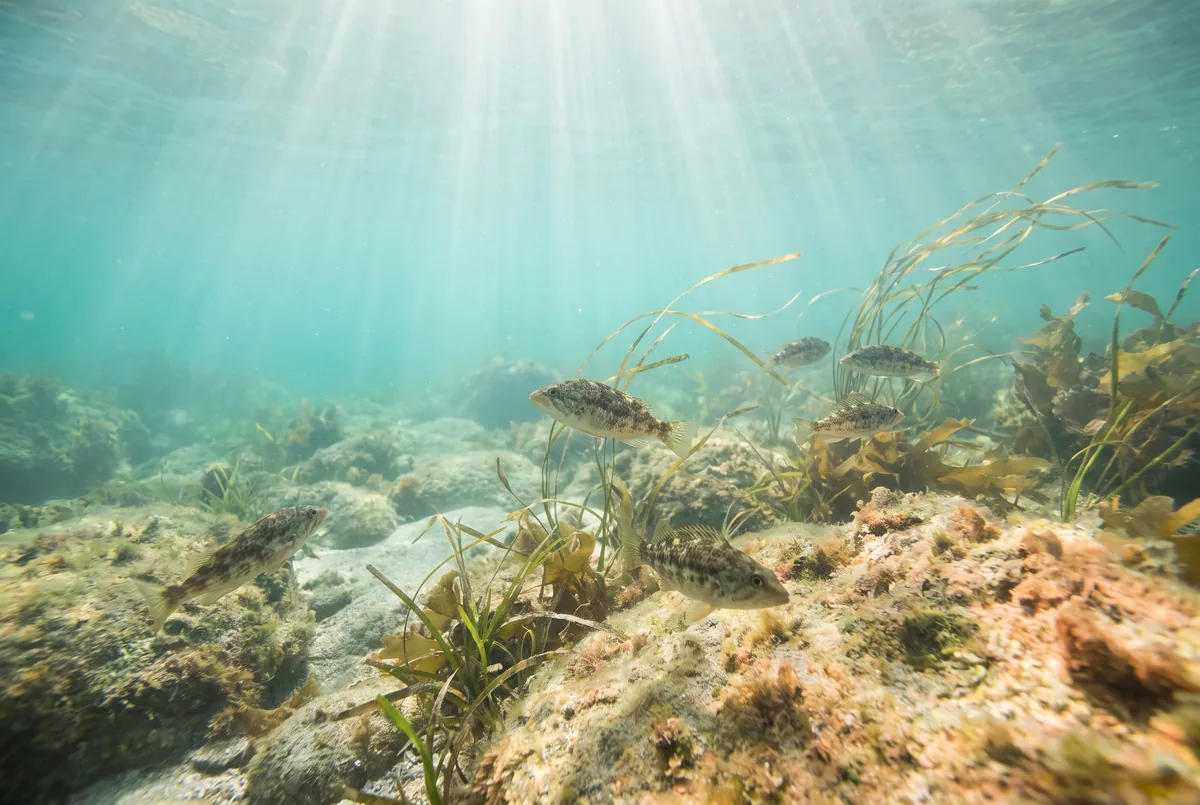
Produce one shared page with those three prompts as headings. Attribute each contribution: “From the information panel,” “Observed from our meeting place,” or “Reported by the water participant.” If someone thinks they saw a particular fish but cannot identify it confidently, record the uncertainty. Do not turn a guess into a family achievement or use the concept illustrations accompanying this article as evidence of a real encounter.
Sightings cannot be promised. AFCD’s habitat information supports learning about a marine place, not a guarantee that visitors will see particular organisms. 1 A quiet day can still generate useful questions about how habitats are protected and how observations differ. End by letting each person choose one question to explore later, not by grading who contributed the most exciting story.
FAQs
Must every family member enter the water?
No. A family can connect separate participation choices through an agreed meeting and reflection. Land-based attendance at a provider’s venue is a different matter: ask whether it is permitted. If not, consider a separate land plan or meeting afterwards rather than assuming access.
Can relatives provide medical clearance?
No. Family reassurance is not individual medical clearance, and relatives should not complete another person’s health questionnaire. Where assessment is indicated or health concerns arise, seek appropriate medical advice through the relevant process. The inclusion card records preferences and arrangements, not fitness to dive.
Does a booking page confirm access arrangements?
Not by itself. Request specific current answers about meeting locations, companion admission, routes, seating and transport. Keep unconfirmed details marked as such. If an essential arrangement cannot be established, revise the plan before relying on it.
Can sightings be promised?
No. A marine outing may offer opportunities to observe and learn, but it cannot guarantee a particular animal or view. Separate direct observations from information read elsewhere. Record uncertain identifications as uncertain rather than embellishing them for the family story.
Can the outing work without scuba?
Yes. A permitted land-based visit, official habitat reading and shared reflection can form a complete marine-learning outing. Scuba can remain a separate option for interested individuals. The common outcome is a conversation everyone can join, not a requirement that everyone enters the water.
References
- [1] AFCD: Hoi Ha Wan Marine Park and habitat protection
- [2] Divers Alert Network: Health Status Overview
- [3] PADI: From Discover Scuba Diving to Open Water Diver
Author note
FlintHub Academy prepared this AI-assisted article from public information for family learning and enquiry planning. It is not instruction, individual medical advice, a firsthand outing report or verification of provider credentials and arrangements. DiveHarbour and FlintHub Academy have the same owner; related resource, not an independent recommendation.
FlintHub Academy · AI-assisted editorial prepared from public information for learning and enquiry planning. The author is not a diving instructor or medical expert. This is not first-hand course testing, a real student case or medical clearance. DiveHarbour and FlintHub Academy have the same owner.