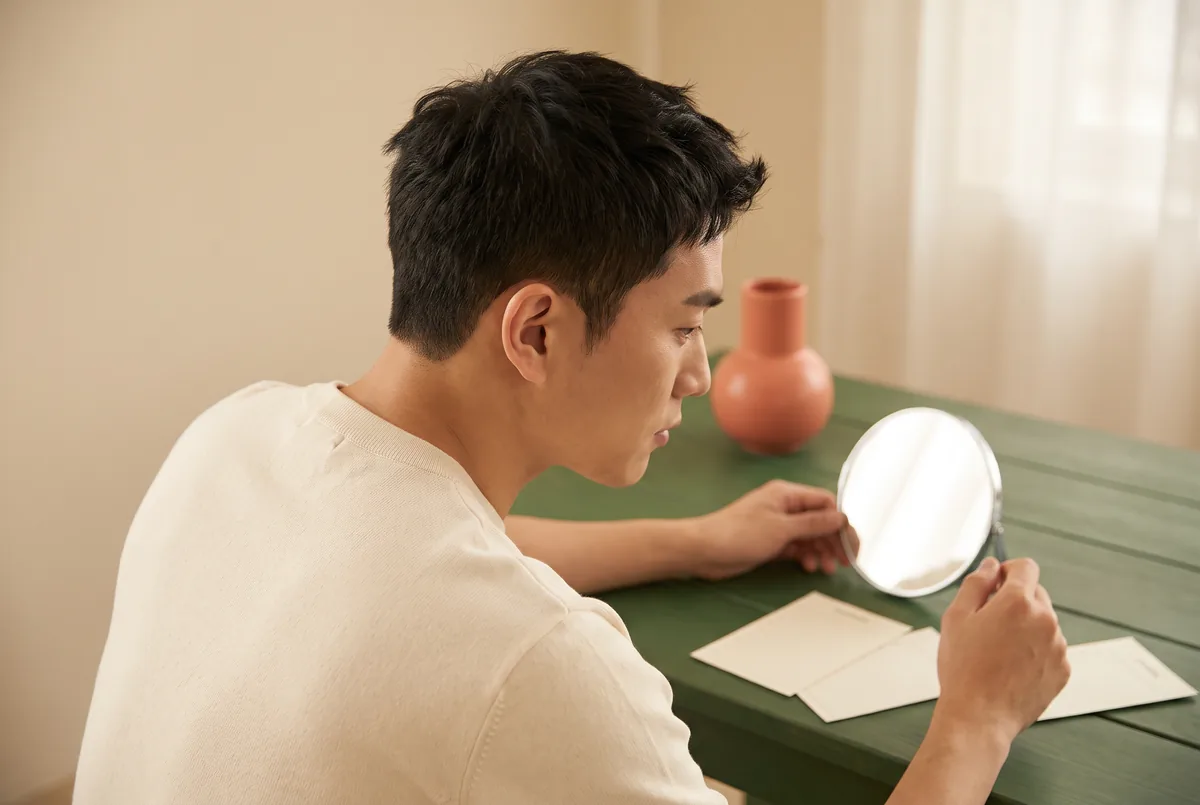
Use a two-block photograph to describe the contrast between a longer top and shorter sides, not to predict how naturally curly hair will behave. Build a zone-based brief from your own dry curls, then rehearse with the confirmed ear microphone before agreeing on lengths and service scope.
For an adult male presenter who introduces a dance set and then joins the choreography, the useful question is not simply whether the style looks good standing still. It is whether the fringe returns clear of the eyes, the ear area allows comfortable equipment placement and the retained curls remain manageable after movement. A tidy photograph cannot answer those questions.
1. Borrow the silhouette, not the model's texture
A two-block reference usually shows a longer upper section above shorter sides and back. On straight hair, a continuous overhanging edge may look smooth. Your curls may create a broken edge or a rounder upper outline. Those differences do not automatically make the structure unsuitable, but they change what copying the picture would mean.
Label the reference in plain language: “I like the lower side contrast” or “I want fullness above the crown.” Cross out features you are not requesting, such as a flat fringe or symmetrical parting. If the back is missing, mark it as unknown rather than inventing a matching neckline.
Vit So's two block haircut guide can help you describe upper coverage, the side boundary and fringe direction. Use it to clarify the structure you want to discuss, not as evidence that a straight-haired model's finish will transfer to your curls. Bring your own resting-hair views alongside it so the enquiry concerns your lengths and movement, not an assumed texture match.
Also separate the appearance of a photograph from the work needed to create it. You may not know whether the model's top was stretched, brushed or held with product. Choose an everyday curly version first; a polished stage arrangement can be a separate styling goal.
2. Map the curls you already have by zone
Photograph the front, both sides and back after your normal drying routine. Keep the camera position and lighting reasonably consistent. Do not pull the curls down to make them match the reference. The main record should show where they land when released, including any difference between the two sides.
A zone means a useful area for discussion, not a diagnosis or a rigid curl classification. Note the visible behaviour and the boundary you care about. “This front curl rests on the eyebrow” says more than “my hair is difficult.” A crown that projects outwards and a temple that lies close may need different conversations.
| Zone | What the reference shows | What to record on your own dry hair | Decision to carry into the brief |
|---|---|---|---|
| Fringe | Forward fall or an open parting | Resting endpoint; where it falls after a turn | Protect eye clearance without demanding straight strands |
| Crown | Fuller upper outline | Where fullness sits from front and profile | Name the volume you want retained |
| Upper sides | Longer hair covering a short panel | Where curls widen or overlap the ear | Agree coverage and the highest acceptable short boundary |
| Around each ear | Exposed or partly covered ear | Hair touching the hook, glasses or cable route | Identify a local contact area, not an automatic high cut |
| Nape | Shorter back beneath the top | Dry neckline and collar contact | Separate lower-edge tidying from upper-back shortening |
The guide to curly haircuts for men focuses on existing movement, dry landing points and differences between curl areas. That makes it relevant when deciding what to retain around the fringe and ears. It does not establish a certified curl-cutting method or predict your result; ask how the proposed approach will account for the specific zones in your photographs.
Wet or gently extended hair may appear longer than its resting dry shape. Record that difference if it helps explain the front, but do not calculate a universal shortening allowance. The decision concerns your actual dry boundary, not a percentage copied from another person's curls.
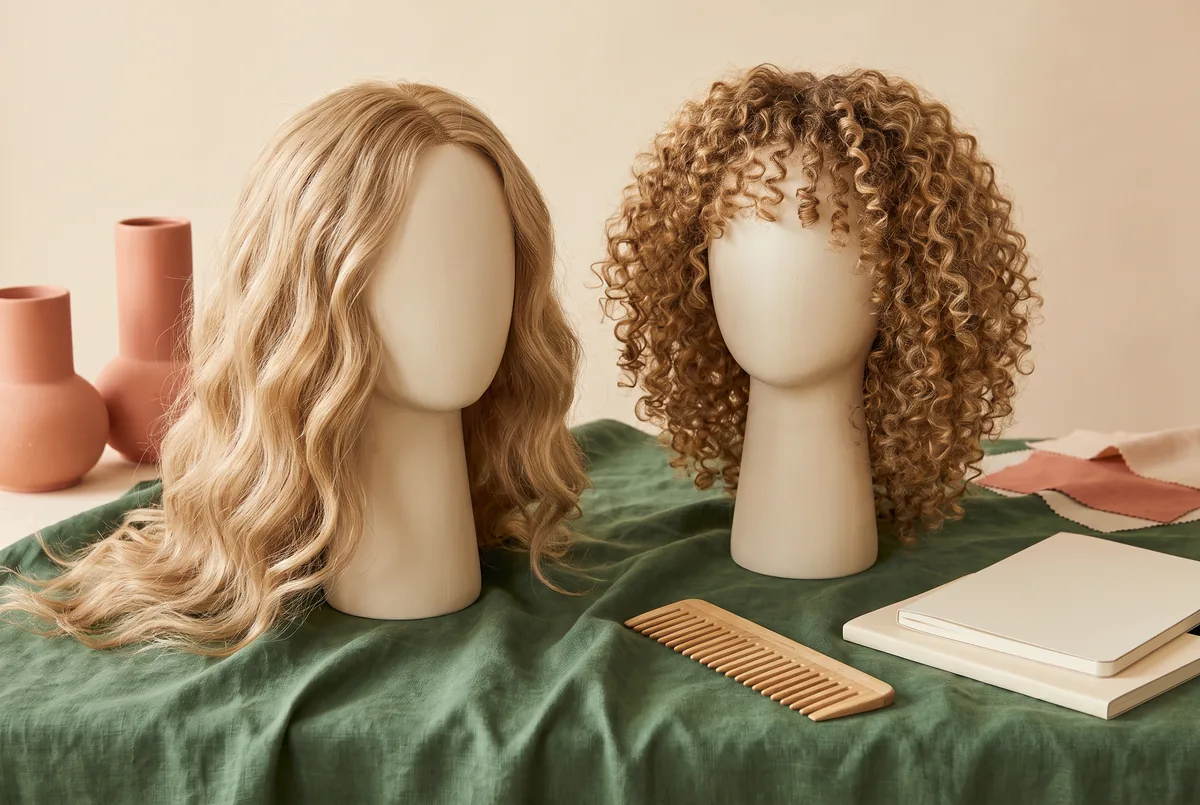
3. Write limits before asking for shorter sides
Give the brief three kinds of instruction: preserve, change and check before cutting. Preserve might mean keeping the front curls that frame an opening. Change might mean reducing visible width just above the right ear. Check might mean showing where the shorter panel would end beneath the longer top.
This order prevents “make the sides short” from becoming permission to remove every side curl. Strong contrast exposes more of the lower head and reduces side coverage. A softer transition retains more movement but may look less like the reference. Neither is inherently better; choose the compromise that supports your performance and ordinary routine.
Avoid specifying a tool as if it guarantees the result. “Keep the upper curl coverage” is a clearer outcome than requesting extensive thinning everywhere. Ask what shortening or weight adjustment would do to that coverage. If the top lacks the length needed for the desired overhang, discuss a partial reshaping or a grow-out plan rather than expecting the picture immediately.
Put the highest acceptable short boundary on a side-view photograph. Add a sentence about the back, because “short sides” leaves the nape and upper back unresolved. Before work begins, ask the stylist to repeat which lengths will stay and which areas will change.
4. Rehearse the microphone with actual turning movements
Confirm the microphone type and wearing side with the production team. An ear hook, boom and cable route create different contact points from a handheld microphone. If the device is not yet assigned, label equipment clearance as provisional. Do not shorten hair around an imagined fitting.
Have the responsible audio person fit the equipment as intended. Observe hair contact without bending or repositioning the device yourself. A rustling sound is an audio finding, not proof that a curl caused it. Record what you saw and let the technician investigate what was heard.
Run a short sequence relevant to the set: speak facing front, turn towards each wing, perform the planned pivot and return to the speaking position. A bow or forward lean matters only if it belongs in the routine. For learners using KPOP dance learning, select the actual choreography section rather than adding dramatic head movements just for the haircut check.
| Moment to observe | Hair note to write | Equipment note to keep separate | What the observation can justify |
|---|---|---|---|
| Speaking at rest | Whether a curl touches the hook | Fit and comfort confirmed by the responsible person | Discuss local clearance if contact is present |
| Turning towards each wing | Whether upper hair shifts over the ear | Whether the device stays in its fitted position | Review coverage without assuming shorter is always better |
| Returning after a pivot | Where the fringe lands without hand correction | Any sound issue assessed by the audio team | Prioritise dry fringe visibility and recovery |
| Leaning or bowing, if required | Whether nape hair meets the collar or cable area | Cable route checked separately | Distinguish neckline tidying from routing changes |
| Removing the device | Whether hair catches during supervised removal | Safe removal handled as instructed | Record the snag location rather than pulling through it |
Stop if the fitting is painful or catches hair. A haircut is not a substitute for correct equipment fitting, and clear ears do not guarantee reliable sound. Use the observations to ask better questions of the stylist and audio team, keeping their responsibilities separate.
5. Make the ordinary styling routine part of the design
Write down how you actually dry your hair and what you do after rehearsal. If you normally air-dry and arrange the front with your fingers, say so. A reference that depends on repeated stretching or a carefully rebuilt parting may demand more effort than you want, especially when washing after exercise.
The American Academy of Dermatology recommends gentle handling, absorbing water rather than rubbing hair dry, air drying when possible and the lowest heat setting when heat is used. Its combing advice distinguishes textured hair or tight curls, which it advises combing damp with a wide-tooth comb, from straight hair allowed to dry somewhat first. These are damage-prevention recommendations, not promises about a two-block silhouette.1
For the brief, identify an acceptable relaxed finish as well as the stage finish. You might accept a less exact parting at home while needing the eyes clear during announcements. Ask how to arrange the retained front gently rather than treating stronger hold or tighter pulling as the only solution.
A cut can reshape existing curls without adding a perm or straightening service. If changing the pattern becomes part of the discussion, treat it as a separate decision with its own hair-condition assessment, scope and quote. Do not add chemical work merely because the inspiration has smoother sides. Persistent scalp discomfort or concerns about thinning need qualified healthcare advice, not a haircut diagnosis.
6. Apply the brief to a hypothetical dance presenter
This example is hypothetical, not a client result. Imagine an adult presenter who wears a microphone on the right ear, introduces a community dance performance and joins a routine containing a pivot. He likes the clear lower sides in a straight-haired reference but wants to keep his own loose front curls.
His draft brief could read: “Preserve the fuller crown and front curls. Discuss reducing width above the right ear without carrying the short panel high into the temple. Show me the proposed boundary first. Keep the dry fringe clear of my eyes after the pivot. Tidy the lower nape separately from the upper back. I normally air-dry and do not want daily straightening.”
That draft still contains questions, which is useful. Right-ear contact might come from the top overhang rather than the lower side. Taking the lower panel closer would not necessarily remove it. The audio fitting might also need attention. He should leave the solution open until the relevant people have assessed the actual contact.
Complete your own worksheet in four steps:
- Save natural dry views and annotate the reference's useful shape features.
- Mark preserve/change/check instructions for each zone, including both ears.
- Add movement observations with hair and equipment notes kept separate.
- List the everyday finish, unresolved questions and appointment details requiring confirmation.
Attach the latest version to the enquiry and date it. If the microphone side or choreography changes, update the brief rather than relying on an outdated drawing. The deliverable is a shared decision record, not a guarantee that hair will return identically after every turn.
7. Confirm the Sheung Wan service without inventing extras
For a local service enquiry, the men's haircut sheung wan page identifies Vit So's men's wash-cut-blowdry service and the reception address at 252 Hollywood Road, Sheung Wan. Send the curl-zone brief and ask about preparation, proposed cutting approach, intended finish and appointment availability. The listing does not by itself confirm specialist curl certification, microphone fitting or a performance-day styling package.
Confirm the total charge for the agreed work and whether any requested additions are separate. Ask what hair condition is preferred on arrival and whether reviewing the dry resting shape can form part of the discussion. An English website does not prove an English-language consultation is available; confirm your communication needs before booking.
Hong Kong Customs explains that the Trade Descriptions Ordinance covers false descriptions of services and misleading omissions, among other unfair practices.2 The practical relevance here is clear scope: do not let an image imply additional treatments, equipment checks or event attendance. This is not a legal judgment about any provider or a statement of automatic refund rights.
Use Event hosting and MC planning for the presentation-side planning context, keeping announcements, choreography and audio responsibilities distinct from the hair enquiry. A salon appointment is not confirmation of backstage attendance. Leave travel and production arrangements provisional until the appointment and any separately requested work are agreed.
FAQ
Can naturally curly hair use a straight-haired two-block reference?
Yes, as an outline reference. Label the contrast, coverage or crown fullness you like, then show your own curls. Do not treat the model's smooth fringe or parting as evidence that your hair will settle the same way.
Should I remove all curls around the microphone ear?
Not automatically. Identify the actual contact point with the fitted device. A longer upper curl may cause the overlap, while the lower panel is already clear. Discuss a local change and equipment fitting before choosing extensive shortening.
Does a two-block cut require a perm or straightening?
No. Its length structure is separate from chemical texture work. A cut-only brief can retain natural curls. Changing their pattern is an additional decision, not something implied by the style name.
Should the stylist cut my curls wet or dry?
Ask how the proposed approach will assess your dry landing points and retained coverage. This article does not prescribe one method for every curl pattern, and a general men's service listing does not confirm a particular specialist technique.
What if the microphone is assigned only near the event?
Mark the device, wearing side and clearance observations as unconfirmed. Base the haircut discussion on your natural dry shape and reversible styling preferences where possible. Complete the actual equipment rehearsal when the production team can provide the correct device.
About the author: FlintHub Academy prepares practical editorial resources for adult creative learning and event planning. This article was organised with AI-assisted institutional editing. FlintHub Academy and Vit So share common ownership; it is not an independent endorsement, a hairstylist-authored review or medical advice. The planned images are original explanatory illustrations, not Vit So work or real-client photographs.
References
The following authorities support the specific care and service-description points cited above; neither endorses Vit So.
- [1] American Academy of Dermatology: 10 hair care habits that can damage your hair
- [2] Hong Kong Customs and Excise Department: Unfair Trade Practices
FlintHub Academy · AI-assisted editorial prepared from public information. FlintHub publishes creative-learning and activity-planning resources. This is not a first-hand salon test, a real client case or a claim of hairdressing, clinical or medical credentials.