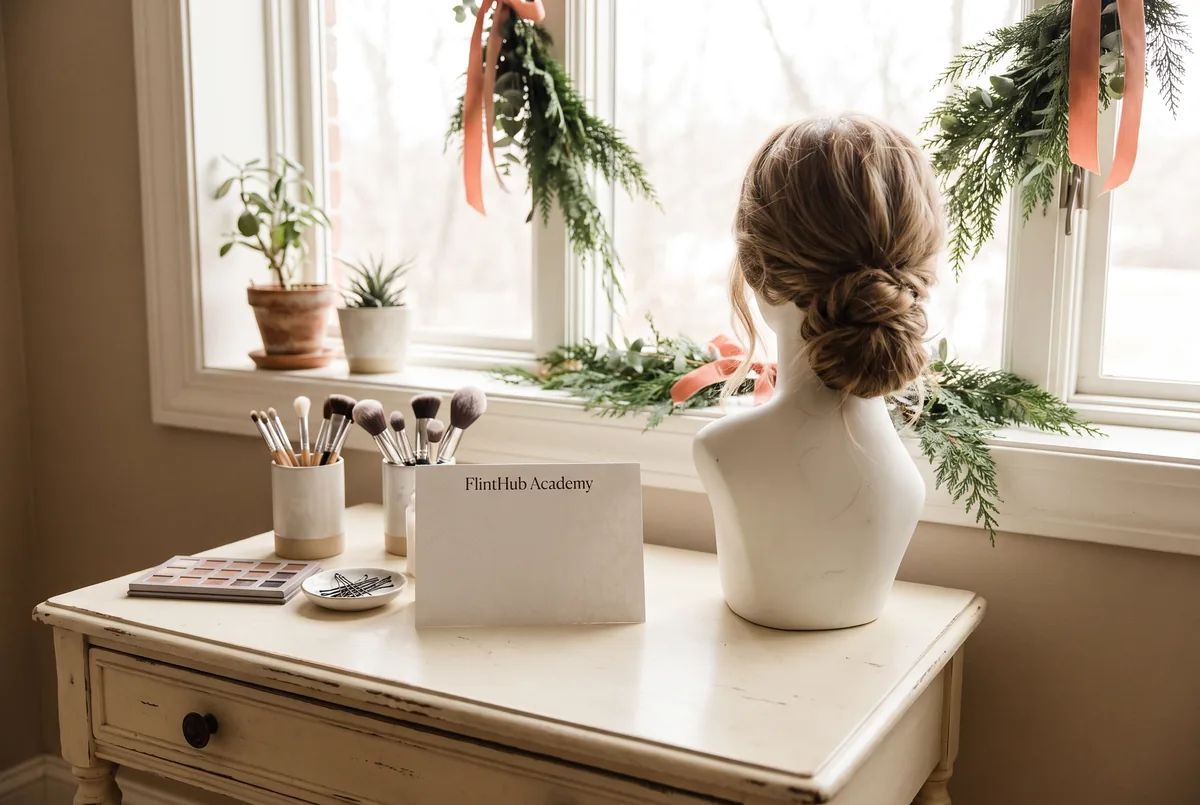
Agree a named provider contact to supply the product details and keep your own accessible copy after the service. Do not assume the makeup artist, hairstylist and booking coordinator share one complete record. This is a practical arrangement to request, not a claim about a universal legal duty. A useful handoff identifies what was actually used, where it touched you and which questions remain unresolved. A finished-look photograph cannot replace that information or establish why discomfort occurred.
List the services and contact areas agreed
Start with the work you are considering, rather than the broad label “makeup and hair”. Face preparation, eye makeup, lip colour and hair setting may involve different products and people. Ask whether accessories, lash adhesive or colour products are proposed. Record only confirmed components, with a separate space for anything still being discussed. This makes the eventual product list specific to your appointment rather than a generic inventory of the provider's kit.
Give each component a contact area in ordinary language. A hair product may be intended for the lengths, while an accessory sits near the scalp; those are different descriptions. You do not need to map ingredients onto a medical diagram. Ask the person performing the work to identify the intended area and update it if the actual application changes. Keep reference photos for appearance separate from this contact information.
Then agree how the record reaches you. One named contact can collect contributions without claiming to perform every service. Ask who confirms the makeup entries, who confirms the hair entries and who sends the combined copy. If no combined copy is available, request separate records under the same appointment reference. Avoid leaving the only copy on a relative's phone or inside a group chat you cannot access later.
For a booking involving separate businesses, do not expect one to confirm the other's products. Give each contributor the same appointment reference and ask them to identify their own entries. You can hold the combined copy while leaving the original replies attached. This preserves who supplied each fact and prevents a convenient summary from appearing to be a joint confirmation that nobody actually made.
Record previous product reactions for professional discussion
Prepare a short factual history of any earlier discomfort: the product name if known, the contact area, what you noticed and approximately when it happened. Separate your observation from someone else's explanation. “My eyelids became uncomfortable after that appointment” records an experience; naming an allergy without a diagnosis adds a conclusion the record cannot support. Where several products were involved, keep that uncertainty visible instead of choosing one suspected cause.
When enquiring about bridal makeup kwun tong, ask how you can share relevant previous product reactions privately and who will read them before work is agreed. The service page is a route for asking about the proposed appointment, not evidence that a particular product suits you. If you already have instructions from your healthcare professional, bring the relevant information for discussion rather than expecting a coordinator to reinterpret it.
Persistent, unexplained or concerning skin or scalp symptoms should first be assessed by a registered healthcare professional before proceeding with cosmetic work. A salon product record can support that conversation, but it does not diagnose the cause or provide medical clearance. Share what is necessary for the service discussion, not an entire medical history in a public booking chat. Keep the original account yourself so later summaries do not quietly change what you reported.

Ask which product information can be supplied
Request a product's full name and variant, not just its brand or a description such as “professional primer”. Where practical, ask for a readable photograph of the original packaging and its ingredient information. If the item comes from a palette, specify the relevant shade or section. These are identification requests, not demands for a proprietary formula. Ask what information is available before assuming a detailed ingredient or batch record will be supplied.
A label photograph has limits. It needs to match the product actually used, and a current website listing may not describe an older container. Ask the provider to confirm the connection between the image and your appointment. When something is decanted, request the original product identity rather than treating an unlabelled pot as sufficient evidence. If the origin cannot be confirmed, write “unidentified” and discuss an alternative or defer that component.
Keep product identity separate from proof of suitability. An ingredient list does not let you diagnose a reaction by matching words on a screen, and a familiar brand is not a personal safety guarantee. Include what the provider can verify, the date of confirmation and the person supplying it. If further information requires contacting a manufacturer, agree who will ask and how the reply will be attached to your copy without overwriting the earlier uncertainty.
Check whether a receipt, kit photograph or shopping link identifies the item or merely a similar product. A receipt may describe a purchase without proving that it was used on you. A photograph containing several containers needs an annotation from the contributor. Keep the evidence attached to its particular row; an album of labels with no connection to the appointment is difficult to interpret later.
Compare personal and shared tools without inventing hygiene certifications
Bringing your own products or tools can make identification easier, but it creates additional questions about condition, compatibility and what the provider accepts. Shared tools reduce what you carry, yet you still need a clear explanation of how the proposed appointment is handled. Neither arrangement deserves an automatic “safe” label. Ask about the actual tools and working practices rather than inferring them from promotional photographs or the appearance of a tidy kit.
For wedding makeup hong kong, ask whether personal items may be used and how the provider would document both those items and any substitutions. This link reaches the same bridal service page as the earlier enquiry, not a second independent recommendation. A useful answer describes what can be accommodated for your service and what remains unconfirmed; it should not be replaced by an unsupported hygiene certification or a claim that all products are suitable.
| Arrangement | Information to confirm | Trade-off and pause condition |
|---|---|---|
| Provider products and tools | Product identities and how tools are handled for the appointment | Less to carry; pause an item if its identity or handling cannot be explained |
| Your own agreed items | Whether the provider accepts them and which items remain necessary | More preparation; revise if acceptance or compatibility is unresolved |
| Mixed kit with substitutions | Which items may change and who updates the record | Greater flexibility; do not let a substitution bypass confirmation |
Use this comparison to choose questions, not award a hygiene score. A personal brush does not explain the condition of a shared palette, and knowing a product's name does not answer how its applicator is handled. Keep those issues in separate record fields. If an important reply remains vague, narrow the requested work or wait for clarification rather than treating silence as agreement.
Check hair-dye warnings where dye is genuinely involved
Hair setting is not automatically a hair-dye service. First establish whether colour work is proposed at all, including any product whose purpose you do not understand. If dye is excluded, mark it excluded; do not add a chemical process because an inspiration image shows a different shade. If colouring is proposed, give it its own agreed scope and product record rather than burying it inside an event-styling package.
The U.S. Food and Drug Administration advises following hair-dye label directions and allergy precautions, including the labelled skin-test instructions, and warns that plant-derived colouring is not necessarily free from allergy risk.3 That guidance concerns hair dyes; it is not a certification for makeup, adhesives or a provider's entire kit. “Natural” does not mean allergy-free. Ask the responsible professional to explain the relevant product warnings without copying a testing routine from an unrelated item.
If an unclear colour step changes the booking, revisit the scope before agreeing to it. FlintHub's guide to comparing dark-hair brightening scope offers a separate way to distinguish proposed colour work from exclusions and future maintenance. Use it to organise questions, not to decide which chemical method fits your hair. A reference photograph, a product card and a provider's marketing claim cannot guarantee a particular colour outcome or absence of harm.
Separate scalp symptoms from styling dissatisfaction
A hairstyle that feels visually too flat is an appearance issue. Pain, persistent itching or unexplained shedding raises a different question and should not be filed simply as dissatisfaction with the finished look. Record both if they occur, without deciding that one caused the other. Note the styling changes and products involved so the relevant professional can understand the circumstances. Avoid turning an appointment sequence into a diagnosis merely because one event followed another.
The American Academy of Dermatology identifies heat and tightly pulled hairstyles among habits that can damage hair, supporting questions about tension and hair handling.1 This does not establish that a particular appointment caused damage. For unexplained hair loss, the NHS advises seeing a GP to understand the cause before considering a commercial hair clinic.2 Seek qualified healthcare assessment first; a styling consultation or scalp Spa is not a medical diagnosis and should not replace that assessment.
When discussing makeup and hair styling kwun tong, ask who receives a later product-identification request and how the makeup and hair contributors would respond. This is a handoff question, not a request for a salon to identify a medical cause. This article is not medical advice and cannot guarantee results. If symptoms arise, obtain appropriate medical help rather than waiting for every record field to be completed; the information can follow when available.
Keep a practical handoff record and a stop condition
Use a “Makeup and Hair Product Record Card” with one row per product or accessory category, tied to the actual appointment. Give each row a status: confirmed, excluded, changed or unknown. Add the information supplier and the person responsible for the next question. This is more useful than one overall signature saying “products checked”, because that phrase conceals whether the list reflects a proposal, the finished service or a later recollection.
| Card field | What to enter | Who resolves a gap |
|---|---|---|
| Appointment and component | Reference, date and makeup or hair task | Booking contact confirms scope |
| Product and contact area | Verified name, variant and intended or actual area | Person performing that component confirms |
| Change during service | Original proposal, replacement and confirmation | Contributor updates; coordinator combines records |
| Copy and open question | Recipient, accessible location and unresolved detail | Named contact supplies the missing information |
Prepare the card before the appointment with proposed entries, then request an updated copy reflecting what was actually used. Preserve both versions rather than deleting the proposal. During a hypothetical service, a planned lip colour might be replaced because the desired finish changes. The useful entry names the replacement and its supplier; “same brand” leaves the original question unanswered. A trial appointment likewise needs its own record rather than silently standing in for the final service.
Keep sensitive observations in your private copy and agree which parts the provider needs. Ask about access, storage and how long their copy is retained; do not assume an indefinite archive or a right to retrieve every internal note. Save readable files you can open independently of a temporary message link. An appointment reference can connect the records without putting private health details in every filename or shared photo caption.
If a later request receives no complete answer, save the request and any partial reply with the existing record. Describe the missing item precisely rather than restarting the whole enquiry: for example, the full identity of a replacement used for one component. Ask whether the relevant contributor can answer directly. Do not manufacture the missing name from online images, and do not delay needed medical assessment while pursuing administrative clarification.
Finally, choose a stop condition before the appointment: an unresolved product identity, an unexplained substitution or a healthcare concern that needs assessment first. The next action may be clarification, a reduced service or postponement, not automatic cancellation of everything. A missing detail should remain unknown until answered. The card succeeds when you leave with a usable record and clear follow-up responsibility, not when every box is filled with reassuring but unverifiable language.
FAQ
Must the provider keep the only product record?
No. Ask what record the provider can supply and keep your own accessible copy. Agree the contact responsible for missing entries. This is a practical arrangement, not a statement that every provider has an identical legal retention duty.
Is a photograph of the finished look enough?
No. It documents appearance, not the identity of every product. Request confirmed names and relevant label images where available. Keep the photograph as a separate reference; it cannot establish an ingredient, tool-handling practice or cause of discomfort.
Can I use my trial record for the final appointment?
Use it as a starting point, not proof of what happens later. Ask for a separate appointment reference and update changed products or components. Confirm whether the proposed entries match what was actually used before treating the final copy as complete.
Does bringing my own makeup remove the need for questions?
No. Confirm which items are accepted, what else the provider proposes and how substitutions will be recorded. Personal ownership does not itself establish suitability or tool condition. Keep product identification and handling questions separate rather than marking the whole arrangement safe.
Should I wait for the full record before seeking help for symptoms?
No. Seek appropriate healthcare assessment first if symptoms are concerning, persistent or unexplained. Share the information you already have and supply further details when available. Neither a completed card nor a salon's explanation replaces diagnosis by a qualified healthcare professional.
About this article
FlintHub Academy prepared this article through AI-assisted editorial synthesis of public information. It is not a first-hand service review, clinician-authored assessment or independent recommendation. DT HUB and FlintHub Academy have the same owner; the links are related resources, not independent endorsements. The editors are not medical professionals. The planned images are original AI concept illustrations, not real premises, clients, product specifications or documented outcomes.
References
The AAD source supports general hair-handling questions, the NHS source supports diagnosis-first discussion of hair loss, and the FDA source supports hair-dye label precautions. None verifies DT HUB's products, hygiene practices or results.
- [1] American Academy of Dermatology: 10 hair care habits that can damage your hair
- [2] NHS: Hair loss
- [3] U.S. Food and Drug Administration: Hair dyes
FlintHub Academy · AI-assisted editorial based on public information, not a first-hand service test or a claim of hairdressing or medical credentials. DT HUB and FlintHub Academy have the same owner. This is not medical advice or a guarantee of individual results.
Connect this guide with your planning
For comparison tables and enquiry tools on this same subject, visit Hair & Scalp Planning Guides. This is an information journal, not a course, product or medical service.