
When a wig purchase has a problem, preserve the order and the supplied piece, describe what you can observe, and ask the seller to compare it with the agreed specification. Request a written next step before allowing changes that could obscure the original issue. If there is a skin or health concern, seek assessment from a qualified healthcare professional first rather than waiting for a commercial explanation. A useful record supports communication; it does not establish a defect, diagnose a reaction or guarantee a remedy.
Keep the order and supplied product description
Start with one folder for this transaction, not a collection of unrelated catalogue screenshots. Save the invoice, order confirmation, payment record and product reference. Attach the selected model, colour code, stated size, fibre description and cap construction where these were actually specified. Record who took payment and who supplied the piece. If two businesses were involved, do not assume they have identical responsibilities or policies.
Preserve the version that informed your decision. A current product page may differ from the wording you saw before payment. Keep a dated copy of the earlier page if you have it, alongside messages confirming your chosen variant. If a detail was discussed only verbally, write down your recollection and label it as such. Do not turn a remembered conversation into a claimed written promise, or present a later screenshot as the original offer.
Keep packaging, labels and supplied care instructions with the transaction documents. Record the delivery or collection date and any fitting, cutting or styling performed before handover. An order for an unaltered catalogue wig is different from an order that includes a custom cut. Where the seller proposed a substitution, retain both descriptions and the message showing whether you accepted it; a similar photograph does not establish the same specification.
FlintHub's catalogue evidence checklist explains how to connect model identity, specification and transaction terms before buying. After purchase, those same documents become the starting point for checking a discrepancy. Missing documents do not prove wrongdoing. Mark them as unavailable and ask for copies, keeping the original order separate from any new proposal offered to resolve the problem.
Record the problem in neutral language
Describe the observation before explaining what you think caused it. “The label shows a different colour code from my confirmation” is more answerable than “the seller sent a fake wig”. For an appearance concern, identify the feature: fringe position, visible outline or colour under stated lighting. Separate dissatisfaction with a style from a mismatch with an agreed detail. Both deserve discussion, but they require different evidence and questions.
Take clear overview photographs and closer views of the affected area without editing the originals. Include labels where relevant and note the lighting, whether the piece was worn or on a stand, and any styling already performed. A photograph may document a loose seam or a label discrepancy, but it cannot reliably identify fibre composition. Keep an annotated copy for explanation while preserving the untouched file, and avoid repeatedly manipulating the piece to produce a more dramatic image.
If you used DT HUB's wig hong kong information while choosing the product, save the particular wording you relied on and distinguish it from the order confirmation. A broad service statement is not automatically a term of your purchase. Ask whether the statement applies to your exact model and transaction rather than treating general marketing as proof of what was supplied.
Add a short chronology: what you noticed on receipt, what changed after fitting, and what happened after any care or styling. Include actions that may seem inconvenient to your complaint, such as an adjustment by another provider. For example, “tangling noticed after first washing; product and method recorded below” leaves the cause open. “The fibre is defective” assumes a conclusion that the record alone cannot establish.
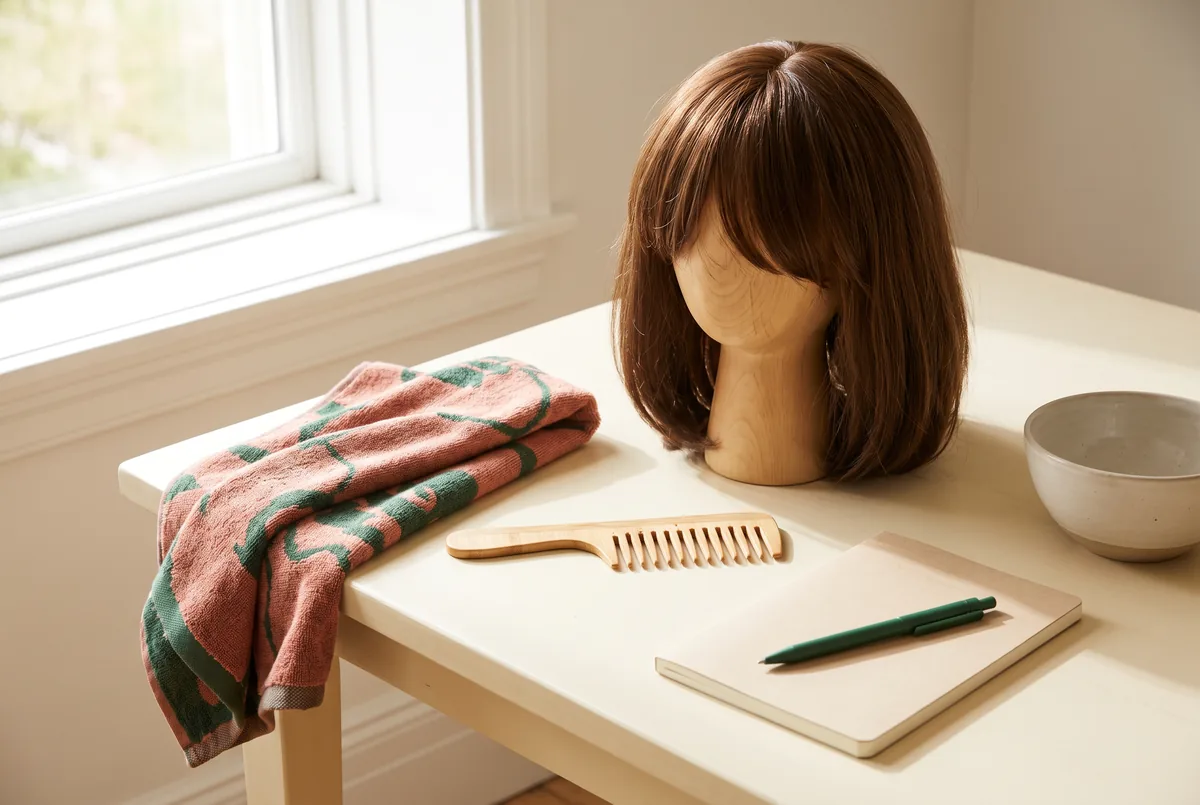
Separate fit concerns from material uncertainty
A slipping cap, pressure at an edge and uncertainty about fibre are not interchangeable problems. Record where a fit concern occurs, which size was ordered and whether an adjustment was made at handover. The American Cancer Society notes that sizing can vary between brands and encourages attention to fit and comfort when choosing a wig.1 That supports checking the actual item, not concluding that every cap carrying the same size label should feel identical.
For material uncertainty, copy the seller's exact wording and the supplied label into your notes. Distinguish “no fibre description supplied” from “label contradicts the order”. Appearance, shine and feel may prompt a question, but this guide does not provide a home test for fibre authenticity. Ask for model-specific documentation and an explanation of any discrepancy. Do not use heat, burning or chemicals to try to prove your suspicion.
Care history needs similar precision. Jon Renau's care guide distinguishes requirements for different types of alternative hair.2 Its instructions are manufacturer guidance for its own products, not confirmation of DT HUB materials or permission to apply the same heat conditions to another wig. Save the instructions supplied for your piece and record what you actually did, including any advice given by the seller. Avoid making further experimental changes while the issue is being clarified.
Make separate entries if several concerns overlap. A colour disagreement may be ready for comparison against a code, while a fit issue needs an in-person review and a fibre question still lacks documentation. Keeping them separate prevents an answer to one concern from being mistaken for resolution of all three. It also lets you accept a useful clarification without giving up questions that remain unanswered.
Compare what was agreed with what arrived
Build a side-by-side comparison using only identifiable evidence. In the agreement column, reference an order line or dated message. In the arrival column, describe the supplied item and attach the relevant photograph or label. Keep your preferred outcome in a separate field. Otherwise, “I want a shorter fringe” can become mixed with “the agreed fringe was not supplied”, even when the original order contained no length specification.
The wig shop hong kong page can help frame questions about where a proposed review would take place, but a location overview does not identify the person responsible for your transaction. Use the seller details on your order and ask who will review the discrepancy. Confirm the actual review location instead of inferring a branch, a booking or included aftercare from a general page.
| Issue | Agreement evidence | Arrival evidence | Useful clarification |
|---|---|---|---|
| Colour or model mismatch | Confirmed code and variant | Supplied label and overview photo | Is this the confirmed item or an approved substitution? |
| Fit concern | Stated size and fitting scope | Location of slipping or pressure | What review is proposed before alteration? |
| Fibre uncertainty | Item-specific material wording | Label, instructions or missing information | Which documentation supports this description? |
| Missing finishing service | Named inclusion in the quote | Handover record | Was the service included, completed or still pending? |
Compare like with like. A promotional model photograph and your bathroom photograph may differ in lighting and styling, so they are weak evidence of an exact colour mismatch. A confirmed code and a different supplied code make a more specific question. If there was no agreed feature to compare, ask about available adjustments and their terms rather than rewriting a preference as a contractual promise.
Ask who handles clarification and aftercare
Send the initial enquiry through an identifiable contact channel. Give the order reference, the main observation, the evidence attached and the answer you need. Avoid opening with every possible accusation or forwarding an entire photo library. A focused message might say: “My confirmation names one colour code, while the supplied label names another. Please explain the difference and confirm the proposed review or correction before any alteration.” Adapt the wording to the actual issue.
Ask who is responsible for the next action. The person who handles bookings may not be the person who can explain the model or approve a change. Clarify whether the proposed appointment is an inspection, an adjustment or a separately charged service. If a consultation is described as free, confirm whether it is free for this case, what it includes and the applicable conditions; do not assume that repair, accessories or later work are also included.
Before leaving the wig with anyone, request a handover record identifying the piece, its current condition and the work authorised. Ask how it will be labelled, whether photographs will be taken, and what must happen before additional work is approved. Keep a copy of your complaint record. Inspection and alteration are different permissions, and an apparently small cut may remove the feature you wanted the seller to examine.
Share information proportionately. An order number, relevant photographs and a description of the problem usually make a better first enquiry than a full medical history or an identity document. Crop unrelated personal details from the copy you send while retaining the original privately. After a telephone conversation, send a brief written summary and invite correction. Label the summary as your understanding until the other party confirms it.
Seek clinical diagnosis first for persistent skin concerns
Keep commercial clarification separate from care for your body. If discomfort persists, skin changes concern you or hair loss needs explanation, first seek assessment and diagnosis from a registered healthcare professional. Do not wait for the seller to decide whether the wig caused the problem. Record when symptoms were noticed and what contacted the area, but do not use that sequence alone to diagnose an allergy or assign responsibility.
The American Cancer Society advises people dealing with treatment-related hair loss to consider comfort and discuss relevant concerns with their healthcare team.1 A wig is an appearance option, not treatment for an underlying condition. Commercial fitting advice cannot replace that assessment. This article is not medical advice and cannot guarantee results from a different cap, an adjustment or any commercial service.
A page labelled best wig shop hong kong is a shopping information resource, not evidence of clinical competence or a guarantee that a product will suit your skin. When discussing discomfort, ask the supplier for the item's documented materials and attachment information while seeking healthcare advice separately. Ranking language and provider claims do not establish medical effectiveness.
Do not let a proposed cosmetic add-on become the explanation for an undiagnosed problem. A scalp Spa is not medical diagnosis, and “natural” does not mean allergy-free. You can ask a clinician what information would help their assessment, then request that specific information from the seller. Keep clinical notes private unless sharing a relevant detail is necessary and you choose to do so; a product enquiry need not become disclosure of your whole health history.
Keep next steps tied to actual written terms
Use a one-page Wig Purchase Problem Record to prepare the next conversation. At the top, put the order reference, the item identity and one sentence describing the main issue. Underneath, keep four labelled fields: agreed detail, observation, unanswered question and requested next action. Attach the evidence rather than squeezing every message onto the page. Date each update and preserve the previous version so later proposals do not overwrite the original complaint.
The tool is deliberately unscored. Three answered questions cannot outweigh an unresolved material discrepancy, and a complete folder does not prove entitlement to a refund. Its purpose is to show what can be checked and who needs to respond. Use the comparison below before consenting to a proposed solution; these are options to discuss, not remedies this article promises are available.
| Possible next step | Known detail to attach | Unconfirmed question and responsibility | Trade-off or pause condition |
|---|---|---|---|
| Written clarification | Order wording and supplied label | Seller explains the apparent difference | Clarification may not resolve fit or appearance |
| Inspection without alteration | Photos and current condition | Provider confirms scope and handover record | Pause if inspection permission includes unspecified changes |
| Adjustment proposal | Agreed issue and desired change | Provider sets out work, charges and consent | An irreversible change may obscure the original discrepancy |
| Exchange or refund discussion | Transaction terms and complaint history | Seller states applicable conditions and process | Do not assume eligibility or accept unexplained conditions |
Read any proposed solution against the terms supplied for your transaction, including provisions for customisation or previous alteration. Ask what you would be accepting and which concerns the proposal addresses. If an essential answer is missing, request that answer before authorising work. Keep your own communication dates and any stated deadlines visible. For an unresolved dispute, consider appropriate independent consumer guidance about your options; this record is not legal advice or a finding against the seller.
Frequently asked questions
What if I did not save the original product page?
Keep the documents you do have and ask for the description associated with your order. Label a current page as current, not as proof of the earlier offer. Record missing evidence honestly instead of reconstructing wording from memory.
Should I wash or restyle the wig before reporting it?
Avoid experimental changes intended to prove or hide the issue. Preserve its present condition and ask for item-specific guidance before further care or alteration. Tell the seller about washing or styling already completed; omitting it makes the chronology less useful.
Can photographs prove that the fibre description is wrong?
Photographs can document labels and visible differences, but they do not reliably establish fibre composition. Request documentation for the exact model and ask the seller to explain any contradiction. This guide does not offer home authenticity tests.
Does discomfort automatically mean the wig is defective?
No. Discomfort is an observation, not a diagnosis or a defect finding. Seek healthcare assessment first for persistent or concerning skin symptoms, and ask the supplier separately for material information and the proposed fit review.
What should I do if the seller's reply is incomplete?
Identify the unanswered question and request a written response tied to your order. Keep earlier replies and pause unspecified alterations. If the dispute remains unresolved, seek appropriate independent consumer guidance rather than assuming this checklist establishes a particular remedy.
About this article
FlintHub Academy prepared this article with AI-assisted organisation of public sources and editorial tools. The editorial organisation is not a medical practitioner, and this is not a wearer test, legal opinion or first-hand account. DT HUB and FlintHub have the same owner; linked DT HUB resources are related-brand information, not independent recommendations. Provider claims are not evidence of effectiveness. The planned images are original AI concept illustrations, not photographs of real customers, premises, clinicians or outcomes.
References
FlintHub Academy · AI-assisted editorial based on public information, not a first-hand service test or a claim of hairdressing or medical credentials. DT HUB and FlintHub Academy have the same owner. This is not medical advice or a guarantee of individual results.
Connect this guide with your planning
For comparison tables and enquiry tools on this same subject, visit Hair & Scalp Planning Guides. This is an information journal, not a course, product or medical service.