
A school trip connected to scuba should still deliver a complete lesson if nobody enters the water. Start with a curriculum question that students can investigate from an approved land route, define the evidence they will collect, and plan a shared piece of work afterwards. Any scuba element can then be considered separately, rather than becoming the condition for a successful day.
This approach gives families a meaningful choice. It also prevents a teacher's group booking or general trip permission from being mistaken for a decision about each child's suitability for a particular diving programme.
Define learning outcomes that do not require water entry
Choose something students can explain, compare or evaluate, rather than an activity they must complete. “How do people use and protect a coastal place?” is a workable question. “Everyone will dive and see coral” depends on participation and an encounter that cannot be promised. The first question can produce evidence from maps, visitor information and observations made from permitted land locations.
Set the assessment before choosing the optional experience. Students might submit an annotated map showing different uses of a coastal area, followed by a short argument about one conservation trade-off. Ask them to distinguish what they observed from what they learned through a published source. A classmate who remains on land should be able to meet the same learning outcome and receive the same recognition.
| Curriculum route | Evidence available without water entry | Trade-off to acknowledge |
|---|---|---|
| Geography: coastal land use | Annotated map and observations from an approved viewing point | A land view cannot reveal every underwater feature |
| Science: habitats and evidence | Habitat information, sketches and questions for further study | Published descriptions are not proof of a sighting that day |
| Citizenship: conservation choices | Comparison of visitor needs and habitat protections | Students must separate their opinions from stated rules |
| Communication: explaining a place | A short illustrated briefing using attributed sources | Attractive presentation must not replace accurate evidence |
Separate school-trip administration from scuba teaching
The school organises its educational visit: learning aims, school permissions, supervision arrangements and communication with families. A scuba provider must explain the particular programme being proposed and confirm its current requirements for each participant. These are connected responsibilities, but one cannot stand in for the other. A class list is useful administration; it is not evidence that every listed child meets a programme's conditions.
NAUI describes entry-level certification as teaching fundamental knowledge and skills, with subsequent diving limited by the scope of training and comparable conditions. That is a training pathway, not simply a label for a coastal outing. It should not be reduced to “the school says the group can join.” Ask which programme and standards apply before discussing individual participation. 1
If the school is considering a Sai Kung scuba diving course, use the linked page as an enquiry starting point. Ask the provider to identify the proposed course, its current individual entry requirements and how those requirements will be confirmed. Do not present the page as evidence that a school cohort has been accepted or that certification fits within the proposed visit.
| Responsibility check | School's planning question | Confirmation needed outside the teacher's decision |
|---|---|---|
| Programme identity | Is this relevant to our educational aim? | Provider identifies the actual activity and applicable standards |
| Individual participation | Have families received a clear explanation? | Provider confirms requirements; individual consent remains separate |
| Group organisation | Can we supervise both learning routes? | Provider explains how the proposed group format would operate |
| Changes to the water element | Can learning continue without it? | Provider confirms activity changes; school communicates the revised plan |
Name a school coordinator and a provider contact in the brief. Families should know whom to ask about the educational route and whom to ask about programme requirements, rather than receiving an informal answer from whichever adult replies first.
Make any water activity genuinely optional
An optional activity is not genuinely optional if declining it means losing the main lesson. Put the complete land route in the first description sent to families, and give it an identifiable task and outcome. Avoid calling it the “waiting group” or a lesser version of the trip. Students should not have to explain personal reasons to classmates to justify choosing it.
Provide separate places to express interest in the visit and in the water activity. Explain that an enquiry about scuba is not acceptance into a programme. Any required individual consent and provider documentation should be handled through the appropriate process, not inferred from permission to travel with the school. A child's own willingness matters too; family agreement should not be framed as an obligation to participate.
For an introductory enquiry such as try scuba diving Hong Kong, ask what the experience actually involves and which current requirements apply to each child. Do not assume that a shorter or introductory format removes individual checks. Present the answer alongside the land option so families can compare the choices without promotional language suggesting that everyone ought to enter the water.
The practical trade-off is staffing. Two simultaneous routes can require more coordination than one shared route. If the school cannot support both properly, reconsider whether an optional water element belongs in this visit at all. A complete land-only day is a stronger educational design than a nominal choice that the school cannot deliver.
Ask providers to confirm current individual requirements
Send questions that identify uncertainty instead of asking for blanket reassurance. “Can our school group join?” leaves too much unstated. A better enquiry describes the students' age range, the educational purpose and the optional nature of the water activity, then asks which current programme requirements the provider needs to review individually. Do not circulate sensitive personal information in a general planning email.
Useful questions include: “Which programme are you proposing?” “What individual information and consent documents are required?” “Who reviews them?” and “How will families receive an answer if further assessment is needed?” Ask the provider to explain any requirements relating to age, previous experience or water ability without having the school translate them into its own eligibility test. Where a requirement calls for an appropriate professional assessment, the teacher should not substitute a personal judgement.
An enquiry about private group scuba lessons Hong Kong should distinguish a private booking format from individual participation. Ask whether the proposed arrangement can accommodate different decisions and learning progress, and how the school would be told about unresolved requirements. Group organisation does not justify treating the class as one learner or promising a common training outcome.
Request written answers that name the programme and apply to the proposed visit. If important points remain unresolved, describe the water element as an enquiry, not a confirmed part of the family brief. The land route can still be developed while those questions are outstanding; it should not depend on a favourable answer.
Use habitat observation without promising sightings
Marine learning does not require an underwater encounter. Students can examine the difference between a habitat described by a reliable source and a species personally observed. AFCD's Hoi Ha Wan Marine Park information provides a conservation context and guidance on avoiding damage to natural habitats during water activities. Use it to discuss why visitor behaviour matters, not as a promise that a class will see particular organisms. 2
Build an evidence task around three distinctions: observed here, reported by a source, and still unknown. A student might describe visible shoreline features, attribute an explanation of underwater habitat to AFCD, and record a question that cannot be answered from land. That is better scientific reasoning than copying a species list and presenting it as the day's sightings.
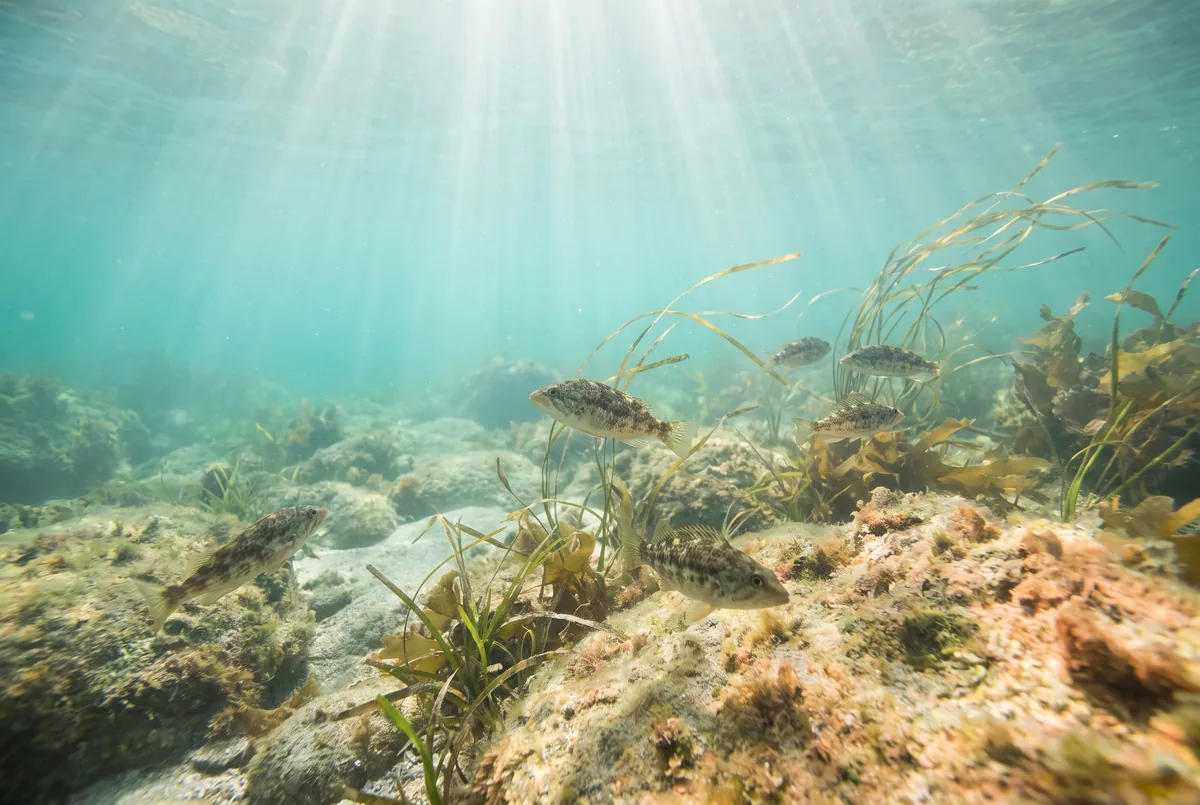
Do not make close contact with marine life the reward. The conservation discussion should emphasise avoiding habitat damage and respecting current access and protection arrangements. An illustration of fish or seaweed can support the lesson, but it must remain an illustration, not a record of the trip. The article's conceptual images likewise show learning themes, not promised encounters or provider activities.
Choose observation positions only after the school has checked the actual route, access and suitability for its group. “Land-first” does not mean any shoreline is an appropriate classroom. If the selected location is unavailable, students can compare published habitat information with a prepared map and explain what direct observation would have added. The limitation becomes part of their evidence evaluation.
Prepare a weather-dependent change channel
A land route is independent of scuba participation, but it is not independent of weather or access. Prepare a separate classroom or suitable indoor version of the evidence task. An outdoor route should not be retained automatically just because the water activity has changed. The school needs a way to revise the whole visit when conditions require it.
State who receives provider updates, who makes school-trip changes and who sends the authoritative message to families. Use current official weather information alongside relevant provider and venue updates; a forecast image shared in a parent chat is not confirmation that an activity will proceed. Avoid wording that guarantees a departure, water session or substitute arrangement before the responsible parties have confirmed it.
A useful update names the affected part of the plan and explains what students will do instead. “The water element will not proceed; the confirmed land route remains” is clearer than “activities may vary.” If the outdoor route also changes, explain the replacement learning task, meeting arrangements and any action families need to take. Do not leave them to infer changes from an old itinerary.
Use the land-first school-trip brief
Complete the five entries below before presenting scuba as part of the trip. The brief should produce a viable learning route even if the optional water enquiry receives no confirmation. Blank responsibilities or missing land evidence are reasons to revise the proposal, not details to fill in after families have committed.
- Curriculum question: Write one question students can answer without water entry. Name the subject and the work they will submit.
- Land evidence task: Identify the proposed observation location, published material and evidence record. Include a non-outdoor version if access changes.
- Optional water enquiry: Record the programme question and provider contact. Mark it pending until current individual requirements and arrangements have been explained.
- Consent responsibility: Identify the school's permission process and the separate individual water-activity process. State who handles each without putting private details in the shared brief.
- Update contact: Name the school contact, communication channel and person who issues changes to the educational route.
Hypothetical completed brief: A class asks, “How can visitor access and habitat protection be balanced?” Its land task is to annotate a map from an approved viewing location, compare visible visitor use with AFCD information, and write a reasoned recommendation. The optional water entry reads “provider enquiry pending,” with no student described as eligible. School-trip permission and individual activity consent are recorded separately. A named school coordinator will issue route updates through the established family channel.
The resulting route is complete: introduce the question, gather land evidence, discuss its limits and produce the recommendation. If the outdoor visit cannot proceed, prepared maps and attributed habitat materials support a classroom comparison. Scuba could add a separately confirmed experience, but removing it does not remove the assignment or disadvantage the students who choose land.
Use the brief to explain the complete land route
Write the family description in the order students will learn, not in the order activities were offered to the school. Lead with the question and the shared outcome. Then explain the land evidence task and the possible change arrangements. Put any optional water enquiry afterwards, with its individual confirmation and consent requirements clearly separated.
For wider educational planning, FlintHub's school study-tour information can sit alongside this brief. Use that resource to frame the visit's learning purpose, rather than presenting a scuba provider's activity description as the whole curriculum. The family-facing version should make clear what every student will learn regardless of participation.
Before sending it, ask a colleague to read only the land route. Can they explain what students will investigate, where the evidence comes from and what they will produce? Then ask them to read the optional water paragraph. If it sounds like universal eligibility or an expected achievement, revise it. The strongest brief makes both the educational commitment and the limits of the water enquiry easy to understand.
FAQs
Must a school trip include scuba?
No. A complete coastal learning route can use permitted land observations, maps and attributed habitat information. Scuba should only be considered as a separately confirmed option, not the activity that determines whether students can complete the lesson.
Can a teacher decide every child is eligible?
No. A teacher can organise the educational visit but should not make a blanket ruling about programme eligibility. The provider must explain current individual requirements, and any required consent or professional assessment must follow the appropriate separate process.
Does group booking remove individual requirements?
No. A group arrangement concerns organisation; it does not turn separate participants into one learner. Ask how individual requirements and decisions will be handled before treating the optional activity as confirmed.
Can marine sightings be promised?
No. Plan the learning around evidence students can obtain, not a promised species encounter. Published habitat information can support a lesson, but students should not present it as proof that they saw those organisms during the trip.
What if water activity is cancelled?
Use the confirmed land route if it remains appropriate, or the prepared indoor task if the wider visit changes. Tell families which element changed and what replaces it. Any provider arrangements require direct confirmation; the article does not promise substitute sessions or terms.
References
- [1] NAUI Open Water Scuba Diver: entry-level training and scope
- [2] AFCD Hoi Ha Wan Marine Park: habitats and conservation guidance
Author note
FlintHub Academy prepared this article with AI assistance using publicly available information. It is educational planning guidance, not instruction from a qualified diving instructor, individual medical clearance or an independent provider endorsement. DiveHarbour and FlintHub Academy have the same owner; the linked resources are related information, not independent recommendations. Confirm current programme requirements and visit arrangements directly with the responsible providers.
FlintHub Academy · AI-assisted editorial prepared from public information for learning and enquiry planning. The author is not a diving instructor or medical expert. This is not first-hand course testing, a real student case or medical clearance. DiveHarbour and FlintHub Academy have the same owner.