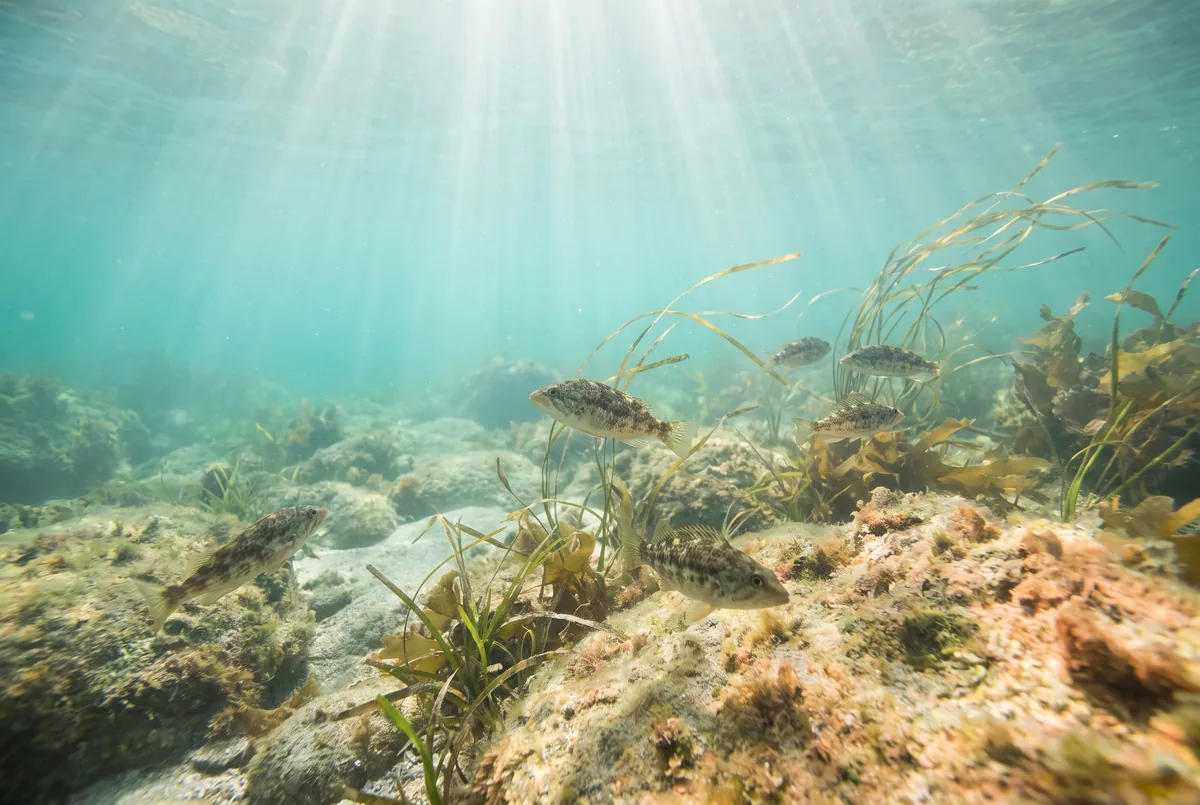
A marine-learning day can belong to the whole friendship group without putting everyone in the water. Start with a question that museum research, land-based observation and an optional introductory scuba experience can each explore. The shared purpose is learning about the marine environment, not persuading every friend to book the same activity.
Keep the museum visit and any water activity separate until their practical arrangements are confirmed. A museum-to-marine plan is a learning framework, not a packaged itinerary: this article does not establish venue availability, transport connections or a same-day activity sequence. The mixed-interest day canvas below helps each person choose a route that contributes to a later discussion.
Set one marine-learning question for the day
Choose a question broad enough for different routes but specific enough to investigate. “What makes a marine habitat different from an empty patch of water?” works better than “Can we all see the same fish?” The first invites attention to habitat structure and interpretation. The second makes the group's success depend on a sighting that cannot be promised.
Write one thing the group wants to understand and one kind of evidence each person could bring back. A museum visitor might record how a display explains shelter or human impacts. Someone choosing water participation might later describe what they noticed, without assuming species identification was correct. A land-based researcher might compare those observations with an official habitat description. None needs to outperform another.
For friends considering an optional water route, the try scuba diving Hong Kong information page can be a starting point for asking what the offered activity actually covers. Treat it as a provider enquiry resource rather than the organising principle for everyone else's day. Before anyone commits, distinguish the learning question from the booking decision: the group can keep its marine theme even if nobody chooses introductory scuba.
A useful test is whether the question still works without an underwater photograph. If it does, the plan has room for changed preferences and different activities. Agree that written observations, a labelled sketch or a carefully attributed exhibit explanation are equally valid contributions.
Keep museum research distinct from water participation
Museum research can provide context, but it cannot establish readiness for scuba participation. Reading about marine habitats and completing a provider's participation process are different tasks. Do not describe the museum visit as a substitute for the briefing, assessment or instruction that a particular water activity requires.
Choose a museum or exhibition only after checking that its current displays address the group's question. This plan does not identify a guaranteed marine exhibition or an available guided visit. Ask about relevant content, admission arrangements, accessibility and any restrictions on note-taking or photography. A compelling gallery description is not confirmation that a particular exhibit will be available when you arrive.
Compare routes by their contribution, not by how adventurous they look:
| Learning route | Useful contribution to the shared question | Limitation to recognise |
|---|---|---|
| Museum or exhibition research | An explanation, diagram or historical account with its source recorded | An exhibit is interpreted information, not a current field observation |
| Land-based habitat research | Notes from an official habitat resource and questions for later discussion | Published information does not describe every condition on the day |
| Optional introductory scuba | Personal observations from the activity actually offered and completed | Participation does not guarantee a sighting or confer certification |
| Combined land-only route | A comparison between exhibit explanations and published habitat information | It should not be presented as equivalent to underwater experience |
The land-only route deserves its own question and output, not a vague instruction to wait nearby. FlintHub's Hong Kong study-tour planning resource offers a related starting point for thinking about learning-led outings. Use it to develop the educational purpose, while checking museum and activity arrangements with the relevant operators separately.

Explain what introductory scuba does not establish
An introductory experience is not the same as earning a scuba certification. PADI's explanation of progression from Discover Scuba Diving to Open Water Diver distinguishes the experience from a certification course, which includes knowledge development, confined-water work and open-water training. Any possible credit from an introductory experience depends on applicable conditions; it should not be assumed to transfer automatically. 1
For a non-diving friend, that distinction removes an unnecessary social expectation. Trying an activity need not signal a commitment to a longer course. Equally, deciding against the activity does not mean abandoning marine learning. Keep curiosity about the sea separate from a person's interest in learning to dive, and let the person answer those questions independently.
If a friend is comparing introductory options, the PADI Discover Scuba Diving Hong Kong page is an enquiry entry point for clarifying the named programme and its current conditions. Ask the provider what completion means, what documentation is issued and whether any future training credit could apply. The page name alone does not establish an individual's eligibility, a particular instructor's credentials or permission to dive independently afterward.
Avoid telling the group that “no certification” means “nothing to prepare.” It describes what is not required or awarded in a particular context, not a universal exemption from participation requirements. A friend can remain undecided while those requirements are clarified; the canvas should preserve a complete land route in the meantime.
Ask about individual requirements and supervision
Send the provider questions about each prospective participant rather than describing the group as a single beginner. Ask what current age, swimming or water-comfort conditions apply to the exact programme. Ask which forms must be completed and whether an individual needs any further review under that process. Each person should provide their own information; an organiser should not answer personal screening questions on a friend's behalf.
Clarify supervision in plain language. Who leads the activity? What qualifications and current authorisation apply to the programme being offered? How is the participating group arranged, and what happens if one person chooses not to continue? These are questions to obtain written answers, not assumptions this article can settle for a named provider.
The non-diving route also needs practical clarity. Ask whether companions may access the venue, whether any separate admission is needed and which facilities they may actually use. Do not assume an activity operator supervises land-based friends or provides a viewing area. If that arrangement is unavailable, choose an independent land activity instead of making companions depend on access they have not been granted.
Use a boundary sentence in the group chat: “Only people who independently choose the water activity will enquire about participation; everyone else has a separate learning route.” This avoids turning a shared booking enquiry into apparent consent. For anyone unsure, record “undecided” rather than treating silence as agreement, and do not require them to justify a land-only choice publicly.
Compare activity scope without inventing prices
Compare what each person would buy before comparing totals. A museum admission, a land-based research outing and an introductory scuba product have different scopes. A group estimate becomes misleading if it assumes everyone pays for the same activity or silently excludes the costs of a companion's alternative route.
The discover scuba diving price Hong Kong page can help frame a current quotation request, but this plan does not establish a payable amount. Ask for a dated, written breakdown for the exact option being discussed. Confirm what is included, what is optional and which costs apply only to water participants. Keep the museum and land-route expenses separate unless a provider explicitly confirms a combined arrangement.
Use the same categories for every option so a lower-looking quote is not mistaken for a like-for-like offer:
| Expense scope | What to establish before comparison | Why it matters for mixed-interest friends |
|---|---|---|
| Museum or exhibition access | Current admission basis and any separately charged guided activity | Land-only friends may have a different purchase from water participants |
| Introductory water activity | Exact programme, equipment provision and other stated inclusions | A product label does not reveal the full scope of the quote |
| Travel and venue access | Which transfers or access charges, if any, are included | Separate routes may involve different journeys and entry arrangements |
| Optional purchases | Whether photographs, learning materials or other extras are optional | A group's shared learning output need not rely on a paid extra |
| Changed or cancelled participation | Current written terms for withdrawal, disruption and unused elements | Do not assume a companion's change affects every booking identically |
Do not fill unknown cells with guessed amounts. Mark them “awaiting confirmation” and identify who will ask. Agree how genuinely shared expenses would be divided, while leaving individual activities with the person choosing them unless the group expressly agrees otherwise. This keeps non-diving friends from subsidising an activity simply because they joined the outing.
Use the canvas to include non-diving friends
Make one entry per person using four fields: learning question, water participation preference, land activity and provider query. The canvas produces parallel learning routes, not a timetable. It is complete when every person has something meaningful to investigate and every unresolved booking issue has a named owner.
Learning question: Write a question the person can answer partly through their chosen route. For example, “How do rocks or vegetation create places for marine animals?” is more workable than “Will I see a particular species?” Link it to the group's common question without requiring everyone to investigate identical details.
Water participation preference: Record “land only,” “interested, subject to confirmation” or “undecided.” These are preferences, not eligibility decisions or promises to book. Make clear that a person can change their preference without losing their place in the shared learning discussion.
Land activity: Name a real task, such as comparing a relevant exhibit explanation with AFCD's habitat information. Check the chosen venue separately. Someone interested in scuba also needs a land alternative so that the educational plan does not disappear if their activity cannot proceed.
Provider query: Write the question that blocks a decision and who will seek the answer. A prospective water participant might ask about current individual requirements. A land-only friend might ask the museum about access to relevant displays. “Someone will check everything” is not an actionable entry.
Consider this explicitly hypothetical group. Maya chooses land only and investigates how museum displays explain marine shelter. Leon is interested in introductory scuba, subject to the provider's requirements, and wants to distinguish a direct observation from an interpretation. Priya is undecided and researches what visitors should avoid doing around sensitive habitats. Each has a land task, and Leon owns the enquiry about his potential participation.
Their resulting routes run in parallel: Maya brings attributed exhibit notes, Leon brings notes from whichever activity he actually completes, and Priya brings conservation questions. No entry says they must travel together between a museum and a water venue at a particular time. If the locations or confirmed arrangements do not combine sensibly, keep one shared land outing and treat the water experience as a separate activity.
The tradeoff is that friends may not share every moment. In return, nobody must enter the water merely to remain included, and the final discussion gains evidence from more than one perspective.
Bring the group back together through an observation discussion
Ask each person to bring one observation, one interpretation and one unanswered question. An observation is what they actually read or noticed; an interpretation is what they think it means. Keeping these separate helps the group avoid turning an uncertain identification or an exhibit summary into a stronger claim than the evidence supports.
For the conservation discussion, AFCD's Hoi Ha Wan Marine Park guidance gives a concrete reference for avoiding damage to natural habitats. Its visitor guidance includes not standing on fragile coral, touching or feeding marine life, or collecting organisms. Use it to discuss respectful observation, not to imply that this plan includes a visit there or guarantees underwater visibility. 2
A useful discussion prompt is: “What can we learn without disturbing what we are studying?” A museum researcher can examine how displays communicate that responsibility. A water participant can reflect on what they were able to observe during the activity, without treating wildlife contact as an achievement. A land researcher can identify a question that needs a better source rather than guess an answer.
Close by comparing what the routes revealed and what they could not establish. A day without a desired sighting can still answer the habitat question through exhibit research and published information. The next step might be another land-based visit, further reading or an individual training enquiry. None needs to become a whole-group requirement.
FAQs
Must every friend enter the water?
No. Give land-only friends a defined learning question and an independent activity, then bring everyone's findings into the same discussion. Their inclusion should not depend on buying a scuba product or being allowed to wait at the water venue.
Is introductory scuba certification?
No. An introductory experience and a certification course are different. PADI describes a further training pathway rather than automatic certification from the experience. Ask what the exact programme establishes and whether any conditional training credit applies. 1
Does no certification mean no requirements?
No. Ask the provider about the exact programme's current individual requirements, forms and supervision. A product description does not decide a friend's eligibility. Keep a land alternative available while questions are unresolved, without pressuring the person to participate.
Can a shared day guarantee marine sightings?
No. Do not make success depend on a particular animal, visibility or underwater image. Museum explanations, official habitat information and honestly described observations can support a worthwhile discussion even when the hoped-for sighting does not happen.
Are prices fixed by this plan?
No. This is a learning and enquiry framework, not a quotation. Obtain current written scopes and terms from each relevant operator. Separate individual purchases from shared expenses, and leave unknown amounts unfilled until they are confirmed.
References
- [1] PADI: From Discover Scuba Diving to Open Water Diver certification
- [2] AFCD: Hoi Ha Wan Marine Park habitats and visitor conservation guidance
Author note
FlintHub Academy prepared this article with AI assistance using public information. It is a learning-planning resource, not instruction from a qualified diving professional, individual medical clearance or a first-hand activity review. DiveHarbour and FlintHub Academy have the same owner; related resource, not an independent recommendation.
FlintHub Academy · AI-assisted editorial prepared from public information for learning and enquiry planning. The author is not a diving instructor or medical expert. This is not first-hand course testing, a real student case or medical clearance. DiveHarbour and FlintHub Academy have the same owner.