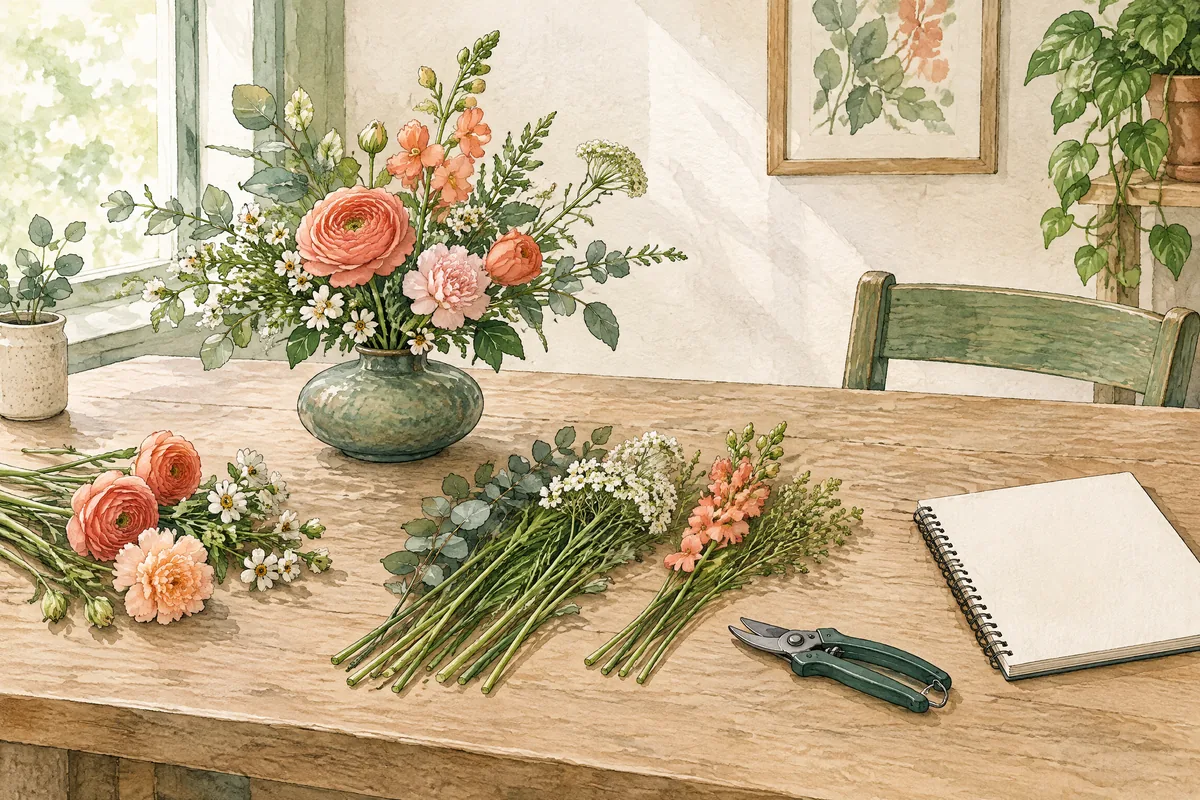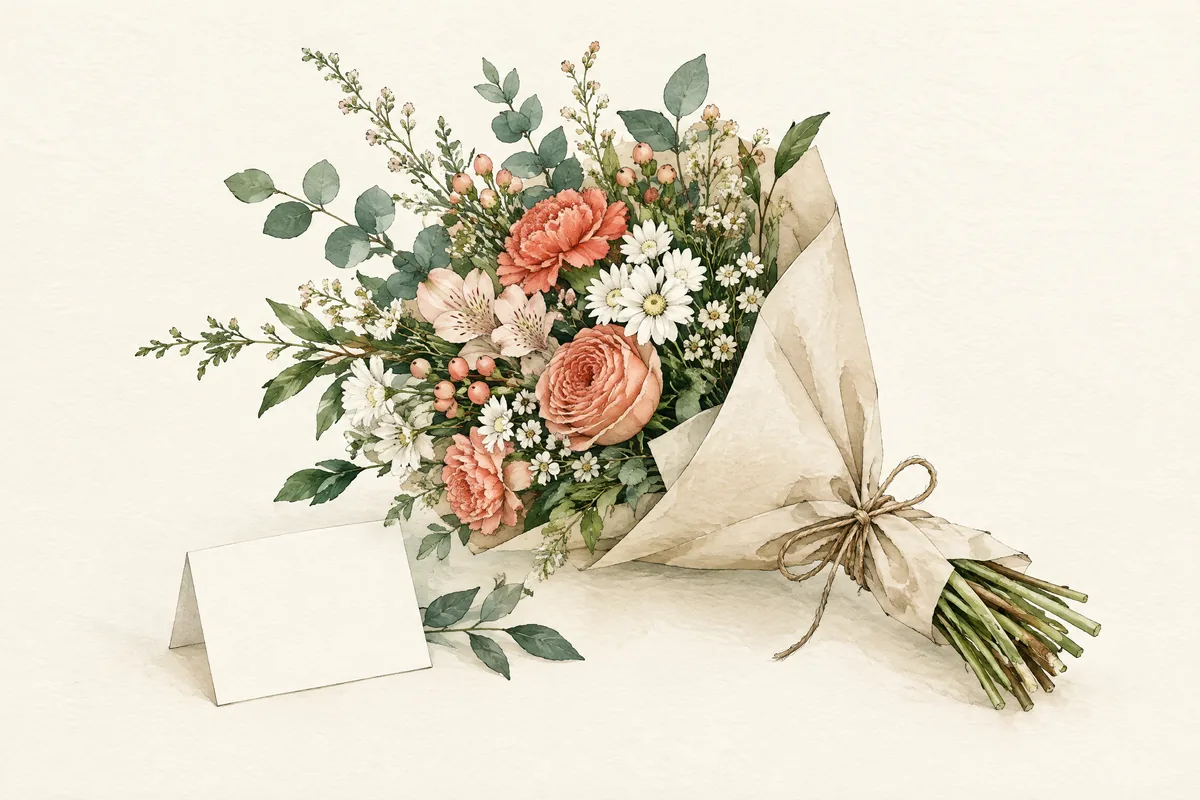
1. Start with the decision the flowers need to support
Anniversary flowers can be a personal gift, a table feature, a welcome display or part of a larger gathering. Those uses place different demands on the materials. A hand-tied bouquet intended to be carried away is not the same planning problem as a fixed arrangement that must remain in place throughout an event. Begin by writing down the purpose, recipient, setting and point at which the flowers will be handed over or removed.
Then separate preferences from constraints. Colour, shape and associations may guide the design, while access, space, duration and who will handle the arrangement determine what is workable. Do not treat “lasting longer” as a complete specification: ask what appearance is expected, where the flowers will be kept and whether someone can maintain or store them. This article offers planning comparisons, not a guarantee of performance or a recommendation for a particular supplier.
For venue planning in Hong Kong, the location is a context to investigate, not a claim that one set of rules applies everywhere. The Leisure and Cultural Services Department (LCSD) says its wedding services rent designated venues and provide basic facilities, rather than arranging wedding decoration; this is guidance about its own venues, not a statement about hotels, private clubs or corporate spaces 1. Confirm the selected venue’s own boundaries and arrangements before choosing a display.
2. Map recipient and participant needs before choosing
A gift for one recipient may need to be easy to carry, open and place at home. Flowers for a shared anniversary event may instead need to fit a registration desk, dining table or photo area without disrupting people using the space. Ask who will receive the flowers, whether they will travel with them, and whether the display is meant to be taken away, reused, dismantled or simply enjoyed during the event. These questions prevent a visually attractive plan from overlooking practical ownership and handover.
Record the recipient’s stated preferences where available, but do not infer them from relationship status or occasion alone. If the arrangement will be near food, equipment, a doorway or an accessible route, show that relationship on the layout and ask the venue to review it. For a long-running display involving live plants, placement and care are separate decisions; ask for guidance relevant to the actual plant and its intended location.
If the event includes a learning or participatory activity, keep the floral display decision distinct from the activity brief. FlintHub’s floral workshop comparison can help readers think through workshop formats as a separate planning task; it does not mean flowers, materials or instruction are included with any course. Likewise, consider whether a gift should be independent of an activity, rather than assuming a bundled experience.
3. Use the anniversary floral material and display worksheet
Use this worksheet in a planning conversation or copy it into an email. Fill in the fields before requesting a proposal; write “unknown—please confirm” wherever the answer is not established. It is a decision aid, not an approval form or a promise that a particular material will suit every setting.
Purpose and recipient: Is this a personal gift, a shared display, or both? Who takes possession after the event?
Display location: Identify the exact surface or zone, nearby doors and routes, and whether the venue has approved that location. Attach a marked floor plan if one is available.
Display period: State when the flowers must be ready, how long they are expected to remain, and when removal or collection can happen. Ask the venue and supplier to confirm access and timing rather than assuming setup can occur outside booked hours.
Material preference: Compare fresh, preserved and dried flowers; note whether the priority is a particular look, a tactile gift, less day-of handling, or another stated preference. Ask how each proposed material should be displayed and handled.
Support and responsibility: Name the person receiving, positioning and removing the arrangement. Confirm in writing whether transport, vessel, installation, collection, cleanup or replacement is included—or not included—in any offer.
Exceptions and decision owner: Record budget only if supplied by the organizer, restrictions communicated by the venue, an alternate contact, and who has authority to approve changes. Unconfirmed details remain questions, not settled terms.
4. Turn related enquiries into specific requirements
A useful enquiry describes the result needed rather than simply naming a flower type. For a gift, explain whether the recipient will carry it away and whether a container is needed. For an event display, provide its position, approximate available footprint if known, viewing direction, required ready time and removal plan. Invite the supplier to state assumptions and exclusions in writing. In particular, do not presume delivery, installation, a vase, care instructions, collection or waste removal unless the written offer says so.
If exploring a preserved flower bouquet, ask what the proposed material and finish are, how the item should be displayed, and what handling or storage guidance accompanies it. The linked phrase is a page label and enquiry resource, not an endorsement or evidence of a specific product’s lifespan, quality, price or service terms. Confirm the actual item and all relevant arrangements directly before approval.
For other material preferences, a dried flower bouquet page may help frame an enquiry about style and format. Ask whether the proposed design includes a vessel, what display conditions are recommended, and who is responsible for setting it down or taking it away. The link does not establish any safety, durability or maintenance claim; request item-specific information rather than treating a general material category as a complete specification.
5. Compare workable material and display approaches
Materials are not interchangeable, and the right comparison depends on the intended use. Fresh flowers may fit a gift or short event display where their appearance at handover matters; preserved and dried options may appeal when a recipient wants a keepsake-like display. These are planning distinctions, not claims about how long any individual arrangement will last. Ask for details about the actual design, vessel, storage, handling and expected presentation, and consider whether the recipient can accommodate it.
| Approach | May fit when… | Confirm before choosing |
|---|---|---|
| Fresh arrangement | The occasion centres on a handover or a display for a defined event period. | Readiness, water or vessel needs, placement, transport, and who handles the arrangement afterward. |
| Preserved arrangement | The recipient wants a display piece and the proposed design suits the available home or event space. | The specific material, display guidance, vessel inclusion, handling expectations and any written care instructions. |
| Dried arrangement | The intended look suits the recipient and the design works in the planned location. | Fragility or handling guidance for the specific item, placement, packaging and what happens after the event. |
A second comparison is between a portable gift and an installed display. A portable item can simplify venue coordination, but still needs a clear recipient and handover point. An installed feature can create a focal point, yet brings questions about footprint, access, setup, removal and venue approval. Neither approach is automatically simpler: the answer depends on the location, event schedule and responsibilities agreed by the organizer and supplier.
| Display approach | Planning advantage | Key trade-off to resolve |
|---|---|---|
| Handheld or table-ready gift | Ownership and handover can be assigned to one recipient. | Carrying, surface space, container and post-event transport still need attention. |
| Freestanding feature | Can be placed in a defined area without assuming a wall fixing. | Footprint, stability, permitted position and removal arrangements need confirmation. |
| Wall-mounted or suspended feature | May use a designated visual zone rather than a tabletop. | Fixings, attachment permissions, overhead constraints and installation responsibility require venue review. |
6. Coordinate handover, access and exceptions
Treat the venue, organizer and floral supplier as separate parties with separate responsibilities until written terms establish otherwise. Send the same marked layout and timing information to the relevant contacts, then ask who approves the final position, who can enter for setup, and who removes the display. LCSD’s wedding-venue guidance says its specified booking period must include preparation, rehearsal, dismantling and post-use tidying; that is an example for those LCSD venues only, not a Hong Kong-wide rule or a timing estimate for floral work 3. Other venues need their own confirmation.
Keep routes and temporary storage in the review. The Hong Kong Fire Services Department’s public fire-escape education page advises keeping escape routes, including corridors and staircases, unobstructed 2. This is general fire-safety education, not event approval or a measurement standard. Ask the actual venue to confirm its approved layout and access requirements; do not describe a floral plan as fire-approved based on that page. Similarly, LCSD Annex I discusses temporary structures in its own venue context 3. It does not settle whether every arch, wall or suspended floral feature falls into a particular category; seek the venue’s classification and required documents.
For a group activity connected to the celebration, FlintHub’s floral and gardening workshop is a learning-planning route, not confirmation that a course includes flowers, catering, gifts or event decoration. Keep the activity’s learning objectives and the floral purchase in separate written scopes. Before confirming, circulate a short handover note naming the display owner, venue contact, setup and removal responsibilities, and unresolved exceptions.
7. Resolve open questions before approval
Before approving a design, check that the recipient or event purpose, material, location, display period and handover owner are all stated. Ask for an itemized written description of what is offered and excluded, including vessel, transport, setup, installation, collection, cleanup, care information and changes. These are questions for the merchant; this article cannot establish YumYum’s current service scope, prices, availability, delivery arrangements or terms. Leave any detail unanswered until confirmed in writing rather than filling gaps with assumptions.
If the arrangement is for an anniversary celebration, an anniversary flowers page can serve as a starting point for a relevant enquiry. Explain whether the request is for a personal gift or an event display, where it will go, and who will receive or remove it. The anchor is a page label, not an endorsement or a statement of available designs, pricing, delivery, installation or other merchant promises.
A simple approval rule is to pause when a practical dependency has no named owner. If the venue has not confirmed the location, ask before committing to an installed feature. If the recipient’s handling needs are unknown, clarify before selecting a format. If a proposed care plan concerns living plants, verify it for the actual species and placement rather than borrowing cut-flower assumptions. With responsibilities recorded, the final choice can be based on recipient preference and the event’s real constraints instead of an untested idea of what anniversary flowers “should” be.
Frequently asked questions
Are fresh flowers always the best choice for an anniversary?
Not necessarily. The recipient, setting, display period and handover plan matter. Compare the actual proposed arrangement with those needs, and ask how it should be transported, displayed and handled after the celebration.
Should I choose preserved or dried flowers for a longer-lasting gift?
Those categories may suit a keepsake-style display, but this article cannot promise a lifespan. Request item-specific display and handling guidance, and confirm the design, vessel and any stated care information in writing.
What should I ask a venue before planning a floral feature?
Ask where it may be placed, what access and setup times apply, whether attachments or structures need approval, and who must remove it. Requirements vary by venue; obtain confirmation from the venue itself.
Does a floral order automatically include a vase, setup or cleanup?
No such inclusion should be assumed. Ask the merchant to list what the offer includes and excludes, including the vessel, transport, installation, collection, cleanup and any care guidance, before approving the order.
Can I combine flowers with a FlintHub learning activity?
You can plan an activity and a floral purchase alongside one another, but do not assume a course includes flowers, food, gifts or decoration. Confirm each scope separately with the relevant organizer or provider.
Editorial disclosure
FlintHub Academy and YumYum have the same owner. This article was prepared with AI assistance by FlintHub Academy’s editorial team and is not an independent recommendation of YumYum or any other merchant. The date 2026-11-10 records editorial preparation, not a confirmed publication date. The team does not claim medical, veterinary or professional qualifications. The linked pages are enquiry resources, not endorsements. Confirm current product details, availability, responsibilities and terms directly in writing. Hong Kong venue examples are planning contexts only, and guidance about LCSD wedding venues is not Hong Kong law or a universal venue rule.
References