1. Decide what the birthday tea needs to do
A birthday tea might be a light pause between activities, the main food offering, or a dessert-led moment near the end of a gathering. Those purposes point to different choices. Before discussing a menu, write down what guests should be doing during the tea: sitting together, circulating, listening to a toast, or taking a break from a children’s activity. Then note the expected start and end, the space available, and who will handle decisions on the day.
This is a planning framework, not a description of any merchant’s package. The supplied evidence does not establish YumYum’s menu, staffing, equipment, delivery arrangements, prices or service scope. Treat each of those as an open question for the merchant and request written confirmation. If the event is in Hong Kong, the location is a planning context only; it does not indicate a local branch or confirm that a service is available there.
Think about what “tea” means to your group, too. It could be a seated tea-and-dessert break, a self-serve spread, or individually arranged portions. Clarifying this early helps avoid comparing unlike proposals. Keep the birthday person’s preferences in view, but do not assume a particular menu, dietary accommodation or serving style is available until confirmed.
2. Map participants before choosing food
Start with a realistic attendance estimate and distinguish confirmed guests from people who have not replied. The University of Rochester’s Green Events Handbook recommends estimating attendance accurately and planning food orders strategically to reduce waste 1. That is a useful planning principle, not a formula for portions: it does not determine how much food a birthday tea needs, or how children and adults should be counted. Ask the supplier to explain its serving assumptions and when the final headcount is due.
Next, note practical differences among attendees: whether people will be seated or moving around, whether children need a simpler layout, and whether guests have dietary requests. This is a prompt to communicate needs, not a guarantee that a supplier can meet them. Ask what information the merchant needs, what it can confirm about ingredients and handling, and which requests it cannot accommodate. Do not treat a menu label or verbal reassurance as proof of suitability for a particular allergy or medical diet.
A useful guest note can be brief: expected attendance; age mix where relevant; dietary requests to discuss; seating or access constraints; and the person who will approve changes. For a family event with children, the separate FlintHub guide to children’s party catering can help connect food decisions to activity planning. It is a learning resource, not a bundled service or a promise about catering provision.
3. Compare formats by the work they require
A service format affects how guests collect food and what the host may need to coordinate. UC San Diego’s catering guidance distinguishes buffet service, which may require less staff but can still need someone to portion a main dish, from plated service, which needs more staff and sufficient kitchen preparation space 2. This university event guidance is an example for comparing questions; it is not Hong Kong law, a universal staffing ratio, or evidence that a particular merchant includes staff, tableware or equipment.
Use the comparison below to identify trade-offs, then ask which formats the supplier actually offers. “Self-serve” does not automatically mean no host involvement, and “served” does not establish how long staff remain or whether clearing is included.
| Approach | Possible fit | What to clarify before choosing |
|---|---|---|
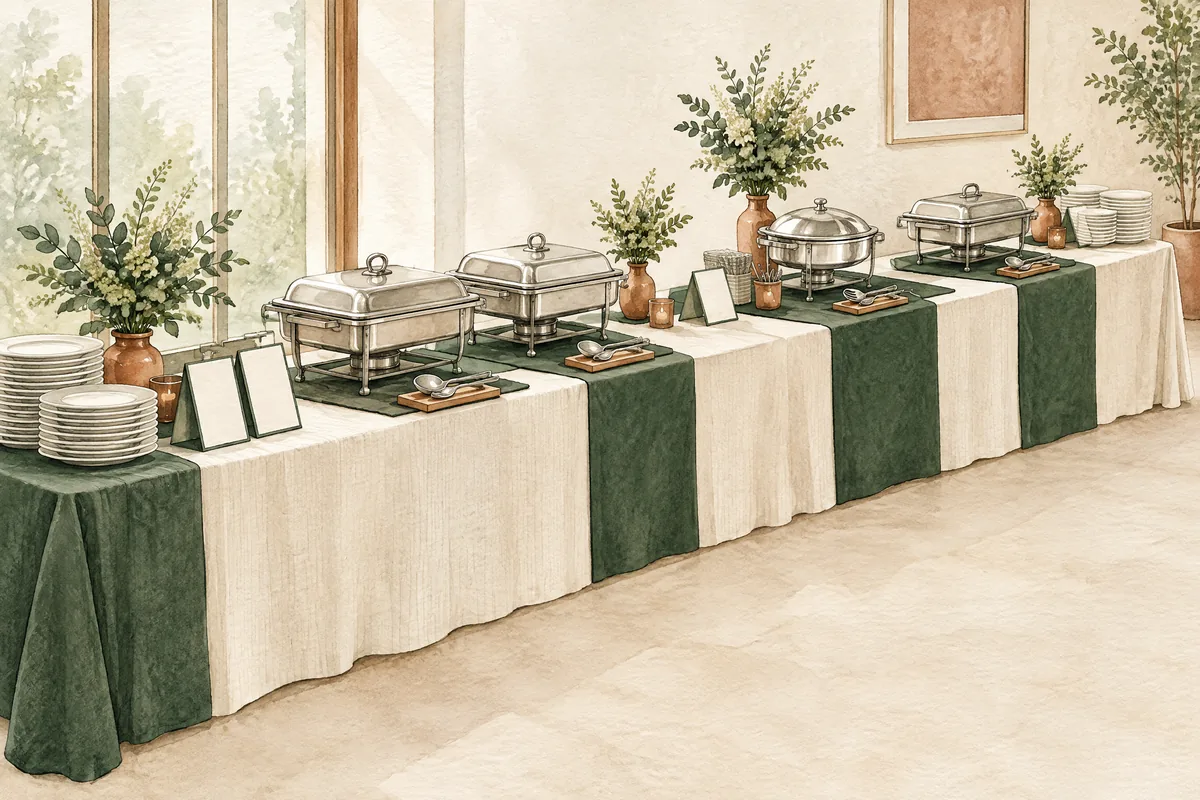
| Self-serve spread | Guests can approach the food at different times, which may suit a relaxed gathering with room for a serving point. | Who sets out and replenishes items; whether a person must portion any dish; what serving utensils, plates and clearing are included. |
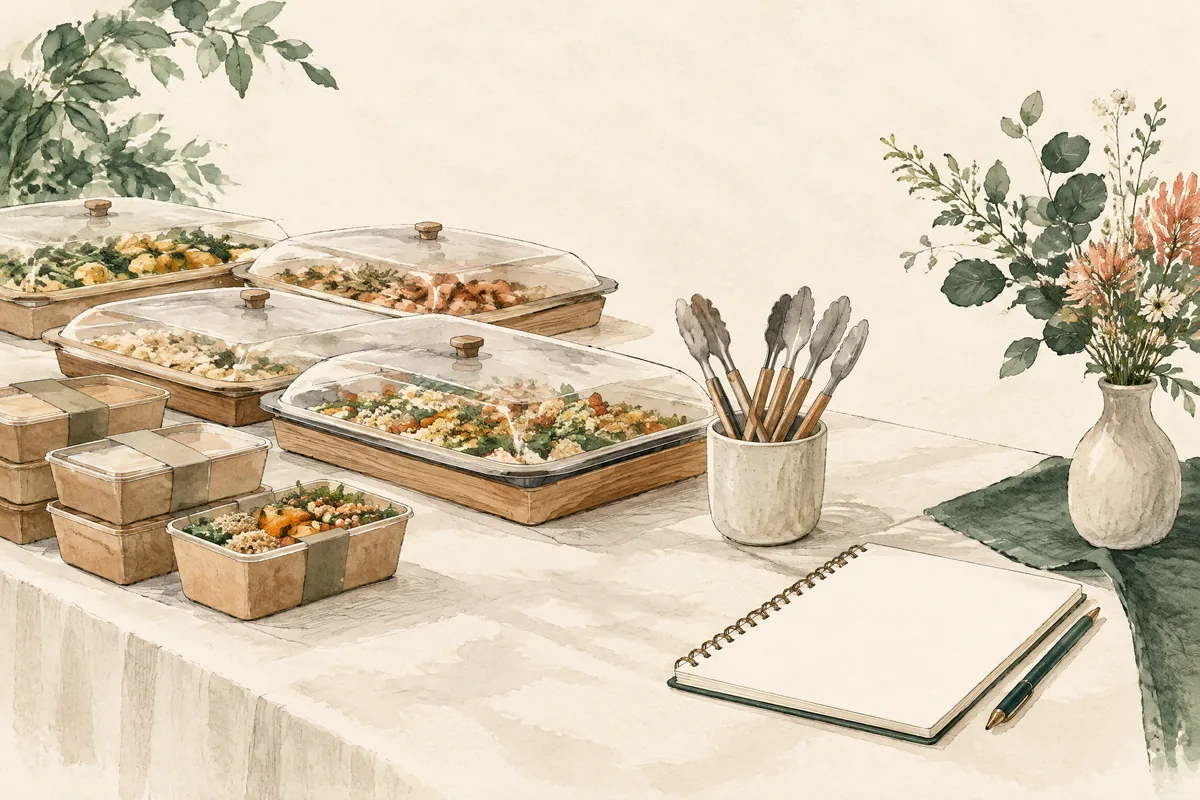
| Individually arranged portions | May make distribution easier when guests arrive in a defined group or food is intended as a short break. | How portions are counted; whether the format is available; how late attendance changes are handled; what packaging or tableware is supplied. |
| Plated service | May suit a seated moment when the host wants guests served rather than visiting a food point. | Whether staff are available, for what period, and what preparation space, access and clearing arrangements are required. |
For a dessert-led event, consider whether sweets are the whole food offer or one part of a broader tea break. A Dessert Table Catering enquiry is a relevant way to ask about a dedicated dessert display, but the page label alone does not confirm menu choices, styling, setup, serving equipment or staffing. Request a written description of exactly what is proposed, what the host must supply, and how the arrangement fits the venue and event flow.
The timing of food availability is another choice to resolve. A continuously available spread may suit guests arriving or taking breaks at different times; a defined serving window may suit a shared toast or seated moment. Neither approach is guaranteed to be available. Ask the merchant how each would affect setup, replenishment, staffing and clearing, and compare the written scope with the venue’s access limits.
| Approach | Possible fit | Questions to confirm |
|---|---|---|
| Food available across a wider event window | Guests may arrive or take breaks at different times. | How long can food remain available, who replenishes it, and what are the setup and clearing arrangements? |
| Defined serving window | Guests can gather around a planned tea break, toast or activity. | What are the agreed serving times, how does the venue’s access window affect them, and who handles any delay? |
4. Turn broad enquiries into answerable requirements
An enquiry such as “something nice for a birthday” leaves important decisions open. Give the merchant a short brief: occasion and purpose; date and event window; planning location; estimated attendance and final-count deadline; preferred service format; venue access limits; and any dietary requests that need discussion. Ask for an itemised response separating food from any setup, staff, equipment or clearing. Do not infer that an item is included because it appears in a photograph, page title or general description.
The University of California San Diego recommends explaining an event’s purpose and whether it includes performances, remarks or presentations, since those details affect timing, staffing, menu and service-format planning 3. Its guidance is an example of questions to raise, not a rule for Hong Kong events. Apply the idea to a birthday: if there will be a toast, games or a cake moment, tell the supplier when those occur and ask how the proposed service can work around them. Confirm the actual serving, setup and collection times rather than assuming a standard duration.
Use direct questions. What is the proposed menu and portion basis? What is not included? What is the deadline for the final guest count? How are late additions treated, and could they change the amount payable? Which dietary requests can be addressed, and what information is available about ingredients and cross-contact? What happens if access or timing changes? Ask for any price, minimum, cancellation term and additional charge in writing; none is established by this guide.
For a workplace birthday or a celebration attached to a learning session, the FlintHub corporate training hong kong resource reconnects event planning with learning and activity coordination. It is not a catering offer and does not imply that any FlintHub course includes food, flowers, gifts or venue service. Keep the learning plan and the merchant’s food proposal as separate decisions, then coordinate their timings if they share a space.
5. Use the birthday dessert and tea sequencing sheet
The worksheet below is a practical run-through for the organiser. Fill it in before requesting a proposal, then send relevant details to the merchant. Leave unknown items marked “confirm in writing” rather than guessing. Its purpose is to expose dependencies—such as a toast happening while guests are queuing—not to prescribe a standard schedule or guarantee that a supplier can meet a requested arrangement.
Birthday dessert and tea sequencing sheet
- Purpose: Is tea the main food, a short pause, or a dessert moment? What should guests be doing during it?
- People: Estimated attendance: __. Expected final-count deadline: _. Who will approve a revised count: ___?
- Sequence: Guest arrival: __. Food available from: _. Toast, cake or activity: . Food service ends: ___. Write “to confirm” where times are not agreed.
- Format: Compare self-serve, individually arranged portions and plated service. Preferred option: __. Why does it fit the room and guest flow? ____.
- Needs to discuss: Dietary requests or access considerations: __. What information must the merchant provide? ____. Do not record a request as accommodated until confirmed.
- Venue and handover: Address or planning location: __. Approved access and unloading point: _. Venue contact: . Organiser’s on-the-day contact: ___.
- Written scope: Menu and portion basis: __. Staff and service period: _. Tableware and equipment: . Setup, replenishment and clearing: . Charges, deadlines and change terms: ___.
- Decision: Open questions: __. Person responsible for each answer: _. Approval date: ___. Keep the final written proposal and venue instructions together.
The worksheet is deliberately specific about responsibilities. If the merchant confirms delivery only, for example, do not translate that into a promise of setup or service. If a proposal mentions staff, ask what tasks they will do and when their attendance ends. The Georgia Tech event checklist recommends discussing service expectations such as server coverage and table clearing 4. The supplied evidence does not establish a universal staffing ratio or what any supplier provides. Treat that checklist as a prompt, not as evidence of a YumYum service commitment.
6. Coordinate handover, access and exceptions
Food planning can fail at the handover even when the menu is settled. Confirm the venue’s permitted arrival window, delivery or unloading point, route to the serving area, and who can receive the order. Ask whether setup is proposed, who provides any tables or equipment, and what happens to packaging or used tableware. The answers should identify responsibility, not simply say “as usual.” Venue rules and merchant arrangements vary; no delivery punctuality or onsite service is promised here.
Make a compact event run sheet for the organiser and relevant venue contact. Include the agreed arrival and serving windows, the person to call if access changes, the point where food will be placed, and the latest approved guest count. Share the same version with the people who need it. If there is a toast or activity, avoid placing food collection at the same moment unless the organiser has deliberately chosen that flow.
Keep exceptions visible. A late guest, changed room, revised count or delayed activity may affect the proposal, but the consequences are merchant-specific. Ask in advance which changes can be accepted, by what deadline, and whether they alter charges or the service arrangement. Do not assume an adjustment is approved until the supplier confirms it. A plan with named contacts and written decisions makes it easier for the host to respond without inventing terms on the day.
7. Resolve open questions before approval
Before approving a birthday tea proposal, compare the written scope with the event plan. Check that the menu, quantity basis, service format and relevant times are clear. Check who supplies tableware and equipment, whether setup or clearing is included, and which party handles each handover. Confirm the final-count deadline, how requested changes are treated, and all stated charges and terms. A blank or vague answer is an open question, not an implied inclusion.
A birthday gathering may be informal, but approval still deserves a clear record. Save the proposal, the venue’s access instructions and any written answers in one place. Send the final run sheet to the organiser and the venue contact; share it with the supplier where relevant. If a detail is not confirmed, decide whether to ask again, change the plan or proceed without that assumption. Do not let a page label stand in for an agreed scope.
A Birthday Catering enquiry may help frame questions about an occasion-led proposal. Treat the page label as an enquiry resource, not a recommendation or confirmation of availability, contents, price, delivery, packaging or service. Ask the merchant to state in writing what any proposed option includes and whether it suits the event’s location and timing.
An Afternoon Tea Box Catering enquiry may prompt a comparison with individually arranged tea portions. The page label does not confirm availability, contents, price, delivery, packaging or service. Ask the merchant to describe the actual proposed items and responsibilities in writing before deciding whether this format fits the event.
FAQ
Should birthday tea replace a meal?
That depends on the event’s purpose, duration, attendance and what guests expect. Describe whether tea is a light break or the main food offering, then ask the supplier to explain its menu and portion assumptions. This guide cannot prescribe an appropriate quantity or establish a standard serving size.
Is a buffet always easier than plated service?
Not necessarily. UC San Diego’s service guidance notes that a buffet may require less staffing but can still need someone to portion a main dish; plated service needs more staff and preparation space. These are comparison points, not a guarantee about a particular proposal.
When should I provide the final guest count?
Ask the merchant for its own deadline before approving the proposal, and record the answer. The deadline and any effect of late additions are open merchant details, not fixed by this guide. Share changes promptly and wait for written confirmation of any revised scope or charge.
Can I rely on a menu description for dietary needs?
No. Treat a dietary request as something to discuss directly with the merchant. Ask what ingredient and handling information it can provide and what it cannot confirm. This article makes no allergy, cross-contact or medical-diet assurance; do not infer suitability from a menu label.
What should I confirm with the venue?
Confirm permitted access and arrival windows, the unloading point, serving location, available space and the venue contact for the day. Ask separately about tables, equipment, setup and clearing. These are planning questions; the guide does not establish venue permissions or merchant responsibilities.
Editorial disclosure
FlintHub Academy and YumYum have the same owner. This article was prepared with AI assistance as an editorial planning guide, not as an independent recommendation or a review of a merchant’s services. FlintHub Academy does not claim medical, veterinary or professional qualifications. Hong Kong is discussed only as a possible planning context, not as evidence of a branch or service availability. University event guidance cited here is an example for planning questions, not Hong Kong law. Open merchant details require written confirmation. No FlintHub course is represented as including gifts, food, catering or flowers. Editorial preparation date: 2026-11-10; this is not a stated publication date.
References