1. Start with the decision, not the occasion
A new baby, birthday or graduation can make gift shopping feel straightforward: choose something that suits the event and wrap it. But a family milestone may involve several people with different needs. The person being celebrated may not be the person who will use or eat the gift, and the family may have preferences that are not obvious to an outside guest. Start by deciding what your gift is meant to do: mark the occasion, offer a practical item, provide a shared treat, or let the recipient choose for themselves.
Think of those as different purposes, not interchangeable descriptions of one perfect present. A decorative keepsake can carry meaning without being used by a child; a food gift may be intended for adults rather than the baby in the household. In Hong Kong, where a gathering may involve relatives, friends and visitors arriving at different times, planning context matters too: consider who can receive the gift and where, without assuming any particular venue or delivery arrangement.
2. Map the recipient and actual user
Before browsing, make a short list of the people affected by the gift. For a baby milestone, distinguish the baby from the parents or other caregivers. For a birthday or graduation, ask whether the named recipient prefers a personal item, something useful for the household, or a shared celebration. If you do not know, a low-pressure question to the host can prevent an otherwise well-meant present from being unsuitable or difficult to accommodate.
For a toy or children’s product, check the actual product’s age guidance rather than relying on a label such as “baby gift” or “full moon.” Hong Kong Customs advises against giving children under three toys marked as suitable only for ages three and above, and warns about small toys or detachable parts that young children could swallow or inhale. Those points are selection considerations, not proof that a particular item is safe. Customs also describes bilingual warning and identification requirements for toys and children’s products covered by the relevant rules; they do not apply indiscriminately to every family gift 1.
Food needs its own conversation. Ask the recipient or host about known dietary restrictions before choosing, then check the current package information for the specific product. FARE advises people with food allergies to reread packaged-food labels each time, because ingredients and manufacturing processes can change; if the ingredient information or possible cross-contact is unclear, ask the manufacturer. A missing precautionary warning is not a guarantee that a product is suitable. This is a reason to confirm details, not a basis for promising an allergy-safe gift 2.
3. Compare the kinds of gift that could work
A useful comparison begins with the recipient’s priorities, not a ranking of products. A keepsake can be meaningful but may need display space; a practical item can be useful but risks duplicating something already owned. Shared food can suit a gathering, but the giver should establish who will eat it and whether its ingredients work for them. A flexible choice can respect personal preferences, though it may feel less individually selected. The table below compares approaches rather than endorsing any merchant or item.
| Approach | May suit when | Ask or check before choosing |
|---|---|---|
| Keepsake or personal item | The recipient values a lasting reminder or personal gesture | Is there room for it, and does the recipient prefer this kind of item? |
| Practical household or child-related item | The family has identified a genuine need | Is it already owned, and are age guidance and relevant labels clear? |
| Shared food or drink | The intended recipients have agreed it fits the occasion | Who will consume it? What are the current ingredients and any restrictions? |
| Flexible contribution or recipient choice | Preferences are unknown or the family wants to decide later | Is this form of gift welcome, and can the recipient use it as intended? |
For a new baby celebration, Full moon gift sets may be a page label to review when considering a milestone-themed option; it does not establish what a particular set contains or whether any item is suitable for a baby. Identify the intended user, ask the family what would be welcome, and confirm the current contents and relevant details directly with the merchant before relying on them.
For a birthday, Birthday basket is a page label to review as a possible theme, not confirmation of a product’s contents, ingredients or availability. Ask the recipient or host what would be welcome, identify who would eat any food, and request written confirmation of relevant details from the merchant before making a decision.
4. Turn the occasion into specific questions
Once you have a possible direction, replace vague assumptions with a few clear questions. “Is this suitable for the family?” is difficult to answer if nobody knows who will use it. Instead ask: Who is the intended recipient? Is the gift for the child, the caregivers, or everyone at the gathering? For a food item, who is expected to eat it, and what current ingredient information can be checked? For a toy or children’s product, what age guidance and warnings appear on the actual item?
Make the questions proportionate. You do not need to interrogate a family about private details; a simple “Would a non-food gift be easier?” can be more considerate than asking for sensitive information. If a detail matters and the host cannot confirm it, choose another approach rather than filling the gap with a guess. For occasions that include food and guests, our guide to housewarming party catering offers related event-planning prompts. It is a separate FlintHub learning resource, not a catering offer or part of any gift arrangement.
Keep a record of what you still need to verify. Open details can include what a gift actually contains, whether substitutions are possible, how it will be presented, or whether a recipient can receive it at the proposed place and time. These are questions for the relevant merchant or host to confirm in writing; this guide does not establish any merchant’s product range, prices, availability, delivery, or service terms.
5. Use the recipient-choice cards
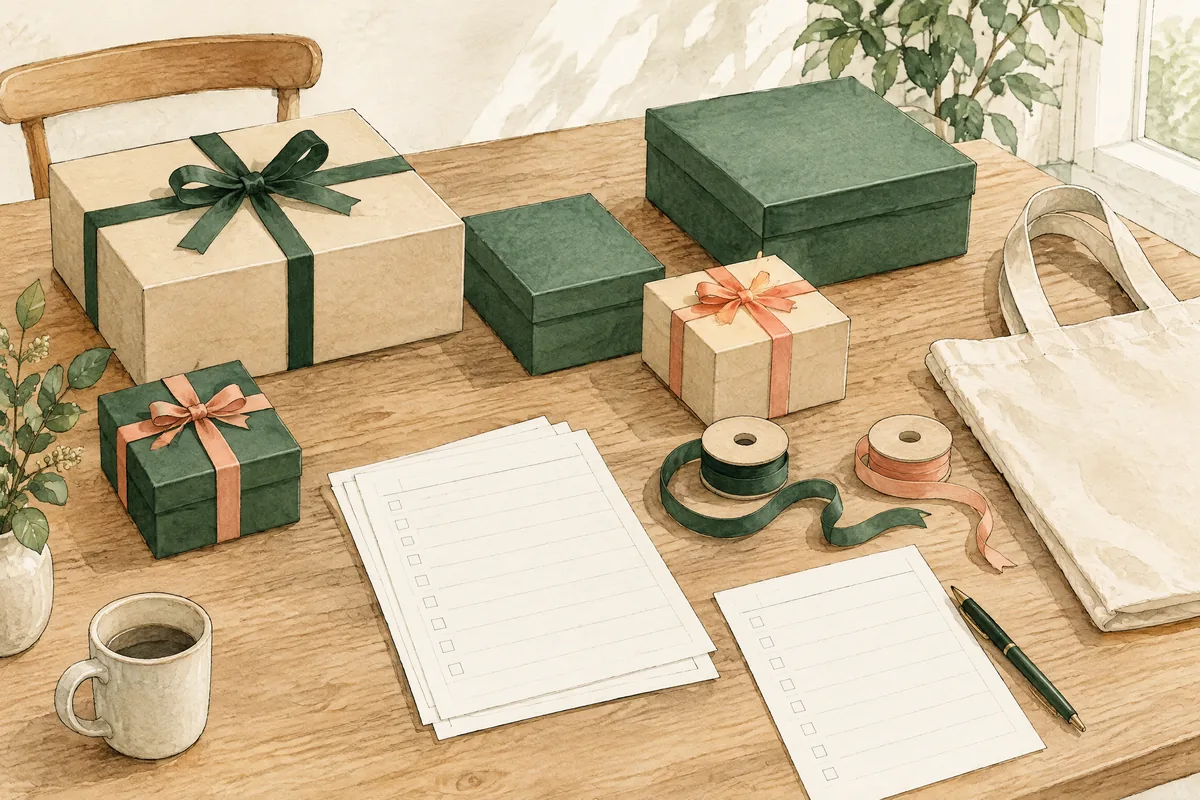
Use these cards as a practical worksheet. Fill them in before committing; if a key answer is unknown, mark it “ask” rather than treating an assumption as confirmation.
Card A — People: Milestone: __. Named recipient: _. Actual user or users: . Who can answer questions on the recipient’s behalf? ___.
Card B — Purpose: The gift is meant to: mark the occasion / be useful / be shared / let the recipient choose / other: __. The recipient has expressed a preference for: _. What would make a gift inconvenient or unwelcome? ___.
Card C — Relevant checks: If food: intended eaters __; restrictions to confirm _; current ingredient information checked with on . If a toy or children’s product: intended age ; age guidance and warnings checked on the actual product: yes / no. Other relevant details to verify: ___.
Card D — Practical handover: Who will receive it? __. Confirmed place and time, if applicable: _. Is the proposed handover acceptable to the host? . Written merchant details still needed: ___.
Finish with a decision: proceed with this option / ask one more question / choose a different type of gift. These cards are not a safety inspection or a guarantee. They make uncertainty visible so that you can avoid relying on a product name, past experience, or a well-intentioned guess.
A child-related activity may be part of a family celebration, but it should not be assumed to be included in a gift. FlintHub’s kids workshop hong kong page is a separate learning and activity-planning resource; it does not describe a bundled gift, food, catering or flowers. If an activity is being considered separately, check its own details and suitability with the relevant organizer.
6. Plan the handover and compare fallback choices
A thoughtful choice can still become awkward if the handover is unclear. Check with the host before sending anything to a private address, workplace or event venue. Confirm who is authorized to receive it, whether the timing works, and how to handle a change in plans. Do not assume a gathering venue accepts deliveries or can store a gift. If a merchant is involved, request written confirmation of any details you need, such as what is included, the recipient or location served, and applicable timing or change arrangements. Treat unanswered questions as unresolved.
A fallback is useful when a specific item depends on information you cannot get. The comparison below helps distinguish a considerate alternative from simply pushing ahead with uncertainty.
| If this remains uncertain | A reasonable alternative to consider | Why it can be more considerate |
|---|---|---|
| The family’s food restrictions or the product’s current ingredients | Choose a non-food present, or ask the host to suggest an option | Avoids making a guess about what someone can eat |
| The child’s age or the product’s relevant guidance | Hold off on a child-directed product and choose something intended for the adults | Keeps the gift decision separate from an unverified age assumption |
| Whether the family wants another item | Ask about a preference or offer a flexible form of gift | Gives the recipient more control and can reduce unwanted duplication |
| The location or timing for a handover | Wait for an agreed arrangement or deliver the gift personally when invited | Avoids assuming a venue or another person can receive it |
Graduation is often a milestone for an individual, even when family members gather to celebrate. A Graduation basket page name may help frame an enquiry about a themed present, but it does not verify any current contents, ingredients, suitability or availability. Ask the graduate or host what would be welcome, and seek written confirmation of any merchant details that affect your choice before treating them as settled.
7. Resolve open questions before approval
Before you decide, review your worksheet and separate confirmed facts from unanswered questions. A product description or occasion label may suggest a theme, but it does not tell you who should use the item, whether a particular family wants it, or whether its current details match their needs. For a children’s product, look at the actual age guidance and warnings. For packaged food, check the current information and ask the manufacturer if a detail is unclear. Neither step amounts to a guarantee of complete safety or suitability.
If a proposed gift depends on a claim about nutrition, growth or a child’s special dietary needs, leave that judgment outside the gift-selection process. Ask the caregiver whether there is a particular item they actually want, rather than selecting a product because its description sounds beneficial. Do not suggest replacing the family’s existing arrangements. If the choice still depends on an unresolved health question, consider a different kind of present. For ordinary gift planning, focus on the recipient’s stated preferences rather than health claims.
Finally, confirm the practical terms with the person responsible: contents, any requested options, handover details, and what happens if plans change. Do not infer a price, delivery promise, product composition, or service scope from this editorial guide. A considerate gift is not necessarily elaborate; it is one chosen with the recipient in mind and with important unknowns acknowledged rather than disguised.
Frequently asked questions
What makes a family milestone gift thoughtful?
A thoughtful gift reflects the recipient’s preferences and the occasion without assuming that every family wants the same thing. Identify who will actually use or eat it, check relevant details, and ask before choosing when an uncertainty could make the gift inconvenient.
Should a baby milestone gift be intended for the baby?
Not necessarily. A gift may be intended for parents or caregivers rather than for a baby to use or eat. If considering a toy or children’s product, check the actual age guidance and warnings; a milestone-themed name does not establish suitability.
How should I choose food for a family celebration?
Ask the intended eaters or host about relevant restrictions, then check the current package information for the specific item. If ingredients or possible cross-contact are unclear, ask the manufacturer or choose a non-food alternative rather than promising it is suitable.
What if I do not know what the recipient wants?
Ask a low-pressure question or choose a flexible option that allows the recipient to decide. You can also ask the host whether a practical, personal, shared, or non-food gift would be welcome. Avoid treating a guess as a confirmed preference.
What details should I confirm before arranging a handover?
Confirm who will receive the gift, the agreed place and timing if relevant, and any merchant details that matter to your choice. Ask the responsible party in writing about open questions; do not assume a venue accepts deliveries or stores gifts.
Editorial disclosure
FlintHub Academy and YumYum have the same owner. This article was prepared with AI assistance on 2026-11-10; that is the editorial preparation date, not a confirmed publication date. It is not an independent recommendation or endorsement of YumYum or any product, merchant, or service. FlintHub Academy is an editorial and learning resource; it does not claim medical, veterinary or professional qualifications. Hong Kong references are planning context, not claims about a branch or service location. The cited government guidance should not be treated as a blanket assessment of any particular gift. Confirm product-specific information with the responsible source.
References