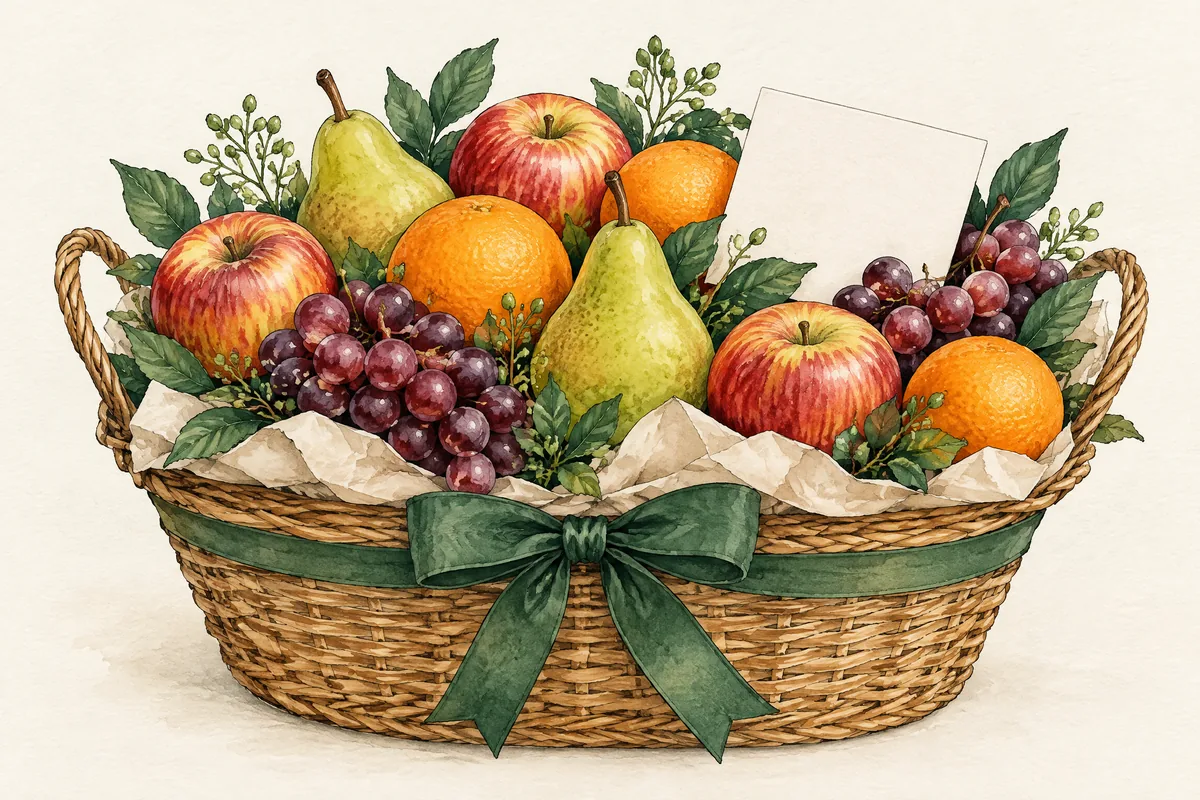
A fruit gift may seem straightforward to arrange, but a hospital’s rules, the recipient’s circumstances and the handover all matter. The safest first step is not choosing a basket: it is confirming that the recipient wants one and that the actual ward can accept it. Use the questions and decision aid below to turn an uncertain idea into a clear, permission-first plan. Hong Kong locations here are planning contexts only, not claims about branches or local delivery coverage.
1. Resolve permission before choosing a gift
Treat permission as two separate checks. First, ask the recipient, or someone they have authorised to speak for them, whether fruit would be welcome and manageable. Then ask the actual hospital or ward whether outside food is permitted, what kinds of packaging it accepts and how a delivery would be received. A family member’s approval does not replace ward permission, and a ward’s general answer does not establish that a particular patient can eat a particular food.
Policies can differ between hospitals and change over time. For example, Shatin Hospital’s June 2026 admission notice says it does not encourage bringing in food that needs preparation or storage, and it says the hospital cannot take responsibility for storing, heating or refrigerating such food. That is a specific hospital’s guidance, not a rule for every Hong Kong hospital. The notice also says patients may have special dietary requirements, so ask the recipient’s care team about any medical restriction rather than guessing from preference or appearance 1.
Record who gave permission, when you checked and what exactly they approved. If the answer is unclear, conditional or based on an outdated message, pause rather than treating silence as approval. Keep the gift optional: it should not create pressure for the patient or their family to accept, store or distribute food they do not want.
2. Map the recipient’s needs before selecting fruit
Ask a small number of respectful questions before comparing products: Does the person want fruit? Is there a limit on how much they can keep or manage? Are there specific foods, textures or other restrictions that their care team has identified? Would a card or a visit be more welcome? Do not ask someone to disclose more health information than needed to decide whether the gift is suitable.
Medical diets, allergies and swallowing concerns require the recipient’s clinician or dietitian to confirm what is appropriate. Do not infer suitability from a diagnosis, age, familiar preferences or the fact that fruit looks soft or easy to eat. Shatin Hospital’s notice specifically advises patients to tell medical staff about food allergies and to follow hospital advice on food texture and drink thickness when there is a choking risk 1. This is an example of that hospital’s guidance, not a Hong Kong-wide protocol or an invitation to make a clinical judgement yourself.
Consider the practical burden, too. A large arrangement may take up bedside space, be difficult to carry or leave the recipient responsible for sharing or disposing of food. Ask about a modest quantity and whether an uncut selection is preferable. If the recipient cannot answer, ask an appropriate family contact whether they can check with the care team; do not treat uncertainty as permission.
For organisers planning an activity rather than a personal gift, our eco-workshop food planning article can reconnect this decision to FlintHub learning about workshop planning and food choices. It is a learning resource, not a catering offer or evidence that any course includes food. Keep the hospital gift decision separate from any event plan and confirm the ward’s requirements independently.
3. Use a permission-first call script
A short, neutral enquiry helps you avoid promising a delivery before you know the rules. Call the ward or the hospital contact it directs you to, and make clear that you are asking about a possible gift, not assuming the hospital will receive it. If the person answering cannot confirm the relevant details, ask which team or contact can. Write down the answer and any conditions in the caller’s own words; request written confirmation when possible.
Practical call script
- “I’m considering sending a small fruit gift to a patient on [ward]. Is outside food currently accepted for this patient or ward?”
- “Are there restrictions on fresh fruit, packaging, size or items that need refrigeration or preparation?”
- “May a delivery be brought to the ward, or must a named visitor hand it over? Who, if anyone, is authorised to receive it?”
- “What current visiting or access arrangements should I check, and when should I call again if those arrangements change?”
- “If the patient has a medical diet, allergy or texture restriction, should their care team confirm suitability before anything is brought in?”
- “Could you repeat the agreed handover details, and tell me how I can receive confirmation in writing?”
Do not ask ward staff to make a medical decision for a person they are not authorised to advise about, and do not ask them to guarantee an item’s safety. The purpose of the call is to establish the hospital’s process and identify who can answer remaining questions. Bristol NHS Foundation Trust’s external-food guidance, for example, describes its own process for food gifts arriving on a ward; it is an example from a UK hospital, not a Hong Kong rule 2.
4. Turn enquiries into requirements you can verify
After the call, separate confirmed requirements from unresolved questions. A useful note should identify the hospital and ward, the date and time of the enquiry, the contact or team, whether outside food is accepted, any restrictions stated, the permitted handover method and the next step for medical-diet questions. Avoid recording unnecessary health details. If a staff member says to check again nearer the intended date, mark that as an open item rather than treating the earlier conversation as permanent approval.
You can use this worksheet as a decision aid:
- Recipient: Has the person or an appropriate contact said the gift is wanted? If not, stop and ask before selecting anything.
- Ward permission: Who confirmed that outside fruit is currently acceptable, and when? If no authorised answer is available, hold the plan.
- Suitability: Has the recipient or care team confirmed any relevant dietary, allergy or texture restrictions? If uncertain, do not choose food on their behalf.
- Item limits: What type, quantity, packaging and storage conditions did the ward actually allow? Write “not confirmed” where there is no clear answer.
- Handover: Who may bring or receive the gift, where and during what confirmed access window? Do not assume a reception desk or ward will accept it.
- Fallback: If rules change, the recipient is unavailable or the item cannot be received, what non-food message or alternative would the recipient prefer?
Set a decision point: proceed only when the recipient’s wishes, ward permission, suitability questions and handover details are all adequately resolved. Otherwise, choose a non-food gesture or wait for a clearer opportunity. This is a planning filter, not a guarantee that a hospital will accept a gift on arrival.
5. Compare workable choices, not just attractive baskets
Once permission and suitability are established, compare the practical options against the ward’s actual conditions. A fruit gift is not automatically preferable to a card, and a smaller or simpler choice may be easier to manage. Ask what can be accepted before considering presentation, quantity or product details. Any merchant-specific item, substitution, delivery method, timing or price remains a question for written confirmation; this article does not verify those details.
| Option | When it may fit | What to confirm before deciding |
|---|---|---|
| Small selection of whole fruit | The recipient wants fruit and the ward permits the item and its packaging | Allowed type and quantity, recipient suitability, handover and any storage expectations |
| Pre-cut or prepared fruit | Only if the recipient wants it and the care team and ward have confirmed it is appropriate and acceptable | Medical suitability, refrigeration and prompt handover; do not assume a delivery maintains a cold chain |
| Card or non-food message | When permission, diet, storage or recipient preference makes food uncertain | Whether a visitor or hospital contact can pass it on, and any applicable access arrangements |
A general food-safety page is not a product certification. Hong Kong’s Centre for Food Safety advises selecting fresh fruit without damage or bruising and discarding fruit that is rotten; those observations do not prove that an item is free from microbial contamination or establish the quality of any particular basket 3. Its guidance for fruit products also includes following labelled storage directions and avoiding products with damaged packaging, signs of spoilage or a passed use-by date. Do not assume that every whole-fruit gift has the same labelling or storage conditions.
If prepared, cut or peeled fruit is being considered, the Centre for Food Safety’s guidance says ready-to-eat pre-cut fruit should be purchased properly refrigerated, and cut or peeled fruit not eaten immediately should be kept at or below 4°C; if cumulative time at room temperature exceeds four hours, it should be discarded. This advice covers handling circumstances described by the source; it does not show that any supplier or delivery route has maintained refrigeration. Ask the relevant provider for product-specific details in writing and do not proceed if the hospital cannot receive the item appropriately.
6. Coordinate the handover and plan for exceptions
| Handover option | Responsibility to settle | When to pause |
|---|---|---|
| A named visitor carries the gift | Visitor confirms access, permitted item and direct recipient handover | The ward has not approved the visitor or food |
| A delivery service brings the gift | Ward and transaction party confirm receiving point, contact and timing | No authorised receiver or workable access arrangement is confirmed |
| Defer food and send a message | Recipient or family confirms how a message may be passed on | Even message handover is unresolved; ask before dispatch |
A delivery address alone is not a handover plan. Confirm whether the hospital permits a courier, whether a named visitor must bring the gift, which entrance or contact point applies, and whether the recipient will be able to receive it. Never presume staff will store a basket, refrigerate it, carry it to a patient or contact the sender. If the ward has not confirmed an authorised recipient and workable handover, do not dispatch.
Check access and visiting arrangements close to the intended time. Shatin Hospital says visiting times may change in response to infection-control arrangements and directs visitors to follow ward staff instructions; its notice is specific to that hospital and may not describe current arrangements elsewhere. The NHS also advises visitors to check with a ward because some foods may not be allowed, and cautions against gifts cluttering the patient’s bedside. That is general UK guidance, not a Hong Kong policy; the page states that it was last reviewed on 14 April 2023, and its scheduled review date has passed as of 10 November 2026. Together, these examples show why the actual hospital’s current answer matters more than a general assumption 1; 4.
Agree in advance what happens if the patient has moved, is unavailable, the ward changes its rules or a delivery cannot be accepted. A sensible fallback might be to cancel, defer or switch to a message, but only choose an option that respects the recipient’s wishes. For organisers considering food as part of a separate activity, our parent-child workshop food planning resource reconnects to FlintHub learning and activity planning; it does not imply catering is supplied with a course, nor does it replace hospital approval for a personal gift.
If you are making a merchant enquiry, keep it factual and specific. For example, Gift basket delivery is an enquiry resource for asking what delivery arrangements may be available; the page is not an endorsement or confirmation of hospital access, timing, stock or terms. Request written answers about the particular item, delivery method, recipient details and any exceptions, then compare those answers with the ward’s permission before committing.
7. Close open questions before approval
Use a final go/no-go review, not a last-minute assumption. Proceed only if the recipient wants the gift, the actual ward has confirmed that the proposed food and handover are acceptable, any medical suitability question has been referred to the right care professional, and the practical arrangements are clear. If a required answer is missing or has changed, pause and reconfirm. A previous acceptance at another hospital, or for another patient, does not establish permission here.
When those checks are complete, keep the plan modest and make the handover instructions easy to follow. Confirm the recipient’s name and ward through an appropriate contact, but share only information necessary for the agreed arrangement. Avoid asking a patient or staff member to take responsibility for food storage that has not been confirmed. If you need a selection guide, Hospital fruit basket is a page to consult for shopping questions, not proof that a specific basket is appropriate, accepted or available. Treat product contents, substitutions and terms as open merchant details until confirmed in writing.
The Best fruit basket page is an enquiry label, not a ranking or proof of suitability. Confirm the actual contents and handover with the transaction party and ward; let the recipient decline the gift.
Frequently asked questions
Can I assume a hospital in Hong Kong accepts fruit baskets?
No. Hospital and ward rules may differ, and arrangements can change. Ask the actual ward whether it currently accepts outside food, what restrictions apply and how a gift may be handed over. Do not rely on another hospital’s policy or a general guide.
Should I ask the patient or the ward first?
Ask the recipient, or an appropriate contact, whether fruit is wanted, then check the actual ward’s rules. If the patient has a medical diet, allergy or texture concern, ask their care team to confirm suitability. Neither preference nor ward permission replaces the other.
Is whole fruit suitable for someone with a medical diet?
Not necessarily. Do not infer suitability from the food, diagnosis or the person’s usual preferences. Ask the recipient’s clinician or dietitian to confirm any relevant restrictions. If you cannot get an appropriate answer, avoid choosing food on the person’s behalf.
Can a hospital keep a fruit gift refrigerated for the patient?
Do not assume that it can. Ask the ward whether storage is available and whether it accepts the proposed item. Shatin Hospital’s notice says it cannot take responsibility for storing, heating or refrigerating food that needs storage or preparation; other hospitals may have different arrangements.
What should I do if the ward will not confirm delivery details?
Pause rather than sending a basket to a general address and hoping someone receives it. Ask which contact can clarify the process or choose a non-food gesture. Confirm the recipient’s wishes again if plans change, and do not treat silence as permission.
Editorial disclosure
FlintHub Academy and YumYum have the same owner. This article was prepared with AI assistance and is not an independent recommendation. FlintHub Academy is not acting as a merchant or professional practitioner here, and no medical, veterinary or other professional qualifications are claimed. The article is general planning information, not medical advice, a product assessment or a promise about any merchant’s stock, price, delivery, storage or service. Hong Kong locations are planning contexts only and are not representations of branches. Confirm current requirements directly with the recipient, relevant care team, hospital and any merchant before making arrangements.
References