1. Decide what the menu needs to do
Mixed-cuisine catering is not simply a choice between dishes from different traditions. The practical decision is how the menu should serve the event: a seated meal, a flexible reception, a training session with a break, or a family gathering where people may arrive at different times. Start with the event’s purpose, the space available and how guests will eat. Then choose dishes and service arrangements that support those conditions.
A coherent menu can draw on more than one cuisine while still having a clear shape: for example, a few contrasting main options, suitable accompaniments and a consistent approach to serving. That does not mean every dish must match. It means the selection should be intentional, with no obvious duplication and a realistic plan for how guests will access it. Treat menu pages as starting points for enquiries, not proof of a particular package, portion, service or availability.
2. Map guest needs before choosing dishes
Begin with a useful estimate of attendance, then record what you know about the group without guessing at anyone’s needs. Ask whether guests have requested particular dietary options and whether those requests need to be discussed directly with the caterer. Do not treat a menu label as confirmation that a dish meets an individual medical or allergy requirement; ask what information the supplier can provide and what it cannot guarantee.
The University of Rochester’s Green Events Handbook recommends estimating attendance accurately and planning orders strategically to reduce food waste 1. That is a planning principle, not a formula for portions. Ask the supplier how they interpret your confirmed headcount for the type of meal you are arranging, and how children, late additions or changing attendance would be handled.
For a family event or activity, consider how a meal break fits the programme and who will help participants find and collect food. FlintHub’s event catering resource can reconnect this planning question to learning and activity design; it does not mean food is included with any FlintHub course. For a workplace session, keep the food decision separate from the training plan: corporate training hong kong is a FlintHub learning route, not a bundled catering offer.
3. Run the mixed-cuisine duplication and balance audit
Use this worksheet before sending a menu enquiry. It is a practical audit, not a serving-size calculator. Write brief answers, then mark each line clear, needs a decision or ask the supplier.
- Event and eating style: What is happening, where will guests eat, and is the meal seated, self-serve or another arrangement?
- Guest estimate: What is the current attendance estimate, when will it be confirmed, and who will notify the supplier of changes?
- Menu roles: List the intended mains, sides, snacks and any other courses. Give each item one role so two dishes do not accidentally compete as the same kind of option.
- Cuisine balance: What does each cuisine contribute? Is one represented by a single token dish while another dominates the selection? If that is intentional, note why.
- Repeat check: Circle repeated ingredients, textures, sauces or preparation styles. Decide whether the repetition is useful or whether a contrasting option would make the menu feel more varied.
- Service and access: Can guests reach and identify the dishes? Who would serve, replenish or clear, if those tasks are needed? These are questions, not assumptions about what a package includes.
- Open points: Record dietary requests, serving equipment, tableware, delivery or setup arrangements, timing, fees and the name of the day-of contact as items to confirm in writing.
After the audit, read the menu as a guest would encounter it, rather than as separate cuisine lists. If two mains have similar roles, consider whether both are needed. If the selection has variety but no clear way to serve it, resolve the service question before approval. UC San Diego’s guidance notes that a self-serve buffet may need less staff than plated service, while plated service calls for more staff and sufficient kitchen preparation space 2. That university example helps frame a comparison; it does not establish what any Hong Kong supplier includes.
4. Turn menu browsing into specific enquiries
A useful enquiry names the decision you need help with. Rather than asking only for a “mixed menu,” describe the event format, estimated attendance, intended meal time and the menu roles you want to cover. Then ask which combinations are available, how the supplier describes each option, and whether substitutions or changes can be considered. Request a written breakdown so that a menu name is not mistaken for a confirmed service detail.
For instance, if you are exploring a Chinese option alongside dishes from another tradition, Chinese Food Catering can be used as an enquiry starting point. Ask which specific dishes and serving formats are currently available for your date and event, and request confirmation of portions, inclusions and any charges in writing. The page label alone does not confirm a particular menu, quantity, or service arrangement.
Do the same when considering a different style of meal. Western Catering is a page label to help direct a question about possible menu options, not an endorsement or confirmation of what is available. Specify how the dishes would fit alongside the other cuisine, then ask about serving method, accompaniments, dietary information and any equipment or staffing that would be separately arranged. Treat all unanswered points as open until the supplier responds.
5. Compare workable menu and service approaches
There is no single best mixed-cuisine format. The most useful comparison is between approaches that suit the event’s movement, space and appetite for choice. UC San Diego’s service-style guidance distinguishes buffet and plated formats, but its university event setting is an example rather than Hong Kong law or evidence of a particular merchant’s services 2. Confirm the details that apply to your venue and supplier.
| Approach | What it can make easier | What to clarify before choosing |
|---|---|---|
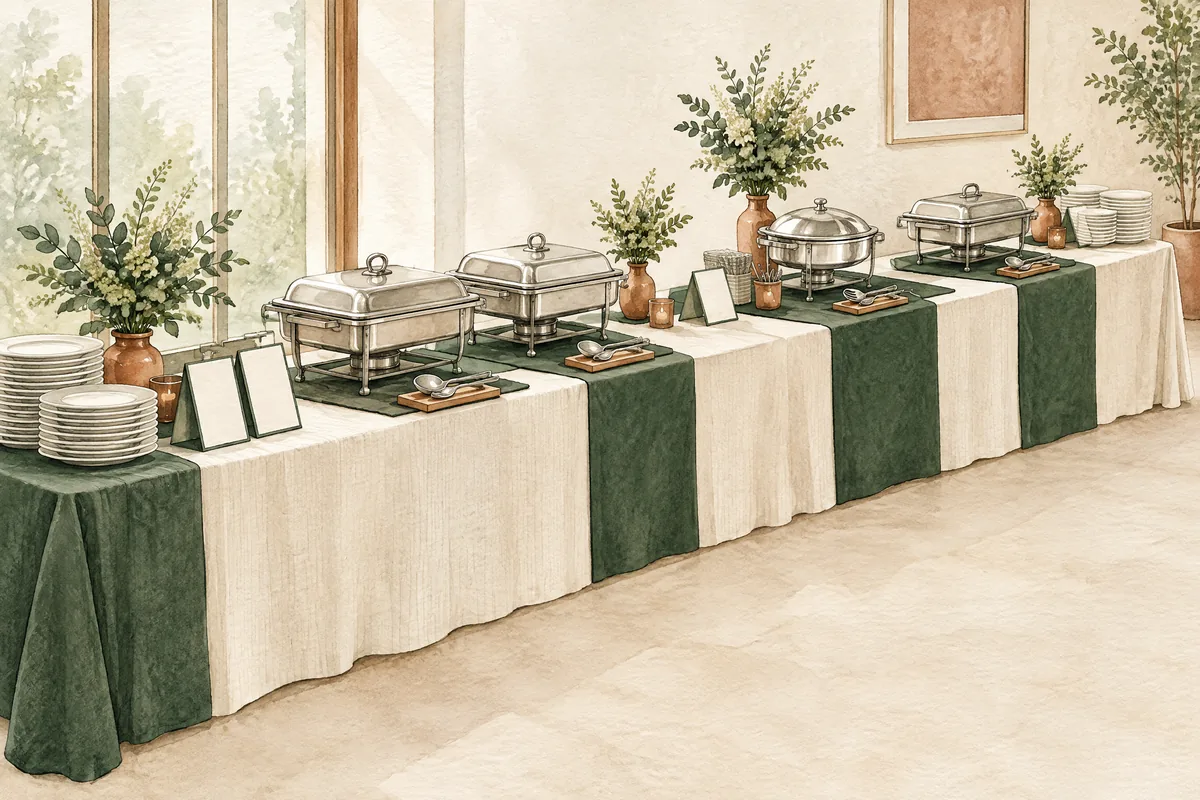
| Self-serve buffet | Guests can select from the presented choices, which may suit a group with varied preferences. | Who portions or replenishes dishes, how queues and dish identification will work, what serving equipment is included, and whether quantities are planned to avoid popular options running out early. |
| Plated meal | Each guest can be served a planned meal, which may suit a programme with a defined seated segment. | Staffing, preparation space, the process for communicating guest choices, the timing of service and whether the venue can support the arrangement. |
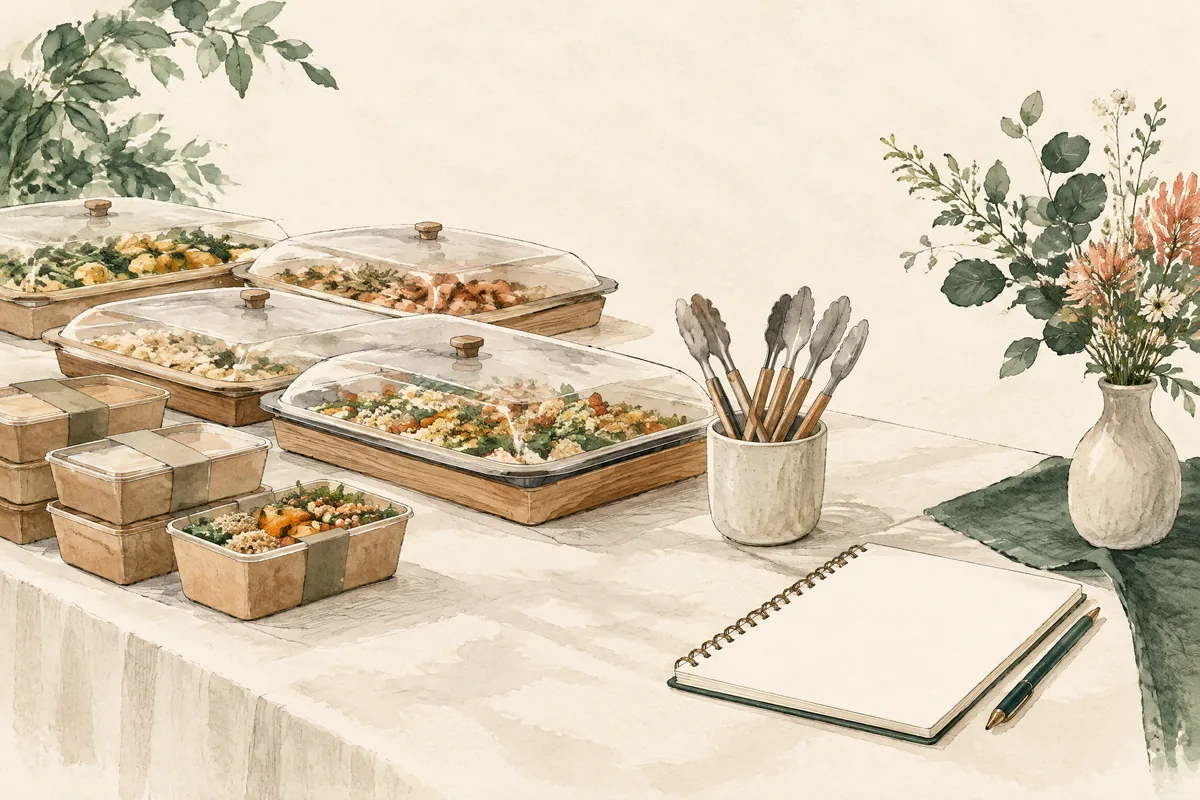
| Individually packed meal | Portions are assigned in advance, which may be useful when guests need to collect food separately. | How packs will be labelled, how dietary requests are handled, whether tableware is included and where the packs can be distributed. |
Menu balance also has alternatives. A broad selection may offer more choice, while a tighter selection can make the menu easier to explain and serve. A fixed split between two main dishes can appear fair on paper, but UC San Diego cautions that in a self-serve buffet one option may run out before everyone has a chance to choose it 4. That is a possible planning risk, not a prediction. Ask the supplier how it would plan quantities for your attendance and format; do not invent a universal ratio.
| Menu strategy | Potential benefit | Trade-off to consider |
|---|---|---|
| Broad variety across cuisines | More distinct options may make the menu feel inclusive and give guests a choice. | More dishes can increase coordination needs. Confirm labels, serving arrangements, quantities and whether the kitchen can accommodate the requested combination. |
| Focused selection with clear roles | A smaller set can be easier to present as a joined-up meal and may reduce repetition. | Fewer options may not suit every guest preference. Check whether the selection includes the roles your event requires and how requests will be addressed. |
| Shared dishes plus individual options | Combines communal choices with a defined alternative for guests who need or prefer it. | Clarify how the two formats will be kept distinct, identified and distributed, and whether any extra handling or equipment is involved. |
6. Coordinate handover, access and exceptions
Menu approval is only one part of the handover. Share the venue’s access details, the planned arrival and serving times, and any constraints on setup or collection. Ask who the supplier’s day-of contact will be and who on your side can answer questions. If there is a presentation, activity or speech, explain where the food break sits in the programme; UC San Diego’s event-planning advice makes the same general connection between event purpose, programme elements and catering choices 4. Its guidance is not a standard meal duration.
Discuss service tasks explicitly. Georgia Tech’s Event Planning Checklist suggests discussing expectations such as server coverage at tables and when tables will be cleared 3. Use those as questions, not assumptions about staffing or what is included. Confirm in writing whether staff, serving utensils, tableware, setup, replenishment, clearing or cleanup are part of the arrangement, separately charged or not offered. If your venue supplies reusable plates or cutlery, tell the supplier and ask what it will provide; do not assume either party handles washing or disposal.
A handover note can list the confirmed headcount deadline, dietary requests and the process for late changes, together with any fees the supplier has identified. Add access instructions, equipment responsibilities, setup and collection windows, and the day-of contact. Georgia Tech’s checklist is a campus event example, not a Hong Kong legal requirement or a guarantee of punctual delivery. Build the plan around written answers and the actual venue’s arrangements.
7. Resolve open questions before approval
Before approving a mixed menu, read the supplier’s written response against your audit. Check that the selected dishes, attendance basis and service style match what you requested. Where there are dietary needs, ask for the information the supplier can provide, and avoid turning that response into a guarantee of allergy safety or suitability for a medical diet. If any important answer is missing, ask again rather than filling the gap with an assumption.
A page labelled Dim Sum Catering may help you ask about a particular style of food alongside other menu choices. Request the current options, how they would be served, and whether quantities, utensils and timing have been confirmed for your event. The label is not a promise of availability or of any particular service. Record the response with the other menu decisions, then check that this addition contributes a distinct role rather than duplicating an existing dish.
Approval should capture the agreed menu and any alternatives, the confirmed guest-count process, the service format, responsibilities, timing and charges. If an item remains undecided, mark it as open and identify who will resolve it by when. This simple record helps the organiser, venue and supplier work from the same version without implying that every requested service is available. Keep a copy of the final confirmation and share relevant operational details with the people coordinating the event.
Frequently asked questions
How do I make two cuisines feel like one menu?
Give every dish a clear role, then compare the menu as a whole. Look for repeated mains, flavours or textures, and decide whether those repetitions are intentional. A shared serving approach and a clear menu description can help guests understand the selection without requiring every dish to match.
Should I choose buffet or plated service for a mixed menu?
Compare the space, guest movement, staffing needs and programme before deciding. A buffet may offer choice but needs a plan for serving and quantities; plated service needs coordination and suitable preparation space. Ask the supplier what it can provide and confirm each inclusion in writing.
How should I estimate food quantities?
Start with a realistic attendance estimate and ask the supplier how it plans quantities for your event format and menu. There is no portion formula in this guide. Confirm how the final headcount is set, how changes are handled, and what happens if attendance differs from the estimate.
What should I ask about dietary requirements?
Describe the requests you have received and ask what menu information the supplier can provide, including how options are identified. Do not assume a dish is free of allergens or suitable for a medical diet. Seek written answers and communicate any limitations clearly to guests.
When is a mixed menu ready to approve?
Approve only when the menu, headcount process, service format, timing, responsibilities and known charges are clear enough for your event. Record unresolved points with an owner and follow-up date. A menu page or verbal suggestion by itself does not confirm availability or inclusions.
Editorial disclosure
FlintHub Academy and YumYum have the same owner. This article was prepared with AI assistance on 2026-11-10; that is its editorial preparation date, not a confirmed publication date. It is not an independent recommendation. FlintHub Academy does not claim medical, veterinary or professional qualifications. The university guidance cited here comes from US institutional event-planning contexts and is used as an example of questions organisers can ask, not as Hong Kong law or evidence of any YumYum service. Any open merchant details require written confirmation.
References