
Balance a male band's group portrait by comparing each member's hair outline against the background at the intended display size, not by giving everyone the same cut. Use a spacing-and-background grid to decide which differences need a photographic adjustment and which, if any, belong in an individual grooming brief.
For adult musicians and photography learners, the goal is readable faces within a coherent group. A sharply shortened side can attract attention, but so can a dark, full silhouette beside a bright wall. Neither is automatically a fault. Start with the image's purpose, then preserve each member's choice about his own hair.
1. Choose the group frame before judging hair
Decide whether the photograph will introduce the band on a booking page, sit beside an event programme or become a small social thumbnail. A hairstyle detail visible in a close portrait may disappear when four faces share a narrow screen. Conversely, one bright side panel may remain conspicuous after finer texture has vanished.
Prepare a rough frame with the likely clothes and instruments. Look at it in the intended crop and at a small viewing size before enlarging individual heads. Ask whether every face remains identifiable, whether adjoining hair outlines merge and whether the viewer's attention follows the intended emphasis. Do not confuse equal visibility with equal prominence: a deliberately central vocalist may be part of the brief.
For a Hong Kong band moving between rehearsal-room publicity and a banquet performance, a single photograph may need several crops. Plan these uses through Live-band performance planning, while keeping the portrait brief separate from performance arrangements. A photograph with no room for a vertical crop cannot be rescued simply by tidying everyone's sides.
2. Use the spacing-and-background grid
Side contrast means the visible difference between the hair or exposed side area and what sits immediately behind it. Record it separately from face lighting. The practical question is not whose haircut is strongest, but which boundary becomes lost or unusually prominent in this particular frame.
Use three working labels: lost, readable and dominant. These describe an image, not a person's appearance. “Lost” means the outline merges at the chosen viewing size; “dominant” means it draws attention beyond the agreed emphasis. Have two learners discuss any disagreement rather than treating the labels as measured scores.
| Subject spacing | Plain, lighter background | Plain, darker background |
|---|---|---|
| Heads close together | Dark hair may separate from the wall but merge with a neighbour; open the head-level gap. | Full dark sides may merge with both neighbour and wall; change placement before grooming. |
| Clear gaps between heads | Inspect whether a light, closely shortened side becomes too prominent; adjust angle or light if needed. | Check each outer outline; try a lighter background patch or another position. |
| Staggered front and rear positions | Check that a nearer shoulder or instrument does not obscure the rear member's side. | Keep rear faces readable without making one side outline the brightest feature. |
This is a planning grid, not a universal prediction. Hair density, skin tone, background texture and lighting direction change the result. A light wall may also resemble an exposed side area rather than separate it. Photograph the actual arrangement and replace the provisional entry with what you can see.
3. Describe fade and taper by area, not labels alone
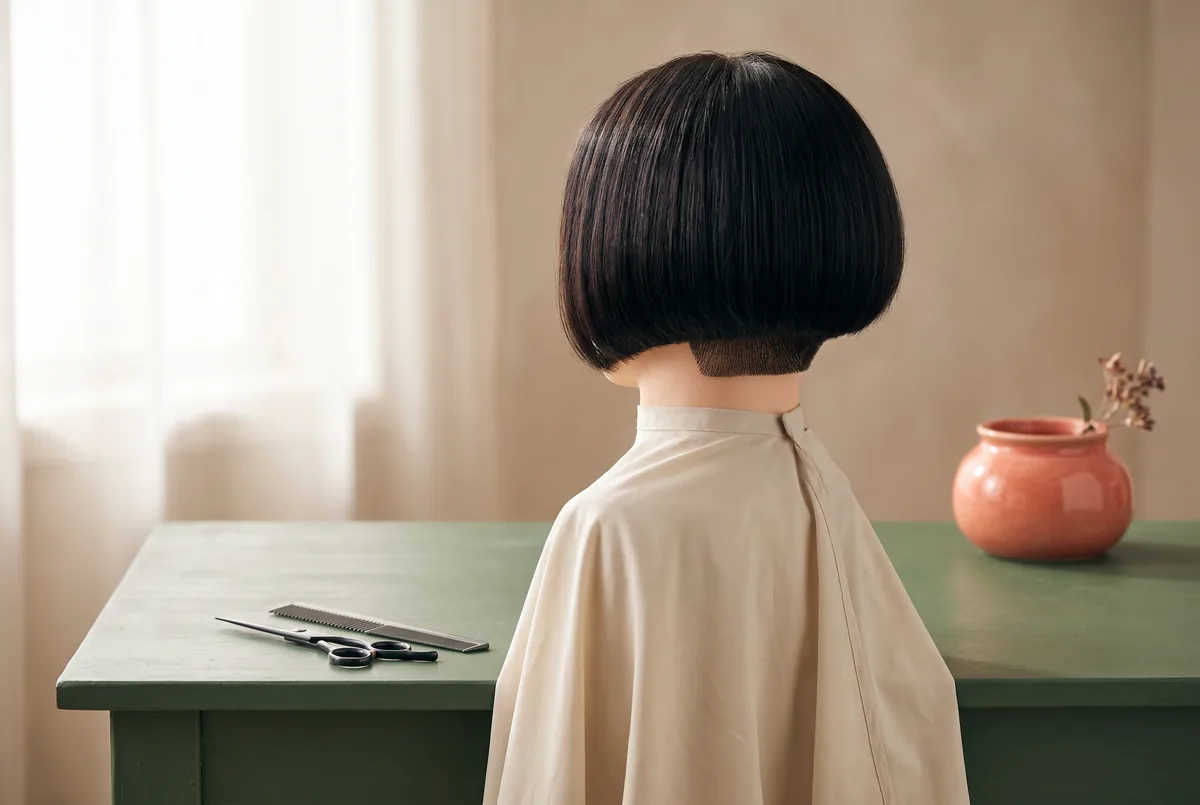
For the brief, distinguish the coverage of shortening from its shortest finish. A fade generally describes a broader short-to-long transition across the sides and back. A taper usually concentrates shortening near the sideburns and neckline while keeping more hair above. Usage can overlap, so neither word settles height, skin exposure or the connection to the top.
The Vit So guide labelled fade haircut explains transition height and side coverage as separate choices. Use it as descriptive service-related information when a member wants a wider change, not as evidence that its concept illustrations are salon results. In your group brief, mark the highest acceptable short area and describe what should remain dark and full beneath the top.
A photograph may make a transition appear stronger because of lighting, hair density or styling. “Make my sides look like this” therefore leaves several decisions unresolved. Ask whether the member wants less width, a visible gradient, a clearer ear area or simply a softer perimeter. These are different requests even when the reference image is the same.
The section on taper haircut is useful when the preferred change is local to the ears and nape. Translate that into boundaries: preserve the upper-side coverage, specify the sideburn endpoint and discuss neckline softness. The guide cannot establish how this outline will balance your band against a particular backdrop; that remains a photographic comparison with the member's own hair.
4. Protect individual length and identity
Before suggesting a change, ask each member what must stay. A longer fringe may be part of his everyday style; fuller sides may provide coverage he prefers; curls may be important to his silhouette. Do not turn a composition problem into a vote on which member should lose length.
Separate a band-level agreement from an individual decision. The group can agree on visible faces, a shared clothing direction and an uncluttered background. It should not assume agreement on a high transition, exposed scalp or identical sideburns. Balanced photographs can include different textures and lengths when spacing gives each outline room.
Record an ordinary styling routine as well as the desired photograph. A musician who air-dries his hair should not receive a brief that depends on repeatedly lifting the top with heat. A dramatic top-to-side difference may work for a publicity frame but feel burdensome between gigs. Ask what each member is willing to maintain after the shoot, not just what appears striking today.
5. Compare reversible changes first
Run a short comparison before discussing cutting. This creates alternatives when the background, not the hair, is the problem.
- Photograph the planned arrangement with each member's usual dry hairstyle. Keep the camera position, crop and lighting unchanged for the first spacing comparison.
- Open the gaps at head level without losing the sense of a band. Check shoulders and instrument necks as well as faces.
- Try a plain background of a different brightness. Keep people in the same order so the comparison remains understandable.
- If a side area still dominates, test a modest head turn or lighting adjustment. Review the whole frame before inspecting that member alone.
- Save the preferred group view and note any remaining individual concern. Only then discuss whether grooming is wanted.
In a compact Hong Kong rehearsal room, moving backwards may be impossible. Move people away from a busy wall where space permits, or simplify the portion of the background behind their heads. Avoid blocking exits or shifting equipment into unsafe positions to obtain a cleaner outline.
Repeated shoot-day restyling is not a reason to keep increasing heat or pulling hair into place. The American Academy of Dermatology recommends air drying when possible, the lowest heat setting when heat is used, and gentle handling rather than tugging.1 Use that guidance to limit unnecessary styling between comparison frames. It does not identify a suitable fade height or diagnose scalp discomfort.
Photography learners can use the Photography and image workshop as a relevant learning route for developing image-making skills. The grid here is an editorial exercise for discussing composition, not a claim that a workshop includes salon work or guarantees a particular portrait result.
6. Work through a hypothetical four-member brief
Imagine four adult male musicians preparing a horizontal publicity photograph. This is a hypothetical worksheet, not a customer case or a tested outcome. One member has a broad fade, another a local taper, a third fuller short sides and a fourth longer curls. They plan dark jackets against a dark rehearsal-room wall.
Start by recording each member's protected length and a question, rather than prescribing a group haircut.
| Hypothetical member and current description | Length or feature to retain | Individual grooming question |
|---|---|---|
| A: broad fade transition | Current top movement; no higher short boundary | Is any maintenance wanted, or is the bright side simply catching the light? |
| B: local taper | Dark upper sides and natural sideburn length | Would a softer nape tidy be enough without widening the shortened area? |
| C: fuller short sides | Comfortable temple coverage | Is the apparent width caused by overlap with B, or does C want less side fullness? |
| D: longer curls | Curl length and rear silhouette | Can spacing reveal the outline without shortening or pulling the curls tightly? |
In the first frame, suppose B and C's dark sides merge, while A's nearer side catches a bright light. Write those observations as conditional notes, not defects. Open the B–C gap and compare a lighter plain background. Then adjust A's angle while keeping his face visible. D may need more space beside his curls, not a matching short cut.
If the revised composition is acceptable, the grooming column can remain “no change requested”. If C independently wants less fullness, his brief should identify that area and preserve his temple coverage. The exercise succeeds when it produces a clear decision, including the decision not to cut.
7. Hand over a service brief, not a portfolio assumption
Keep the final group photograph for the photographer and a separate side-and-rear note for any member choosing grooming. The individual note should name retained areas, acceptable shortening and everyday styling preferences. A group picture alone is too small to communicate those boundaries reliably.
Vit So's men's haircut page provides service information for discussing length, ear-area shape and a finish that fits an ordinary routine. It is not a portfolio proving a band-portrait outcome, nor confirmation of a coordinated group booking. If enquiring, send the individual brief and ask about the proposed scope, actual charge and appointment availability. Vit So lists one reception address at 252 Hollywood Road, Sheung Wan; its English website does not establish that consultation in English is available.
Hong Kong Customs explains that the Trade Descriptions Ordinance covers specified unfair practices, including false service descriptions and misleading omissions.2 For this handover, the practical lesson is to clarify what is being supplied: cutting, washing, finishing and any separately requested work. Ask about payment and cancellation conditions before committing. This is service-planning guidance, not a legal finding or a promise of refund rights.
Keep appointment arrangements separate from the photo schedule. Do not assume the band can be accommodated together or that a slot exists immediately before a shoot. Finally, let each member approve his own note; the photographer approves framing, not how much hair someone must lose.
Frequently asked questions
Does a balanced band portrait require matching haircuts?
No. Look for readable faces and intentional emphasis at the final viewing size. Different cuts can work together when head-level gaps and background brightness separate their outlines. Matching hair does not solve overlapping heads or a distracting wall.
Will a higher fade make a member stand out more?
Not necessarily. Its prominence depends on lighting, retained hair, exposed side area and the background. A higher transition also changes coverage. Test the intended composition instead of assuming that “higher” means more suitable for a photograph.
Can a taper solve a bulky upper-side silhouette?
A local taper mainly changes the perimeter. It may leave upper-side fullness largely intact. Identify where the unwanted width appears, then distinguish overlap or styling direction from a change the member actually wants in his cut.
What if the horizontal image works but the vertical crop does not?
Prepare a second arrangement or leave more usable space during capture. Cropping can compress gaps or exclude a member. Do not compensate for an unsuitable crop by asking someone to shorten his hair; solve the framing requirement directly.
Should a member tolerate pulling or scalp discomfort for a sharper outline?
No. Stop uncomfortable styling and discuss a gentler alternative. The grid evaluates visibility, not scalp health. Persistent discomfort or other concerning symptoms should be discussed with an appropriate healthcare professional rather than assessed from a portrait.
About the author: FlintHub Academy publishes creative-learning resources for adults. This article was prepared with AI-assisted institutional editing. FlintHub Academy and Vit So share common ownership; the links are not independent endorsements. This is not a hairstylist-authored review, an expert-reviewed article or medical advice. The planned images are original illustrative scenes, not Vit So portfolio photographs or client results.
References
- [1] 10 hair care habits that can damage your hair — American Academy of Dermatology
- [2] Unfair Trade Practices — Hong Kong Customs and Excise Department
FlintHub Academy · AI-assisted editorial prepared from public information. FlintHub publishes creative-learning and activity-planning resources. This is not a first-hand salon test, a real client case or a claim of hairdressing, clinical or medical credentials.