
Choose a manageable hair shape by recording one ordinary week, then identifying which daily task you need the cut to reduce. Separate washing, drying and finishing in that diary so your brief describes a routine you can repeat, not just a photograph you like.
For an adult artist, “easy hair” can mean keeping the face clear during rehearsal, arriving comfortably after an MTR journey, or making a modest adjustment before portraits. These goals can conflict. A shorter outline may remove your convenient tie-back option; a photogenic finish may need more attention than you want on a late rehearsal night. The useful starting point is your week, not a style label.
1. Record an ordinary week, including the rushed parts
Choose seven consecutive days that include your usual work and creative commitments. If the week contains an exceptional performance, mark it as exceptional rather than allowing it to define every morning. Someone doing occasional portraits should not necessarily choose a permanent shape around that single appointment.
For each hair task, record hands-on minutes and the elapsed window separately. Hands-on time includes washing, detangling, drying with a tool and arranging. Elapsed time includes pauses while hair dries without your attention. If you prepare breakfast during that pause, do not count breakfast as hair work, but note whether damp hair still delays leaving home.
Add one observation after travel or rehearsal. Did the front need repositioning? Did you loosen a tie because it pulled? Was the appearance acceptable without another adjustment? A Hong Kong route involving outdoor walking and an air-conditioned studio is worth describing specifically, without assuming weather affects everybody’s hair identically.
Finally, record the step you skipped when tired. That omission tells you more about a sustainable routine than your most elaborate weekend finish. Do not improve your habits simply to make the diary look tidy.
2. Use the diary to connect tasks with requirements
The following worksheet is entirely hypothetical. It describes an adult musician who also takes part in photography projects; the minutes are invented planning entries, not measured results or salon appointment estimates. Replace the entries with your own observations.
| Day and activity | Hair work recorded | Requirement revealed |
|---|---|---|
| Monday: paid work, then band rehearsal | Four active minutes arranging dry hair; front reset after travel | Keep the front clear without repeated attention |
| Tuesday: washing evening | Six active minutes washing and detangling; twenty-minute drying window | Separate care effort from waiting time |
| Wednesday: rehearsal with headphones | Two active minutes making a loose tie; side pieces escape | Preserve usable tie-back length around the ears |
| Thursday: editing photographs at home | No finishing; usual dry outline is acceptable | Natural movement can be part of the everyday look |
| Friday: rehearsal after an outdoor walk | Three active minutes resetting the front | Identify the section that changes, not “all my hair” |
| Saturday: planned portrait session | Twelve active minutes finishing; brush used | Treat the polished finish as an occasional requirement |
| Sunday: washing and rest | Usual care only; no extra shaping | Keep a low-effort fallback on non-performance days |
Do not total these minutes into a promised saving from a haircut. Instead, underline repeated tasks. In this example, front resets appear on several days, while elaborate finishing appears once. That suggests a question about front length or direction, not an automatic request to shorten everything.
Keep washing observations separate from appearance preferences. Sweat after rehearsal may change what feels comfortable, but this worksheet does not prescribe a washing frequency. Its purpose is to reveal your constraints and questions, not to replace individual care advice.
3. Separate the cut, the wash and the finish
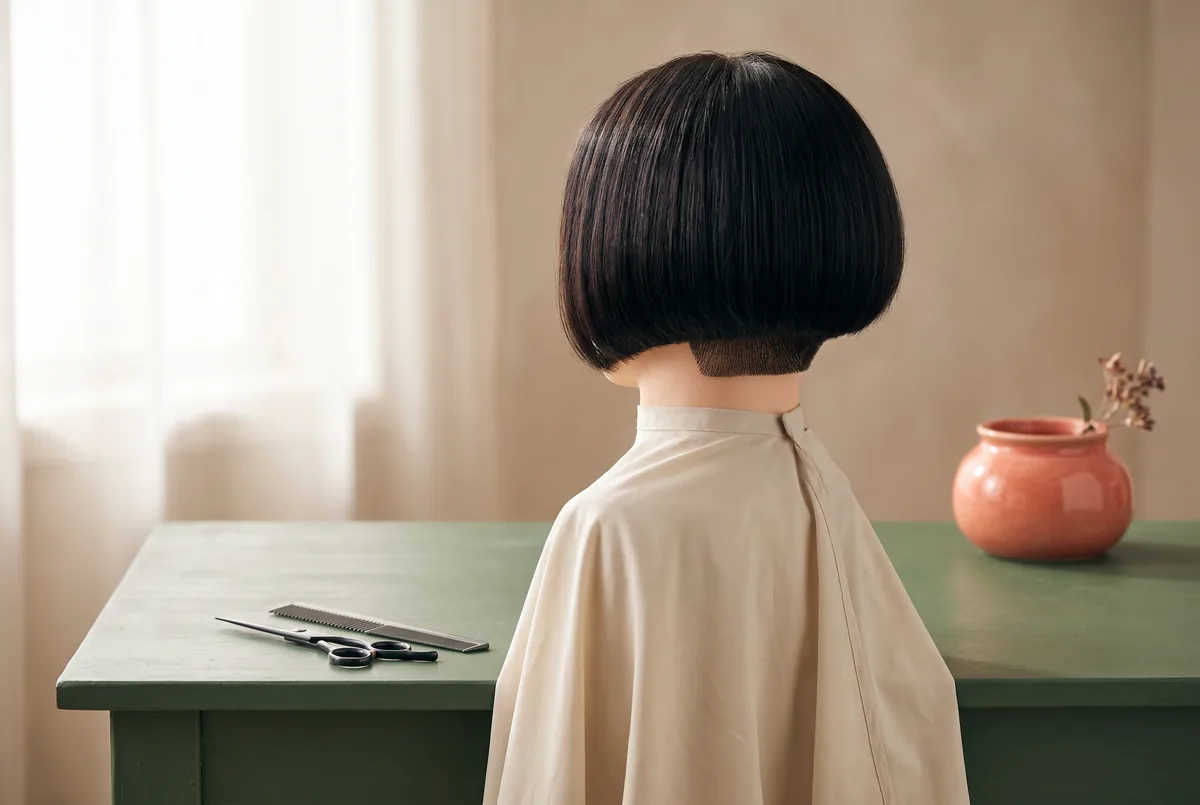
A cut changes retained length and shape. Washing concerns cleansing, while a finish arranges the existing hair for its next use. A photograph can show all three together without revealing which produced the feature you admire. Treating them as separate decisions prevents “make it easier” from becoming permission for unwanted length removal.
| Part of the request | Question to answer in the brief | What it does not establish |
|---|---|---|
| Cutting | Which area may change, and what must still reach a tie or tuck? | A specific home routine or guaranteed time saving |
| Washing | What care concerns and existing products should be discussed? | A universal washing schedule |
| Drying | How do you normally remove moisture, and what window is available? | That using higher heat is an appropriate shortcut |
| Finishing | Which direction, lift or movement matters for this occasion? | A lasting texture change |
| Additional styling | Are pinned sections, accessories or extra tool work wanted? | Inclusion in a basic service or an agreed total charge |
If the diary points to a structural issue, Vit So’s haircut entry opens a general service guide that helps distinguish cutting from other hair work. It is not a dedicated specification for your proposed cut. Use it to frame a request such as retaining a loose tie while discussing the front section, then confirm the actual cutting proposal rather than assuming every service in the guide belongs in your visit.
A useful boundary is “please discuss changes before cutting,” followed by a visible landmark. “Keep enough length for my usual loose tie” is clearer when you demonstrate that tie, including the pieces near your face.
4. Read photographs as evidence of appearance, not effort
Bring an ordinary photograph alongside your aspirational reference. For the ordinary photograph, use your normal drying method and note any products or tools used. Include front, side and back views in similar light. You are showing the starting outline, not producing an attractive portfolio image.
On the aspirational reference, identify one feature: the visible ear, the substantial end line, or the front moving away from the eyes. Do not ask to copy the entire image without considering lighting, pose and styling. A sharply lit portrait can emphasise separation that is less noticeable in everyday light; a turned head can hide a troublesome section.
FlintHub’s Photography and image workshop is a relevant setting for thinking about how framing and light change presentation. Apply that distinction to your hair brief: ask which visual feature needs a cutting discussion and which belongs to the photographer’s choices. Photography education is not haircutting, and changing a camera angle does not alter the underlying hair shape.
For a performer, add a photograph wearing the headphones, glasses or collar you normally use. Keep equipment requirements intact. A hair choice should accommodate necessary protective headwear, not become a reason to leave it off.
5. Set limits for effort, recovery and maintenance
Use two time limits: one for ordinary days and one for an occasional photograph or performance. Base both on your diary. If you willingly spend longer finishing on a portrait morning, that does not mean you will repeat the same routine before every rehearsal. Also record whether the longer routine is physically comfortable and practical after a late night.
The main trade-off is not simply long versus short. A precise short outline may require attention as it grows. Retained length may take longer to dry but provide a comfortable fallback tie. Shorter face-framing pieces can create a new daily task even if the back becomes easier. Decide which inconvenience you can accept before choosing which length to remove.
Vit So’s guide to a haircut for a busy lifestyle offers context for comparing daily arranging with upkeep between trims. Read it alongside your diary rather than treating “busy” as a guarantee of effortless hair. Ask what happens when you omit the finishing step, which growing area may become inconvenient first, and whether your realistic return schedule fits the proposed outline. Those answers matter more than a style’s reassuring name.
Do not buy time by making handling harsher. The American Academy of Dermatology recommends gentle washing, absorbing water with a towel rather than rubbing, the lowest heat setting when using heated tools, and loosely secured hair rather than tight pulling.1 These are general care principles, not proof that a particular design will reduce damage or suit your scalp.
Combing advice also depends on texture. The same AAD guidance advises letting straight hair dry a little before gentle wide-tooth combing, while textured hair or tight curls should be combed damp with a wide-tooth comb.1 Avoid turning the diary into a universal “never comb wet hair” rule.
6. Turn the hypothetical week into a maintenance brief
The musician’s worksheet can become a short brief without pretending a final design has already been assessed. Use the following sequence with your own entries.
- Name the repeated problem. Identify the section and when it interrupts your activity. “The front needs resetting after my commute” is more useful than “my hair is difficult.”
- Show what must remain. Demonstrate your loose tie and ear tuck. Describe acceptable natural movement and any length you do not want removed.
- Declare the routine you will repeat. List the tools you already use, the steps you willingly perform and the ones you want to avoid. Keep ordinary and occasion routines distinct.
- Ask for alternatives and their costs in effort. Compare retaining length, changing a specific area and using an occasional finish. Ask what each option requires at home and between appointments.
Here is a hypothetical finished brief, not a client story:
I rehearse after work twice in a normal week and need the front clear while using headphones. I want to keep enough length for my usual loose tie, including the side sections. My ordinary routine is gentle detangling, drying and a small front adjustment; I do not want daily straightener work. For occasional portraits, I can allow a separate finishing window. Please discuss whether changing the front or outline could reduce repeated resets, what length would be removed, and how the shape would behave without brush finishing.
If your week includes a performance, use Live-band performance planning as a separate context for coordinating the event. Put soundcheck, costume changes and photography times into your own running order. Hair arrangements require their own confirmation; the performance page does not establish salon attendance, a joint package or a grooming service included in music planning.
7. Confirm the visit, then compare the next ordinary week
When enquiring about wash cut and blow dry, explain whether you want all three stages and describe the finish separately. Ask whether additional curls, pinned sections or accessories would change the scope or charge. Share your departure deadline and onward journey, but wait for the provider to confirm what is practical. A service label and a gap in your diary do not reserve an appointment or establish its duration.
Hong Kong Customs identifies false service descriptions and misleading omissions among practices covered by the Trade Descriptions Ordinance.2 For this decision, the practical habit is to obtain a clear description of the agreed work, optional additions and payment conditions. That is not a legal judgment about any salon or a promise of an automatic refund.
If choosing Vit So, plan around its single reception address at 252 Hollywood Road, Sheung Wan. Confirm the consultation language you need; an English website does not establish spoken-English reception. Mention previous chemical work and product reactions where relevant. Persistent scalp irritation or unexpected hair loss deserves appropriate medical assessment, not an assumption that cosmetic care will diagnose it.
After any agreed change, record another ordinary week using the same categories. Compare the repeated problem, not just the first finished photograph. If arranging remains difficult, note when it occurs and what tools you used before asking for advice. The diary helps explain the difference without presuming that another cut or chemical process is needed.
FAQ
Must I record exact minutes every day?
No. Consistent rough entries are more useful than false precision. Separate active work from elapsed drying time and note interruptions. The repeated task and its context matter more than a stopwatch total.
Should I cut my hair short if rehearsal nights are tiring?
Not automatically. First identify whether washing, drying or arranging is the problem. Shortening may remove a useful loose tie and introduce front shaping or outline upkeep. Compare those trade-offs with your tired-day routine.
Can one polished portrait define my everyday cut?
It can identify a feature you like, but it cannot reveal the effort behind it. Bring ordinary views and label the portrait as an occasional finish. Ask which elements depend on cutting and which depend on temporary styling.
What if my diary changes during a production week?
Keep a normal-week brief and add a production-week supplement. Record extra headwear, costume changes and photography moments. Do not assume an exceptional timetable can be solved by a permanent cut or an unconfirmed appointment.
Does this method make a salon consultation unnecessary?
No. It makes your request clearer but cannot assess your hair, guarantee a result or establish service availability. Take the brief to the provider, discuss alternatives and agree on the proposed work before it begins.
About this article: By FlintHub Academy, with AI-assisted institutional editing and organization. FlintHub Academy and Vit So share common ownership. This is contextual guidance, not an independent endorsement, a hairstylist-authored review or medical advice. Illustrations are explanatory scenes, not Vit So work or real-client results.
References
- [1] American Academy of Dermatology: 10 hair care habits that can damage your hair
- [2] Hong Kong Customs and Excise Department: Unfair Trade Practices
FlintHub Academy · AI-assisted editorial prepared from public information. FlintHub publishes creative-learning and activity-planning resources. This is not a first-hand salon test, a real client case or a claim of hairdressing, clinical or medical credentials.