
The photographer owns composition, the hair professional owns agreed hair work, and the adult subject approves changes to their appearance. Put those boundaries into a shot-level responsibility map and a versioned visual brief so that every handoff names the decision, its owner and the approval still needed.
A flattering portrait is not evidence that one person controlled everything. Light can change apparent shine; a jacket can compress hair at the neckline; a turn of the head can hide a carefully arranged section. For adult photography learners, recognising those interactions is part of making an intentional image, not a reason to ask a hair professional to fix every visual problem.
1. Set the approval chain before discussing the look
Start with the picture's purpose: a professional profile, a performer introduction or an event programme portrait. Specify where it will appear and what the frame must communicate. “Approachable host in a waist-up portrait” gives the team a usable aim. “Make me look better” leaves everyone guessing about changes the subject might dislike.
Name the subject and any commissioning client separately. A company representative may approve a brand background, while the person being photographed decides whether their hair can be moved or their usual parting changed. Neither decision substitutes for the other. Assign someone to maintain the brief; on a small learning shoot, this can be the photographer.
For a proposed appointment, Vit So's hair salon service categories can help you identify which hair work to enquire about. They do not establish that shoot attendance, wardrobe coordination or continuous touch-ups are included. Write those requests as separate scope questions, then record the provider's answer rather than treating a category label as an all-purpose production booking. This prevents the shot plan from depending on work nobody has accepted.
2. Map decisions one shot at a time
A general mood board shows intent, but it does not assign authority. Give each planned frame an ID, such as S01 for a front-facing headshot and S02 for a three-quarter portrait. Then use the following responsibility map for each shot. “Owner” means the person responsible for proposing and carrying out that decision, not someone entitled to override the subject.
| Decision for the shot | Working owner | Approval or consultation | Handoff evidence |
|---|---|---|---|
| Camera height, crop and lighting | Photographer | Subject; commissioning client if applicable | Test frame at the intended crop |
| Hair parting, arrangement and agreed grooming | Hair professional, or subject if self-grooming | Subject before touch or change | Approved front and side reference |
| Jacket, collar and accessories | Named wardrobe owner | Subject; consult hair professional about contact | Outfit reference and collision note |
| Change that alters the agreed look | Person proposing the change | Subject and affected decision owner | Revised brief and new test frame |
| Final image selection and hair retouching | Named image editor or photographer | Approvers identified in the brief | Selection and permitted-edit record |
One person may hold several roles, but write each responsibility separately. A photographer handling wardrobe does not automatically have permission to brush the subject's hair. A subject grooming themselves still needs to know which side the camera will see. Naming the task avoids confusing job titles with authority.
Leave unconfirmed work visibly unassigned. “Hair professional on set: pending” is more useful than a blank cell that others interpret as covered. If that support cannot be arranged, simplify the shot sequence and agree what the subject can comfortably maintain themselves. Do not quietly transfer the missing work to an assistant.
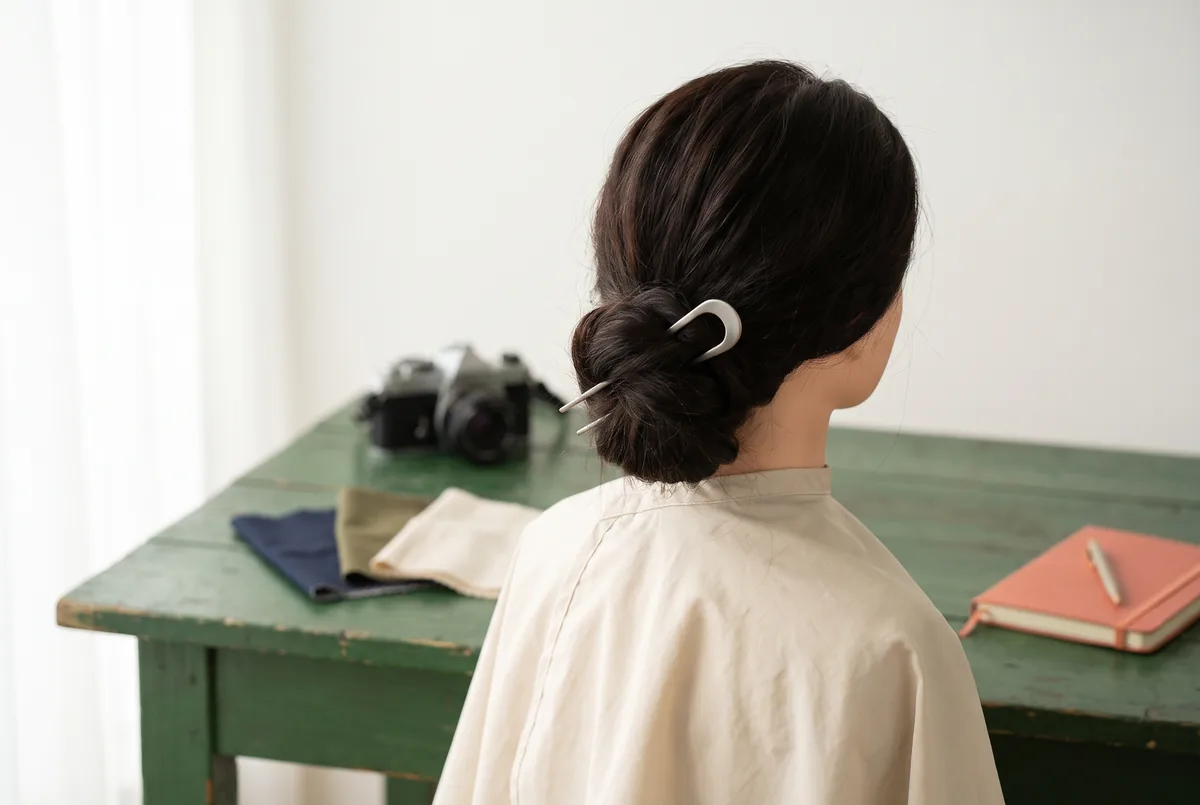
3. Try camera changes before requesting grooming changes
When something looks wrong in a test frame, describe the observation without judging the person. “The hair outline merges with the dark background” points to a visible problem. “Your hair is unsuitable” does not identify whether the cause is lighting, positioning or styling, and may pressure the subject into an unnecessary change.
First hold the hairstyle constant and change one camera variable. Move the light, adjust the background or alter the framing, then compare equivalent test images. If the outline becomes readable, the solution belongs to photography. If a collar catches a section during a turn, inspect garment placement with the wardrobe owner before requesting more hold or a different hairstyle.
There is a tradeoff. A tighter crop may solve a distracting neckline but remove the hands needed for a performer portrait. A head turn may improve the outline while hiding an accessory central to the brief. Choose against the image's stated purpose, not merely the neatest hair silhouette.
FlintHub's Photography and image workshop is a relevant starting point for learners considering camera and image-making skills. Use this article's map alongside that learning: keep a short comparison record explaining which variable changed and why. A good decision should remain understandable when another person takes over the camera.
4. Specify hair tasks rather than relying on titles
For this brief, distinguish grooming from styling by the agreed task. Grooming might mean restoring the subject's approved parting or moving a loose section away from glasses. Styling might involve deliberately arranging a new shape. These are working categories, not rigid industry definitions; the same professional may do both within a confirmed appointment.
When approaching a hairdresser, describe the current hair, the intended crop and what must stay unchanged. Ask whether the proposed task needs a separate preparation appointment or can be achieved through temporary arrangement. The title alone does not settle the scope, available time or suitability of a method. Nor does it imply medical expertise: concerns about scalp symptoms require an appropriate healthcare professional, not a photographic assessment.
Agree a comfort boundary before shooting. The American Academy of Dermatology recommends gentle combing without pulling or tugging, limiting heat-tool use and avoiding tightly pulled-back styles.1 For the shoot, this supports choosing a manageable arrangement rather than repeatedly forcing hair into position. It does not guarantee that any particular product or technique will suit the subject.
Ask before touching hair and make pausing easy. If the subject reports pain, burning or irritation, stop the attempted adjustment rather than treating discomfort as the cost of completing the frame. A close-up photograph cannot diagnose the cause. Persistent or concerning symptoms belong with a healthcare professional, while the shoot can be changed or postponed.
5. Turn references into a versioned visual brief
Keep the brief to one usable page, with additional reference images attached only where needed. Record the shot IDs, intended crops, outfit, visible side of the hair and permitted changes. Label a reference's purpose: “side outline only” prevents someone from copying its colour, length or finish without approval.
A hair stylist can be asked to assess how the intended arrangement relates to the actual hair and outfit. Send annotated references rather than an unexplained collection of favourite portraits. Request confirmation of what is feasible and what information is missing; do not infer backstage, off-site or full-shoot support from the label. The provider's response becomes an input to the brief, while the photographer remains responsible for camera choices.
Use a simple version rule: v1 is proposed, v2 incorporates agreed changes, and later versions record any departure from that agreement. Add the date, editor and changed shot IDs. Preserve the previous version so that an older screenshot cannot silently become the current instruction. Mark the current file clearly when sending it through the team's chosen messaging channel.
Separate appearance approval from permission to use photographs. A subject accepting a side part does not automatically consent to publication or portfolio use. Record intended image use and the relevant agreement independently. Likewise, approve retouching explicitly: tidying a background and digitally changing hair density are different editorial decisions, even when both happen after the shoot.
6. Work through a hypothetical Hong Kong shoot
Imagine an adult learner planning three portraits of a volunteer event host in a borrowed meeting room. This is a hypothetical worksheet, not a client case or a claimed result. The subject wants their familiar parting retained, wears glasses and has a jacket with a high collar. The learner proposes a front headshot, a three-quarter introduction portrait and a seated waist-up frame.
| Brief version and shot | Observation or request | Decision and owner | Unresolved question or approval |
|---|---|---|---|
| v1, S01 front headshot | Hair overlaps one glasses arm | Ask subject about a temporary tuck; hair professional assesses arrangement | Subject has not approved the tuck |
| v1, S02 three-quarter | Collar catches hair during turn | Wardrobe owner tests collar position before hair changes | Does the jacket remain comfortable? |
| v2, S01 and S02 | Test frames show an acceptable arrangement | Photographer records approved crop; subject approves tuck | Confirm who restores it between shots |
| v2, S03 waist-up | Profile crop would remove the hands | Photographer retains waist-up framing and tests background separation | Approve new test frame before capture |
| v3, delivery | Client requests a cleaner silhouette | Editor proposes limited stray-hair editing without reshaping | Subject and client review the proposed edit scope |
The key is not that every initial request gets accepted. The temporary tuck may expose an ear the subject prefers covered. Then the team can change the camera side or choose another frame instead. Record the rejected option and the replacement so that the next helper does not repeat the unwanted adjustment.
For a Hong Kong plan involving an appointment in Sheung Wan and a separate shooting venue, treat travel, access and outfit changes as explicit dependencies. Vit So has one verified reception address at 252 Hollywood Road, Sheung Wan. Do not assume another branch, an on-location visit or a seamless transfer into the shoot schedule. An English website also does not confirm an English-language consultation; agree communication needs directly.
If the portraits support a host's appearance at an event, Event hosting and MC planning offers relevant FlintHub context for the wider production. The portrait brief should reflect the actual introduction and clothing requirements, but it remains distinct from the event running order. Shared planning information does not mean hair preparation and hosting are sold as a combined service.
7. Close the handoff at capture and delivery
At each new shot, use a short sequence: state the shot ID, check outfit contact, confirm the agreed hair arrangement and take a test frame. Show the relevant crop to the subject before the main capture. Record approval against that shot and version rather than relying on a nod given while someone viewed a different composition.
If hair changes between frames, decide whether continuity matters. A personal profile set can sometimes accommodate variation; images intended for a matched programme may need a consistent outline. Repeating the same arrangement takes time and may add handling, so reduce unnecessary resets. Capture the most continuity-dependent frames together when the subject and team agree.
Confirm commercial responsibilities separately from creative approval. Hong Kong Customs identifies false service descriptions and misleading omissions among practices covered by the Trade Descriptions Ordinance.2 Ask who supplies each service, what is included, and what payment or change conditions apply. This is a planning safeguard, not a legal determination or a promise of refund rights.
Before delivery, check that the selected images match the permitted edit scope and intended use. Keep the approved brief with the selection record, and limit access to those who need it. The handoff is complete when the next person can identify the current decision without reconstructing the whole conversation.
FAQ
Can the photographer approve a hairstyle without asking the subject?
The photographer can recommend an arrangement and explain its effect in the frame. Changes to the adult subject's appearance still need their approval. A client's branding preference does not replace consent to touching or changing hair.
Does every adult portrait shoot need a hair professional on set?
No. A stable, familiar arrangement may be enough for a simple shoot. Match support to the shot sequence and the subject's needs. If continuous touch-ups are important, confirm that work explicitly rather than assuming a preparation appointment includes it.
What if the subject changes their mind after approving the brief?
Pause and identify the affected shots. Update the version, note what is no longer permitted and agree a replacement. Approval is not a reason to pressure someone into continuing with an unwanted appearance change.
Should learners copy a reference photograph's hair exactly?
Use the reference to communicate a specific feature, such as the visible side or outline. Hair characteristics, clothing, lighting and camera position may differ. Annotating what matters is more useful than requesting an identical result.
Does common ownership make this a joint FlintHub and Vit So service?
No. Confirm bookings, providers and scope individually. This article teaches a production handoff; it does not establish a combined package, shared appointment, English consultation or medical service.
About this article: FlintHub Academy provides this educational article for adult creative learners. It was prepared with AI-assisted institutional organisation and editing, not as a hair professional's personal review or a clinician-reviewed guide. FlintHub Academy and Vit So share common ownership; the links are not independent endorsements. The illustrations are explanatory scenes, not Vit So portfolio images or real-client records.
References
- [1] American Academy of Dermatology: 10 hair care habits that can damage your hair
- [2] Hong Kong Customs and Excise Department: Unfair Trade Practices
FlintHub Academy · AI-assisted editorial prepared from public information. FlintHub publishes creative-learning and activity-planning resources. This is not a first-hand salon test, a real client case or a claim of hairdressing, clinical or medical credentials.