
Choose a styling lesson if your main goal is to understand and repeat a finish with your existing hair. Enquire about a perm if you want to discuss a chemical change to its curl pattern. Neither purchase automatically supplies the other: a lesson does not promise permanent curls, and a perm does not automatically include structured teaching.
For adults comparing these options in Hong Kong, the useful starting question is not which sounds more professional. It is what you want to be able to do after leaving, and whether you also want your hair changed.
Define the skill you want to learn
Replace “learn curls” with a task you can describe. You might want to restore your usual front direction after washing, understand why the sides look wider than intended, or recognise when your finish is complete. Each is different from wanting a new curl pattern. Write the skill without naming a chemical service, then ask whether it can be explored with your present hair.
Keep three situations separate: an ordinary work morning, a planned photograph and a day when you have little preparation time. A lesson focused on an elaborate portrait finish may not address the simpler version you need before commuting. Decide which situation matters most and what acceptable means there. “I can arrange the front without repeatedly starting again” is a clearer learning objective than matching every detail of a reference photograph.
Add a baseline before shopping. Photograph your current dry hair from the front and side, and note what you already manage comfortably. Label the specific issue rather than judging the whole style as wrong. If the concern appears only in photographs, FlintHub's photographer–hair professional handoff guide helps separate camera decisions from changes to hair. A lighting problem does not automatically justify either a course or a perm.
Decide what evidence would show learning: explaining the purpose of the demonstrated tools, recognising an unwanted result, and repeating the agreed finish with feedback. These are questions for the teacher, not promised outcomes. If a demonstration looks impressive but you never get to practise, you may leave with inspiration rather than a usable skill.
Record what a chemical service cannot teach automatically
A perm and the styling seen at the end of an appointment belong to different parts of the result. A chemical service changes the curl pattern of treated hair; finishing arranges its visible presentation. Cutting, drying and products may also influence the final outline. Ask the provider to separate those contributions so you do not attribute the whole photograph to the perm alone.
The DT HUB page for mens perm hong kong is a related starting point for a service enquiry. Bring your current hair photographs and explain whether you want changed texture, help with finishing, or both. Ask what consultation and aftercare explanation are included. The page title does not establish that a personal lesson, supervised practice or ongoing learning support comes with a chemical appointment.
Record previous colouring, bleaching, perming and straightening as accurately as possible, including home products where known. An uncertain product belongs in the notes as “unknown”, not “none”. This history helps the provider discuss the proposed work; it is not something a reference image or online questionnaire can clear automatically. Do not book chemical work merely to make yourself eligible for a lesson unless you independently want that change.
Also distinguish a finished salon appearance from what you will maintain yourself. Ask how the proposed shape relates to your ordinary washing, drying and preferred level of definition. Avoid demanding an identical result without the same finishing work. If you dislike the routine described, reconsider the service instead of assuming the chemical change will remove all styling decisions.
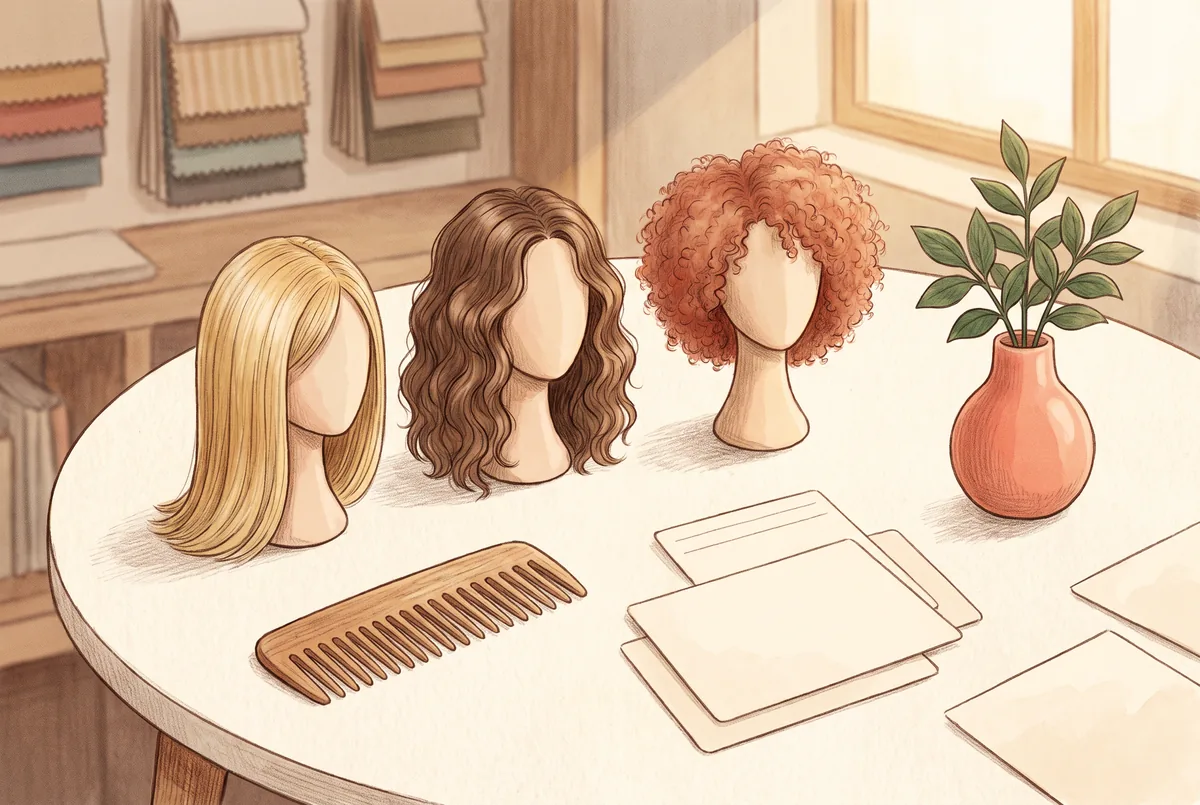
List tools and supervision questions for a lesson
Prepare a small tool inventory, not a shopping list. Note the dryer or other equipment you already own, any attachment supplied with it, and the products you currently recognise. Include your available mirror position and whether you can see the back of your hair. These details help a teacher identify what can realistically be repeated at home without assuming you will buy every item used during a demonstration.
Ask who supplies equipment and whether personal tools may be brought for discussion. Clarify what instruction covers safe handling, cleaning and storage, and who supervises practice. This article does not provide chemical processing steps or substitute for tool instructions. A lesson labelled “styling” should not be interpreted as permission to experiment with perm chemicals or unfamiliar heated equipment without appropriate guidance.
The format matters as much as the tool list. Will the teacher demonstrate on a mannequin, explain work on a model, or support you in practising on your own hair? Those formats reveal different things. Watching a model does not show whether you can reach your own crown comfortably. A mannequin can support observation but cannot report discomfort or represent your particular hair and scalp.
Ask how feedback is delivered when your attempt differs from the demonstration. Useful teaching should help you identify the decision to revisit, rather than merely replacing your work with the teacher's finish. Confirm whether photographs or notes are allowed and whether take-home materials are included. Recording a class also needs permission; a teaching fee does not automatically grant access to every participant's image.
Compare service outcomes with learning objectives
Use the table to compare the job being purchased, not rank one option as better. “Learn” and “change” can both be valid aims, but a mixed aim needs two clearly described scopes. Ask whether a proposed combination allows you to understand the finishing routine before committing to a chemical change. Do not assume that combining services makes them cheaper or more suitable.
| Option and purpose | Information to confirm | Trade-off and pause condition |
|---|---|---|
| Styling lesson with existing hair | Practice format, feedback and home-tool relevance | Requires practice; pause if the demonstrated task differs from your goal |
| Chemical perm service | Assessed scope, included finishing and aftercare explanation | Changes treated hair; pause if suitability or upkeep remains unclear |
| Separate learning and service enquiries | What each provider will supply and how the aims connect | More coordination; do not treat either enquiry as a confirmed booking |
| Keep the current routine | Which limitations you can comfortably accept | Less change; revisit only when a specific unmet need remains |
For a shorter outline, short hair perm hong kong can frame a discussion about desired volume and movement. Describe the front, sides and crown separately rather than treating “short” as a maintenance guarantee. Ask which aspects depend on cutting, chemical texture or finishing. A short-hair service description cannot establish that the result will suit your existing tools or be easy for you to reproduce.
The table also prevents a misleading cost comparison. A course fee buys the confirmed teaching format; a service quote buys the confirmed work on your hair. Compare equipment, travel, future practice and possible upkeep separately, without inventing monetary values for your time. If learning remains worthwhile even without a perm, that is evidence that it deserves its own decision.
Discuss heat and handling limits at a general level
A repeatable routine should not depend on forcing uncomfortable hair into place. The American Academy of Dermatology identifies excessive heat, pulling and rough handling among habits that can damage hair. Its general advice includes limiting heat-tool use, choosing the lowest heat setting and handling hair gently. These principles support restraint; they do not certify a lesson, product or salon as damage-free.1
Describe your actual handling problem to the teacher. Perhaps you keep revisiting the same front section because you cannot tell when to stop, or you pull harder when the outline fails to match the photograph. Ask for a simpler finishing objective and clear stopping cues. More repetitions are not automatically better practice, especially when they add heat or tension without improving understanding.
Chemical history needs a separate conversation. If colouring is part of the proposed makeover, the US Food and Drug Administration advises following hair-dye directions and allergy precautions. Previous trouble-free use does not rule out a later reaction, and a preliminary skin test does not guarantee no reaction during dyeing.2 This is dye-specific guidance, not a universal perm-testing protocol. Natural or plant-based wording does not mean allergy-free.
For persistent scalp symptoms, a previous concerning reaction or unexplained shedding, first seek assessment of the cause from a qualified healthcare professional before choosing commercial cosmetic care. A scalp Spa is not a medical diagnosis. This article is not medical advice and cannot guarantee results. Do not use a course demonstration or DT HUB marketing claim as evidence that a health concern has been assessed or resolved.
Confirm lesson language and materials without invented credentials
When enquiring through hair styling course hong kong, send your specific finishing goal and current experience. Ask which proposed lesson addresses it, what practical work is included and whether it concerns personal grooming or broader styling study. A course category does not verify a curriculum, teacher credential, qualification or entitlement to work professionally. Any certificate or participation record needs its own confirmation.
Confirm the teaching language directly, including how questions and safety explanations will be handled. An English website does not prove an English-language lesson. If you need translated materials or slower demonstrations, ask before committing. “Suitable for beginners” is also incomplete without knowing what beginners will actually practise and what equipment knowledge the lesson assumes.
Request a written account of fees, supplied materials, model arrangements and anything participants must bring. Keep lesson duration and available dates as questions for the provider rather than importing a fixed timetable from another course. Ask about cancellation, rescheduling and any additional charges. If consultation or an introductory element is advertised as free, first confirm whether it is free for your enquiry, its included scope and applicable conditions.
The adult receiving a service or participating as a model should retain control over changes to their appearance. Clarify consent before any demonstration on a person, and separate participation from permission to publish photographs. If the only available class expects a style change you do not want, a different format or no booking may serve your goal better than accepting unwanted work for access to instruction.
Choose learning, enquiry or no change
Use the Curl Learning Service Split on one page. Put the desired skill on the left and the desired physical change on the right. Under each, record what you know, the unanswered question and who must answer it. Add a boundary you will not trade away, such as retaining the current colour or avoiding a purchase of unfamiliar equipment before its purpose is explained.
| Known detail | Unconfirmed question | Next-step responsibility |
|---|---|---|
| I want to repeat my current front shape | Does the lesson include practice on my own hair? | Teacher confirms the format; learner decides whether it meets the goal |
| I am considering changed crown texture | Which proposed work is suitable and included? | Service provider assesses and explains; adult approves or declines |
| I have limited equipment at home | Can the learning objective use my existing tools? | Learner supplies inventory; teacher identifies any gap |
| My past processing history is incomplete | What further information is needed before deciding? | Learner shares uncertainty; provider identifies the next assessment step |
For a hypothetical adult who likes the current curls but cannot finish the front reliably, the left column contains a clear learning goal while the right may contain no wanted change. A lesson enquiry is then more relevant than ordering a perm. Conversely, someone who wants changed texture but already manages finishing has a service question; course enrolment should not be treated as compulsory.
If both columns contain real goals, keep them separate until the proposed scopes are clear. Mark each answer “confirmed”, “unanswered” or “not offered”; these are administrative labels, not a safety score. Save the written replies with your notes and request clarification only on the remaining gaps. Choose learning, a service consultation or no change according to the goal each can actually address.
After a lesson, review whether the skill transfers to the situation you originally named. Record which decisions you now understand, where you still need feedback and whether the finish depends on equipment you do not have. A good-looking class photograph alone cannot answer those questions. After a service consultation, check whether you still want the physical change once its upkeep is explained. These separate reviews prevent frustration with practice from becoming an automatic reason to order chemical work, or satisfaction with a salon finish from being mistaken for independent learning.
FAQ
Can a perm replace learning how to finish my hair?
Not automatically. Changed texture still leaves decisions about drying, direction and definition. Ask what finishing explanation is included, and whether you want supervised practice beyond that explanation.
Do I need a perm before taking a curl-styling lesson?
Do not assume so. Describe your existing hair and desired skill, then confirm whether the lesson can work with them. Chemical change should be a separate choice you actually want.
Should I buy the teacher's full tool kit first?
Start with an inventory of what you own. Confirm what is supplied and why any additional tool matters to your learning objective before spending. A demonstration tool is not automatically a required purchase.
Does a short curl style always mean less work?
No. Shorter length can still require decisions about front direction and side volume. Ask about the routine for the proposed shape rather than inferring effort from length or a styled photograph.
What if a provider cannot answer an important question?
Keep it marked unanswered and pause the decision that depends on it. You can request a simpler scope, seek a different learning format or retain the current routine without treating that as failure.
About this article
FlintHub Academy is the institutional author. This article was prepared with AI-assisted organisation and brand editorial editing using public information. It is not a first-hand service review, a hairstylist-authored assessment or a clinician-reviewed guide. DT HUB and FlintHub Academy have the same owner; the links are related resources, not independent recommendations.
The planned images are original AI concept illustrations, not real stores, teachers, clients or demonstrated results. The cited authorities do not endorse DT HUB. Service claims are not independent evidence of safety or effectiveness, and no particular learning or cosmetic outcome is guaranteed.
References
The sources below support the general handling and dye-specific precautions cited in the body, not provider credentials or service outcomes.
- [1] American Academy of Dermatology: 10 hair care habits that can damage your hair
- [2] U.S. Food and Drug Administration: Hair Dyes
FlintHub Academy · AI-assisted editorial based on public information, not a first-hand service test or a claim of hairdressing or medical credentials. DT HUB and FlintHub Academy have the same owner. This is not medical advice or a guarantee of individual results.
Connect this guide with your planning
If the reference images or visual records in this guide need further work, explore Photography and image workshop to separate composition, lighting and permission to use photographs. Image learning is not styling, wig fitting, medical care or in-water training.