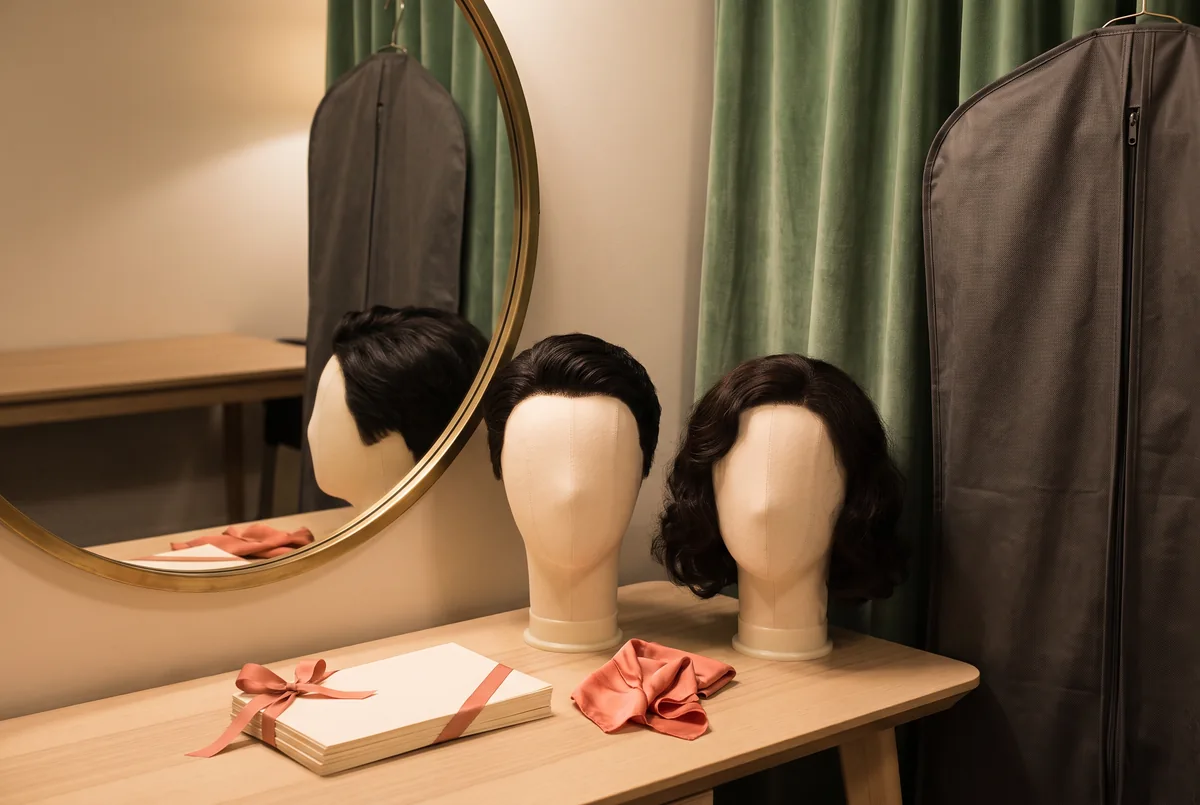
Start with the choreography: tight, quick patterns usually call for controlled texture and enough density to frame the face without obscuring the neck or line, while broad, slower movement can carry softer wave and more visual volume. A useful rehearsal brief treats curl pattern, wave and density as separate decisions shaped by movement range, costume neckline, sightlines and preparation time—not as a guarantee that a look will stay perfect or change a performance result.
Ask not “Which texture is best?” but “What must this hair shape do during this rehearsal or appearance?” This prevents a catalogue image from becoming a substitute for a movement plan.
Begin with a rehearsal brief, not a texture label
Write five facts before comparing textures: dance style, movement range, costume neckline, venue viewing distance and available preparation time. “Latin social dance, turns and shoulder actions, V-neck dress, mixed close and room-distance viewing, 25 minutes” is more usable than “glamorous curls.” It tells you where hair may meet the shoulders, when the audience can see its shape, and how much time exists to reset it between runs.
Movement range means the practical path of the head, shoulders and torso: include spins, supported work, floorwork, arm lines near the head and partnered moments. A halter, high collar, open back and deep V create different visual boundaries. Preparation time includes fitting, any item-compatible pinning, a mirror check and a correction buffer.
Use the same brief whether you are attending a structured Latin dance class or planning an evening practice. The course link is about dance learning; it does not imply that FlintHub provides wigs, fitting, styling or a performance service.
Brief principle: Choose the silhouette that supports the movement already in the choreography. Do not add movement, heat or adhesive steps merely to make the hair resemble a reference photo.
Separate texture from density before you compare
Texture describes the visible bend: a defined curl, a loose wave or a near-straight surface with minimal movement. Density describes the amount of hair distributed across the cap or construction. A compact curl can look visually full even where the underlying density is moderate; a loose wave can look more open despite a higher amount of hair. Mixing up these two variables leads to many unhelpful comparisons.
OwnStrand is an external shopping website under the same owner as FlintHub Academy. It is mentioned here as a disclosed reference site, not as an independent recommendation or an endorsement of a particular item. If you are learning the vocabulary used for tighter bend patterns, its page labelled curly wigs is one route to inspect alongside the item-specific description and care instructions.
For a looser bend pattern, the page labelled wavy wigs provides a separate vocabulary reference. Compare the named texture with the exact product details and your rehearsal brief; a category label alone does not establish how an item will behave in motion.
The table is a starting framework, not a universal rule. Face shape, personal comfort, cap construction and the individual product can change the decision. Its value is in exposing the question each texture raises before rehearsal.
| Texture direction | It can support in an adult dance brief | Watch for during movement | Useful question before choosing |
|---|---|---|---|
| Defined curl | A compact, intentional outline and visible shape in still photos or pauses | Curl mass can rise toward the jaw, shoulders or neckline during turns | Will the curl outline crowd the face or costume boundary when the head turns? |
| Soft wave | A flowing outline that moves with slower torso and arm phrases | Separation may look less uniform after repeated handling | Is the desired impression relaxed enough that slight variation is acceptable? |
| Controlled, low-movement texture | Clean lines where the costume and choreography are already visually busy | A flatter surface may read less dramatically from far away | Does the costume provide the visual statement, leaving hair to frame rather than compete? |
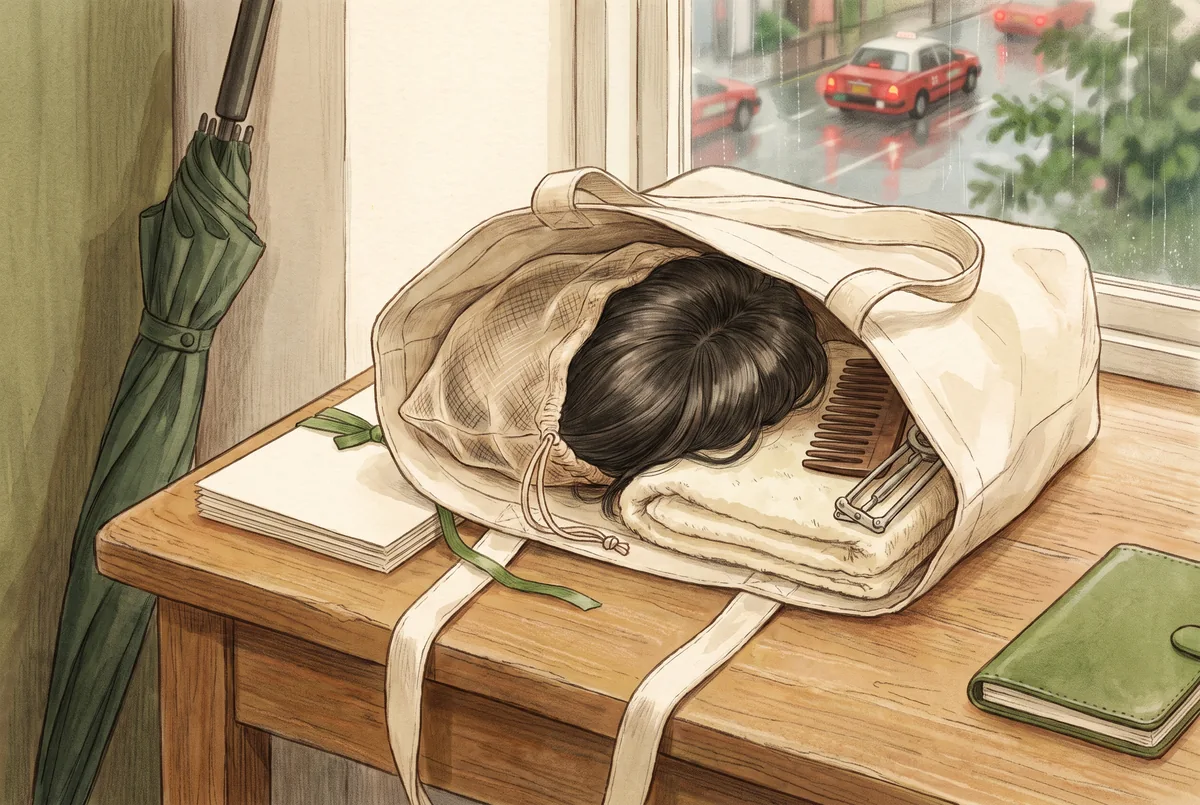
Translate the dance style into movement questions
Dance labels help only after they become observable actions. A Latin-inspired routine may have fast spotting and turns across the shoulders; partner dancing introduces proximity and hand changes; lyrical work may deliberately allow hair to follow a larger torso arc.
During a low-stakes run-through, do not rate the look as “good” or “bad.” Note whether it enters the eyes, catches a strap, changes the shoulder line, needs repeated touching or distracts from counting.
A quick inventory can look like this:
- Head path: spotting turns, tilts, rolls, quick looks over either shoulder.
- Shoulder path: shrugs, shoulder rolls, lifted arms and any contact with straps or collar.
- Partner path: close hold, hand changes, supported turns and the distance between heads.
- Pause path: whether the hair needs attention between combinations, songs or costume changes.
- Viewing path: close teaching feedback, mirror checks, phone video and the audience’s likely distance.
For a beginner or returning dancer, a lower-maintenance choice may preserve attention for timing and connection. That is a practical trade-off, not a claim that a simpler style performs better. A more sculptural curl may be worth the extra preparation when a short presentation has clear posed moments and the wearer has time to follow the product’s instructions.
Use the neckline as the edge of the composition
A neckline tells the eye where the face-and-torso composition begins. With a high collar or halter, dense texture resting at the nape can make the upper body look visually crowded. With an open back or low back, a longer wave can become part of the line—but it may also travel across bare skin or fabric when the dancer turns. A V-neck can tolerate a vertical opening around the face, whereas a boat neck can invite a wider, shoulder-level outline if it does not interfere with movement.
Test the outline from the front, three-quarter view and back, using a rehearsal top with a similar neckline if the costume is unavailable. A changing silhouette is more informative than a close selfie.
| Costume boundary | Texture and density question | Low-risk rehearsal check | Trade-off to accept consciously |
|---|---|---|---|
| High neck or halter | Can the hair retain air at the crown without filling the neck area? | Turn the head left and right with arms raised, then inspect the nape | A cleaner neckline may mean less lower-back volume |
| Open back | Does the length create a deliberate vertical line rather than an uncontrolled curtain? | Film two turns from behind and stop at the end position | More movement can be expressive but can require more resetting |
| Deep or narrow V-neck | Does the face framing point inward rather than cover the chest line? | Check a three-quarter pose and a forward fold | A face-framing shape can reduce the impression of overall fullness |
| Wide boat neck | Does shoulder-level volume merge with the garment’s horizontal line? | Compare arms-down and arms-up mirror views | More width can look balanced in stillness yet busy in fast choreography |
Fit density to sightlines, light and the task
Density is visible mass under room conditions, not a number alone. A bright mirror, phone camera, dim social floor and small stage reveal it differently; state the main setting and most demanding secondary setting.
For comparison terminology, the wig density page may help identify retailer naming. Read the exact item description rather than treating a general guide as a promise under your lights. FlintHub does not verify stock, price, fit, colour match, exchange terms or availability.
Use the following three-pass method. First, view the silhouette at arm’s length for face framing. Second, step back to the distance at which a teacher, partner or first row would normally see it. Third, take a short moving video from that distance. In each pass, ask whether the hair competes with the costume or whether the intended line remains legible.
Density checkpoint: If an outline is already clear at the most important viewing distance, adding more visible mass solves no identified rehearsal problem. It may instead add warmth, time or contact with the neckline.
Do not treat a density label as evidence of comfort, durability, secure attachment or suitability for every dance. Construction, fit, texture, lighting and camera exposure also affect the result.
Build the plan around the preparation window
Preparation time changes the sensible texture choice because the plan must include recovery from normal handling. Divide the available window into four small stages: inspect, prepare according to the item’s instructions, dress and move-test, then leave a correction buffer. If the only available time is just before a class, a look requiring extensive reshaping is a poor fit for that brief even if its photo reference is attractive.
Where care involves heat, distinguish the fibre or hair type first. Jon Renau differentiates human hair, conventional synthetic hair and heat-resistant synthetic hair; its conventional synthetic styles should not be heat styled or blow-dried, while other guidance remains product-specific.1 This is not a universal temperature rule: follow the precise item’s instructions and do not assume human hair makes chemical alteration risk-free.
A practical preparation checklist is:
- Read the exact product instructions for material, heat use, cleaning, drying and storage before the rehearsal day.
- Plan a first fit well before the event, when there is no pressure to alter the item or rush a decision.
- Move-test in the intended neckline, first slowly and then at realistic turn speed.
- Use only compatible accessories or attachment methods stated for the item; avoid inventing a fix from a social-media clip.
- Let the cap dry fully before storage if it has been cleaned, and avoid rough rubbing or unnecessary handling, consistent with the manufacturer guidance.1
- Reserve a fallback, such as a simpler hair plan or a costume adjustment, rather than relying on an untested last-minute change.
Hypothetical planning example: a 30-minute social dance brief
This is a fictional planning example, not a customer story, test result or performance claim. A dancer is attending a social dance session with several turns, close partner work and a black V-neck top. The room has moderate overhead light, the most frequent viewer is a partner at close range, and the dancer has 30 minutes to get ready after work. There is no performance requirement and no assumption that a particular item will fit.
The brief could read: “Prioritise a face-clear outline, limited contact with the V-neck, no heat reshaping and a final two-minute movement check.” The dancer compares a compact curl and soft wave as visual directions. The curl gathers near the shoulder during fast spotting; the wave leaves more negative space around the face but separates after repeated hand contact.
The decision is not “curl fails” or “wave wins.” If the close partner setting and short preparation window are decisive, the plan might favour the lower-interference option and accept a less sculpted still-photo outline. If a posed social photograph is the priority and there is a pre-event fit test, the curl direction may remain workable. The dancer records the reason, tests it once, and changes one variable at a time on the next rehearsal.
For dancers who also want a setting where connection and practical movement are central, a Social dance course can inform the movement part of the brief. It is not an offer of hair consultation, product fitting or a guaranteed styling outcome.
Catch common mismatches before they become a rushed fix
The repeated error is choosing an appealing image without naming the condition it was made for. Another is trying to solve every issue by increasing visible volume. A better approach is to identify the first friction point and make the smallest relevant change.
- Defined texture plus high collar: the neck reads heavy and hair catches at the collar. Reassess lower length or density before adding more product.
- Loose wave plus fast, repeated turns: the outline may change more than the wearer expects. Decide whether that variation suits the choreography or whether a more controlled direction is preferable.
- Full-looking hair plus limited prep: touching and reshaping consume the buffer. Simplify the plan rather than assuming a quicker technique will appear on the day.
- Reference photo plus different lighting: a colour and texture that reads clearly outdoors can appear flatter or brighter in a studio. Test in the actual or closest available light.
- Unfamiliar adhesive, tape or scalp product: a last-minute attachment experiment introduces a condition that the texture brief cannot answer. Read the product directions, patch-test only if the manufacturer directs it, and seek appropriate professional or clinical advice for scalp concerns, reactions or treatment-related sensitivity.
If a purchase is involved, read the written product description, applicable sizing information and transaction terms before relying on it for an event. Hong Kong Customs explains that the Trade Descriptions Ordinance addresses false, misleading and incomplete trade descriptions; that general consumer-protection principle is a reason to compare what is written, not a statement that every online purchase is returnable.2
Reusable adult dance texture worksheet
Copy this worksheet into notes before a first fitting or rehearsal. It turns vague preference into a record that can be revised after one honest movement test.
- Dance context: ______
- Movement that most affects the hair: ______
- Costume neckline / shoulder detail: ______
- Main viewing distance and lighting: ______
- Available preparation time, including buffer: ______
- Desired visible shape: defined curl / soft wave / controlled texture
- Density question: clearer face framing / more visible mass / less neckline contact
- Item conditions checked: material, heat guidance, cleaning, drying, storage, terms
- One movement test to run: ______
- Observed friction point: ______
- Smallest next adjustment: ______
- Fallback if the test is not comfortable or practical: ______
Use it as a two-step decision method. First, circle the single criterion that cannot be compromised—for example, clear vision during spins, a free neckline or a five-minute preparation ceiling. Second, choose the texture-and-density direction that creates the fewest conflicts with that criterion, then test it before adding a secondary preference such as photo drama. This process is deliberately modest: it helps organise a styling conversation, but it cannot determine fit, material tolerance, scalp response or event-day conditions in advance.
Keep the final decision honest about limits
Curl pattern, wave and density can change the visible relationship between face, costume and movement. They cannot guarantee that hair will not shift, tangle, feel warm, suit a particular person, photograph identically under every light or improve dance quality. Fit and care conditions remain item-specific, and a rehearsal test is information—not proof of future results.
Treat the final brief as an editable plan. Note what happened during an ordinary run-through, retain what reduced distraction and revise only the element that caused friction. That gives an adult dancer a repeatable way to select a texture direction without overstating what styling can do.
FlintHub Academy · AI-assisted editorial. FlintHub Academy shares practical planning information for adult learning and activity contexts; it does not claim wig-fitting or medical expertise. Learn more about FlintHub Academy.
References
FlintHub Academy · AI-assisted editorial. FlintHub publishes creative-learning and event-planning information. This article is a desk-researched planning resource, not a first-hand product test or a claim of wig-fitting or medical qualifications.