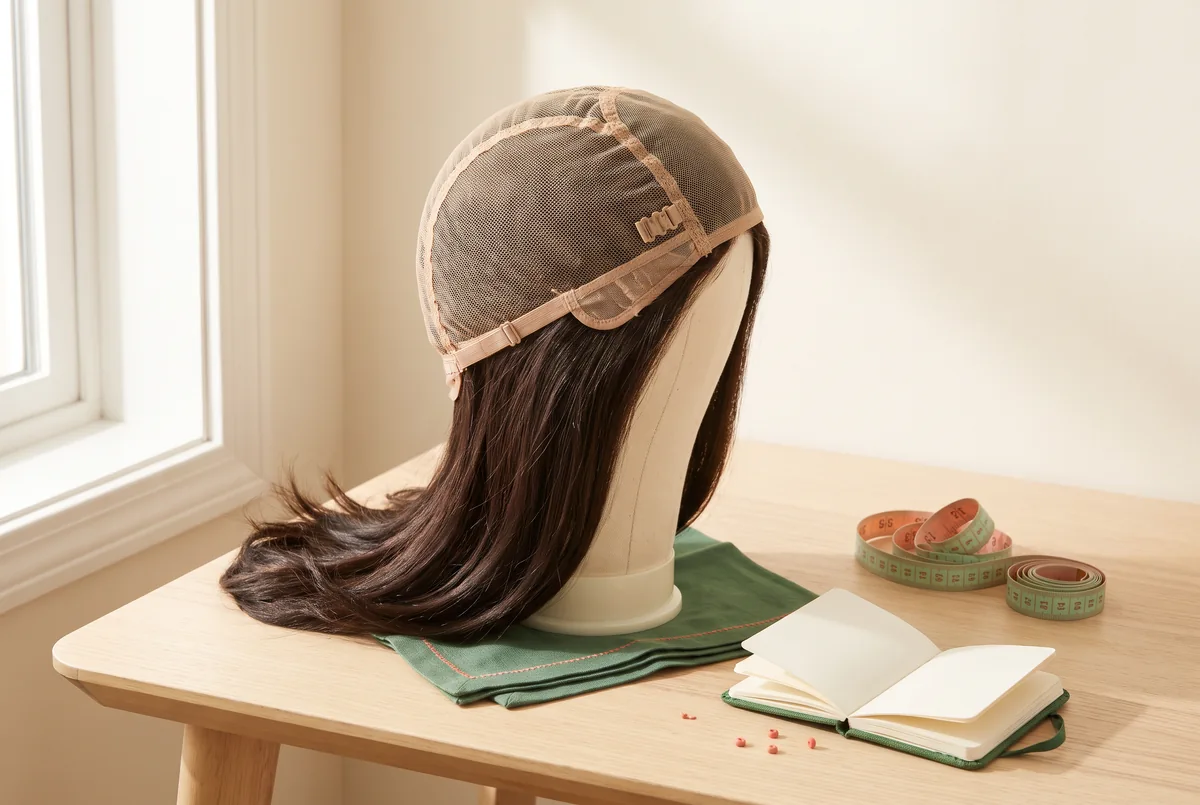
Test the rehearsal room, your largest planned movements, the liner question, and the cap’s adjustment details before you run the full routine. Then schedule short, deliberate pause points so you can decide whether the setup remains workable for that session rather than treating comfort as a safety or medical claim.
This article offers a planning method for dancers, teachers, and rehearsal leaders. OwnStrand is an external retail website with the same owner as FlintHub Academy. It is mentioned here only as a source of its own product information, not as an independent comparison or recommendation, and not as medical guidance.
Start with four questions, not a product verdict
Before selecting an extra layer or changing a cap, write down four questions. They separate conditions often bundled together as simply “too hot”: room heat, movement range, the liner question, and cap details you can inspect.
Do this before a performance-level run. A six-to-eight-count trial, then a short sequence, identifies where you need a pause, styling revision, or quieter mark-through.
Working rule: comfort notes are observations, not proof of safety, material suitability, or a health outcome. A setup that feels acceptable for one room and one rehearsal may not suit a different day, routine, or wearer.
Write notes in ordinary language: “edge felt distracting after four turns”, “nape felt warm during the second chorus”, or “adjustment tab was easier to reach before styling”. Avoid vague conclusions such as “fine” or “bad”; they do not tell you what to test next.
Use the four-column hot-rehearsal worksheet
Copy this worksheet into a notes app, print it for the studio, or replace the sample entries with your own. Complete it on the day, because room and costume conditions can differ from the timetable. “Planned pause” means a choreography or coaching pause, not an instruction to work through discomfort.
| Room heat and session conditions | Movement range to test | Liner question to record | Cap details to check before the next block |
|---|---|---|---|
| Warm-up: room feels still; 10 minutes before full-out work | Easy head turns, shoulder rolls, walking counts | Is a liner being used today? If yes, does its edge create a new pressure or bulk point while standing? | Confirm orientation, part position, adjustment setting, and whether all tabs or combs are lying as intended. |
| First chorus: room has filled; lights and music are on | Turns, sharp directional changes, travelling steps | Does the layer stay where you placed it during repeated turns? Is there a change you can describe without guessing why? | Note whether the nape, ear area, and front edge remain easy to check during a water break. |
| High-output section: repeated jumps or fast arm work | Jumps, hair-whip choreography, level changes if included | Would removing, repositioning, or keeping the layer make the next short test more informative? Change one variable only. | Inspect the chosen securing and adjustment method only if it is part of the product instructions and your usual routine. |
| After a planned pause: 60–90 seconds off counts | A calm reset, then two marked counts | Has the sensation changed after the pause? Record “same”, “less noticeable”, or a specific area—not a universal conclusion. | Check whether styling has shifted and whether the cap is dry enough for the storage plan after rehearsal. |
| Cool-down and pack-away | No extra movement test needed | Note what you would test earlier next time: liner placement, no liner, or a different rehearsal block. | Air-dry and store according to the manufacturer’s care guidance; do not pack a damp cap away as a shortcut. 1 |
Test movement range before adding complexity
Start with the least demanding version of the movement and progress only as needed: walking counts and deliberate head turns, then travelling, then one short full-energy sequence. If you film, use it as a styling and placement record, not evidence that a setup will behave the same way in every routine.
A simple order keeps the test interpretable:
- Set a baseline. Put on the cap and styled piece using your usual method. Record the room condition and one neutral standing observation.
- Run a controlled movement block. Choose 30–60 seconds that includes the movement you are most likely to repeat: turns, jumps, level changes, or fast direction changes.
- Stop at the planned point. Look, feel, and note only what changed. Do not tighten, add a liner, restyle, and restart all at once.
- Alter one variable. If you decide to test a liner, test that single change on the same short block where practical.
- Return to choreography. Only after the short comparison should you decide whether to carry the setup into a longer run.
If you are considering a breathable wig cap, use the listing to check the construction and stated care information for that particular item. “Breathable” is a product description, not a promise that every dancer will feel cool or comfortable in every venue. Check fit, adjustment features, and the seller’s written terms before you commit to a rehearsal or purchase decision.
Frame the liner question as a comparison
A liner can be a test variable, not automatically an upgrade. It may add a layer a wearer likes, or introduce bulk, edge awareness, movement, or a different styling effect. Ask: for this routine and duration, does the liner make the next block easier to manage?
Use a consistent placement, movement sequence, and pause length when comparing. Changing liner, cap adjustment, hair placement, and room at once leaves the notes unable to show what drove the result. If time does not allow a comparison, use your established routine rather than treating a new combination as performance-ready.
For an explanation of one retailer’s liner terminology and considerations, see sweat absorbing wig liner. Read it as OwnStrand’s own guidance, then compare the stated material, size information, care instructions, and written sales terms with your needs. A liner does not turn a hot rehearsal into a controlled environment, nor does it substitute for breaks, hydration arrangements, venue policies, or professional advice where needed.
A comparison card to keep beside the mirror
Use three brief prompts after each short block:
- Placement: Did the liner and cap remain in the positions you deliberately set at the start?
- Range: Which specific movement made you want to adjust something—turn, jump, forward fold, floor transition, or none in the test block?
- Next action: Keep the setup for one more block, change one factor, mark the phrase, or pause the test.
Inspect cap details while the pace is slow
Make a short cap check:
- Confirm the piece is oriented correctly and the intended part is where you expect it.
- Check whether adjustments feel symmetrical enough for your own styling plan; do not assume a setting that suited a friend will suit you.
- With clean hands, identify which details you can visually recheck during a normal break without dismantling the style.
- Read the maker’s fibre and care directions before using heat, dyes, adhesives, or unfamiliar products. Standard synthetic fibres may have restrictions distinct from heat-friendly fibres or human hair; Jon Renau, for example, says not to heat-style or blow-dry its standard synthetic fibre wigs. 1
- Leave enough time after rehearsal for the cap to dry before storage, following the applicable product guidance.
Fibre type, hair appearance, and cap construction are separate dimensions. A human-hair piece is not a universal permission to bleach, curl, or use high heat, and a cap label alone cannot tell you whether a particular styling product or adhesive suits your skin. Follow the specific manufacturer conditions. For heat styling, dyeing, adhesive use, a persistently irritated scalp, or a treatment-affected scalp, pause the DIY experiment and seek appropriate professional or care-team advice. The American Cancer Society similarly advises people receiving cancer treatment to discuss discomfort or adhesives with their care team; a wig remains an appearance choice, not a treatment. 2
Choose a rehearsal approach with the decision table
| Current rehearsal signal | Lowest-complexity next test | What to document | Trade-off or limit |
|---|---|---|---|
| Mild room, short marked run, no notable movement issue | Keep the usual setup for one more marked phrase before changing anything | Room condition, routine section, and baseline placement | This does not predict a full-out run or a later, warmer room. |
| Warm room and a specific edge or nape distraction during turns | Insert a planned pause; compare one short block with one carefully chosen placement or liner change | Exact movement, exact area, and whether one change altered the observation | Extra layers can add bulk; changing several variables makes the result unclear. |
| High-output choreography with jumps, rapid level changes, or hair-whip counts | Mark the phrase first, then test a brief full-energy section only when the setup is familiar | The earliest count at which you wished to adjust, plus the intended reset point | A marked run protects rehearsal flow but cannot simulate every full-energy movement. |
| Visible styling shift after a break | Stop and make a styling decision before the next full run; check cap orientation and adjustment access | Whether the shift follows movement, a costume change, or handling at the pause | Repeated checking can itself disturb styling; make checks purposeful. |
| Ongoing discomfort, skin concern, or uncertainty about adhesive or a treatment-affected scalp | End the product experiment and seek suitable professional advice | What was used and the timing of the observation for your own reference | This worksheet is not clinical assessment and cannot establish cause or safety. |
Put pause points into the choreography plan
A pause point is most useful when planned before the music begins. Choose a natural seam: after a chorus, at a formation reset, during water, or while another group rehearses. Avoid putting the first check just before an entrance.
For a group practice, make three labels on the run sheet:
- Pre-run check: orientation, part, adjustment access, and the one variable being tested.
- Mid-run pause: a short, named point after the most demanding sequence.
- Post-run review: one sentence about what to keep, alter, or test earlier next time.
A KPOP dance class can be a helpful setting for building the habit of identifying demanding phrases and reset points. It should not be represented as wig fitting, a product trial, or medical guidance. Equally, a general Dance class can help you practise clear movement notes and rehearsal communication without implying that FlintHub provides specialised hairpiece services.
Avoid these common heat–liner–cap mismatches
- Testing a new liner only in a long run. You lose the baseline and cannot tell whether movement, heat, or the added layer changed the experience.
- Tightening every adjustment after one turn. A rushed change may make the next observation less useful. Change one element, then retest briefly.
- Confusing cap construction with fibre care. Ventilation language does not authorise heat styling; fibre instructions still apply.
- Packing up while damp. It shortens the time available for the cap to dry and may conflict with maker care directions. 1
- Using a label as a health claim. “Absorbing”, “breathable”, and “secure” do not mean clinically safe, hypoallergenic, or appropriate for every scalp.
- Ignoring the sale terms. Product descriptions, sizing, availability, and return conditions can change. Hong Kong consumer protection rules prohibit false, misleading, or incomplete trade descriptions; read the seller’s current written information rather than assuming an online purchase is automatically returnable. 3
If your useful question is specifically how to plan for sweating under a wig, keep the same restraint: use any retailer guidance as information about its own approach, not as an assurance that sweating, slippage, or sensitivity will be eliminated. Your worksheet should record the choreography condition and the next reversible action—not make a diagnosis.
Planning example: a hypothetical 45-minute rehearsal
This is a hypothetical planning example, not a customer account, test result, or recommendation. Mei is preparing a 45-minute indoor rehearsal with a warm-up, two chorus repeats with turns, and a final full-energy run. She expects the room to become warmer once the group arrives, but has no measured temperature.
Before starting, Mei writes “still air; normal costume top; current cap adjustment” in the first column. During warm-up, she tests only head turns and walking counts. Her first planned pause is after the initial chorus. At that pause, her note is: “front styling needs a visual check after turns; no liner comparison yet.” She does not tighten every feature because she cannot identify a single problem from that note.
For the second chorus, she chooses one variable: the liner configuration she planned to compare. She repeats the same turning phrase, then uses the next scheduled pause to write, “nape awareness appeared by the final counts; mark the next repeat.” The action is not “push through”. She marks one repetition, checks the cap details calmly, and decides whether a short full-energy test is worth doing.
At pack-away, Mei records that the next rehearsal should begin with the turning phrase rather than saving it for the end. She also follows the maker’s care guidance before storing the piece. The value of the example is its sequence: observe, alter one factor, pause, and record. It does not establish what another dancer should wear or how any product will perform.
Reuse the worksheet after every changed condition
The most reliable outcome is not a promise of perfect comfort. It is a practical record that helps you ask a better question before the next hot rehearsal: What did I actually test, under which conditions, and what is the smallest sensible next change? That framing respects the limits of product descriptions and leaves room for your choreography, your venue, and your own judgement.
FlintHub Academy · AI-assisted editorial
FlintHub Academy provides activity and learning planning information. This article offers rehearsal-planning information, not wig-fitting, dermatology, or medical advice. Learn more about FlintHub Academy.
References
FlintHub Academy · AI-assisted editorial. FlintHub publishes creative-learning and event-planning information. This article is a desk-researched planning resource, not a first-hand product test or a claim of wig-fitting or medical qualifications.