
Choose a glueless wig for recording only after separating the look you want from permission to handle the piece and permission to publish identifiable footage. Put those decisions in a short recording brief, with distinct full-wig and partial-piece options and an agreed request to stop.
An adult can enjoy learning on camera or appearing in a brand video without making their styling choice a public explanation. The useful question is not simply which piece looks suitable, but whether the preparation, crew involvement and intended image use fit your boundaries.
1. Define the recording look without explaining your reasons
Begin with the task: delivering a seated lesson, demonstrating a craft, or presenting a brand message. State what the hairstyle must let you do, such as read notes, wear glasses or move between a desk and demonstration area. Keep the brief about participation rather than asking anyone to justify why they want alternative hair.
Jon Renau's buying guide connects wig selection with lifestyle, hair type, cap construction and style length.1 For recording, that means preparation you are willing to manage matters alongside appearance. A look that requires help you do not want may be unsuitable even if it matches the creative reference.
Write one look sentence and one boundary sentence. For example: “A tidy shoulder-length outline for a seated presentation; I will make any personal adjustments in private.” The second sentence tells the team how to work, without inviting discussion of what sits beneath the piece.
Ask whether the session involves local recording, a live audience, remote participants or personal phones. A camera intended for the final take is different from an assistant capturing preparation for social media. Agree which devices can record before you enter the styling space.
For the broader learning context, FlintHub's video production course information is a relevant starting point. Check the organiser's actual arrangements separately: a course page should not be read as confirmation of private changing space, hairpiece assistance or restrictions on classmates' recordings.
2. Keep full and partial choices genuinely separate
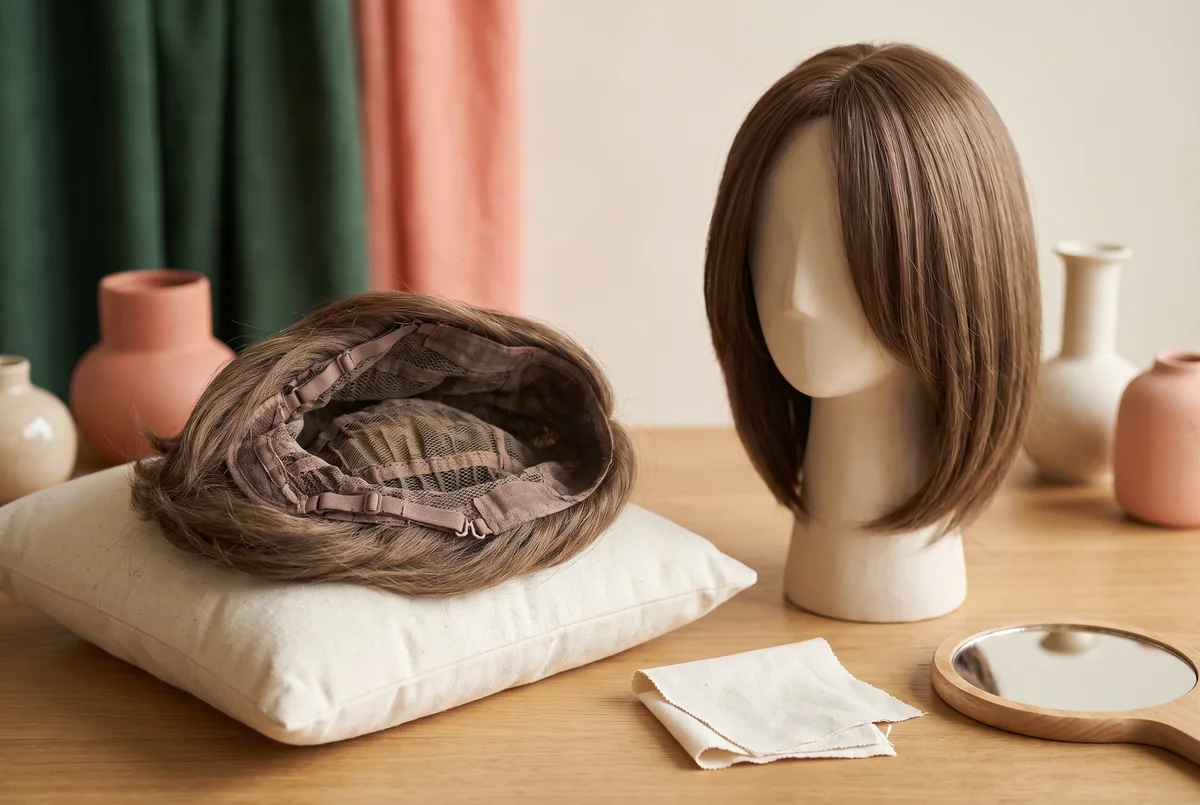
A full wig provides an overall hairstyle; a topper is a partial piece intended to work with existing hair. Neither label tells you how much assistance you will want. Keep separate candidate lines so that a crew member cannot substitute one for the other under a general instruction to “bring a hairpiece.”
When enquiring about a glueless wig, ask which exact model is intended for wear without adhesive, how its fit is assessed and what preparation support is available. Do not treat the category label as proof that every listed item needs no assistance or suits your recording movements. Availability and service scope still require confirmation.
Compare options through their demands on your recording day, not through an assumed hierarchy of realism or quality.
| Option | Recording-day advantage to consider | Personal involvement to consider | Confirm before choosing |
|---|---|---|---|
| Full wig | One overall hairstyle for the session | Private preparation and whole-piece handling | Actual cap fit, wearing conditions and assistance offered |
| Partial topper | Changes a selected area while retaining other hair | Blending and possible access to existing hair | Coverage, attachment design and suitable fitting support |
| Current hair, without a piece | Avoids purchasing or introducing another item | Any styling help remains a separate choice | Whether the agreed creative brief accepts this look |
| Postpone the styling decision | Leaves unresolved questions open | May require a revised filming date or format | Which information is missing and who will answer |
A partial piece is not automatically the more private option: its preparation may involve hair you prefer nobody else to touch. A full wig is not automatically simpler either. Choose the option whose confirmed preparation you can accept, including the possibility of recording without a purchase.
3. Treat construction as product information, not permission
Front construction and wearing method answer different questions. A front feature describes part of the piece; it does not, by itself, establish whether adhesive is needed, which adjustments are appropriate or whether somebody is qualified to make them. Keep these questions separate when speaking with the provider.
Ask for the model's written wearing and care information, then describe the intended session in ordinary terms. “Seated speaking with occasional turns towards a screen” is more useful than “secure for filming.” The latter leaves everyone guessing what movement, duration and assistance are included.
Also ask what happens if you need a break or want to remove the piece privately. Agree a place to put it, who may move it and whether any preparation area is within camera view. These are practical arrangements, not reasons to demonstrate removal for the crew.
Avoid accepting a production request to alter the piece merely because the hairstyle reference differs. Cutting, adhesive use, chemical changes and heat styling need product-specific guidance and appropriate professional assessment; this article provides none of those procedures. A recording deadline is not a substitute for knowing what the item permits.
Bring the instructions only to the person who needs them. The director may need to know that adjustments take place off camera, while the provider may need detailed product questions. Keeping those conversations separate lets the team plan the shot without turning personal preparation into content.
4. Name who may handle, adjust and store the piece
“Styling assistance permitted” is too broad to be useful. Separate carrying the packed item, moving it on a stand, touching the outer hair while worn, accessing the cap and helping with removal. You may accept one action and decline another. Ask the team to record those distinctions rather than assume permission transfers between roles.
A request about a lace front wig should identify the actual product and the proposed assistance. Front construction does not authorise a camera operator or general assistant to make adjustments. Confirm the provider's service scope, then decide whether the named helper may perform the particular action during this session.
Use names where possible, with an agreed backup if the person is absent. A practical phrase is: “Please tell me what you want to adjust and ask before touching; if the named helper is unavailable, pause rather than substitute someone.” This protects the arrangement when the crew changes.
Keep products and professional services distinct in any quotation. Hong Kong Customs describes prohibitions on unfair trade practices, including false trade descriptions of services and misleading omissions.2 That supports asking what a paid preparation service actually includes; it does not establish that a provider offers your preferred handling arrangement or an unconditional refund.
Finally, agree who keeps the piece during breaks and who returns it at wrap. A general permission to help during a take should not become permission to pass it around, use it for a demonstration or photograph it backstage.
5. Decide image use independently of product choice
Treat capture, access and publication as three separate conversations. You might accept a recording for your own learning review but decline a public promotional clip. You might accept the finished presentation yet decline preparation footage, still images, thumbnails or behind-the-scenes posts. Write the intended uses instead of relying on “for the course.”
Someone comparing hair toppers for a teaching video can make the same distinction: selecting a partial piece does not mean agreeing to a post about that choice. If the content is about the lesson, ask that captions and accompanying images stay about the lesson unless you expressly agree otherwise.
For a brand video, identify the intended channels and formats: the company website, a named social account, paid advertisements or internal training. Ask whether other partners will receive the files. Agree whether your name, account tag, voice and recognisable surroundings may appear alongside the footage.
A cropped or face-free image is not a promise of anonymity. Your voice, clothing, workstation or accompanying caption could still make the recording recognisable to people who know you. Review the proposed presentation as a whole rather than treating a missing face as the only privacy decision.
If you want approval before publication, ask whether that can be agreed, who sends the preview and what counts as your approval. Do not assume silence means approval. These are proposed working arrangements, not a statement of legal rights; use the organiser's actual documents and seek appropriate advice where terms are unclear.
6. Complete a recording permission brief together
Copy the following table into a message or shared document before the session. Replace the prompts with your decisions, then ask the organiser to acknowledge the same version. “To confirm” should stay visible rather than becoming an accidental yes.
| Record field | Your entry | Organiser or provider confirmation | Pause condition |
|---|---|---|---|
| Full-wig option | Candidate or “not selected”; acceptable preparation | Exact model and available support | Model or wearing conditions unclear |
| Partial-piece option | Candidate or “not selected”; acceptable blending help | Coverage and preparation requirements | Substitution proposed without agreement |
| Handling consent | Named helper; actions allowed and excluded | Helper and backup acknowledge limits | Unapproved person or action introduced |
| Recording scope | Devices, spaces and preparation footage allowed | Crew receives the recording boundary | Extra device or backstage capture appears |
| Image-use preference | Audience, channels, formats and naming preference | Responsible publisher confirms intended uses | New channel or format proposed |
| Stop and review | Agreed phrase; footage to hold; contact person | Person responsible for pausing and file review | Stop request is not acknowledged |
A concise pre-recording checklist makes the brief usable on set:
- Confirm the selected piece; do not merge the full and partial options.
- Identify the helper and the person managing recordings.
- Check that the preparation space is outside the agreed capture area.
- Repeat the allowed audience and publication uses.
- Confirm the pause phrase and how affected footage will be marked.
- Keep a copy of the acknowledged brief and any later changes.
In a hypothetical adult lesson recording, the presenter might allow a named helper to carry the packed wig but make all worn adjustments privately. They could allow a class-review recording while leaving public promotional use unapproved. If the organiser later requests a social clip, that request returns to the image-use row; it does not erase the earlier handling limits.
7. Plan what happens when you pause or change your mind
Choose a plain stop phrase, such as “Pause recording, please.” Agree that it means stop capturing, allow space and ask what you want next. Do not make you explain the reason on camera or negotiate while someone is already adjusting the piece.
Distinguish stopping the current take from dealing with footage already captured. Ask who will mark the affected take, prevent it entering the edit while reviewed and confirm its eventual treatment. If multiple devices recorded it, the organiser needs to identify those copies too. A verbal pause alone cannot demonstrate that every file has been deleted.
Before a live session, ask what can actually be stopped. A producer may be able to mute or change the feed, but cannot promise viewers have not already seen or recorded it. If that exposure conflicts with your boundary, choose a prerecorded, audio-only or non-participating option before going live.
The brief cannot guarantee stable wear, comfort, confidentiality or enforceability. If the piece shifts, feels unsuitable or needs an adjustment outside the agreed support, stop and seek product-specific advice rather than improvising installation. Persistent scalp discomfort or a health concern belongs with an appropriately qualified healthcare professional, not a production decision.
Your next step is small: send the completed brief with the unresolved product questions before buying or filming. If the provider cannot clarify wearing conditions, or the organiser cannot respect the essential recording limits, revise the look, format or schedule. A successful planning decision can be not to proceed with that setup.
Frequently Asked Questions
Does a lace front specify attachment support?
No. It describes front construction, not the complete wearing method or assistance offered. Ask about the exact model and service scope, then separately decide who may touch or adjust it during recording.
Is a topper the same as a full wig?
No. A topper is a partial piece that works with existing hair; a full wig supplies an overall hairstyle. Keep separate preparation and permission entries, even if both are candidates for the same video.
Who decides whether someone may handle the piece?
State your handling boundaries and ask the organiser to agree them before the session. Name permitted actions and helpers. If the requested support is unavailable, pause or revise the setup rather than assuming a substitute has permission.
Is image-use preference separate from product choice?
Yes. Choosing what to wear does not answer where recordings should appear. Discuss learning review, public videos, stills, advertisements and preparation footage separately, using the organiser's actual terms rather than assumptions.
Does the brief guarantee secure movement?
No. It coordinates people and recording decisions; it does not assess fit or certify a product. Confirm wearing conditions with the provider and stop if the planned activity or assistance exceeds what has been agreed.
References
Editorial disclosure
FlintHub and OwnStrand share ownership. FlintHub Academy prepared this article with AI-assisted organisation of public-source material and editorial planning tools. It is not an independent expert endorsement, a wearer test, legal advice or clinical guidance. Actual products, availability and services require provider confirmation.
FlintHub Academy · AI-assisted editorial prepared from public information. FlintHub publishes creative-learning and personal-planning resources. This is not a first-hand product test, a real client case or a claim of wig-fitting, hairdressing or medical qualifications. OwnStrand and FlintHub Academy have the same owner.