Start with the decision, not the gift
A new baby can prompt a rush to choose something small, sweet, or traditional. But a gift’s name or appearance does not tell you who will use it, whether it fits the family’s plans, or where it will go. Parents may already have the basics, prefer fewer belongings, or welcome practical help instead. Begin by deciding what you want the gift to do: mark the occasion, support a parent, offer something for an older sibling, or provide a useful household item. Those are different aims, and they can lead to different choices.
Treat the parents’ answer as a helpful boundary, not a test of how grateful they are. If you are not close enough to ask directly, a relative or friend may be able to pass on a simple question. Keep the budget and your own comfort level in mind, and avoid assuming that a higher-priced or more elaborate option will be more useful. A considered card or a modest item that fits a stated preference can be more personal than a surprise that creates storage, exchange, or follow-up work.
For Hong Kong planning, consider the handover location and household arrangements; do not assume a merchant has a local branch or particular delivery service. This guide helps frame questions, not assess a seller or product.
Identify the recipient and the real user
“Gift for the baby” is a social description, not a reliable guide to who will use an item. A parent may be the recipient of a meal or a household convenience; an older sibling may enjoy an activity; and an infant may eventually use a toy selected for an appropriate age. Ask who the gift is for, who will handle it, and when it is intended to be used. If the answer is unclear, choose a non-specific option or ask before buying rather than relying on the occasion’s label.
For toys or children’s products, check the age recommendation and the product’s own information. Hong Kong Customs advises against giving a child under three a toy intended only for children aged three and above, and cautions against toys with small or detachable small parts; these points are selection considerations, not certification of a particular product 1. Customs also describes warning and identification requirements for products covered by relevant rules. That guidance does not apply to every family gift, and a label alone does not establish that every safety concern has been resolved.
If considering food, ask the recipient about relevant restrictions and check the current package information for the particular product. Food Allergy Research & Education advises rereading packaged-food labels because ingredients and manufacturing processes may change; where ingredients or cross-contact are uncertain, it recommends contacting the manufacturer 2. This is a reason to ask and verify, not a promise that a label or answer can eliminate risk. If the family has not given clear guidance, avoid presenting food as suitable for them.
Compare options by fit, not by occasion
Use the family’s stated preference, the intended user, and your ability to confirm details as the comparison criteria. The alternatives below are broad approaches, not endorsements of any particular item or provider. “Ask first” may be the best choice when a product depends on age, ingredients, household routines, or a specific need. “Keep it flexible” can be more considerate than guessing, provided you confirm that the format is welcome and usable.
| Approach | When it may fit | What to confirm | Main trade-off |
|---|---|---|---|
| Practical household item | Parents have named a current, ordinary need | Exact item or type, quantity, storage, and whether it is already covered | Useful when requested, but a guess can duplicate what they own |
| Food or consumable | The family has welcomed this kind of gift | Dietary restrictions, current ingredient label, delivery or handover details | Used up rather than stored, but suitability cannot be assumed |
| Toy or child-focused item | The intended child and use are clear | Age recommendation, warnings, parts, and who will supervise or store it | Can mark the occasion, but the label “baby gift” does not establish infant suitability |
| Flexible contribution or experience | Parents prefer choice or less physical clutter | Their preferred format, timing, and any conditions | Lets recipients decide, but only works if the arrangement is convenient to them |
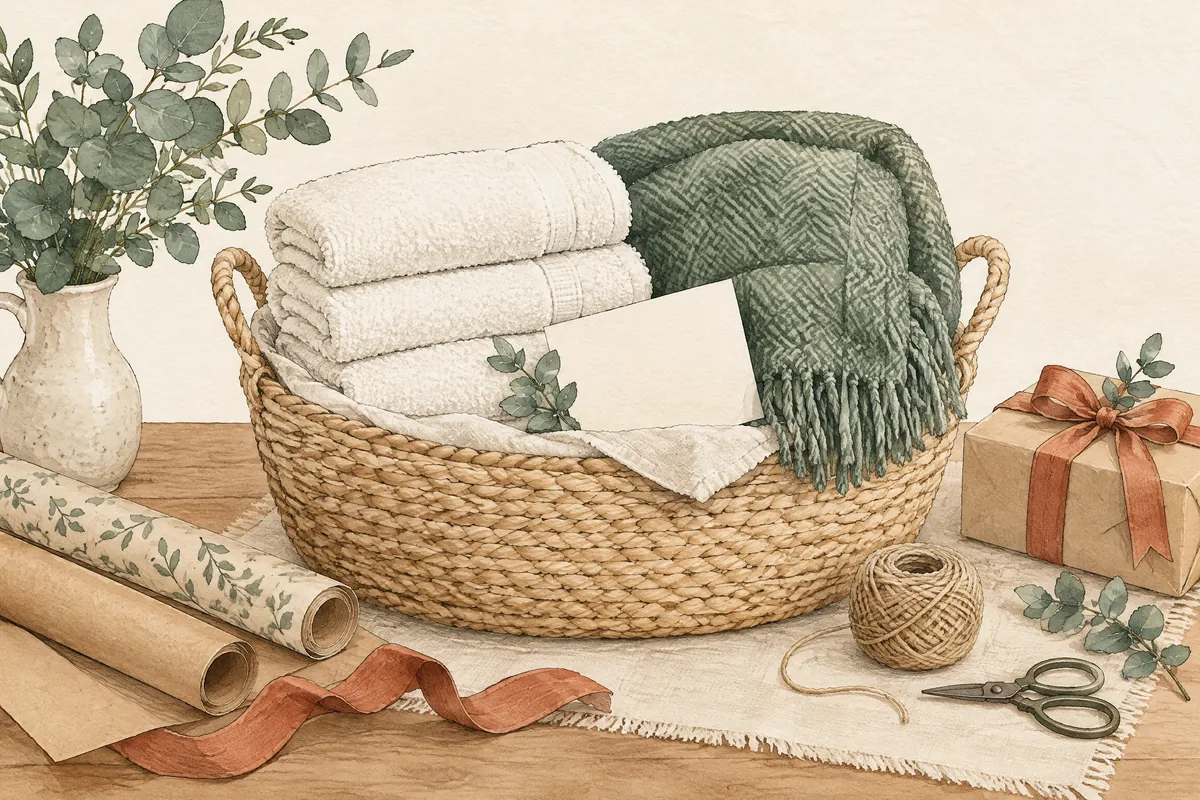
A Baby gift basket can describe a collection, but its format does not establish whether each item suits the family or intended user. Ask which categories are welcome and check actual contents, age information, and food labels where relevant; a shorter, clearly specified choice may leave fewer questions to resolve.
Turn a broad enquiry into specific requirements
A casual “What do you need?” can be difficult to answer, especially when parents are busy or do not want to ask for anything. Make it easier to respond by offering a few neutral directions: something practical for the adults, an item for an older child, a food gift if appropriate, or no physical gift. Avoid steering the family toward something you have already chosen. If they name a product or category, repeat the details back so that you have not mistaken a general wish for an exact specification.
When you are comparing possible purchases, separate confirmed information from assumptions. A preference such as “something for the parents” does not identify an item. “No food gifts” is a clear boundary. “A toy for the older child” still leaves age and product details to check. If a seller is involved, treat unanswered questions as open questions requiring written confirmation. Do not infer stock, contents, suitability, certification, delivery timing, or a return arrangement from photographs or a broad category description.
For families considering a celebration as well as a present, the FlintHub Academy baby 100-day catering learning guide can help reconnect occasion planning to practical questions about guests, preferences, and arrangements. It is a separate learning resource, not a catering offer or a claim that food is included with any FlintHub course. Keeping gift decisions separate from event arrangements can also make it clearer which person needs to answer each question.
| Enquiry approach | When to use it | Questions to resolve | Trade-off |
|---|---|---|---|
| Ask for an exact item | The family has a specific preference | Confirm the intended user, exact product, quantity, and any relevant age or ingredient information | Gives a clear starting point, but availability and current product details still need confirmation |
| Offer a choice of categories | The family wants a gift but has not named one | Ask which categories are welcome, what to avoid, and whether storage or duplication matters | Leaves room for preference, but requires another conversation before choosing an item |
| Let the recipient choose | The family prefers control over the final selection | Ask which format is convenient and confirm any provider's terms in writing | Avoids guessing the item, but the arrangement itself must be welcome and usable |
| Defer the purchase | A key preference or product detail remains unknown | Ask whether a note now or a later enquiry would be welcome | Avoids committing on incomplete information, but leaves the gift decision open |
This comparison offers different ways to move an enquiry forward; none replaces confirmation of relevant product details or the family's wishes. Pause if a key detail is unclear. For food, check the specific package and contact the manufacturer about uncertainty, as FARE advises 2.
Use the new-family gift preference interview
This short interview is a usable decision aid. Ask only the questions that matter, and make it easy for the family to skip any of them. You can send the prompts in a message, ask a friend to pass them on, or use them as notes before choosing. Write the answers beside each prompt; mark anything not answered as unknown, rather than silently filling it in. This helps keep a thoughtful intention from turning into an unwanted obligation.
- Who is the gift for? Parent or parents, the infant, an older sibling, or the household? Record the intended user in the family’s own terms.
- What would be welcome now? Ask whether they prefer a practical item, food if suitable, something for an older child, a flexible option, or no physical gift. Do not treat an example as a suggestion they must accept.
- What should I avoid? Ask about categories they do not want, including food or toys, and whether space, timing, or duplication is a concern. Record a “no” as a firm boundary.
- What details affect use? For a toy, note the intended child and the age information still to check. For food, note that the current ingredients and any family restrictions need to be considered. For another item, note any requested type or size.
- How should it be handed over? Ask where and when would be convenient, who can receive it, and whether they would rather receive it later. Do not promise a delivery or a date until the relevant provider confirms it in writing.
- What remains unknown? List unanswered questions for the parent or provider. If a key point cannot be confirmed, change to a simpler option or do not proceed.
Read back the choice: “I understood that you would welcome [type] for [recipient], and I will check [open detail] before arranging it.” If a key detail remains unconfirmed, choose another approach rather than treating uncertainty as approval.
Plan the handover and keep the choice flexible
A suitable gift can still be inconvenient if it arrives at a difficult time, needs storage, or is addressed to someone who cannot receive it. Confirm the preferred handover with the parents, and ask any provider for written details that matter to your plan: the actual contents, relevant product information, available handover method, timing, and conditions for changes. These are questions to ask, not claims about what any merchant offers. If a provider cannot confirm something important, do not substitute an assumption based on a general product page.
In Hong Kong, a family might be coordinating visitors, work, or a celebration, but those are planning possibilities rather than a rule about every household. Let recipients choose whether a gift is handed over at home, at a gathering, or later. For a toy, retain the product’s age and warning information so the parents can review it. Customs’ guidance on age recommendations and small parts is useful context, but it should not be stretched into a conclusion that a particular toy is safe 1.
A Birthday gift page may relate to a later occasion, but its label does not tell you what a new parent wants now. Keep this choice grounded in the family’s preferences. For broader activity planning, FlintHub Academy’s kids workshop hong kong learning route is a separate resource, not a promise of a particular workshop, gift, or included service.
Resolve open questions before you approve a purchase
Before spending, review what the family actually said, what the product information actually confirms, and what remains unknown. For a food gift, restrictions and the label for the current item matter; a missing precautionary statement should not be treated as proof of suitability. For a toy, check the age recommendation and product warnings rather than relying on the occasion or packaging name. These checks reduce avoidable guesswork, but they are not a safety certification or a guarantee of suitability.
If considering Baby gift hampers, ask whether the family wants one and who would use its contents. Request specific contents and relevant product details in writing; a category or photograph may not resolve questions about ingredients, age guidance, substitutions, or handover. This is a page label and enquiry resource, not an endorsement. If details remain open, ask the parents or choose a simpler confirmed option.
Check that the gift is welcome, practical to receive, and within your means. Respect a “no”; if you cannot establish that an item fits, a note or later offer of help may be preferable to a surprise purchase.
Frequently asked questions
What is a thoughtful gift for a new family?
Start with the parents’ stated preference and the intended user. A practical item, a food gift, or something for an older sibling may each fit some families and not others. Ask what would be welcome, respect any exclusions, and avoid treating the baby’s arrival as evidence that a particular product is needed.
Is a gift labelled for a baby necessarily suitable for an infant?
No. The label describes a gift category, not necessarily the product’s intended user or appropriate age. For toys and children’s products, check the item’s age recommendation and warnings. Hong Kong Customs’ guidance is useful selection context, but it does not certify an individual product or establish that every risk has been addressed.
What should I check before giving food?
Ask whether food is welcome and whether the family has restrictions, then review the current package information for the exact item. FARE advises rereading packaged-food labels and contacting the manufacturer if ingredients or cross-contact are uncertain. Neither a general description nor an absent warning can establish that a particular food is suitable.
What if the parents say they do not need anything?
Take them at their word. You can thank them for being clear, send a warm note, or ask whether they would welcome a later offer of help. Do not press them to justify the answer or replace it with a surprise item that could add storage, delivery, or decision-making work.
What should I confirm with a seller before ordering?
Ask for written confirmation of the specific contents and any product information relevant to the intended user, as well as handover arrangements and applicable terms. Treat unanswered details as unknown. Do not assume availability, delivery timing, substitutions, returns, certification, or suitability unless the provider has clearly confirmed the point.
Editorial disclosure
This article was prepared by FlintHub Academy’s AI-assisted editorial team on 2026-11-10; this is the editorial preparation date, not a known publication date. FlintHub Academy and YumYum have the same owner, so this is not an independent recommendation. We do not assess or endorse YumYum or any other merchant. Our editorial team does not claim medical, veterinary or professional qualifications. Any merchant details left open in this article require written confirmation. Hong Kong is discussed as a planning context only, not as a claim about local branches or services. FlintHub courses do not imply gifts, food, catering, or flowers are included.
References