1. Start with the decisions your reception requires
Reception food is not just a choice between a large platter and a small bite. The menu has to fit the event’s purpose, its flow and the way guests will use the room. A networking reception, a short welcome gathering and a longer event with speeches may call for different service approaches, even if they have similar guest numbers. Begin by writing down what food should accomplish: offer a light welcome, sustain guests through a longer programme, or complement a meal arranged elsewhere.
Then map the practical conditions around that goal. Note the expected attendance, whether guests will be standing or seated, the time available to eat, and any constraints on tables or access. These are planning prompts, not assumptions about a particular venue or supplier. For Hong Kong events, treat the location as a planning context and confirm building access, loading arrangements and room rules directly with the venue. No menu label alone tells you what labour, equipment or service is included.
2. Map the people and the programme
Think about how attendees will encounter the food. Will people arrive together, or in waves? Are guests likely to be carrying bags, holding drinks, moving between rooms or listening to a speaker? A bite that can be picked up and eaten with little interruption may suit a standing exchange; food that needs a plate, cutlery or a place to sit calls for a different setup. These are practical distinctions to discuss, not a guarantee that any named menu will meet them.
Estimate attendance carefully, and distinguish confirmed guests from people who have not replied. The University of Rochester’s Green Events Handbook recommends estimating attendance accurately and planning orders strategically to help reduce food waste 1. That is a useful planning principle, not a portion formula: it does not specify how many pieces or platters a reception needs. Ask the supplier how its quantities are described, what assumptions they use, and how they handle changes to the expected number.
List dietary requests separately from preferences, and ask how the supplier records and communicates each one. A request being noted is not proof that a dish is free of an allergen or appropriate for a medical diet. Avoid making safety assurances on the basis of a menu description. Instead, request written details about ingredients, preparation and any limits on what the supplier can confirm, then decide whether the information meets your event’s requirements.
3. Compare formats by how guests will eat
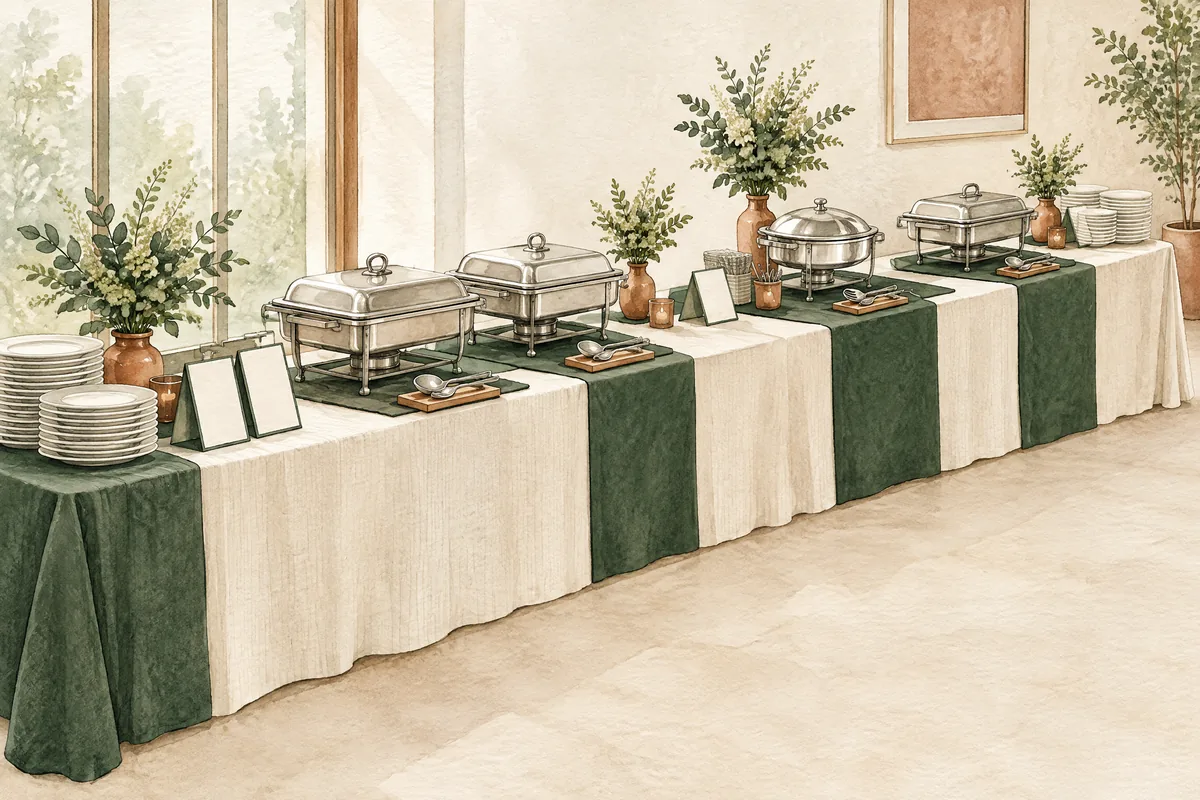
A platter can offer a shared selection that guests serve themselves. Individually portioned finger food or canapés can be easier to circulate or pick up, but the names do not establish serving size, staffing or service style. UC San Diego’s catering guidance distinguishes buffet service, which usually needs less staff but may require someone to portion a main dish, from plated service, which needs more staff and adequate kitchen preparation space 4. This is an example from a university catering operation, not Hong Kong law or a description of any YumYum package.
| Approach | May suit when… | Questions to resolve |
|---|---|---|
| Shared platters or buffet-style spread | Guests can approach a serving point, and the venue has suitable surfaces and room for a queue. | How many platters or selections are proposed? Are plates, serving utensils, replenishment and clearing included? |
| Individually portioned finger food | Guests will mostly stand, mingle or move between parts of the event. | How is the food handed over or displayed? What quantity is proposed, and does it need plates or napkins? |
| Plated service | Guests will be seated and the programme allows a more structured meal. | What staffing and preparation space are required? What service tasks and equipment are included? |
For a shared buffet with two main dishes, a simple half-and-half order may not ensure both remain available until every guest has served themselves. UC San Diego flags that as a planning risk, but it is not an inevitable outcome or a universal quantity rule 2. Ask how the proposed mix relates to attendance and whether the supplier recommends a different allocation. If the event needs several formats, compare the actual service plan rather than assuming a menu category answers every operational question.
When exploring platter options, Food Platter Delivery is a page label to use as an enquiry starting point, not a recommendation or confirmation of availability. Ask for the proposed contents, quantity, presentation, handover arrangement and any included equipment in writing. For Hong Kong planning, verify that delivery access and the venue’s setup rules work for the specific event; do not infer a delivery time, service scope or price from the page name.
4. Turn menu interest into specific enquiries
A useful enquiry describes the event before requesting menu options. Include the date and venue area, the estimated attendance and the time guests are expected to eat. Explain whether food is intended as a light reception offering or a substantial part of the event, and say whether the programme includes speeches, demonstrations or a presentation. UC San Diego’s Event Planning Tips notes that event purpose and programme elements can affect timing, staffing, menu and service style 2. Its guidance is an example for planning, not a local requirement or a guarantee of a supplier’s capabilities.
| Enquiry approach | Useful when… | What to make explicit |
|---|---|---|
| One consolidated enquiry | The event plan and likely format are already clear. | Include attendance, eating time, venue area and programme; ask for a written proposal and list of inclusions. |
| Exploratory enquiry with alternatives | The format or service requirements are still undecided. | Ask for comparable options and identify which quantities, equipment, staffing or tasks remain unconfirmed. |
| Separate operational follow-up | A menu proposal exists but handover or venue logistics are unresolved. | Confirm access, setup, service boundaries, changes and charges with the relevant supplier and venue. |
Use a clear list of open questions. Ask what the quoted menu contains, how quantities are calculated, when final attendance must be confirmed, and whether later additions affect the charge. Ask separately whether serving utensils, plates, cups, napkins, setup, replenishment, clearing or staff are included. Do not treat an item as included unless the written response says so. Rochester’s handbook recommends reusable cups, plates and cutlery where practical, while also advising organisers to tell the caterer if they are supplying reusable items themselves 1. It does not establish that a supplier provides, washes or collects them.
For a more mobile menu, Party Finger Food Catering can identify a page to enquire about, but it does not endorse a provider or establish what the service includes. Ask whether pieces are supplied ready to display or handed out, how the suggested quantity is intended to serve the expected guests, and what setup the venue must provide. Keep answers about staffing, delivery, equipment and any additional charges as written confirmations rather than assumptions based on a category name.
5. Use the standing reception menu-role planner
Complete this worksheet before comparing proposals. It turns a broad menu discussion into a record of what the event needs and what remains unconfirmed. Copy it into your planning notes, add answers as they arrive, and leave unknowns visibly marked rather than filling gaps with guesses.
Standing reception menu-role planner
- Event purpose: What should the food do—welcome guests, support networking, or provide a substantial part of the meal?
- Attendance: What is the current estimate, how many are confirmed, and when will the final count be available?
- Programme: When do guests arrive, when can they eat, and are speeches or other activities taking place during service?
- Guest movement: Will guests stand, sit, move between rooms or queue at a serving point? What surfaces are available?
- Menu format to compare: Which options are under consideration—shared platters, individually portioned bites or plated service—and why might each fit?
- Food information: What ingredients and dietary details are available in writing? What cannot the supplier confirm?
- Service boundaries: Who provides plates, utensils, napkins, display equipment, setup, replenishment, clearing and staff? Record “awaiting written confirmation” for each unclear item.
- Venue logistics: What are the confirmed access route, unloading point, setup window, room restrictions and day-of contact?
- Commercial terms: What is included in the written proposal? What deadlines, late changes, extra quantities or additional charges need clarification?
- Decision and owner: Which option best fits the event’s purpose and constraints, and who will obtain each outstanding answer?
Use the worksheet to compare like with like. If two proposals describe different service tasks or equipment, ask for revised details before deciding that one offers better value. For a canapé-focused enquiry, Canapé Catering is a page label rather than a quality claim or promise of service. Request the menu, proposed quantities and service boundaries in writing, and record whether the format fits the room and programme before treating it as a candidate.
6. Coordinate handover, access and exceptions
Food planning includes the space and the handover, not only the menu. Confirm the venue’s loading point, access route, setup window and restrictions with the venue, then ask the supplier what information it needs. Identify a day-of contact who can answer questions about arrival and placement. Georgia Tech’s Event Planning Checklist advises coordinators to discuss setup and breakdown timing, unloading, equipment, cost changes and day-of contacts with suppliers 3. This campus checklist is a practical prompt, not evidence of a Hong Kong venue rule, guaranteed arrival or any particular supplier’s service.
Agree on what happens if attendance changes, access is delayed or the room setup differs from the plan. Ask which changes can still be accepted, by what deadline, and whether they alter the written charge. Confirm who places food, who replenishes it, who clears it and when each task ends; do not infer that delivery includes staff or cleanup. If reusable items are part of the plan, decide who supplies and collects them, and confirm that arrangement with both venue and supplier.
A separate event catering planning article can reconnect this menu discussion to FlintHub learning and activity planning: organisers can use it to think about how food fits an activity’s flow, then return here to document menu and venue questions. It is a learning resource, not evidence that a course includes food, catering or gifts. For an event in Hong Kong, independently confirm local venue arrangements and supplier terms; this guide does not establish local legal requirements.
7. Resolve open questions before approval
Before approving an option, check that the written proposal matches the event you described. Compare its contents, quantity basis, service method, equipment, staffing, setup and clearing against your worksheet. Check that attendance and dietary requests have been communicated, without treating acknowledgement as an assurance about allergens or medical suitability. If the proposal leaves a point open, ask for a direct written answer or mark it as excluded; a menu title is not a substitute for a scope statement.
A final comparison should account for the work the organiser must still do. A lower-complexity format may still require the venue to supply surfaces or the host to manage serving, while a more structured service may require more preparation space and staffing. Do not assume either option is inherently simpler or less costly without the supplier’s itemised terms. If the event includes training or another facilitated activity, the corporate activity planning page is a FlintHub learning and activity-planning route for connecting programme design with event logistics; it does not imply that training includes catering or food. Make the decision only after the organiser, venue and supplier have the same written understanding of responsibilities.
Frequently asked questions
Are platters or finger food better for a standing reception?
Neither is automatically better. Compare how guests will move, whether they can reach a serving surface, and whether they can manage a plate while talking. Ask for proposed quantities, serving equipment and handover details. A page or menu label alone does not establish suitability, staffing or what is included.
How much reception food should I order?
There is no universal quantity in the planning guidance cited here. Start with a realistic attendance estimate and tell the supplier whether the food is a light offering or part of a meal. Ask how quantities are calculated, what assumptions apply, and how confirmed changes affect the proposal.
Can I rely on a menu description for dietary or allergen needs?
No. Request written ingredient and preparation information, and ask what the supplier can and cannot confirm about the specific request. A recorded dietary note is not an assurance that food is free of an allergen or suitable for a medical diet. Make decisions using information you have actually received.
What should I ask about service and equipment?
Ask separately whether staff, setup, serving utensils, plates, cups, napkins, replenishment and clearing are included. Clarify when service begins and ends, who performs each task, and what the venue needs to provide. Keep unresolved items marked as questions until they are confirmed in writing.
Which venue details should I confirm before approving a menu?
Check access, unloading, setup time, available surfaces, room restrictions and the day-of contact with the venue. Confirm the handover and any changes to attendance or timing with the supplier. University event checklists can suggest useful questions, but they are not Hong Kong law or proof of a supplier’s arrangements.
Editorial disclosure
FlintHub Academy and YumYum have the same owner. This article was prepared with AI assistance by FlintHub Academy’s editorial team on 2026-11-10; this is the editorial preparation date, not a confirmed publication date. It is an editorial planning guide, not an independent recommendation of YumYum or any other merchant. FlintHub Academy does not claim medical, veterinary or professional qualifications. University guidance cited here is used only as an example of event-planning considerations; it is not Hong Kong law or proof of YumYum’s services. Confirm open menu, price, timing, staffing, equipment, dietary and venue details directly and in writing. No FlintHub course is represented as including gifts, food, catering or flowers.
References