1. Decide what the cake plan must settle
A wedding cake decision combines appearance, serving context and a practical handover. A design can look convincing on a screen yet leave important questions unanswered: What are the finished dimensions? Which elements are edible? What does the quoted arrangement include? Who receives the cake, and where can it be kept before serving? Treat these as separate decisions and put answers in writing rather than assuming a picture or brief conversation covers them.
Start with the event constraints you control: the venue’s access arrangements, the place available for display, the time the cake is needed, and the person authorised to accept it. These are planning questions, not claims about any particular venue or supplier. If an answer depends on a merchant’s service, mark it as unconfirmed until that merchant confirms it in writing.
2. Map the people and serving context
Before choosing a style, identify who will make decisions, who will receive the cake and what the serving situation requires. The couple or organiser may approve artwork; a venue contact may explain access; another named person may accept the order. Keep those roles distinct. Confirm the guest count and intended serving approach with the event team, but do not infer a cake’s yield from its appearance or an unverified product description.
Collect ingredient questions from the people who will eat the cake, then ask about the exact proposed base, filling and decoration. The U.S. FDA lists nine major food allergens in its own regulatory context and explains that shared equipment or production lines can cause cross-contact; a missing “may contain” statement is not evidence that cross-contact is absent 2. That American list is a prompt for questions, not Hong Kong law or a complete list of every individual concern. Ask the merchant about the selected recipe and its controls, and do not treat a substitution as a safety guarantee.
3. Compare workable cake approaches
Choose a format by balancing the role the cake should play, the available display space and the certainty of the service plan. A tiered centrepiece may prioritise a traditional focal point; a simpler single form may be easier to fit into a compact display. A design-led cake may emphasise a motif or lettering, while a plainer finish may leave more attention to flowers or table styling. These are planning distinctions, not promises about price, servings, construction or availability.
| Approach | May suit | Confirm before choosing |
|---|---|---|
| Tiered centrepiece | An event where the cake is intended to be a prominent display feature | Finished height and width, construction, display surface, transport and whether every tier is intended for serving |
| Single-form cake | A display with limited space or a preference for a simpler outline | Finished dimensions, serving plan, how the chosen design will read at the event and whether any separate display element is involved |
| Lettering or number-led design | A personal motif that can be expressed clearly through text or numerals | Exact spelling or characters, font or style reference, scale, placement, and which decorative parts are edible |
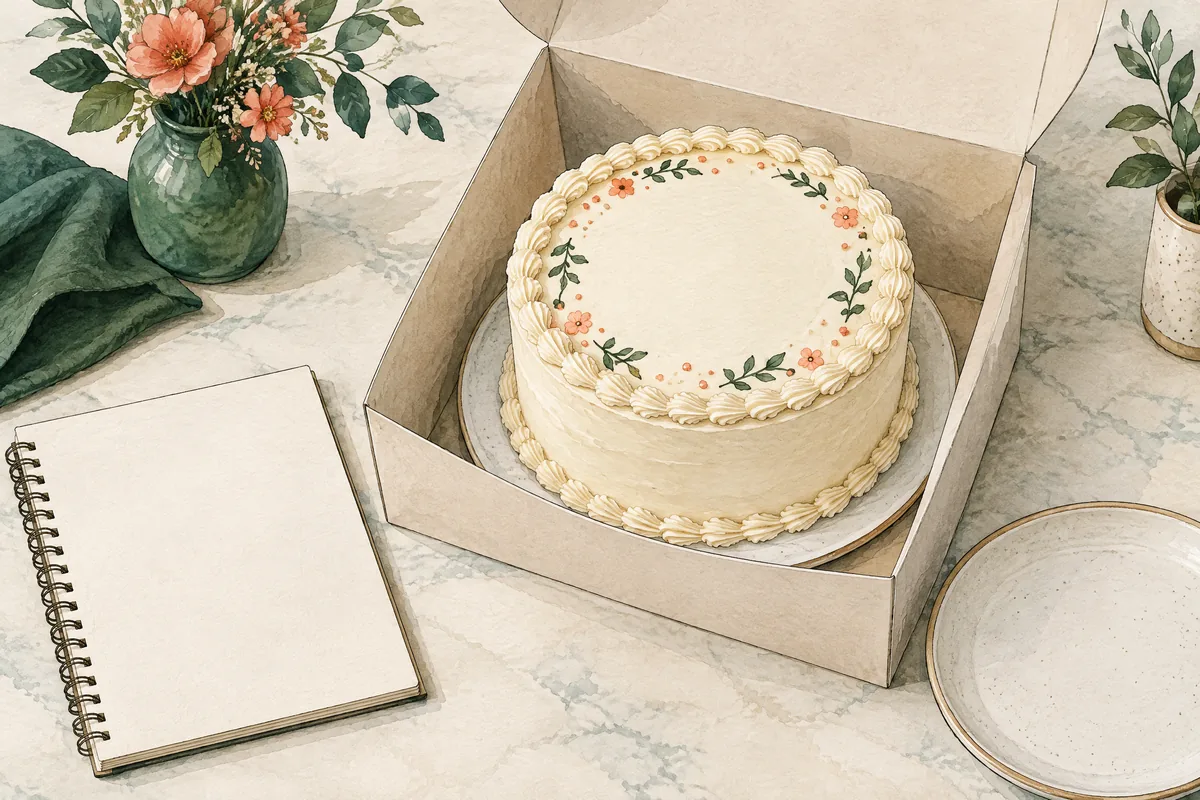
If exploring a Wedding Cake, treat the page name as an enquiry starting point, not evidence of a particular design, ingredient, delivery option or service inclusion. Send a written brief with the venue’s display constraints and ask the merchant to confirm the possible format, finished dimensions and what is included. The answers should describe the order you are actually considering, not a general assumption based on a category label.
4. Turn inspiration into a specific brief
Translate visual references into instructions that can be checked: colours, wording, placement, relative scale, preferred finish and elements that should not appear. Attach a reference image only as inspiration unless the merchant confirms it can be reproduced. Ask whether artwork creation or revisions are included, what file or image format is needed, and how the final proof will be approved. None of those design services or specifications should be presumed from a product page.
For a lettering-led alternative, Custom Letter Cake is a page label to discuss rather than confirmation of a particular shape or customisation scope. Spell out the intended letters, their order and any punctuation in the enquiry, then ask how the merchant will show scale and placement in the proof.
For numerals, Number Cake likewise names an enquiry route, not a confirmed format or specification. Confirm the exact characters and finished dimensions rather than assuming what the page offers.
As a useful cross-check, separate the wedding’s visual decisions from practical learning or activity planning. FlintHub's cake-making class page can support a separate learning enquiry about cake-making activities, but it does not establish that a class includes a wedding cake, catering or any order service. Keep any learning enquiry separate from the cake supplier’s written order details.
5. Use a design proof and service agreement
Use this worksheet in an email or shared document. Complete every field before approval; write “awaiting written confirmation” where the merchant has not answered. Keep the final approved version and any later amendments together so the organiser, venue contact and recipient refer to the same instructions.
Wedding cake proof worksheet
- Event and contact: Event date, venue planning location, organiser’s name, decision-maker and day-of recipient.
- Design reference: Attach the chosen reference and identify which features are essential, optional or not wanted.
- Final artwork: Record exact wording or numerals, spelling, colour, placement, scale and the version/date of the proof approved.
- Dimensions and construction: Ask for finished width, depth and height, plus a description of tiers or separate elements. Record only figures confirmed for this order.
- Ingredients: Ask for the proposed base, filling, icing and decoration ingredients. List each concern raised by guests and request a specific written response about the selected recipe and cross-contact controls. Do not describe the result as allergy-safe based on an unanswered question or substitution.
- Decoration: Identify each element as edible or non-edible and ask how any non-edible item will be identified and removed before serving.
- Storage and handover: Ask for the chosen product’s storage instructions, collection or delivery arrangements, handover location, responsible recipient and what happens if access is delayed. Record the merchant’s exact confirmed terms; do not assume delivery is available.
- Open items: List the question, who will answer it, the written answer and the date it was received.
This worksheet documents questions and approvals; it cannot verify a recipe, production method, venue facility or service promise. If the answers change the design, ingredients or handover plan, request an updated proof and agreement before treating the earlier version as final.
6. Coordinate storage, access and exceptions
Handover planning should join the merchant’s instructions to the venue’s actual arrangements. Confirm whether collection or delivery is being discussed, the exact location, who can enter, any access restrictions, the named recipient and what contingency applies if that person is unavailable. Ask the venue about its own storage facilities and timing rather than assuming refrigeration or a suitable display space is available. These details need confirmation from the parties responsible for them.
The Centre for Food Safety’s Trade Guidelines on Safe Production of Sweet Food advise keeping ready-to-eat dairy cream at 4°C or below and cold desserts at or below that temperature; the guidelines also note that some high-sugar artificial cream may be suitable for room-temperature storage, so the word “cream” alone does not settle storage requirements 1. The guidance was printed in June 2011 and includes examples and qualifications; it does not establish the storage needs or shelf life of a particular custom cake. Ask for product-specific instructions and confirm that the planned venue arrangements can meet them.
Avoid converting general guidance into a display-time guarantee. The same source gives room-temperature handling principles for applicable desserts under stated conditions, while excluding some shelf-stable sweets. It does not establish that every wedding cake can safely sit out for a specified event period. If the handover is delayed or the storage plan changes, ask the merchant for instructions for that specific product and update the venue contact.
A related wedding catering planning resource can help reconnect broader event decisions to FlintHub’s learning and activity content. It is not a catering offer or evidence that food, flowers or coordination are included with a course or cake enquiry. Keep the cake’s storage, access and recipient arrangements in its own written plan.
7. Resolve open questions before approval
The FDA advises that decorative products labelled only “non-toxic” or “for decorative purposes only”, without an ingredient list, should not be used directly on food. It also says non-edible decorations should be removed before serving 3. This is U.S. guidance, not evidence that a merchant’s materials comply or certification of a particular design.
Do not approve a proof while material details remain ambiguous. Check that the final version shows the requested wording, dimensions and decorative elements; that ingredient and storage questions have specific answers; and that the handover plan names a location and recipient. If a merchant cannot confirm a requested feature, decide whether to remove it, change the design or pause the order. A written “not available” is more useful than an assumption.
| Proof approach | Useful when | Questions to resolve | Written record to retain |
|---|---|---|---|
| Annotated visual reference | Colour, motif and relative placement are central to the brief | Can the merchant provide this proof format? Which features are illustrative rather than confirmed? | The agreed image version, exact wording, confirmed dimensions and notes identifying any differences |
| Written specification with a layout sketch | Characters, dimensions and component placement need explicit checking | Can the merchant confirm each specification? Does the sketch represent the proposed finished arrangement? | The agreed specification, sketch version, edible and non-edible elements, and any unresolved details |
For any unresolved point, record the question, the person expected to answer it and the decision deadline set by the organiser. Confirm changes through the same written channel used for the proof. This is a planning method, not a statement of merchant policy or a substitute for product-specific instructions. It helps keep the design decision, service agreement and event logistics aligned without implying that any particular service is available.
Frequently asked questions
What should a wedding cake design proof show?
It should identify the approved design version, wording, colours, placement, dimensions and the features that are edible or non-edible. Ask whether design creation or revisions are included; neither should be assumed. Record any differences between the reference image and the proposed finished cake.
How can we confirm ingredients for guests with food concerns?
Ask about the exact proposed base, filling and decorations, and request a specific response on relevant ingredients and cross-contact controls. A general category name or recipe substitution is not a safety guarantee. If a concern remains unanswered, discuss changing the plan with the relevant people before approval.
How long can a wedding cake stay out before serving?
There is no universal time in this guide for every cake. Storage needs depend on the actual product, and the Centre for Food Safety guidance has conditions and exceptions. Request written, product-specific instructions from the merchant and confirm the venue can follow them.
What should we clarify about non-edible decorations?
Ask which parts are edible, how non-edible elements will be identified, and who will remove them before serving. The FDA guidance is a U.S. source and does not certify a particular design or supplier. Keep its general advice distinct from confirmation about the actual decoration ordered.
What if the venue cannot confirm storage or access?
Mark the issue as open and ask the venue contact about its actual facilities and access arrangements. Do not assume the merchant or venue can provide an alternative. Before approval, agree a workable handover plan with the responsible parties or revise the order and event plan.
Editorial disclosure
FlintHub Academy and YumYum have the same owner. The editorial preparation date is 2026-11-10, not a confirmed publication date. This article was prepared with AI assistance and is not an independent recommendation or a report of a tested order. FlintHub Academy does not claim medical, veterinary or professional qualifications. The Hong Kong references are planning context only, not branches or claims about a specific merchant. Official food guidance cited here does not verify YumYum’s ingredients, production controls, design scope, storage arrangements or delivery. Confirm open merchant details in writing.
References