Quick answer
Start by agreeing the reception style, venue constraints and approximate guest numbers, then choose flowers and food that suit the same mood and season. Discuss the menu, dietary needs, service format, delivery and clearing arrangements with the caterer, and check floral placement with the venue. Keep dessert catering in proportion to the meal and schedule it around speeches and dancing. Confirm all details, timings and costs directly with suppliers; availability and options vary.
Build a shared look between flowers and food
Set the atmosphere before choosing details
Begin with the overall feeling you want: formal or relaxed, understated or colourful, intimate or suited to a larger gathering. Share that direction with both the florist and caterer, along with the venue’s style and any fixed décor. This gives the two suppliers a common reference without requiring every element to match exactly. A table can feel cohesive through a consistent palette, materials or seasonal references rather than identical colours on every plate and stem.
Use colour with restraint
Flowers can bring height, texture and colour, while food naturally adds its own visual variety. Avoid planning centrepieces in isolation: tall arrangements may interrupt sightlines, and abundant foliage can take up space needed for serving dishes or place settings. Ask the venue and florist how arrangements will be positioned, and discuss whether a mix of table pieces and focal displays would suit the room. The final layout depends on the table plan and venue rules.
Make the table practical as well as beautiful
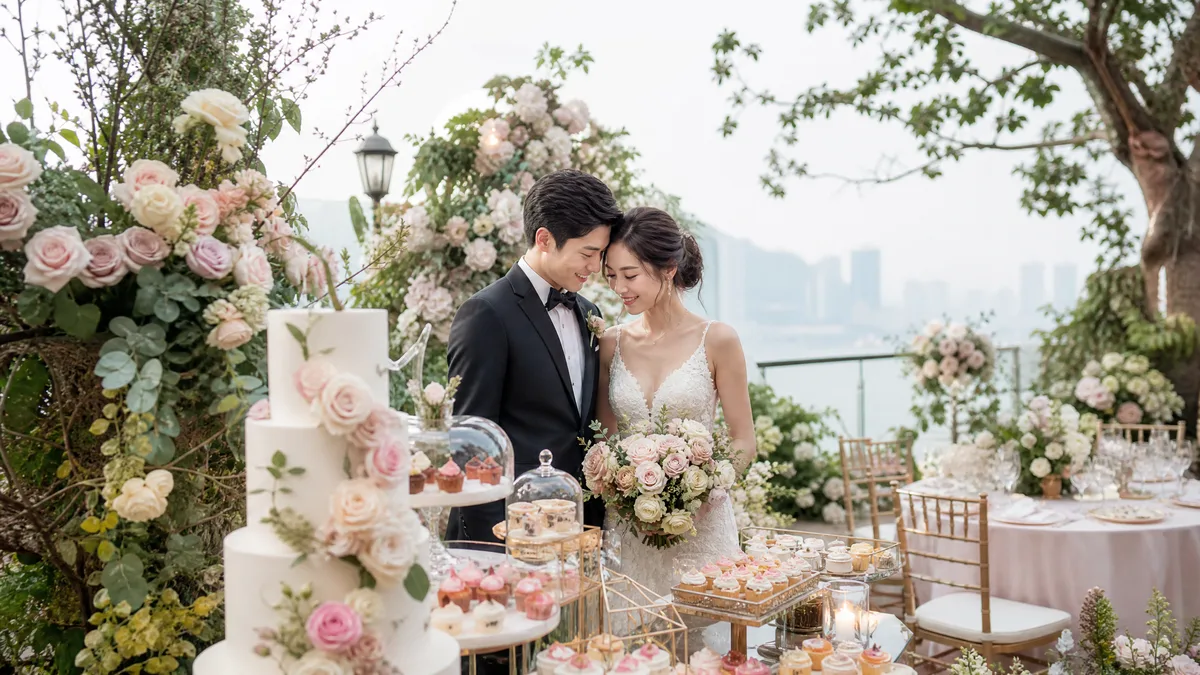
Think about how the food will appear alongside the décor. A buffet, shared platters and individually served courses each create a different visual rhythm and require different table arrangements. If flowers are intended to frame a dessert display, ask whether the display needs its own table, clear access and suitable lighting. Do not assume a supplier can provide a particular display, delivery or set-up service until it is confirmed in writing.

Choose a wedding catering format that fits the reception
Compare wedding catering formats: seated service, buffet and sharing
The right format depends on the venue, guest numbers, budget and the kind of gathering you want. A seated meal can create a more structured occasion, while a buffet or shared dishes may feel less formal. Each option affects staffing, table space, queues and the time available for speeches or entertainment. Ask the caterer what formats they can offer for your specific venue, and whether the venue has requirements that narrow the choice.
Match the menu to the schedule
Consider the day’s schedule before settling the menu. A reception that begins soon after a ceremony may need a different serving plan from an evening event with a long interval before dinner. Think through when guests arrive, when the meal begins and whether there will be a later snack or dessert service. Build in time for people to move between areas, and check who is responsible for announcing or coordinating each service point.
Plan dessert catering as part of the whole meal
Dessert catering can be a course, a compact display or a supplement to the main meal; it need not become a second full buffet. Decide whether the aim is a shared treat, a visual feature or an easy-to-eat option during the reception. Ask how portions are estimated and how desserts will be stored and served at the venue. If you are also considering favours or a take-home gift, keep those separate from the food plan until the supplier confirms what can be prepared and delivered.

Coordinate flowers with season, venue and menu
Use seasonal cues without overmatching
Season can offer a useful starting point for both flowers and food, but there is no need to force a theme. Share any preferred colours, scents or ingredients with the relevant suppliers and ask what is available for your date. Flower varieties and menu choices can depend on season, sourcing and supplier capacity, so treat early ideas as a brief rather than a guarantee. If a particular bloom or dish matters to you, ask about alternatives before making a final plan.
Check the room before confirming arrangements
The venue should be part of the conversation from the outset. Check where tables, service stations and displays can go, whether there are restrictions on fixtures or open flames, and what access is available for deliveries. These details can shape the scale and placement of floral arrangements as much as the creative concept. For floral inspiration, collect examples that show the balance of shape, colour and texture you have in mind, then confirm the design with your florist and venue.
Keep guest comfort in view
Guest comfort is part of the design too. Consider sightlines across tables, clear routes to food and drinks, and whether floral scents may be strong around dining areas. Keep arrangements from crowding shared dishes or guest space. If children, older guests or mobility needs are relevant to your guest list, discuss accessible seating and service routes with the venue rather than assuming a standard layout will work for everyone.

Gather guest numbers and dietary requirements early
Set a clear process for collecting responses
A reliable guest count helps suppliers plan quantities, table settings and service. Set a response date that leaves time to review the list and submit a final number according to each supplier’s terms. Keep track of meal choices and dietary requests in one place, and make sure the person coordinating the event knows which version is final. The exact deadlines and any changes allowed after confirmation should be checked with the caterer and venue.
Ask about alternatives and cross-contact
Ask guests to state dietary requirements clearly, then pass those details to the caterer and request confirmation of what can be accommodated. Vegetarian, vegan, religious, allergy-related and other needs are not interchangeable, and suppliers may have different capabilities. Ask how dishes will be identified and what information can be provided to guests. Do not describe a dish as suitable for a specific requirement unless the caterer has confirmed the ingredients and relevant handling arrangements.
Confirm the final count and menu deadline
For a smaller event, direct follow-up may help clarify a request; for a larger guest list, a form can make responses easier to organise. Either way, avoid sharing more personal information than suppliers need. Confirm the final number, menu selections, serving format and any agreed alternatives by the deadline. If a request cannot be met, let the guest know early and discuss practical options with the supplier rather than promising an unverified substitute.

Map the service timeline and venue logistics
Work backwards from key moments
Create a simple run sheet covering guest arrival, drinks, meal service, speeches, dessert and the end of the event. Work backwards from fixed moments such as a ceremony finish or booked venue access period. Share the draft with the caterer, florist and venue contact so they can identify conflicts. Ask suppliers to confirm their arrival and set-up windows, rather than assuming their timing will align automatically.
Clarify delivery, set-up and clearing
Clarify what each supplier is responsible for. Catering arrangements may or may not include serving staff, tableware, delivery, set-up or clearing; floral work may have separate installation and collection terms. Confirm access instructions, contact people, placement and any venue restrictions in advance. These questions are especially useful when arranging wedding catering across more than one location or when the venue has a short access window.
Allow time for breaks and transitions
For a reception with a workshop or other activity, a mid-session refreshment break may make sense, but timing depends on the programme and service format. For a two-to-three-hour activity, consider a short break around the middle as a starting point, not a fixed rule. For a half-day schedule, ask whether separate refreshment and meal periods are practical. The event organiser and venue should agree the final timetable.

Compare supplier proposals and confirm terms
Request comparable quotes
When requesting proposals, give suppliers the same useful details: event date, venue, estimated guest count, preferred style, service format and known dietary needs. Ask for a clear breakdown of what is included and which items may cost extra. Comparing like with like is more useful than choosing on a headline figure alone. Prices, minimum orders and availability vary, so obtain current quotes directly rather than relying on general estimates.
Check booking lead times and change policies
Book according to the suppliers’ actual availability and deadlines. Ask how far ahead you need to reserve your date and confirm the menu, rather than relying on a general booking window. Large events, popular dates and bespoke menus may require more notice. Ask about deposit requirements, final payment dates, cancellation or rescheduling terms, and what happens if guest numbers change. Do not assume a booking is confirmed until the supplier says so.
Keep gifts and extras within the plan
If you are considering a preserved flower workshop as a guest activity or favour idea, first check whether it fits the reception schedule and whether a provider can accommodate the format. The same applies to a candle workshop: ask about venue permission, set-up requirements, duration and availability before including it in the plan. These are possible creative directions, not services or packages guaranteed by this guide. Confirm any gift, workshop or delivery arrangements separately from catering.

Use a practical wedding-day checklist
Assign one point of contact
Name a day-of contact who can answer supplier questions and make decisions within the agreed plan. Share the person’s contact details with the venue and suppliers, and make sure they have the latest schedule, guest count and layout. The couple should not have to coordinate every delivery personally on the day. If no planner is engaged, agree in advance who will take on this role and what decisions they can make.
Prepare a final information sheet
Prepare a concise final sheet with arrival times, access details, table or display locations, the service sequence and relevant dietary notes. Include the venue contact and supplier contacts, but only information needed for the event. Confirm who will handle late changes, where deliveries should go and who checks that agreed items have arrived. A written summary reduces reliance on assumptions made during earlier conversations.
Review the plan as the date approaches
Review the plan with the venue and suppliers before the event, particularly if the guest count, floor plan or schedule has changed. Ask each provider to confirm the version they are working from. Keep a modest contingency in the schedule for transitions, and identify what can be simplified if the day runs late. A well-coordinated reception is not about controlling every detail; it is about making responsibilities and expectations clear enough for guests to enjoy the occasion.

Catering information to check with providers
If this option is relevant to your event, review wedding catering and confirm the menu, delivery arrangements, dietary information and booking terms directly with the provider.
If this option is relevant to your event, review dessert catering and confirm the menu, delivery arrangements, dietary information and booking terms directly with the provider.
If this option is relevant to your event, review gift service and confirm the menu, delivery arrangements, dietary information and booking terms directly with the provider.
FlintHub and the linked partner website have common ownership. This link is not an independent endorsement, tested recommendation or confirmation of availability.
Plan Flowers Around Reception Service
Before approving centrepieces, ask your Hong Kong florist and caterer to review the same table layout: will arrangement height preserve guests’ sightlines, and will vessels leave room for shared platters, place settings and dessert service? Ask the venue to confirm serving routes and where spare materials may be stored, then revise any display that conflicts with those arrangements. Also ask whether vessels are hired, purchased or returnable, who owns them, and who removes flowers, containers and packing after the reception. Record agreed responsibilities and collection times so decorative choices do not leave an unresolved clearing task.
Prepared by FlintHub Academy with AI assistance from public information for event catering, gifting, baking and floristry planning and enquiries, not first-hand service testing or real client cases. YumYum and FlintHub Academy have the same owner; links are relevant service resources, not independent third-party endorsements. AI-generated concept illustrations do not depict actual YumYum products, services, venues, instructors or clients. No professional author credentials or guarantees of safety, price, availability or outcomes are claimed. Confirm allergies, materials and storage requirements, scope, fees and availability with the actual provider.
Questions about wedding catering
How far in advance should I book wedding catering?
There is no single lead time that suits every date, supplier or event size. Ask your chosen caterer about availability as soon as you have a likely date and venue, and check when they need a confirmed menu, guest count and booking commitment. Larger events, popular dates and bespoke menus may need more notice; confirm the actual deadlines directly with the supplier.
How do I choose a catering package for my guest numbers?
Start with the confirmed or estimated guest count, then consider the event duration, age range, service format, venue space and dietary needs. Ask the caterer how quantities are calculated and whether the proposal includes staff, delivery, tableware and clearing. Dessert catering may suit a reception as a focused addition, but the right amount depends on the rest of the menu and the supplier’s advice.
How can I check food handling and delivery arrangements?
Ask the caterer how food will be transported, when it will arrive, what serving arrangements are included and how any relevant food information will be communicated. Check what documentation or assurances the supplier can provide, and confirm any requirements with your venue. Do not rely on generic claims about packaging or certification; ask the provider directly and assess the information they give you.
When should I schedule refreshments during a workshop or reception?
Base the break on the total programme, meal timing, venue access and how guests will be served. For a two-to-three-hour activity, a short mid-point break may be a useful starting idea; a half-day event may call for separate refreshment and meal periods. Agree the final timing with the event organiser, caterer and venue, allowing time for guests to move between activities.
How should I handle vegetarian or other dietary requirements?
Collect requirements before confirming the final menu, then ask the caterer which requests they can accommodate and what information they can provide about ingredients and preparation. Confirm agreed alternatives and how dishes will be identified. Requirements vary, so do not assume a supplier can meet a particular need until they have confirmed it.
How much does wedding catering usually cost?
Costs vary with menu, guest numbers, service level, location, staffing and minimum order requirements. Request current, itemised proposals from suppliers using the same event details so you can compare like with like. Check whether delivery, equipment, staffing and any other charges are included before confirming the booking.
Prepared with AI assistance and local editorial adaptation. This is planning guidance, not a record of a delivered event. Confirm current arrangements directly; images are references and do not verify a particular class or event.
Before setting a family activity theme, ask how an art workshop Hong Kong would fit the group’s ages, room conditions, and cleaning needs.
When a company needs shared practice rather than only a social break, corporate training Hong Kong should begin with a real work situation and a clear participation goal.
Before requesting a proposal for team building Hong Kong, list the venue limitations around space, access routes, materials and cleaning.