1. Decide what the menu plan must resolve
A wedding menu plan is more than a list of dishes. It is a shared record of what guests have told you, what the host wants to serve, and what still needs a supplier’s written answer. Start by separating food preferences, religious or cultural requirements, medically relevant dietary restrictions, and drink preferences. They are not interchangeable categories, and a menu label alone may not answer a guest’s specific need.
For each requirement, capture the guest’s own wording where possible, the number of meals involved, and any practical details needed to arrange service. Avoid collecting more personal information than is needed to plan the meal, and limit access to the people coordinating it. Agree who will consolidate updates and who will communicate with the venue or caterer. If details change, update one shared record rather than relying on separate messages or memory.
The goal is not to make the couple responsible for assessing whether a meal is safe or suitable. It is to give suppliers clear questions and obtain specific answers about ingredients, preparation, identification and handover. Keep unresolved points visible until the relevant guest and supplier have had a chance to clarify them.
2. Coordinate handover, access and exceptions
Menu decisions can become unclear when information passes between the couple, guests, venue staff, caterers and whoever manages service. Decide who is the main contact on each side, how changes will be recorded, and when the final guest count and meal notes must be provided. Ask the venue and supplier to explain who receives the meals, how special meals are identified, and how the person serving them will know which guest should receive each one.
For a guest who reports an allergy, ask the supplier about the actual dish and the steps involved in preparing and serving it. The Hong Kong Centre for Food Safety advises diners to tell food providers which foods they need to avoid and to check ingredients, including sauces; applying that advice to event planning is a practical adaptation, not a special event rule or a guarantee about any meal 1. FARE also describes cross-contact concerns and suggests asking about equipment, preparation areas, responsibility and meal identification 2. These are questions to raise, not evidence that a particular supplier has adopted those practices.
Write down the answer in terms that can be checked: which dish or product was discussed, who answered, what was confirmed, and what remains uncertain. Ask specifically whether serving utensils or shared equipment are involved. A response such as “we can do that” may need follow-up: what exactly will be done, by whom, and how will the meal be kept identifiable through service? If a supplier cannot confirm a point, record that honestly and discuss the next step with the guest rather than silently treating the requirement as settled.
3. Compare workable menu approaches
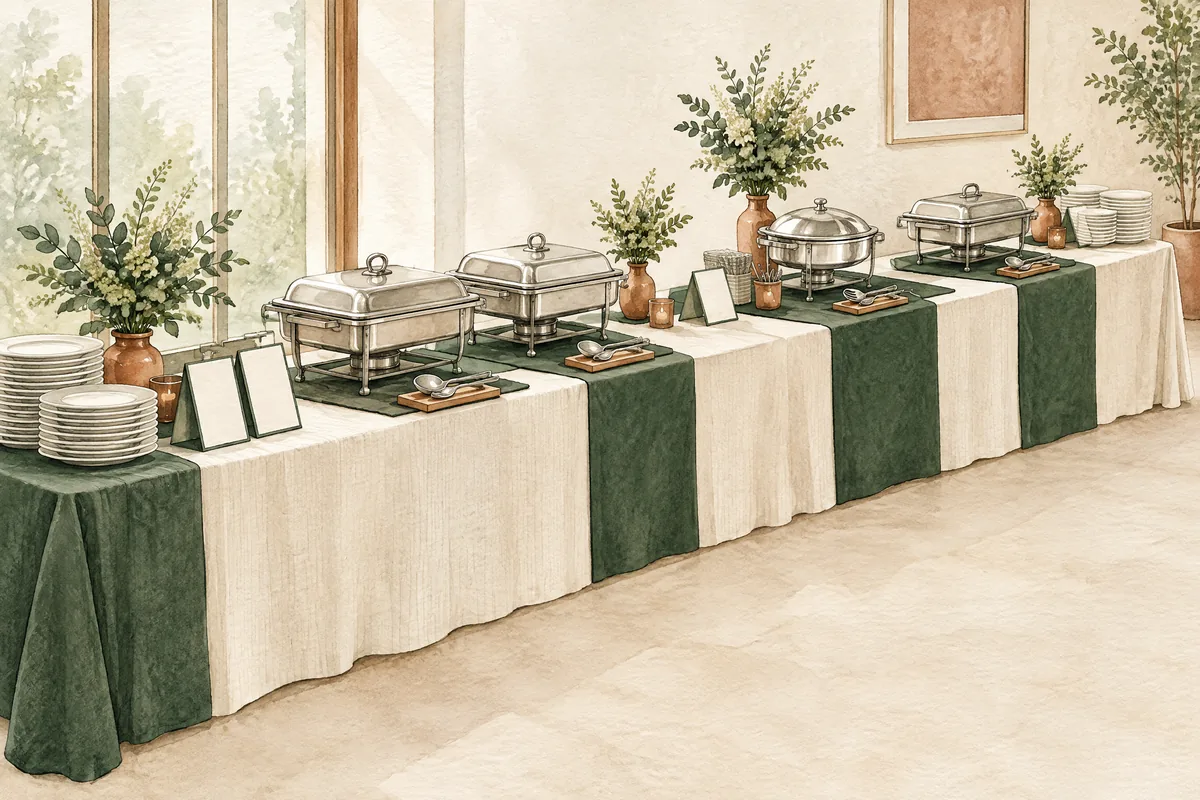
There is no single service format that fits every wedding. Compare options by how well they let you communicate requirements, keep meals identifiable and accommodate the venue’s practical constraints. A separate plate for each guest can make delivery straightforward to explain, while a buffet may offer choice but requires clear answers about shared serving utensils, labels and replenishment. Neither format, by itself, establishes that a meal meets a particular dietary need.
| Approach | Potential planning advantage | Questions to resolve before choosing |
|---|---|---|
| Individually plated meal | A named meal can be matched to a seating plan and delivered directly. | Who verifies the guest and plate match? How are changes handled? What preparation and serving details can the supplier confirm? |
| Buffet or shared stations | Guests can see several choices and select among them. | How are dishes labelled? Are serving utensils shared or replaced? Who can answer ingredient questions during service? |
| Pre-packed or boxed meal | A closed, identified package may make allocation and handover easier to discuss. | What ingredient information is available for the actual products? How is the package identified and stored before delivery to the guest? |
These are comparison points, not recommendations for a particular supplier. You can also compare how the requirement is communicated: a written guest-by-guest brief gives named contacts a shared reference, while a verbal handover may be easier to update but can leave more room for misunderstanding. Neither method replaces supplier confirmation.
| Communication approach | Useful when | Questions to resolve |
|---|---|---|
| Shared written register | Several people need to coordinate the same requirements and updates. | Who can access it, who updates it, and how will changes reach the supplier and service lead? |
| Direct verbal handover | A quick clarification is needed with the person managing a particular service step. | Who will record the answer, confirm it in writing, and pass it to anyone else responsible? |
| Written supplier response | You need a record of what was asked and which dish or arrangement the answer covers. | Is the response specific to the final menu, preparation and service plan, and what remains uncertain? |
For any format, ask what information will be available on the day and who will handle a last-minute question. Consider the venue’s access arrangements and the number of people who need to know about special meals. If an answer depends on a venue setup or staffing plan, request confirmation from the person responsible for that part of the event.
4. Turn enquiries into specific requirements
When you contact a supplier, send the event context and ask focused questions rather than asking only for a broad category of menu. For example, name the dish or ingredient the guest needs to avoid, ask whether sauces and garnishes are included in the ingredient check, and request details about preparation and service. If the requirement is religious, ask what standard or interpretation the supplier is relying on and whether any certification or sourcing documentation is available. Do not assume that a religious label answers a separate allergy question.
If you are looking into Halal Catering, treat the page name as a starting point for an enquiry, not confirmation of certification, ingredients, sourcing or suitability for a particular guest. Ask the merchant to state in writing what its offering means, what documentation it can provide, and which specific dishes or preparation arrangements the answer covers. Keep religious requirements and allergies as separate lines in the planning record, even where one meal needs to address both.
Likewise, vegetarian, vegan, gluten-free and allergy-related requests should not be collapsed into one “special diet” category. University of Toronto Food Services’ vegetarian standard for its St. George campus in Canada permits dairy and eggs; this is an institutional example, not a universal definition or Hong Kong rule 3. Anaphylaxis UK explains that vegan products may contain allergens or encounter cross-contact through shared equipment. That guidance does not mean all vegan products are contaminated, and its UK labelling context is not Hong Kong law 4. If vegetarian catering is part of your broader event planning, FlintHub Academy’s vegetarian catering learning context can help frame sustainability questions; it does not provide food, catering or supplier assurance.
For drinks, record what guests prefer and what the venue can supply, including whether non-alcoholic options are wanted. If you are considering Drinks Catering, use the page label only to open a specific enquiry. Confirm in writing the actual drink options, quantities, serving arrangements, and any venue restrictions or responsibilities; none of those details should be assumed from a category name.
5. Use the wedding dietary and drinks requirement register
Use this worksheet as a practical working document. Create one entry per guest requirement or event-wide decision, and keep the information in a private place accessible to the planning lead and the people who genuinely need it. Do not write “approved” just because an enquiry has been sent. Mark the status as confirmed only when the answer is specific enough for the relevant guest and event team to understand what has been agreed.
Copy-and-fill register
- Guest or requirement ID: Use a name only if necessary; otherwise use a private reference.
- Guest’s stated need or preference: Record their wording. Ask the guest to clarify anything ambiguous rather than interpreting it for them.
- Requirement category: Preference; religious or cultural requirement; allergy or other health-related restriction; vegetarian or vegan; other; or not yet clear.
- Meal or drink affected: Identify the relevant course, dish, ingredient, beverage or service arrangement.
- Supplier question: Write one direct question at a time, including sauces, garnishes, packaged ingredients, preparation equipment or serving utensils where relevant.
- Supplier response: Record the responder, date, exact dish or product covered, and the practical details given. Attach written information if supplied.
- Still to confirm: Note missing details, uncertainty, and who is responsible for following up.
- Service and handover: Record how the meal or drink will be identified, who receives it, and who is responsible for delivering it to the intended guest.
- Guest review: Note whether the guest has received the relevant information and can raise further questions. Do not claim that this constitutes a safety assessment.
- Change log: Record later changes to the guest count, ingredients, menu or service plan, and notify the appropriate contacts.
Before finalising the register, check that every item has an owner and a next step. If a guest does not want a need shared widely, agree a discreet way to pass essential information to the responsible supplier and service lead. This is a coordination tool, not a certification or a guarantee that a meal is suitable.
6. Map guest needs before choosing the menu
Begin with a considerate invitation for guests to share dietary requirements and drink preferences by a clear date. Offer a private way to respond, and explain who will receive the information and how it will be used. Invite clarification without asking guests to disclose a diagnosis or more personal detail than they choose to share. If a request is unclear, ask what ingredient, preparation feature or service detail matters to them instead of guessing based on a label.
Then group the replies for planning while preserving the original wording in the private register. This makes it easier to see whether several guests need the same menu adaptation, whether one guest has multiple requirements, and whether a drink preference affects event-wide quantities or service. Use the distinctions above when grouping replies: the Toronto vegetarian example permits dairy and eggs 3; vegan labelling does not establish that a food is allergen-free 4. For any gluten-free request, record the guest’s wording and ask for clarification rather than interpreting other wheat-related concerns yourself.
FlintHub Academy’s vegetarian catering learning context can also help organisers think through how food choices connect with an event’s wider wellbeing discussion. It is a learning resource, not a meal service or a promise that a course includes food. For a wedding, the practical next step remains to compare the actual menu and supplier responses with each guest’s stated requirements, and to revisit the plan if the guest list or dishes change.
7. Resolve open questions before approval
Before approving a menu, check that the supplier has responded to the actual requirements rather than only confirming a general menu category. Ask whether the written answer covers the final dish, recipe, sauces, drinks and any packaged components that will be served. If a product’s label or ingredient list is relevant, request the information for the product that will actually be used. Do not infer that a missing warning or a familiar dish name proves the absence of an ingredient.
For preparation and service, ask who is responsible for each step and whether equipment, surfaces, storage or utensils are shared. FARE’s cross-contact guidance is a useful prompt for these questions, but its restaurant guidance does not verify an event kitchen or establish that any particular meal is safe 2. If a supplier cannot answer a question, or if a guest is not comfortable with the information provided, keep the issue open and discuss alternatives directly. No editorial checklist can replace the guest’s own judgement or a supplier’s accurate, current response.
If you are requesting Wedding Catering, treat the page as an enquiry resource, not a quote, confirmed service scope or assurance about menu choices. Request a written proposal that specifies what is included, what remains the venue’s responsibility, and which dietary and drink arrangements have been discussed. Check the final version against the register, distribute only the necessary information to the people responsible for service, and retain a clear route for reporting a late change.
Frequently asked questions
What should I ask guests when collecting wedding dietary requirements?
Ask guests to describe the food or drink requirements they want the planning team to communicate, and provide a private reply route and deadline. Invite clarification without requesting unnecessary personal details, and do not translate a label into an assumption about ingredients or suitability.
Is a vegetarian, vegan or halal label enough to address an allergy?
No. These labels describe different dietary or religious considerations and do not establish that a particular dish avoids an allergen or cross-contact. Ask separately about the guest’s stated allergen, the actual ingredients, preparation, equipment and service arrangements.
What should I ask about a guest’s allergy-related meal?
Identify the specific food the guest says they need to avoid, then ask the supplier about the actual dish, sauces, ingredients, preparation equipment, serving utensils, identification and handover. Record the answer and any uncertainty; do not treat a general assurance as a safety guarantee.
Is a buffet or an individually plated meal better for special requirements?
Neither format is automatically better for every event. Compare how each handles identification, serving utensils, guest questions and responsibility for delivery. Ask the venue and supplier how the proposed arrangement works in practice before deciding.
When should the wedding menu and dietary register be finalised?
Set a clear reply deadline that allows time to ask follow-up questions and confirm arrangements with the supplier and venue. Keep the register open for changes, record the final answers in writing, and tell responsible contacts if a guest count or menu detail changes.
Editorial disclosure
FlintHub Academy and YumYum have the same owner. The editorial preparation date is 2026-11-10, not a known publication date. This article was prepared with AI assistance and is not an independent recommendation or an endorsement of YumYum or any supplier. FlintHub Academy does not claim medical, veterinary or professional qualifications. The article offers general planning questions only; it does not verify any merchant’s ingredients, certification, kitchen practices, delivery, service scope or the suitability of a meal for an individual. Hong Kong is a planning context, not a statement that a merchant has a Hong Kong branch. University standards and other cited material are limited to their stated contexts and are not Hong Kong law.
References