
Choose short hair for several stage roles by comparing the dry outline with each costume, movement sequence and changeover requirement. Use a multi-role silhouette grid to separate length you would remove from presentation you can change between scenes, then reject any option that fails a non-negotiable brief.
For an adult performer moving between a music set, a contemporary scene and a cultural performance, the most useful cut is not necessarily the most dramatic one. It is the outline you want offstage that can support the agreed stage looks without an unmanageable reset. This method evaluates those compromises; it does not predict auditions, casting decisions or audience reactions.
1. Describe what each role needs, not what a character should look like
Start with the production's actual instructions. “Reserved,” “bold” and “youthful” do not specify hair length. Translate an approved visual direction into something observable: an open forehead, a continuous jaw-level edge, visible earrings or a clear gap above the collar. Do not turn those observations into rules about gender, age or which faces belong in particular roles.
Separate mandatory continuity from a negotiable impression. If a costume designer requires the same hair outline throughout a scene, a parting change may matter. If the brief only requires the face to stay visible during movement, changing the cut may be unnecessary. Ask who approves the look and record which details remain undecided before treating them as haircut instructions.
For a culturally specific production, establish the performance form and its costume conventions with the production team. A contemporary adaptation is not interchangeable with a traditional presentation. FlintHub's Chinese culture and performing arts material offers relevant learning context, but it does not approve a particular character design. Your grid should record the brief you have actually received, not a generic “Chinese-inspired” hairstyle.
2. Read the silhouette with the costume and at the intended distance
The silhouette is the visible outer boundary of the hair. Read it in front, side and rear views, then add the costume. A rounded back can meet a high collar even when the front looks clear. A long side section can conceal an earring when the performer turns. These are spatial relationships, not evidence that one length is more flattering.
Use a fixed camera position for comparisons and check from a representative audience viewpoint where access allows. Keep lighting and head position consistent when comparing options. A close selfie is useful for finding loose strands, but it cannot establish whether a fine edge remains distinct from the costume at stage distance.
The following table is a hypothetical set of briefs, not a record of a FlintHub production. Replace every row with your own approved requirements.
| Role and costume brief | Silhouette requirement to confirm | Movement or transition check | Length worth protecting |
|---|---|---|---|
| Contemporary speaker in a high-collar jacket | Visible separation between nape outline and collar | Turn, look down and remove the jacket | Enough side length for the agreed ear-tuck, if needed |
| Vocalist in an open-neck outfit with earrings | Face and earrings visible from the agreed views | Sing, turn towards musicians and check microphone position | Front pieces that can be moved without obstructing vision |
| Period scene with a hat | Hair boundary consistent with the approved period design | Put on and remove the actual hat; inspect the reset | Any length needed for the agreed concealed or pinned arrangement |
| Movement-led ensemble scene | Stable eye clearance rather than a particular style name | Repeat the choreography and recover the starting position | Whatever the chosen fastening method needs to hold comfortably |
For a music set, include the equipment and entrances in the brief rather than judging hair in isolation. Live-band performance planning is a useful related starting point. A hairstyle that clears the face in a still photograph must still be checked with the actual microphone arrangement and stage movement; the haircut cannot guarantee sound performance.
3. Compare bob and lob by landing points and retained pieces
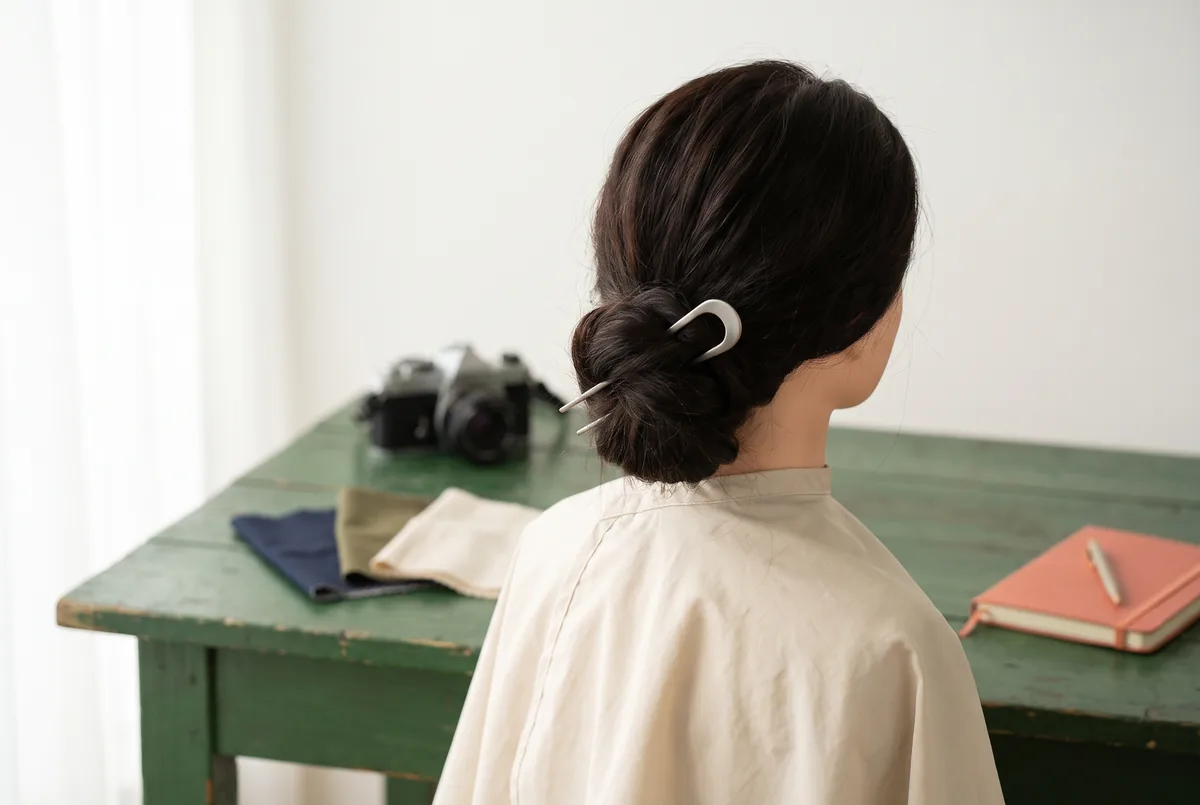
Write down where the dry ends should sit on your own body. “Chin level” or “above this collar” is more useful than assuming a label has one fixed measurement. Describe the front and back separately. Then mark the shortest internal pieces: a long outer edge does not mean every strand can reach a tie or stay behind an ear.
A bob haircut can provide a distinct perimeter, but its relationship with a costume depends on the dry landing point, back shape and internal layers. The linked guide helps distinguish those features rather than prescribing a stage look. For your grid, specify whether the edge must remain visible when loose and whether ear-tucking is allowed to interrupt it. A polished reference photograph alone cannot show how your natural texture will settle or how that outline will behave during the scene.
A lob haircut retains a longer bob outline and may preserve useful gathering length, but neither the name nor a longer back guarantees a secure tie. The same guide explains why the shortest front pieces and actual tie position need checking. Compare the ends with every costume collar and test the proposed fastening with your hair, rather than assuming that extra length solves every role. More length offers options, but can also create shoulder contact that the shorter outline avoids.
Do not add layers merely to make the cut sound versatile. Ask which specific movement or bulk problem they would address and what coverage would be lost. Protecting a continuous perimeter for one role may conflict with removing weight for another; that conflict belongs in the grid before the scissors are involved.
4. Treat a pixie as several zone decisions, not one irreversible package
A pixie cut should be discussed through ear coverage, front length, crown weight and neckline rather than an instruction to make everything short. The linked guide compares retained areas and fuller short alternatives; it does not establish suitability for your production. In the grid, note exactly which exposed areas are acceptable across all roles. Keeping a longer top may preserve a swept-front option, while shortening the sides removes coverage that styling cannot simply put back for the next scene.
A closely cropped outline can clear a costume collar, yet offer less hair for a familiar fastening method. It may also make the natural hairline and crown direction more visible. Neither feature is inherently a problem. The practical question is whether those details work with the agreed looks and the routine you are willing to repeat.
Hair grows, but a cut is not reversible on a scene-change timescale. Avoid planning a return to a bob by an assumed date. If a later production may require more coverage, identify the top and side lengths you would need to preserve now. A wig could change presentation, but only after its fit, appearance and production arrangements are confirmed.
5. Separate reversible presentation from low-risk treatment
A reversible look is one you can undo within the required transition without further cutting. It is not automatically harmless or effortless. Changing a parting is different from repeatedly flattening the hair with heat. Pinning a longer outline into a shorter-looking shape can preserve length, but needs enough hair, comfortable placement and a realistic reset.
For repeated rehearsals, favour the least demanding presentation that meets the brief. The American Academy of Dermatology recommends less frequent heat-tool use, the lowest heat setting and avoiding pulling or tugging during styling.1 These are general care principles, not a promise that a particular method will avoid all damage. A cut that needs repeated forceful smoothing for every role may be less practical than a slightly softer approved finish.
| Decision | What can change between roles | What does not reverse immediately | What to verify before relying on it |
|---|---|---|---|
| Bob-length cut | Parting, ear-tuck and optional finish | Removed length and shortened internal pieces | Collar clearance and whether the shortest side pieces stay tucked |
| Lob-length cut | Loose outline, gathering or a pinned shorter presentation | Cut length; added layers | Actual tie position, comfortable fastening and shoulder contact |
| Pixie-length cut | Front direction and some top texture | Lost ear, cheek or nape coverage | Dry crown behaviour and each costume's coverage requirements |
| Temporary pinning or tucking | Visible edge and exposed ear area | It cannot create missing length | Hold during movement, comfort and reset sequence |
| Wig or hairpiece | An alternative visible outline without cutting natural hair | Supply, fitting work and any attachment-related effects | Production approval, fit, equipment clearance and removal method |
Extensions are not a guaranteed undo button for a short cut. They require an assessment of attachment and suitable remaining hair, plus confirmed service scope. The AAD warns that repeated pulling from weaves or extensions can cause damage and hair loss; pain or excessive tightness should prompt adjustment, not endurance.2 Keep this separate from wig fitting, and seek medical advice for persistent scalp symptoms or concern about hair loss. Temporary appearance and medical safety are different questions.
6. Apply the grid with vetoes before preferences
Use three marks: Pass means the requirement has been demonstrated; Check means it is plausible but unverified; Fail means it conflicts with the brief. These are planning labels, not measured success rates. Do not convert a Check into a Pass because you like the photograph.
Apply non-negotiable requirements first. An outline that cannot meet an approved hat arrangement should not beat another option merely because it scores well for an unrelated music set. After resolving those requirements, compare preferences such as the loose edge, daily effort and comfort with grow-out. The aim is a defensible choice, not the highest total on an arbitrary beauty score.
Hypothetical worksheet: an adult performer currently has collarbone-length hair. One brief asks for a clear nape above a high collar, another permits loose hair with visible earrings, and a third requires an approved concealed arrangement under a hat. No rehearsal findings are assumed.
- Write the three briefs and their approval owner on one sheet. Mark the hat arrangement as unverified rather than guessing what it needs.
- Sketch bob, lob and pixie options in side view against the collar. Label the intended dry edge and the shortest front piece.
- Place Check beside every requirement that needs a physical trial. A cropped sketch does not prove that the hat fits or that a tuck holds.
- Trial temporary presentation with the current length where feasible. Record which role needs a different approach and what remains unresolved.
- Choose whether to cut only after the required arrangements are confirmed. If several options remain workable, prefer the one the performer genuinely wants to maintain offstage.
The worksheet produces a list of decisions and unanswered questions. It does not establish that any of the three cuts has passed, nor suggest that a particular length wins more roles.
7. Turn the chosen outline into a repeatable handoff
Before a lasting change, rehearse the proposed presentation as far as the current length allows. Use the actual collar, hat and accessories. In Hong Kong, include the journey to rehearsal in your planning: an outline prepared at home may need a check after travel before it is camera-ready or stage-ready. Record observed changes instead of assuming every hairstyle reacts alike.
Photograph the approved front, side and rear views, then document the transition order. Note who removes a hat, who checks the nape and which items must be ready. If a reset needs assistance, rehearse with that assistance. A look that only works when one unavailable person adjusts it is not yet a usable production plan.
For a haircut discussion, bring the grid, current dry-hair photographs and a clear “must keep” note. Distinguish the lasting cut from any optional stage finish. If approaching Vit So, its listed reception address is 252 Hollywood Road, Sheung Wan. Confirm appointment arrangements, proposed work and consultation language directly; an English website does not establish English-language consultation. The production team remains responsible for approving the character presentation.
Frequently asked questions
Is the longest option always the most versatile?
No. Retained length may support gathering, but it can meet a collar or require more resetting. Compare demonstrated functions across your briefs, including the shortest pieces, rather than treating length alone as flexibility.
Can a faux bob stand in for a shorter cut during rehearsal?
It can explore a shorter-looking edge if your current hair and fastening allow it. It does not reproduce the weight or movement of a real cut. Use it to discuss appearance, then keep those limits on the worksheet.
Should I cut before the costume is final?
Avoid irreversible decisions based on an unresolved collar, hat or coverage requirement. If a cut cannot wait, agree which constraints are known and preserve the lengths needed for uncertain arrangements rather than inventing an approval.
Does short hair remove the need for a changeover plan?
No. Parting, hat marks, front direction and product finish can still need resetting. Rehearse the transition in sequence and record the steps required to restore the approved look, even when there is little hair to gather.
What if the roles genuinely need incompatible hair outlines?
Keep the conflict visible. Discuss an approved temporary alternative or a change to the visual brief with the production team. Do not promise that one cut can provide missing coverage, or assume wigs and extensions are available without confirmation.
About this article
By FlintHub Academy, which publishes creative-learning content. FlintHub Academy and Vit So share common ownership. This article was prepared with AI-assisted institutional organization and editing. It is not an independent endorsement, a hairstylist-authored review, expert-reviewed guidance or medical advice. The illustrations are original topic concepts, not Vit So work, products or client results. The cited authorities do not endorse Vit So.
References
- [1] American Academy of Dermatology: 10 hair care habits that can damage your hair
- [2] American Academy of Dermatology: How to prevent hair damage from a weave or extensions
FlintHub Academy · AI-assisted editorial prepared from public information. FlintHub publishes creative-learning and activity-planning resources. This is not a first-hand salon test, a real client case or a claim of hairdressing, clinical or medical credentials.