
After adult rehearsal, record hair feel, scalp sensations and styling habits separately before deciding what care you need. Use those notes to choose a gentle routine change or a clearly defined cosmetic enquiry; persistent or concerning symptoms belong with a healthcare professional, not a stronger salon treatment.
An evening rehearsal in Hong Kong may involve a humid journey, an air-conditioned room, repeated movement and a hairstyle kept in place for hours. Those circumstances help describe what happened, but they do not establish why your scalp itches or your ends feel rough. The useful question is not “Which treatment fixes everything?” It is “What did I notice, where, and under which conditions?”
1. Locate the concern before naming a solution
Hair lengths and the scalp are different areas. “The last section catches when I comb” describes handling of the hair fibre. “The skin near my temple stings” describes a scalp sensation. “My bun pulls during turns” records a fastening problem. All three can occur together without sharing one cause or needing one response.
Avoid turning an observation into a diagnosis. Roughness is not proof of a particular nutrient deficiency. Flakes or a coated feeling do not demonstrate that the scalp needs aggressive cleaning. A shiny stage hairstyle is not evidence of healthy skin beneath it. Equally, a comfortable scalp does not tell you how much chemical processing the lengths can tolerate.
Start with the performance requirement. Does hair need to stay clear of your face, avoid a microphone, or maintain a silhouette? For adults exploring Social dance learning, recording when hair moves during a turn is more useful than deciding immediately that it must be tied tighter. A movement requirement can sometimes be met by changing placement rather than adding tension or product.
2. Make a post-rehearsal observation sheet
Write notes while the sequence is still clear, without repeatedly scratching, pulling strands or forcing a comb through knots to gather evidence. Separate what you felt from what you think caused it. “Tender at the hairline after removing the tie” is useful; “damaged follicles” is an unsupported conclusion.
The first table is a reusable worksheet, not a diagnostic checklist. Fill in the relevant rows and leave the others blank. No numerical score turns it into a medical assessment.
| Area to record | Plain-language observation | Context to add | What remains unknown |
|---|---|---|---|
| Hair lengths and ends | Where roughness, catching or snapping appears during ordinary handling | Dry or damp; before or after styling; previously lightened sections | Cause and suitability for further processing |
| Scalp skin | Location of itching, tenderness, stinging or a visible change | When it began and whether it continues after releasing the style | Diagnosis and appropriate treatment |
| Styling contact | Tie, pin, headband or device feels tight at a particular spot | Placement and the movement that exposes the problem | Whether a different arrangement meets the performance need |
| Product use | Roots feel coated or ends feel stiff | Product names, application areas and any recent change | Which product or other factor explains the observation |
| Follow-up | What remains after the usual gentle routine | What you changed and what stayed the same | Whether apparent improvement will continue |
Add the rehearsal date, hairstyle and product names above the table. If a photograph helps identify a location, take it without manipulating irritated skin. Keep it private unless you choose to share it. A picture can show where you mean; it cannot diagnose a scalp condition or establish the strength of a strand.
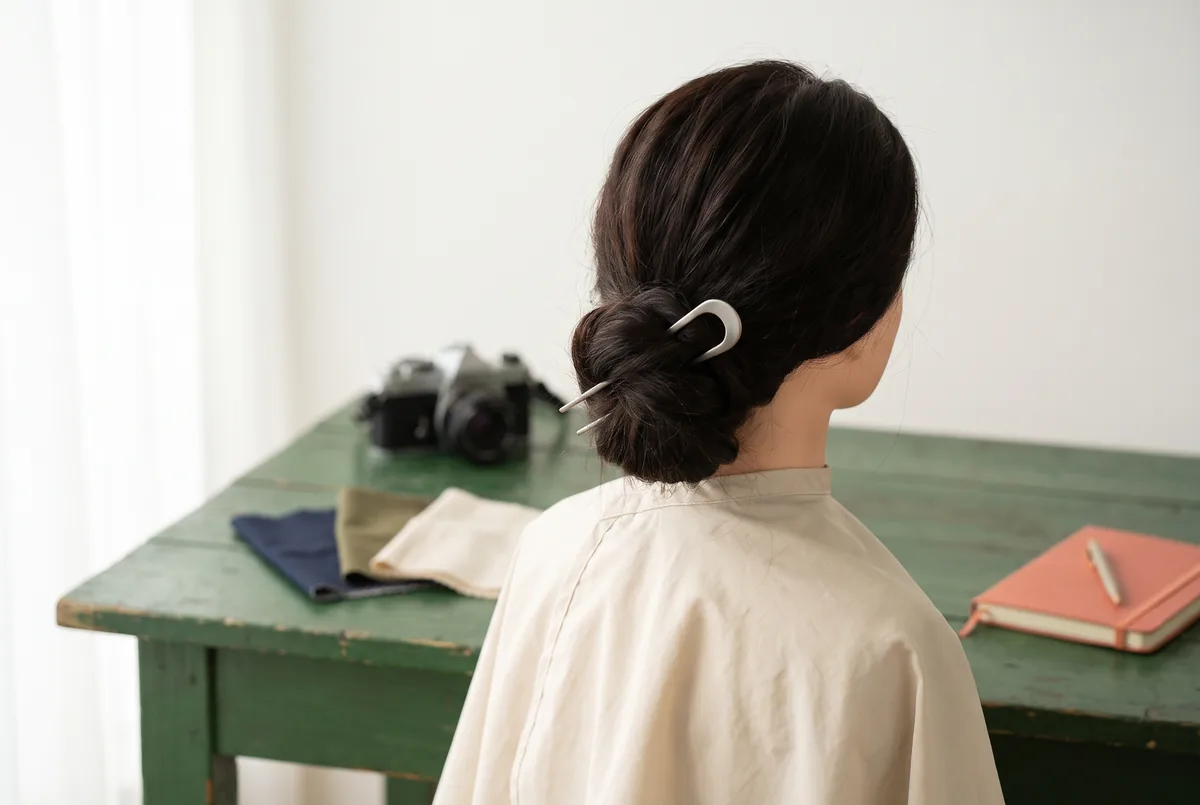
3. Audit handling, heat and fastening first
Look at the sequence before buying another product. Did you repeatedly brush out a firm-hold style between runs? Rub wet lengths with a towel? Reheat the fringe each time it fell forward? These are practical habits to discuss because a cosmetic appointment does not remove the stress of repeated handling.
The American Academy of Dermatology recommends gentle shampoo application to the scalp, conditioning after shampoo, absorbing water rather than rubbing hair dry, reducing heated styling and avoiding tight pulling. It also distinguishes combing advice by texture: straight hair should dry somewhat before gentle combing, while textured hair or tight curls should be combed damp with a wide-tooth comb. One wet-brushing rule does not fit everyone.1
Choose one manageable adjustment when there are no concerning symptoms. For example, try a less taut fastening that still keeps hair clear of the face, or reduce repeated heat passes. Record the change so the next note is interpretable. Several new products and a new hairstyle introduced together make it harder to describe what changed.
The trade-off is appearance versus handling burden. A softer hold may need repositioning; a lower-heat finish may look less polished. Rehearsal is the place to discuss that compromise before the performance. For Live-band performance planning, include a hair-adjustment pause in the run-through instead of assuming stronger hold is the only way to manage a long set.
4. Define a cosmetic goal for the lengths
If the concern is rough ends or difficult detangling, make the desired result specific: easier ordinary combing while keeping natural waves, rather than “repair everything.” Describe which sections have been coloured, bleached, permed or straightened. Older processing can remain in the ends even when the most recent change was near the roots.
Vit So's hair treatment page is a starting point for checking cosmetic care for lengths and ends. Use your worksheet to ask which sections would receive care, what products are proposed and whether the visit includes washing or finishing. That enquiry is about softness and manageability, not a diagnosis of scalp discomfort or clearance for another chemical service.
Conditioning and styling also need separate expectations. Hair may feel easier to handle without becoming straighter. A smooth blow-dried outline may not survive your normal wash. For a meaningful follow-up, describe the same section after your ordinary routine rather than comparing an elaborate salon finish with an unstyled rehearsal-day photograph.
When enquiring about a conditioning treatment, explain both the benefit you want and the finish you want to avoid. For example, easier detangling may matter, but heavy-looking roots may interfere with the stage shape. Ask about application areas, aftercare and the agreed total scope. These two service labels lead to the same care page; they do not establish two distinct procedures or promise permanent restoration.
5. Check what a scalp-care service actually includes
A root-area cosmetic question might concern residue from styling products or preferences for a comfortable cleansing visit. Ask for the actual steps rather than choosing by an intensive-sounding name. Would products touch the scalp or only the hair? Is massage included? What pressure, water temperature and finish are proposed? Which steps can be paused if they feel uncomfortable?
The wording scalp treatment sheung wan identifies a local cosmetic-care enquiry, not a clinic or medical qualification. Vit So's page explicitly separates cosmetic care from medical needs. If surface cleansing is your goal, use the worksheet to describe root products and comfort preferences, then confirm the proposed contents. Do not book it as a substitute for assessment of persistent itching, pain, redness or a change in shedding.
Vit So has one reception address: 252 Hollywood Road, Sheung Wan, Hong Kong. Confirm the appointment arrangements and allow for your own travel before an evening commitment. Neither location wording nor an English webpage establishes English-language consultation, walk-in availability or an appointment that fits between rehearsals. Ask about communication needs and timing rather than making those assumptions.
A relaxing label is not a reason to tolerate burning or pain. Speak up promptly if a cosmetic step feels uncomfortable. Strong scent, cooling sensations and vigorous touch are not reliable measures of effectiveness, and there is no requirement to complete an uncomfortable step to obtain a cosmetic benefit.
6. Use healthcare boundaries, not a self-diagnosis
Do not continue experimenting when discomfort persists, recurs or worsens, or when you notice a concerning skin change or unexpected thinning or shedding. Contact an appropriate healthcare professional and describe the sequence. The AAD advises dermatological assessment when changes in hair care do not help, particularly when thinning or hair loss is a concern.1 A salon observation is not an explanation of the underlying cause.
Recent colour matters even if the appointment you are considering is only for conditioning. The FDA advises against dyeing or relaxing an irritated or damaged scalp. It also explains that previous tolerance does not rule out a later dye reaction, and that a skin test cannot guarantee there will be no reaction during use. Follow the actual product instructions and seek healthcare advice for a suspected reaction.2
Those are product-safety points from a US authority, not Hong Kong legal requirements or approval of any salon. Do not convert them into a universal waiting period between services. A serious or rapidly worsening reaction needs urgent medical attention, not completion of the observation sheet. Avoid treating a new cosmetic product as a remedy, and do not alter clinician-directed care to prepare for a salon visit.
7. Practise the handoff with a hypothetical rehearsal
Consider an entirely hypothetical adult performer attending a dance run-through before a band rehearsal. Their ends catch during normal detangling, the temples feel tender beneath a tight tie, and a root spray leaves a coated feeling. These details are invented to illustrate the worksheet, not a client case or a tested result.
The record should preserve those three observations. It should not collapse them into “needs deep treatment.” The second table shows how the same notes produce different questions and limits.
| Hypothetical note | Immediate decision | Appropriate next question | Boundary |
|---|---|---|---|
| Ends catch during ordinary handling | Detangle gently; avoid force | Would targeted conditioning or a trimming discussion better address this section? | Softer feel does not prove permanent repair |
| Temples feel tender beneath the tie | Release the tension; reconsider the style | Can placement change while keeping hair clear during turns? | Continuing tenderness is not something to rehearse through |
| Roots feel coated after spray | Record the product and follow its directions for removal | What cosmetic cleansing steps, if any, match this goal? | A coated feeling does not establish scalp disease |
| Discomfort continues or a concerning change appears | Stop treating it as an appearance problem | What information should be given to a healthcare professional? | A salon service cannot provide medical diagnosis |
For the next run-through, the performer can discuss a looser arrangement with the production team while keeping the cosmetic question about the ends separate. If discomfort continues, healthcare takes priority. The hypothetical plan does not promise that changing the tie will resolve tenderness.
A concise handoff can read: “The ends catch during ordinary combing. My hairline also felt tender under the rehearsal tie. I want to preserve my waves and discuss easier handling, but I am treating ongoing scalp discomfort as a separate healthcare question.” Add product names and processing history where known. This gives each person a clear task without asking a teacher, stylist or band leader to diagnose.
FAQ
Do rough ends mean my scalp needs deep cleaning?
No. Rough lengths and scalp sensations are separate observations. Describe both if both occur, but do not infer a scalp-cleaning need from the feel of the ends. Begin with gentle handling and a specific cosmetic goal for the hair.
Should I record soreness that disappears after releasing a bun?
Yes. Note its location and the fastening used so you can reconsider the style. Improvement after release is useful information, not proof of a diagnosis. Do not repeatedly recreate pain as a test; recurring or continuing soreness deserves appropriate advice.
Can conditioning make my hair ready for a new stage colour?
An easier-to-comb finish is not chemical-service clearance. Share the full processing history and any scalp discomfort before discussing colour. Suitability depends on the actual proposed process and assessment, not on softness alone or a timetable copied from another product.
Does a scalp-care location page mean medical treatment is available?
No. A location tells you where a cosmetic enquiry can be made. Check the stated service scope, and use healthcare services for diagnosis or treatment of scalp disease. Confirm spoken-language support separately if that matters to your consultation.
What should I bring if I seek healthcare advice?
Bring the symptom sequence, affected locations, product names and recent chemical-service details. Explain what happened before and after releasing the style or following your normal routine. You do not need to identify the cause yourself, and urgent help should not wait for complete notes.
About the author: FlintHub Academy prepares practical learning and performance-planning content for adults. This article was organised with AI-assisted institutional editing; it is not a hairstylist-authored review or medical advice, and no expert or clinician review is claimed.
Ownership disclosure: FlintHub Academy and Vit So share common ownership. The service links are related-business references, not independent endorsements. The educational guidance does not establish a joint package or suggest that FlintHub provides hair or medical services.
References
- American Academy of Dermatology, 10 hair care habits that can damage your hair: handling, conditioning, heat, tension and when further assessment matters.
- US Food and Drug Administration, Hair Dyes: label directions, irritated scalps and the limits of previous tolerance and skin testing.
FlintHub Academy · AI-assisted editorial prepared from public information. FlintHub publishes creative-learning and activity-planning resources. This is not a first-hand salon test, a real client case or a claim of hairdressing, clinical or medical credentials.