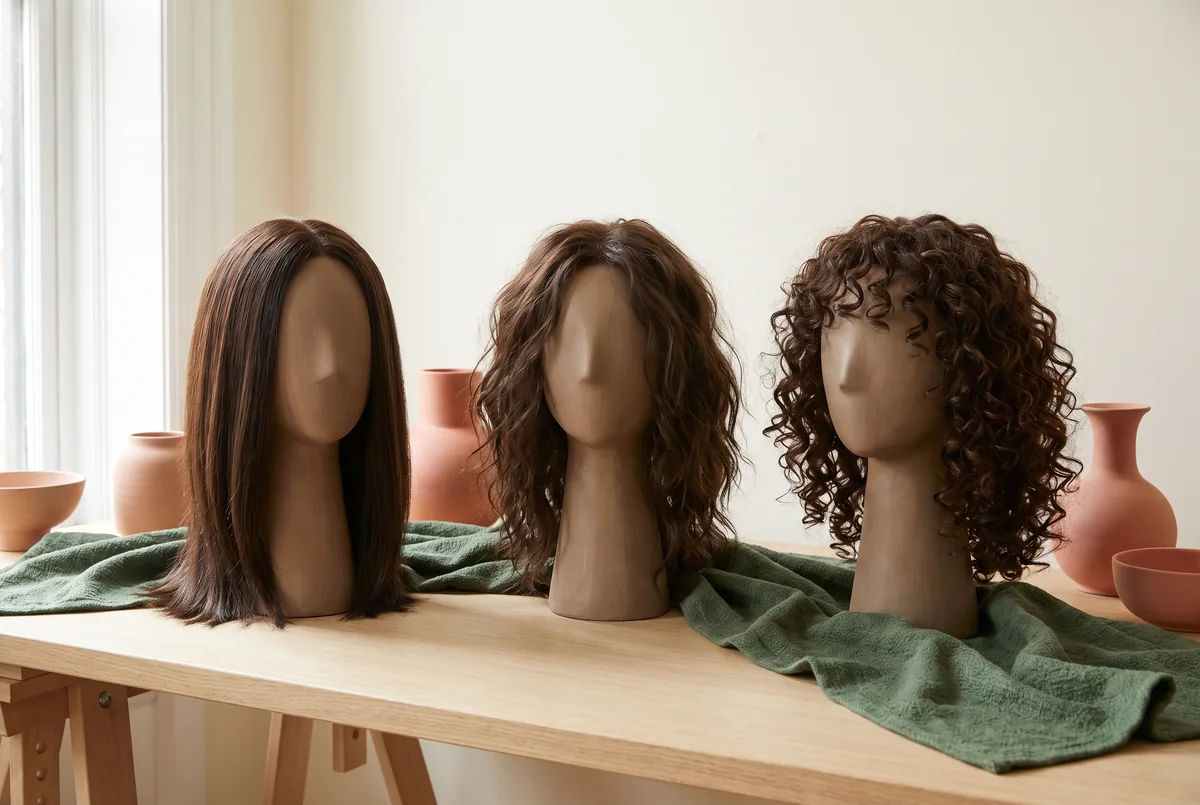
Choose curly or wavy wigs by starting with a supplied texture you genuinely want to keep, then checking whether its actual care requirements fit your willingness to maintain it. Do not buy an unsuitable original shape on the assumption that it can easily be straightened, loosened or curled later.
The useful question is not simply “Which looks better?” It is “Would I still choose this model on an ordinary day, without a new styling appointment?” This guide turns that question into a practical comparison, with space for unknown product conditions rather than promises about effortless hair.
1. Choose a texture you want to keep as supplied
Describe the preferred shape before choosing a fibre. “Curly” might mean clearly separated spirals to one buyer and a loose, rounded outline to another. “Wavy” might mean gentle bends through the lengths or pronounced waves starting higher up. These descriptions are discussion aids, not standardised guarantees across sellers.
Write down where you want texture to begin, how defined you want it to look and where the ends should sit when worn. Add one acceptable alternative: perhaps softer definition is welcome, but a straight root with curled ends is not. This gives the supplier something more useful than a photograph labelled “natural curls”.
Then distinguish your preferred everyday look from an occasional polished finish. If you only like the model after extensive styling, the supplied texture may not be your real preference. Ask whether the displayed sample represents the model's supplied state or a finish created for presentation, and what happens after its prescribed cleaning routine.
Jon Renau's buying guide recommends considering lifestyle alongside fibre, cap construction and length. That supports evaluating the whole ownership commitment, rather than treating appearance as a separate decision.1
Use a simple baseline test: would you be content wearing the verified original shape while postponing any optional transformation? A “no” does not mean curls are unsuitable for you. It means this particular starting shape needs reconsideration. Narrow the search to models whose ordinary condition already meets your main preference.
2. Separate the texture label from the fibre label
A curl pattern describes appearance; a fibre label helps determine care and styling restrictions. Neither tells you everything about the other. Two similarly shaped models may have different permitted tools, cleaning products and requirements for restoring their finish.
When browsing curly wigs, use the category to identify possible shapes, then request the material and care information for the individual model. A category listing alone does not establish availability, heat compatibility or how the displayed curl will look after routine care.
Standard synthetic fibre should not be treated as heat-friendly. Jon Renau's care guidance distinguishes ordinary synthetic hair, heat-resistant synthetic hair and human hair, with different directions for each.3 Those distinctions are useful principles; its tools, temperatures or care schedules should not be transferred to another manufacturer's product.
Use this table to keep the visual preference and the evidence question separate. It compares questions to resolve, not a universal maintenance ranking.
| Comparison point | What to look for | Ownership question | Evidence needed |
|---|---|---|---|
| Loose wave | Broad bends and the position of the first wave | Is this the shape I want without further curling? | Actual model shown in its supplied condition |
| Defined curl | Separation, pattern and the outline at the ends | Am I willing to preserve this degree of definition? | Model-specific routine-care demonstration |
| Standard synthetic fibre | Material identification, not appearance alone | Can I accept the original style without heat-tool changes? | Manufacturer's fibre and care instructions |
| Heat-friendly fibre | Explicit identification for this model | Do I want the permitted maintenance, not just styling flexibility? | Written restrictions and required care |
| Human hair | Supplied texture and its care history | What work is needed to maintain the finish I chose? | Provider's care explanation for this piece |
3. Match upkeep to willingness, not just ability
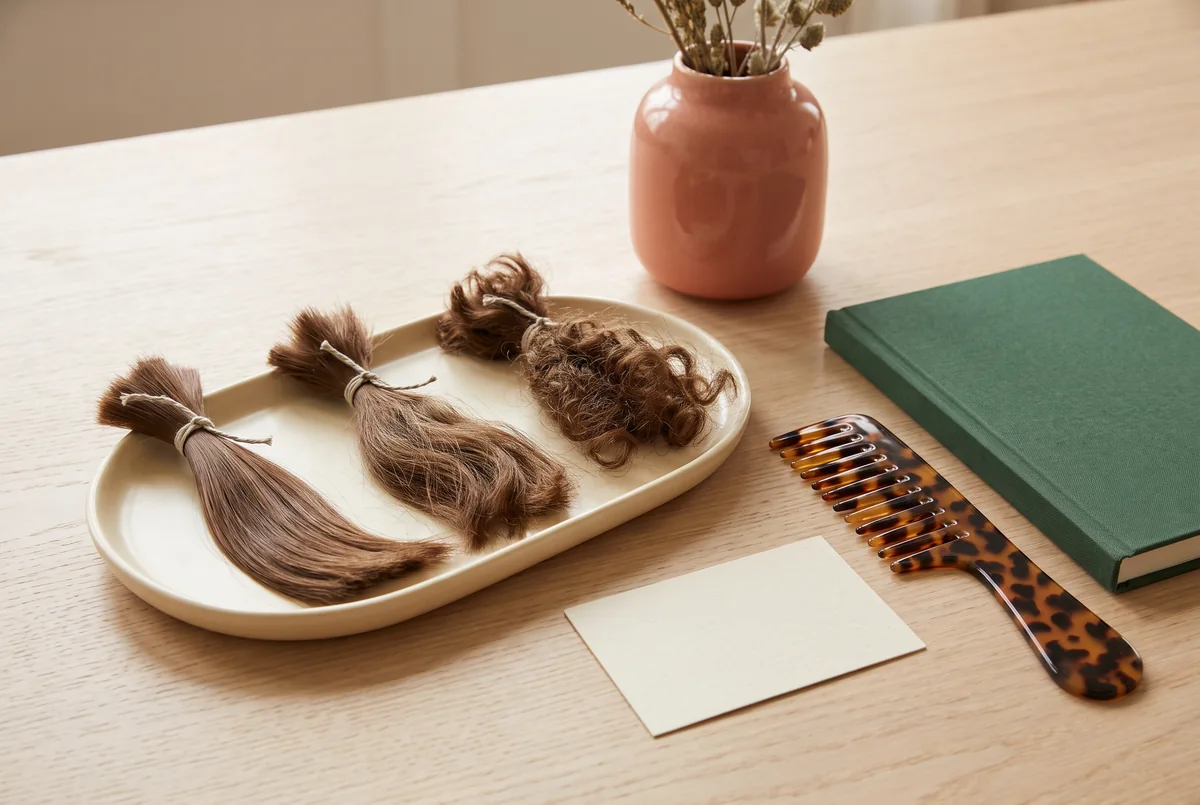
Being able to perform a task is different from wanting to repeat it. You may know how to arrange textured hair yet prefer not to spend your free time doing so. Conversely, a routine that initially requires learning may be acceptable if the texture is important to you and the instructions are clear.
Ask the provider to distinguish ordinary care from presentation styling. Which tasks are required to keep the piece in usable condition? Which create the particularly defined finish shown in the catalogue? Which tasks can the wearer perform according to the instructions, and which require assistance?
Human hair does not cancel this distinction. Its care requirements still need to be checked, and its fibre label is not a promise that the displayed shape will return without styling. Jon Renau's care guide provides separate human-hair instructions and cautions around alterations; it does not establish universal outcomes for every piece.3
Consider a hypothetical buyer who likes both loose waves and defined curls. They are willing to follow an approved cleaning and storage routine but do not want repeated work to recreate a sharply arranged finish. Their shortlist should favour a model whose ordinary appearance they accept, regardless of which promotional photograph is more striking.
Also check practical capacity: a suitable storage place, access to the specified products and time to follow the required process. If an essential task has no realistic place in your routine, write “not manageable” rather than assuming enthusiasm will solve it after purchase.
4. Put proposed shape changes in a separate column
Maintaining the supplied texture and creating a different texture are separate commitments. Do not quietly include straightening curls, tightening waves or changing the cut in the everyday-care column. These requests may alter the piece, require professional assessment or be unsuitable for the model.
If wavy wigs are closer to your everyday preference, investigate a wave supplied in that form before planning to loosen a more defined curl. Ask whether the exact wave is available for enquiry and whether the sample has been styled beyond its ordinary condition. A broad catalogue does not prove that every pictured option is ready to supply.
For each proposed change, request an answer specific to the piece: is it permitted, who should assess it, and what result can reasonably be discussed? “Human hair” or “heat-friendly” is not a complete answer. Nor does a professional appointment guarantee that an unsuitable transformation becomes feasible.
Hong Kong Customs identifies false service descriptions and misleading omissions among prohibited unfair trade practices. That makes clearly stated product and service scope important when comparing an alteration proposal, though this guide is not legal advice.2
Keep an alteration out of the purchase decision until its feasibility and scope are confirmed. If the change is essential to liking the wig, an unresolved answer should pause that candidate. If it is merely optional, decide whether you would still be satisfied if it never happened. This prevents an attractive possibility from becoming an unspoken requirement.
5. Read reference photographs without buying the styling
A reference photograph can clarify which features you like, but it cannot establish the construction, material or maintenance behind them. Circle only the relevant features: the bend near the cheek, the definition through the ends, or the position where the texture starts. Leave unrelated colour and styling choices out of the brief.
When considering human hair wigs, ask how the proposed piece compares with those features in its supplied condition. Do not assume that choosing the same broad material category will reproduce a photographed finish or allow every chemical or heat-based change.
Ask for a clear distinction between “the model already has this feature” and “a styling service may create something similar”. If a seller cannot demonstrate the post-care appearance, mark it as unknown. You can then decide whether that uncertainty is acceptable instead of filling the gap with a general claim about curl retention.
Length should also be compared in the worn shape, not inferred from a single number. Ask what the stated length measures and inspect where the textured ends actually finish on the available sample. This is especially useful when two candidates look similar in close-up but sit differently around the shoulders.
For a separate discussion of outline and physical space, FlintHub's guide to curls around instrument playing offers related visual-planning context. It does not establish a wig's care requirements or transformation options. Return to the individual product conditions before deciding what you can maintain.
6. Complete the texture capacity worksheet
Make one copy of this worksheet for each serious candidate. Keep three categories visible: wanted original shape, manageable upkeep and professional-only changes. The third category is a place to record requests for assessment, not a declaration that a procedure is possible.
Fill in your own preferences first. Then add the supplier's answers, identifying which model they concern. Avoid letting a reassuring demonstration replace missing care instructions, or letting an optional service conceal a mismatch with the original shape.
| Worksheet field | Your entry or supplier answer | What remains unresolved? | Decision or next step |
|---|---|---|---|
| Wanted original shape | Model: ; texture begins: ; ends sit: ___ | Is the display styling part of the supplied state? | Keep only if the verified starting shape is acceptable |
| Acceptable variation | Definition or outline I can accept: ___ | Expected appearance after prescribed care: ___ | Request an explanation or sample comparison |
| Manageable upkeep | Required tasks I will do: ___; suitable space and products: ___ | Instructions or equipment still missing: ___ | Confirm before counting the routine as manageable |
| Upkeep I will not do | Tasks I am unwilling to repeat: ___ | Is assistance suitable and actually offered? | Choose another model if essential care remains uncovered |
| Professional-only changes | Desired alteration: ___; assessor or provider: ___ | Suitability, scope and likely limitations: ___ | Exclude unresolved changes from the base decision |
| Final choice | Keep / pause / reject: ___; reason: ___ | Question that would change the answer: ___ | Send a focused enquiry or stop this candidate |
Apply a non-scoring rule: a candidate stays on the shortlist only when its original shape is wanted and its essential upkeep has an acceptable owner. An unresolved essential alteration pauses it; an optional alteration cannot rescue an unwanted baseline.
If both candidates pass, choose according to the feature you value most. If neither passes, broaden the search rather than awarding points to the least unsuitable choice. “Not buying yet” is a useful worksheet result, not a failure to choose.
7. Verify the remaining conditions before committing
Turn the unresolved worksheet entries into a short enquiry. For example: “I want to keep this wave as supplied. Please confirm the model's fibre, whether the displayed finish is additional styling, and what routine is needed after cleaning.” Add any essential alteration as a separate question.
Ask for the actual care directions before assuming that a familiar routine is suitable. This article provides no heat settings, chemical alteration steps or DIY cutting instructions. If instructions are missing or contradictory, seek clarification rather than borrowing a method from a similar-looking piece.
Use this concise pre-purchase checklist:
- [ ] I like the verified supplied texture without an essential transformation.
- [ ] I have model-specific fibre and care information.
- [ ] I know which appearance features require extra styling.
- [ ] Every essential upkeep task has a willing, realistic owner.
- [ ] Proposed professional changes have a separate assessment and scope.
- [ ] Supply, included services and applicable transaction terms are confirmed.
Where a service is proposed, ask what the quotation includes and how additional work is agreed. Written clarity helps distinguish a product description from a service commitment; it should not be interpreted as an unconditional refund promise.2
The worksheet's limit is straightforward: it tests the match between your preferences and known conditions. It cannot predict a lifespan, guarantee the same finish every day or determine whether an alteration will work. Your next step is to resolve the question most likely to change the decision, then keep, pause or reject the candidate on that evidence.
Frequently Asked Questions
Are curl pattern and fibre the same decision?
No. Curl pattern describes the shape you want; fibre information helps establish care and styling conditions. Compare both for the exact model. Similar-looking curls can belong to products with different instructions, so a texture category should not be used as a material specification.
Can human hair be reshaped without limits?
No unlimited reshaping should be assumed. Suitability depends on the individual piece and its condition, as well as the requested change. Ask for professional assessment where appropriate, and do not make an essential transformation part of the purchase plan before it is confirmed.
Should I choose a texture I want to keep as supplied?
Usually that is the strongest starting point for this decision. It reduces dependence on an unconfirmed change. Still ask whether the display represents the supplied state and what care preserves an acceptable everyday appearance; “as supplied” does not mean “requires no upkeep”.
Does the worksheet give heat settings?
No. It records the exact product instructions you need to obtain and the tasks you are willing to undertake. It does not authorise heat-tool use or substitute a universal temperature for the manufacturer's model-specific restrictions.
What if a change needs professional support?
Separate the alteration assessment from ongoing maintenance. Confirm that an appropriate provider can assess the actual piece, then clarify scope and limitations. If professional help is also needed routinely, include that commitment in the upkeep column. Pause if essential support is unavailable or unresolved.
References
- [1] The Beginner's Guide to Wig Buying
- [2] Hong Kong Customs: Unfair Trade Practices
- [3] Alternative Hair Care Guide
Editorial disclosure
FlintHub and OwnStrand share ownership. FlintHub Academy prepared this article with AI-assisted organisation of declared public sources and editorial decision tools. It is not an independent expert endorsement, a wearer review or medical advice. Individual products, availability and services require provider confirmation.
FlintHub Academy · AI-assisted editorial prepared from public information. FlintHub publishes creative-learning and personal-planning resources. This is not a first-hand product test, a real client case or a claim of wig-fitting, hairdressing or medical qualifications. OwnStrand and FlintHub Academy have the same owner.
Connect this guide with your planning
For comparison tables and enquiry tools on this same subject, visit Wig Selection & Personal Styling journal. This is an information journal, not a course, product or medical service.