Start with the purpose of making art
Expression, observation, and fine-motor practice are different aims
A drawing activity may invite open expression, close observation of colour and shape, or practical actions such as gripping, dabbing, pressing, and layering. If the aim is observation, a leaf, object, photograph, or story image can provide a useful point for looking and discussing before marks are made.
Age and attention patterns shape a sensible starting point
Younger children often benefit from fewer stages, larger paper, and tools that are easy to hold. Older children may be ready to test colour mixing, foreground and background, or a sequence of sketches. Share attention patterns so pacing can be considered realistically.
Ask what the child enjoys drawing, whether they are comfortable getting their hands messy, and how they respond to waiting for paint to dry or listening to directions. Those answers can be more useful than school year alone. If there are sensory, communication, or mobility considerations, raise them during an enquiry so that practical adjustments can be discussed without assumptions.
Match material choices to the skills being explored
Dry media support line, pressure, layering, and revision
Crayons, coloured pencils, and pastels allow children to explore line weight, pressure, layering, and local changes without waiting for a surface to dry. Watercolour, poster paint, and water-based ink can introduce transparency, flow, mixing, and reserved areas, but they also involve water, surface protection, clothing considerations, and drying space. No medium is automatically better; suitability depends on the child, purpose, and setting.
Wet media and collage bring different preparation needs
Collage shifts attention towards tearing, arranging, texture, and composition, while stamps, sponges, and rubbings emphasise repeated patterns and controlled pressure. A story-led activity may connect pictures to characters and settings. For a shorter parent-child session, a process with fewer stages and visible progress along the way may be easier to manage than one that depends on extended drying or detailed preparation.
During an enquiry, list whether scissors, glue, paints, aprons, easels, or drying racks may be needed, and ask who supplies them. It is also sensible to ask whether alternatives can be discussed. If a child avoids a certain smell, texture, or material, do not assume a substitute will be on hand; state that need clearly before an arrangement is confirmed.
Compare formats, groups, and the pace of participation
Guided demonstrations and open choices feel different
A format built around a shared theme and short demonstrations can give a clear entry point when children are new to a medium. A more open format may leave greater room for subject choice, colour decisions, and individual composition. Compare them by whether the child prefers an example or independent trying.
Family, same-age, and mixed-age groups have distinct needs
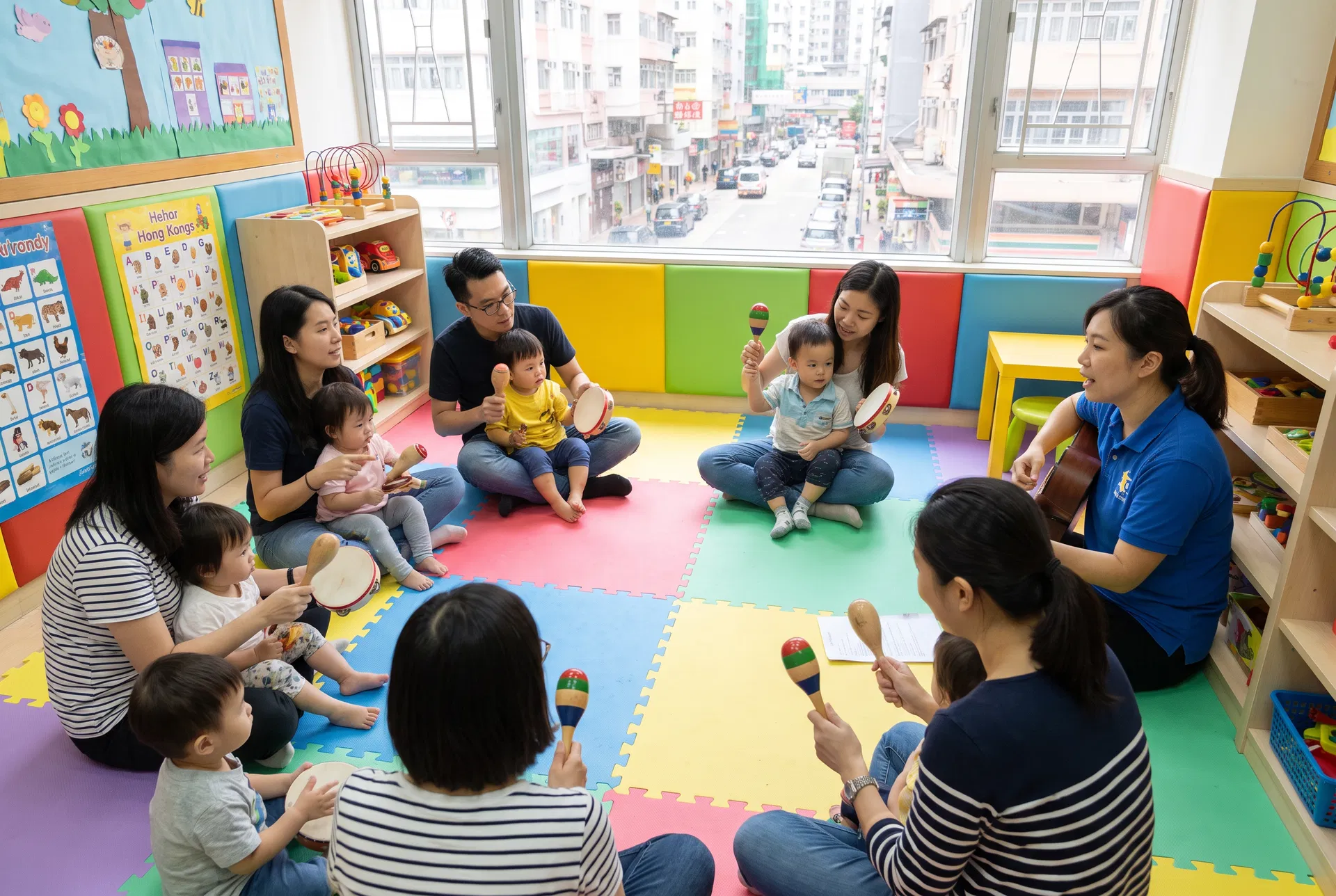
Same-age groups can make it easier to adapt tool size, explanation speed, and working rhythm. Parent-child or sibling participation raises additional questions: whether an adult must stay, whether younger children need direct help, and whether each person has a separate work area. Mixed ages can still work when different levels of complexity are discussable rather than every participant being expected to produce the same image.
A short session may focus on one technique or a compact piece, while a longer period can leave room for planning, testing colours, breaks, and tidying. Do not infer a fixed duration, capacity, or facilitator ratio from a service name. Ask about dates, group numbers, adult-accompaniment expectations, teaching language, and how late arrival or early collection can be handled.
For schools, separate learning aims from on-site logistics
Connect the art activity to the day’s learning context
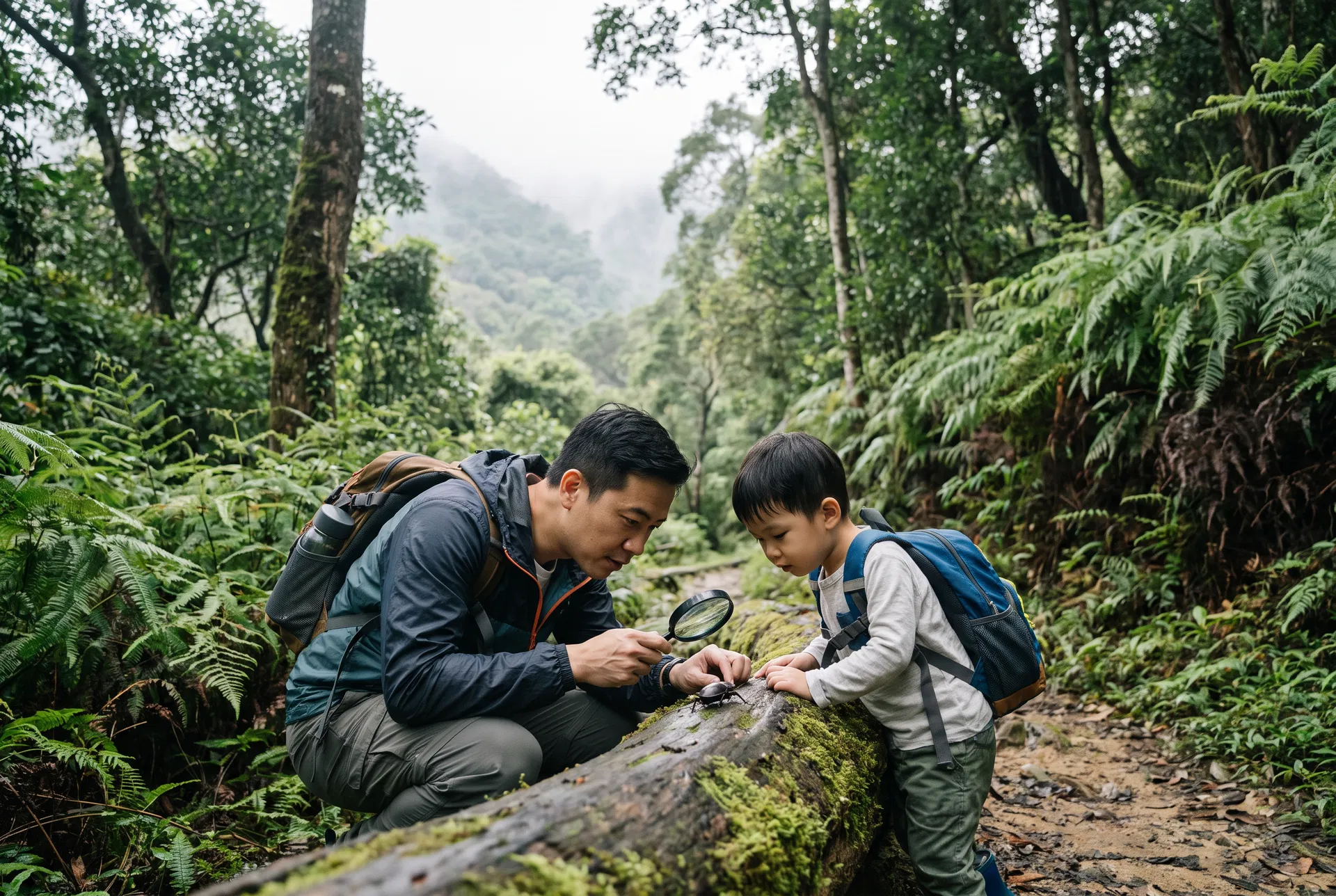
A school can first decide whether the activity is meant to extend a visual-arts topic, a reading theme, an arts day, or a period of creative exploration. Nature, neighbourhood, and story themes can be framed through looking, rough sketches, and sharing. Art making should not be forced into unrelated programming or science objectives. The specific theme, materials, and sequence need to be discussed for the requested setting.
Check the operating limits of classrooms, halls, and outdoor areas
In a classroom, consider desk surfaces, water access, clear routes, storage or drying space, and the time needed to change between classes. A hall may hold more participants but offer fewer sinks and less suitable table space for detailed work. Outdoor locations require separate thought about weather, ground conditions, shade, and securing materials. A floor plan, timetable, and age range help make an early feasibility conversation more precise.
If bilingual explanations, teacher assistance, station rotation, or artwork labels are relevant, mention them in the first enquiry. Do not presume a set lesson plan, display format, or image record of results. Instead, ask what guidance methods may be discussed, what school staff support may be needed, how much setup time is practical, and how finished work could be collected or held temporarily.
Plan family and community sessions around accompaniment and shared space
Parent-child making is not an adult completing the picture
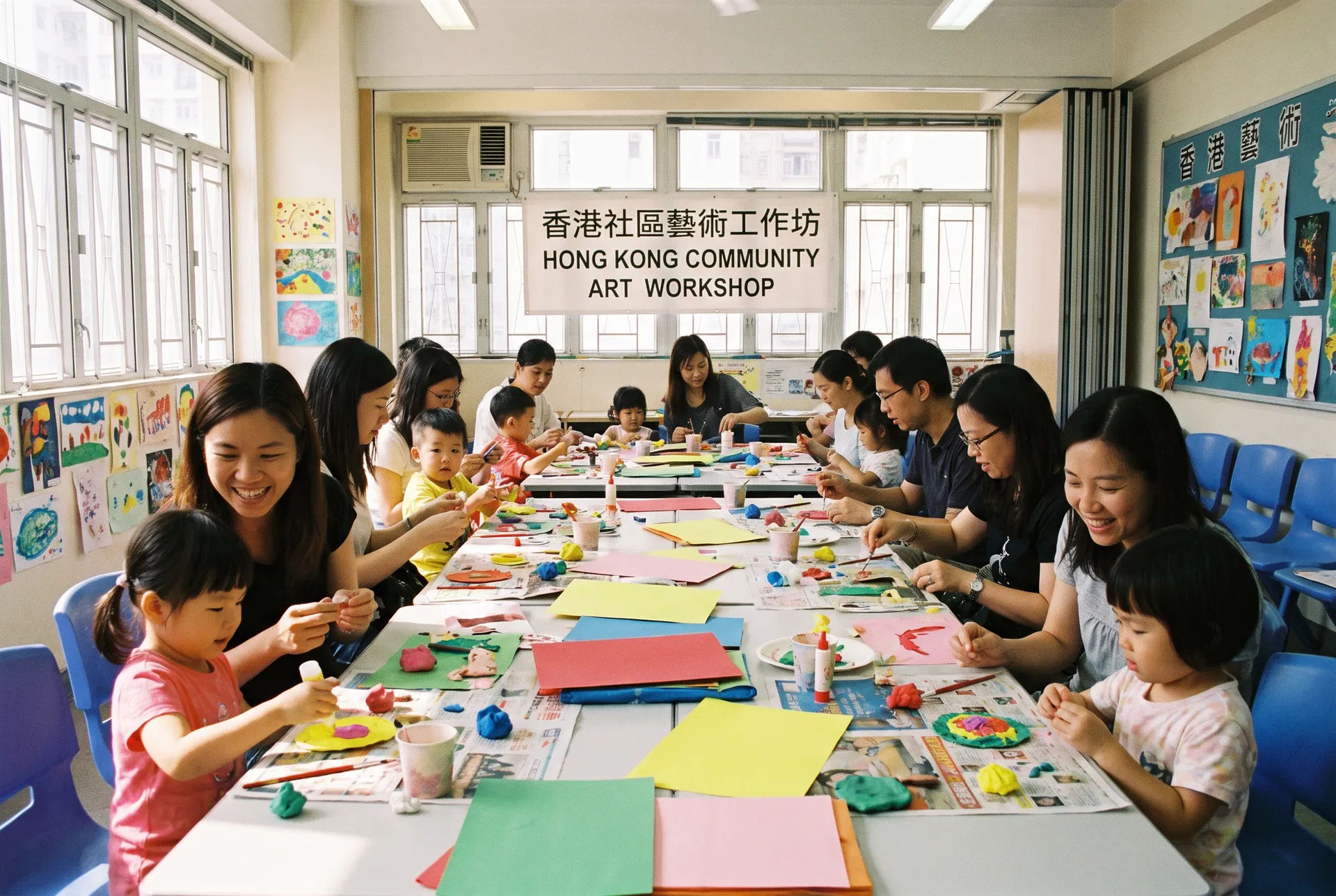
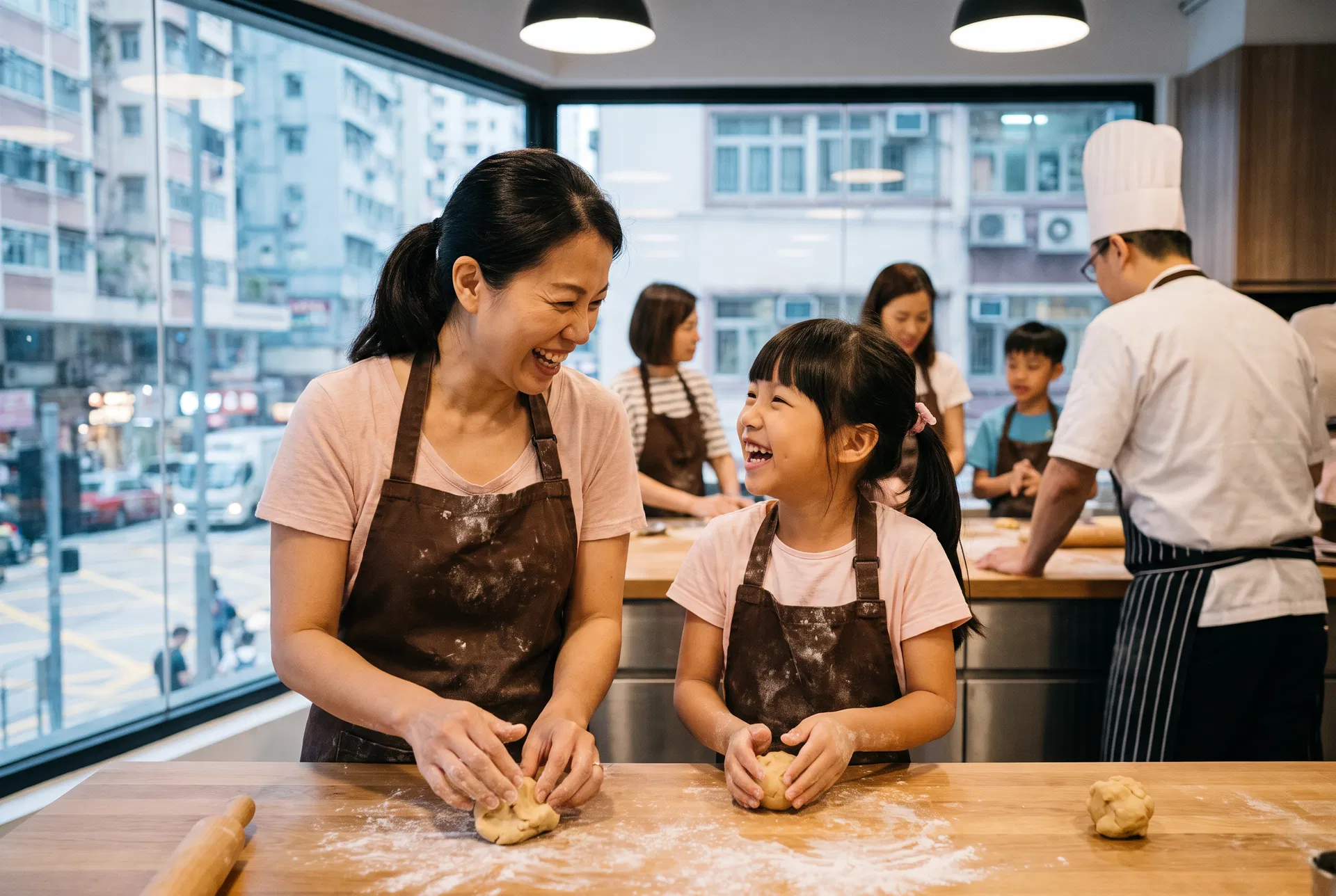
In a parent-child setting, adults can help read prompts, collect tools, manage clean-up, and listen to a child’s ideas without correcting every mark or taking over the main image. Let the child choose colours, subject matter, and manageable experiments. With large age gaps, a shared theme with varied levels of challenge can be more respectful than treating an adult example as the standard everyone should copy.
Family days need arrival, care, and circulation plans
For a residential clubhouse, community venue, or organisation’s family day, seating is only one consideration. Ask about check-in, waiting areas for carers, buggy access, distance to washrooms, and a wet-weather alternative where relevant. If an employer or organisation is coordinating attendance, it should confirm who accompanies each child and communicate venue rules clearly, rather than leaving supervision unclear at the activity itself.
Shared tables call for an understandable sequence for collecting, using, returning, and cleaning materials so that everyone does not converge at one point. Whether waiting lists, timed entry, observers, or additional family members can be accommodated are service details to confirm before registration. It is safer not to assume that places can be added on the day or that a session can simply run longer.
Use conservative venue and safety planning to support making
Build cleaning, clear routes, and tool control into the plan
A practical art space has stable tables and chairs, adequate lighting, wipeable work surfaces, and unobstructed exits. Liquids, paints, and cleaning supplies should be positioned to reduce accidental knocking; wet patches should be dealt with promptly. Whether scissors or other tools are appropriate depends on age, the activity, and adult oversight. These are cautious planning principles, not a replacement for the venue’s own safety rules.
Agree what adults should watch and who handles each responsibility
Where there is no sink, discuss water use, cloths, sealed containers, and waste collection in advance. Where carpets, walls, or furniture are easily marked, establish whether protective coverings are permitted. Ventilation, lighting, and entry points can influence material choices and participant flow, especially with larger groups or young children. Confirm these conditions instead of assuming that every location can support the same setup.
Organisers, parents, and schools can agree on accompaniment boundaries, emergency contact information, sign-in procedures, and venue notices before the activity. Parents should seek suitable professional guidance for a child’s health needs and provide only necessary practical information to the organiser. A general art activity should not be presented as medical care or therapy, and safety planning should remain proportionate to the confirmed venue and group.
Use an enquiry checklist to compare feasible arrangements
State the date, group details, and creative expectations together
For a first enquiry, prepare the children’s age range, expected number, adult-accompaniment plan, preferred and alternative dates, required language, venue type, and materials of interest. Schools and community organisers can also share a timetable, available furniture, washing facilities, and access restrictions. Clear information makes it easier to assess which format may fit in practice.
Confirm artwork handling and future options without assumptions
Ask how fees are calculated, which dates can be discussed, any minimum or maximum numbers, whether materials are included, what the venue needs, and how the actual session may be led. Also ask when and how work is taken home. Same-day collection, drying time, protective packaging, display, and temporary storage depend on the medium and arrangement and should be confirmed rather than inferred.
If a child may want to continue, ask whether different materials, themes, or levels might be discussable and whether it makes sense to begin with a one-off experience. Do not treat a progression route, facilitator details, certificates, or any eligibility as automatic. Compare the current information received through enquiry, then choose the option that best fits the family’s or school’s available time, support, and space.
A family event balancing child participation and adult collaboration can first ask whether Art Jamming Hong Kong fits the expected group size and cleaning requirements.
For a session that uses poured colour and movement as prompts for observation, consider a fluid art workshop Hong Kong within a wider creative plan.
Before confirming a cross-curricular event, a school workshop Hong Kong gives staff a prompt to check materials, movement routes, and support needs.