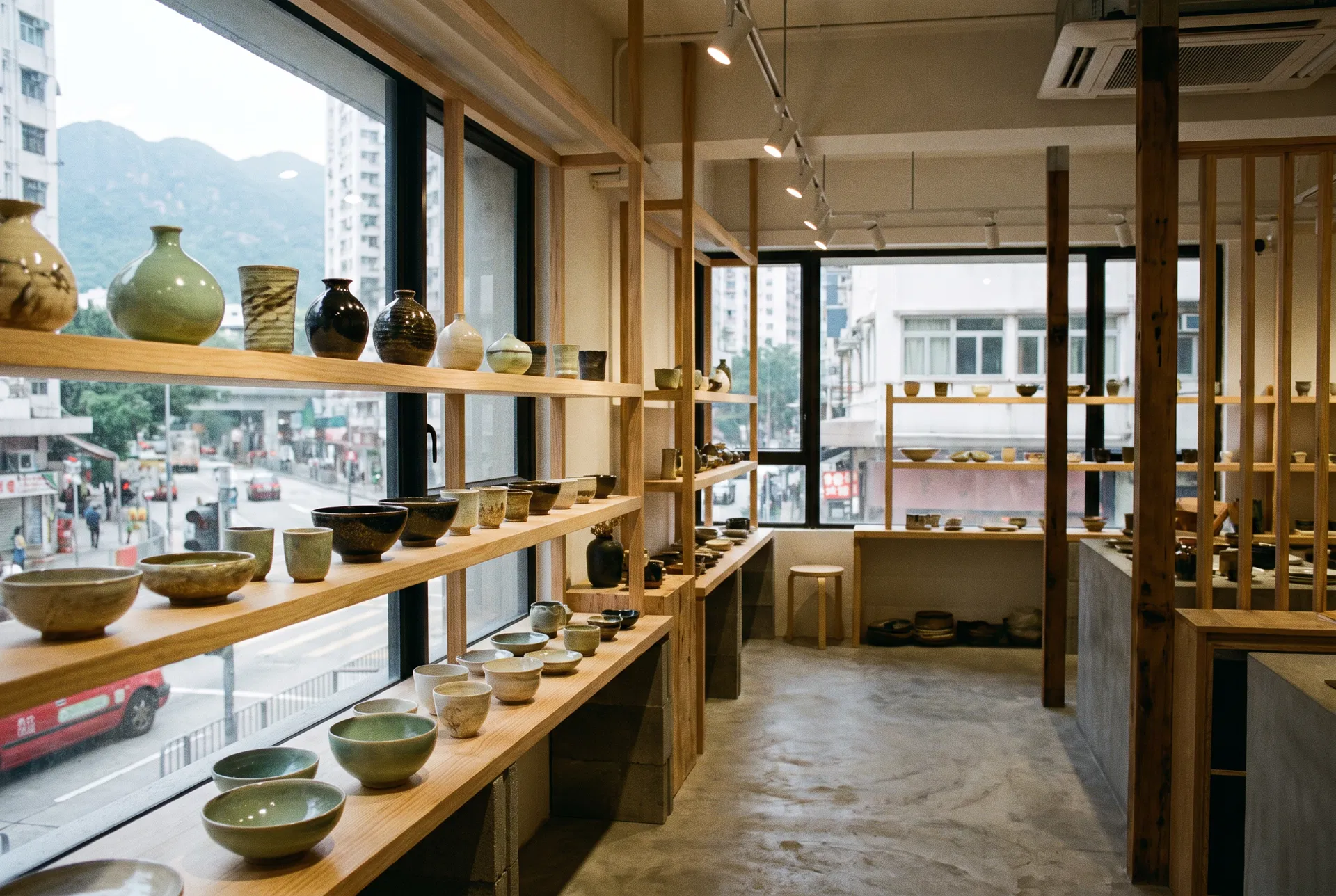
Start with the purpose, not the finished object
A first encounter is about materials and sequence
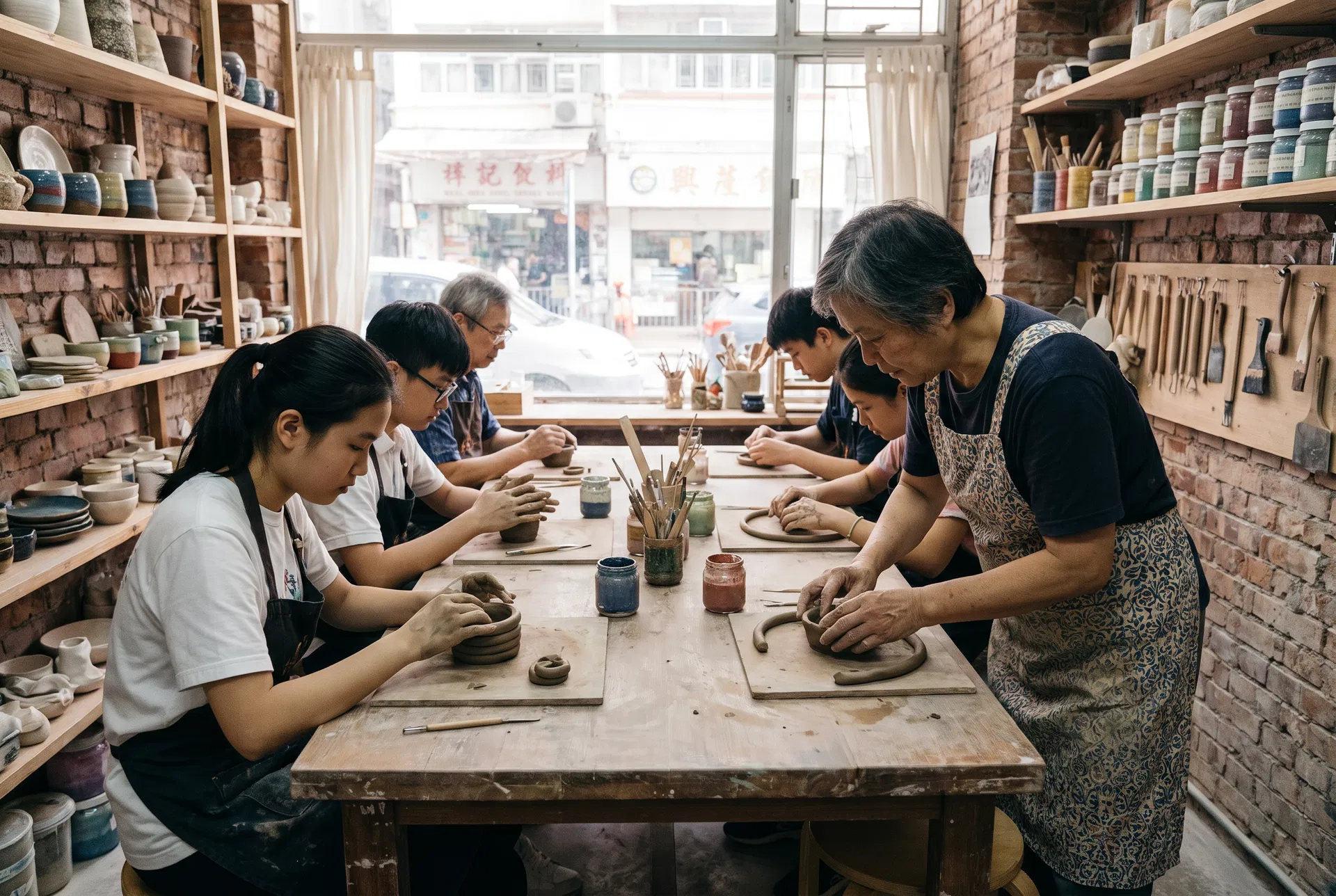
For a first encounter, the goal is to feel how clay holds moisture, responds to pressure and changes through forming, rather than to produce a flawless vessel. Pinching, coil building and slab construction create different decisions and hand movements. Ask whether a proposed session can introduce a method and how any work will be handled afterwards, instead of assuming every format includes the same object or finish.
Ongoing learning needs a skill order
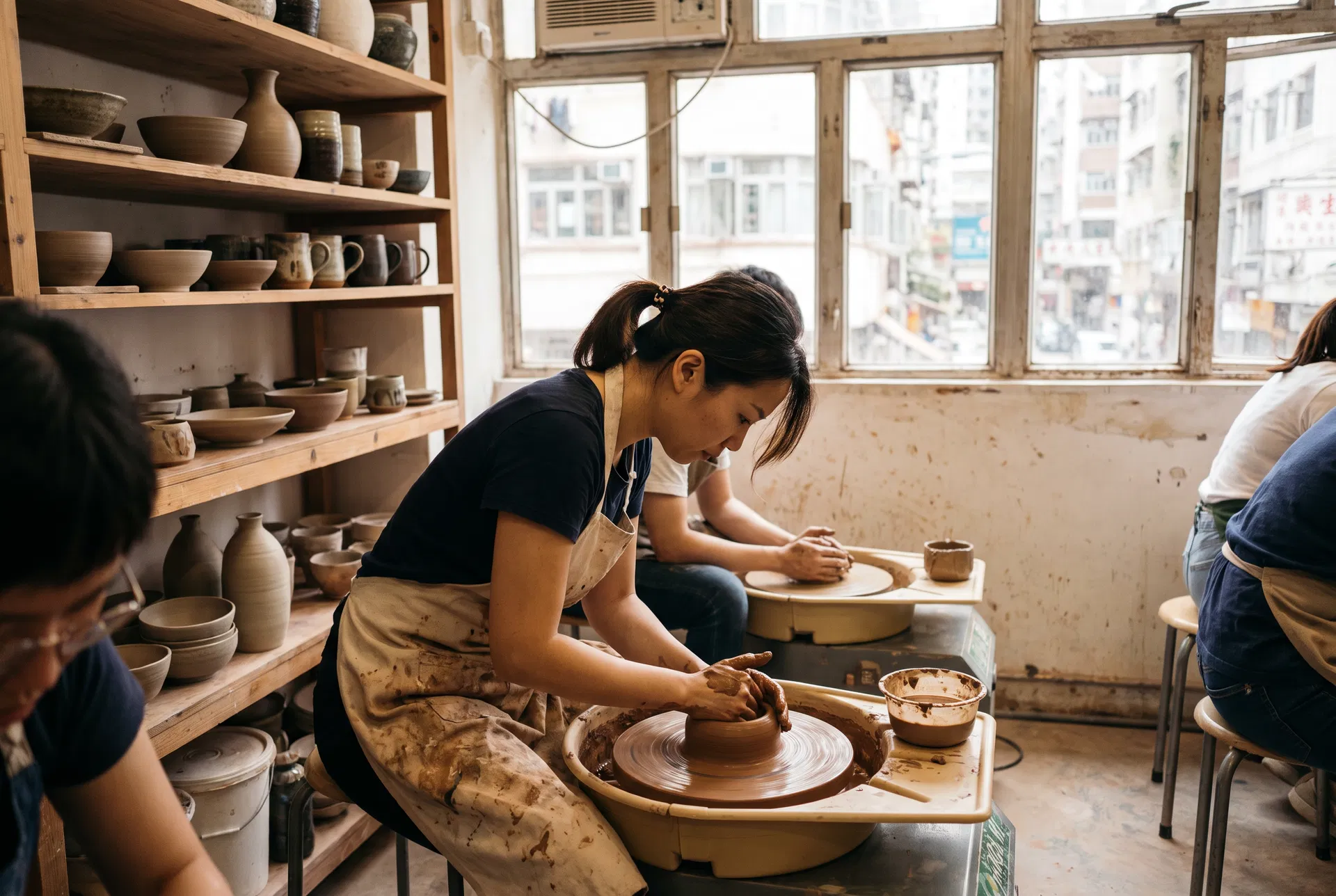
A learner who wants symmetry, even walls or more control of a vessel may be looking for wheel practice rather than a general making session. Wheel work involves centring, opening and lifting clay while it turns, so repeated attempts and suitable operating space matter. Share experience, the type of form of interest and available time when making an enquiry; dates, equipment and content should be confirmed for the arrangement.
The purpose changes again for families, schools and teams. A family may value shared making and age-appropriate steps; a school may connect touch, observation and reflection; a workplace may protect time for conversation and a common prompt. Writing that purpose in one or two sentences helps a pottery class Hong Kong enquiry receive options that are relevant rather than generic.
Compare clay and forming methods in practical terms
Clay affects texture, shrinkage and fired character
Ceramic clays differ in colour, particle size, plasticity and firing range. Before choosing, ask what type of clay may be used, whether it is likely to feel sticky or become dry quickly, and whether size is limited by the material or firing process. Those answers help set expectations more clearly than asking only whether a cup can be made.
Hand-building and wheel work use different spaces
Hand-building can include pinching, slabs and coils, allowing an idea to grow gradually from a flat or sculptural starting point. Wheel throwing requires a wheel, a seated workstation and a cleaning routine around moving clay and water. The first method can be easier to adapt for mixed ages; the second needs a venue and timetable that support turns. Confirm the actual setup before planning a group.
Surface treatment deserves its own questions. Incising, impressions, applied pieces and coloured slips may happen while the clay is damp, while glaze relates to later firing and may change in the kiln. Ask which stage participants may join, whether drying time is required, and how natural variation in fired colour or texture will be communicated. Do not treat a reference image as a guaranteed result.
Match the learning stage to a realistic progression
Beginners learn safe handling and adjustment
A beginner can benefit from understanding the balance between demonstration, trial time and cleaning up, as well as how to manage moisture, join clay parts and keep an appropriate wall thickness. A soft rim, a collapsed form or a small crack can be a prompt to observe and adjust, not evidence that a session failed. Ask whether time for testing is possible rather than expecting a predetermined outcome.
Returning makers can isolate one technique
Someone with prior experience may want to focus on one issue: centring on the wheel, attaching a handle, trimming a foot, fitting a lid or developing a surface texture. Describe the intended use of the object and the difficulty already encountered. This makes it easier to discuss whether independent practice, a technique demonstration or a more continuous learning arrangement is appropriate; availability and format must be checked by enquiry.
For students, a useful sequence can move through looking at vessels, sketching, making, documenting and reflecting. It need not be presented as coding or a STEM activity. A school should provide year level, class size, language preference, learning aim and available lesson time so that a possible arrangement can be considered against the real classroom conditions.
Plan drying, firing and collection as part of the experience
Fresh clay is not yet a usable ceramic object
A newly made clay piece still contains water and normally needs controlled drying before later firing steps. Thickness, joins, weather and kiln scheduling can affect the lead time. If a birthday, school display or team event has a desired handover date, state it early in the enquiry rather than treating collection as an automatic same-day step.
Firing and glaze require time and flexibility
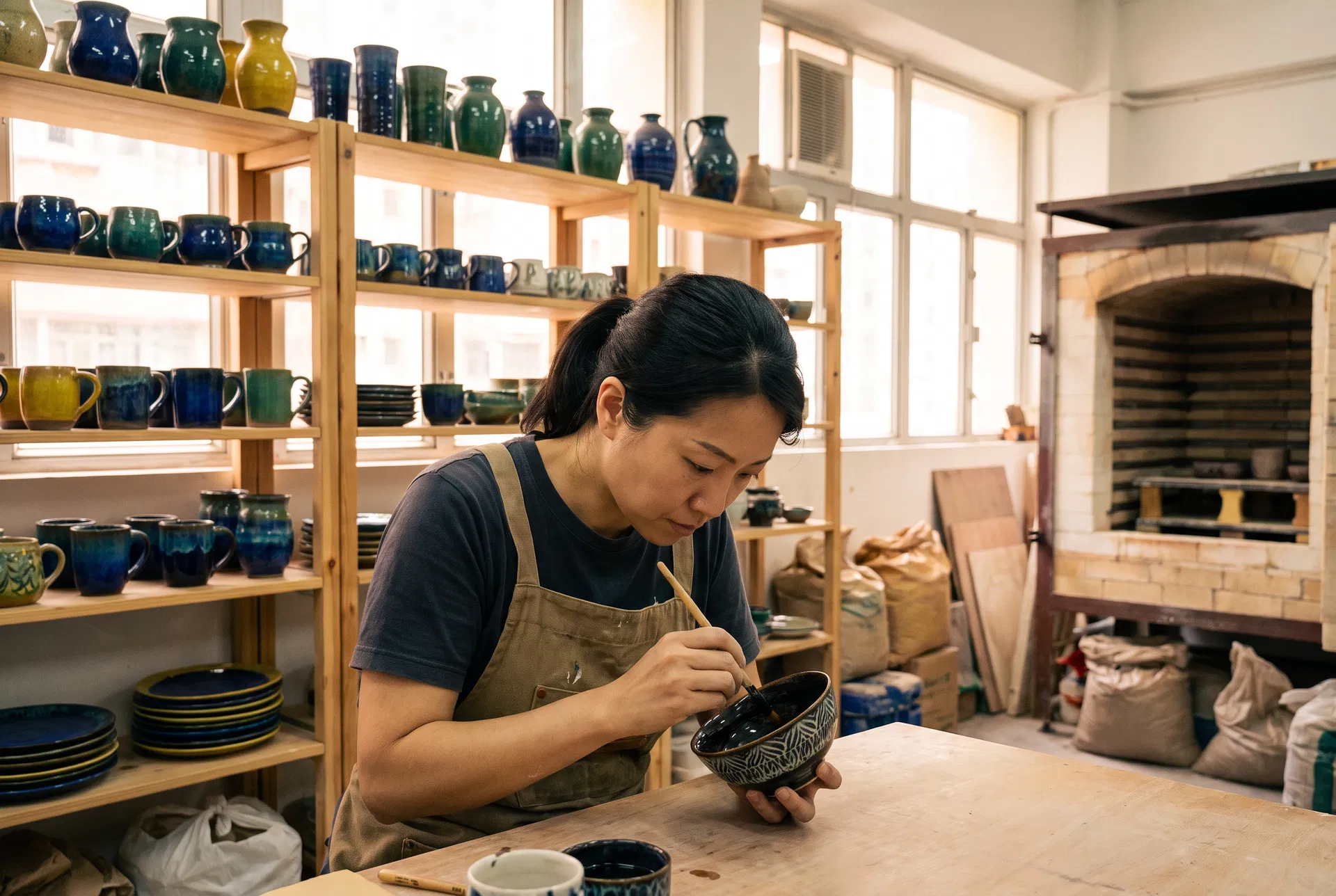
Bisque firing and glaze firing are different stages, and a glaze may look unlike its wet application after it has been fired. Ask whether surface options are available for the proposed format, how work is labelled, and how reasonable shrinkage, colour shifts or other kiln variation will be communicated. The suitability of a piece for a particular use should also be discussed with the provider, not inferred from appearance.
Collection needs planning too. Families may need to protect children’s pieces during transport; schools may need class labels and a central collection point; workplace organisers may need a distribution window. Confirm the estimated timing, notice method, packaging needs and what to do if collection cannot occur as planned. Each of these details can differ by arrangement.
Design for group makeup and the actual venue
Participant mix shapes pace, support and table layout
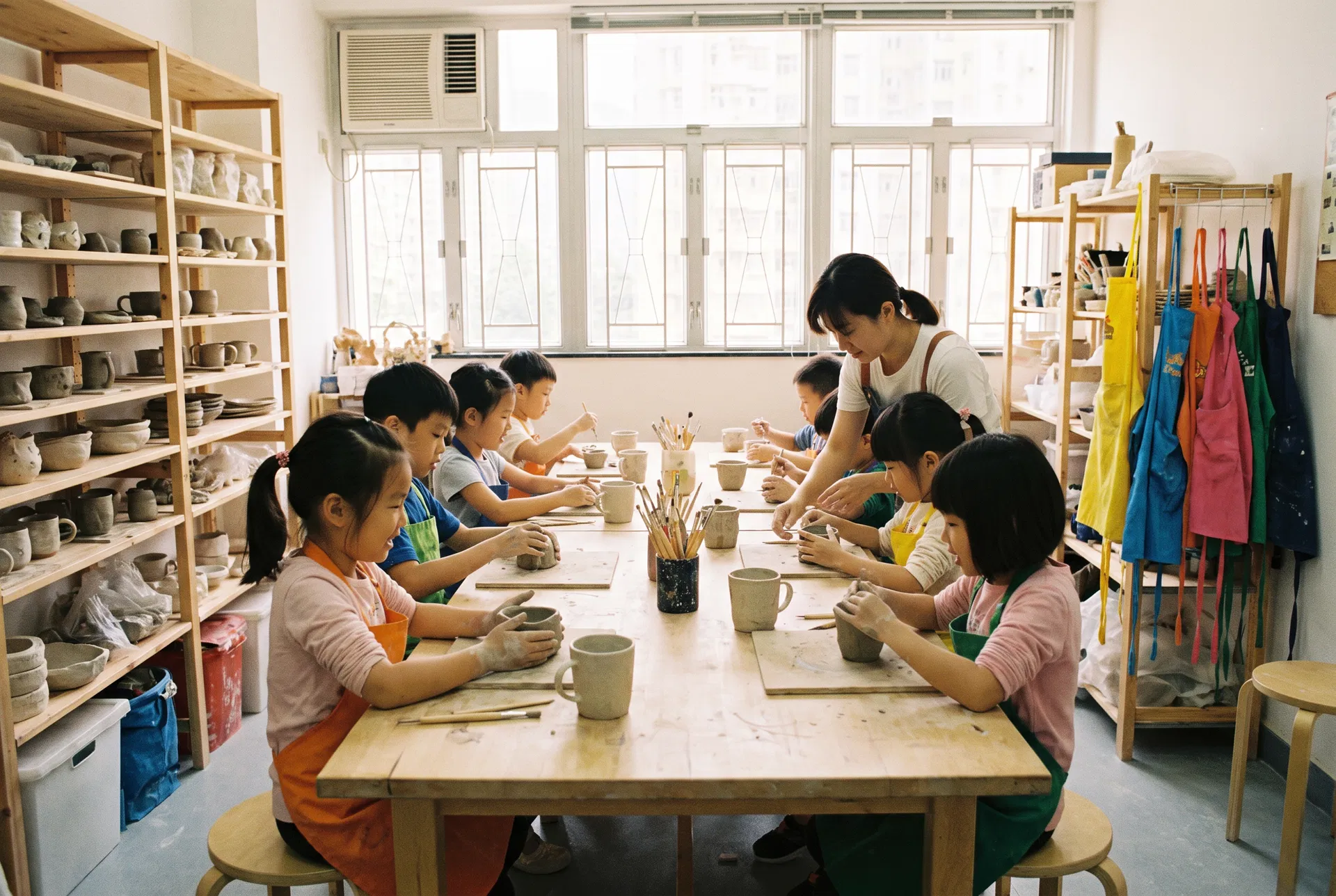
For a parent-child plan, consider whether an adult can accompany each child, how long younger participants can stay engaged, and whether they will make together or separately. Age labels alone do not settle suitability. Include children’s ages, adult numbers, cleaning preferences and the desired making style in the enquiry so that a provider can discuss a workable flow rather than promise a standard format.
Off-site plans begin with practical restrictions
A school should check whether classroom surfaces can be protected, where hands can be washed, how people move through the room, and how much time exists before and after the lesson for setup and cleaning. Wheel equipment, kiln access or specialist materials must never be presumed available on campus. If conditions are not suitable, hand-building may be a more practical design to discuss.
For a workplace group, decide whether the focus is informal conversation, quiet individual making or a shared theme, then reserve time for arrival, briefing and closing. Provide estimated attendance, time window, language preference, furniture and venue constraints. Ask about tables, protective measures, carrying access and restoration of the space after the activity before making any internal commitment.
Use conservative venue and cleaning practices
Keep wet clay, water and tools in clear zones
Separate food and drink from the making area, protect work surfaces, and plan access to handwashing and damp-cloth cleaning. Clay residue should not simply be washed into drains where it may cause blockage; follow the venue rules and the provider’s practical instructions for disposal. Anyone concerned about contact with materials should raise it when enquiring or registering, so suitable information can be discussed.
Treat kilns and dust as controlled areas
Cutting wire and trimming tools call for slow handling, clear demonstrations and use by adults or participants who have received appropriate guidance. Keep loose sleeves, long hair and personal belongings away from moving equipment, and plan suitable supervision for young children. These are conservative planning reminders only; the applicable on-site procedure and venue requirements take priority.
Kilns, hot pieces, glaze storage and material mixing are controlled parts of ceramic practice, not routine participant tasks. A school or hired venue with its own safety procedures should share them in advance. If step-free access, a particular layout or other support is needed, raise it early and ask what conditions may be accommodated for the proposed activity.
Send an enquiry that produces comparable information
Give the date, group and desired experience first
For a pottery class Hong Kong enquiry, provide the event date or acceptable time range, participant ages, expected headcount, district, venue type and preferred language. State whether it is an individual trial, parent-child activity, school lesson or workplace gathering, and whether the interest is hand-building, wheel work, decoration or vessel design. That context allows a response about possible arrangements.
Then confirm cost, handover and next steps
Ask item by item what any quoted cost may cover: clay, tools, firing, venue, delivery or collection. Also confirm the minimum and maximum group size, proposed duration and available dates. These conditions vary by format, so photographs or general site descriptions should not be read as a fixed syllabus, included material list or price. Rely on the current enquiry response for the actual proposal.
Finally, ask how completed work is managed, what waiting period may apply, how pieces are collected, whether further practice can be discussed, and whom to contact about rescheduling or other administrative terms. Keeping the answers in one checklist helps a parent organiser, teacher or administrator compare pottery class Hong Kong options thoughtfully before deciding.
If you want a group activity that leaves room for patient observation, palette discussion and shared making, amosaic lamp workshop Hong Kongis worth comparing with other creative formats.
When an open day needs a creative station that people can complete together, compare the materials and take-home arrangements for anart workshop Hong Kongbefore choosing a format.
After table protection, resting space, and collection arrangements are checked, a fluid art workshop Hong Kong may be easier to fit into the venue flow.