Understand preserved, fresh, and dried flower options
Material character changes the planning brief
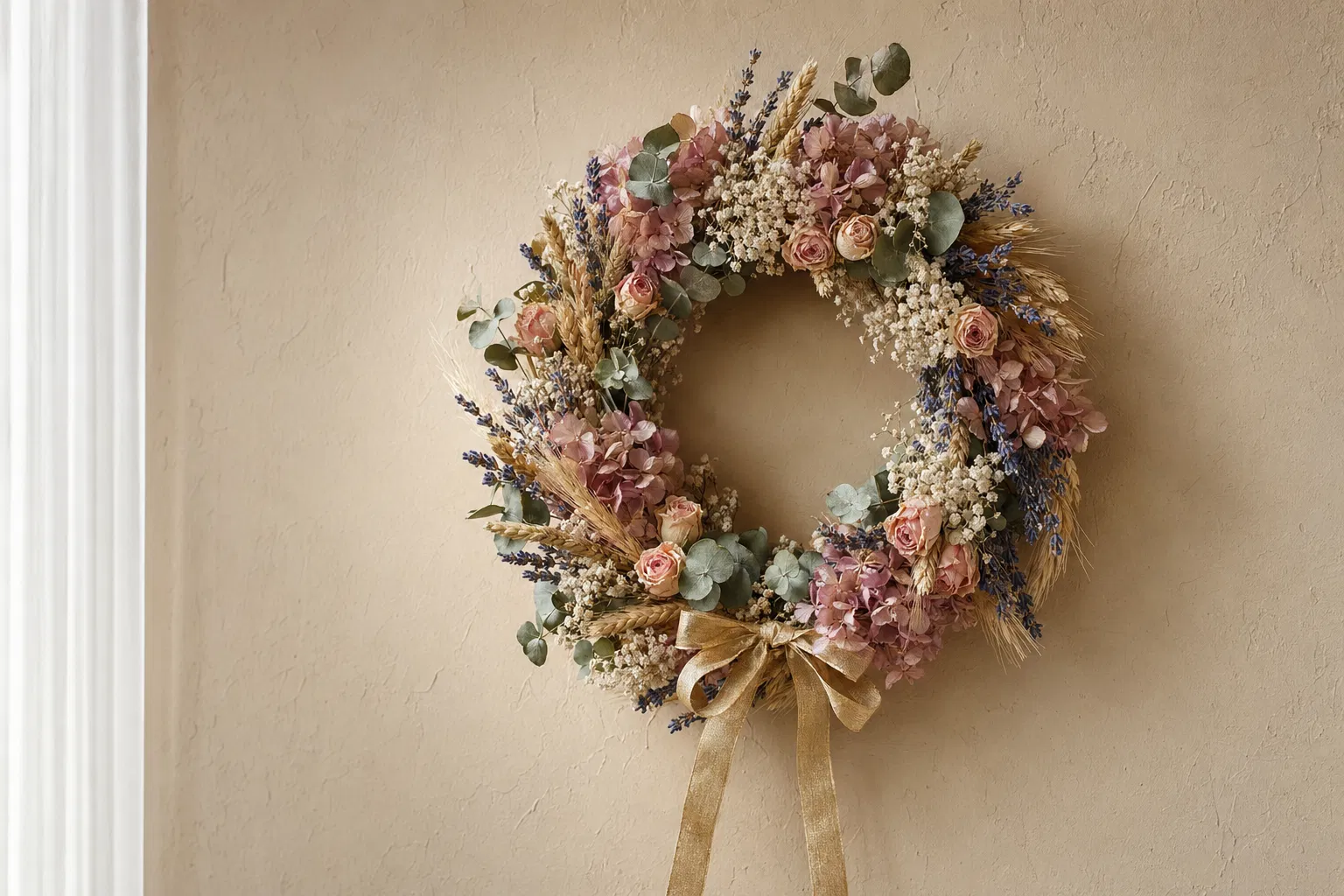
Preserved flowers are natural botanical materials that have undergone a preservation process and may retain a soft visual character. Fresh flowers depend on immediate condition and water, while dried flowers often have a drier feel and more visibly natural variation. Their colour, fragility, storage, and handling needs differ, so a photograph alone is not enough for selecting an activity format.
Start with the purpose of the finished piece
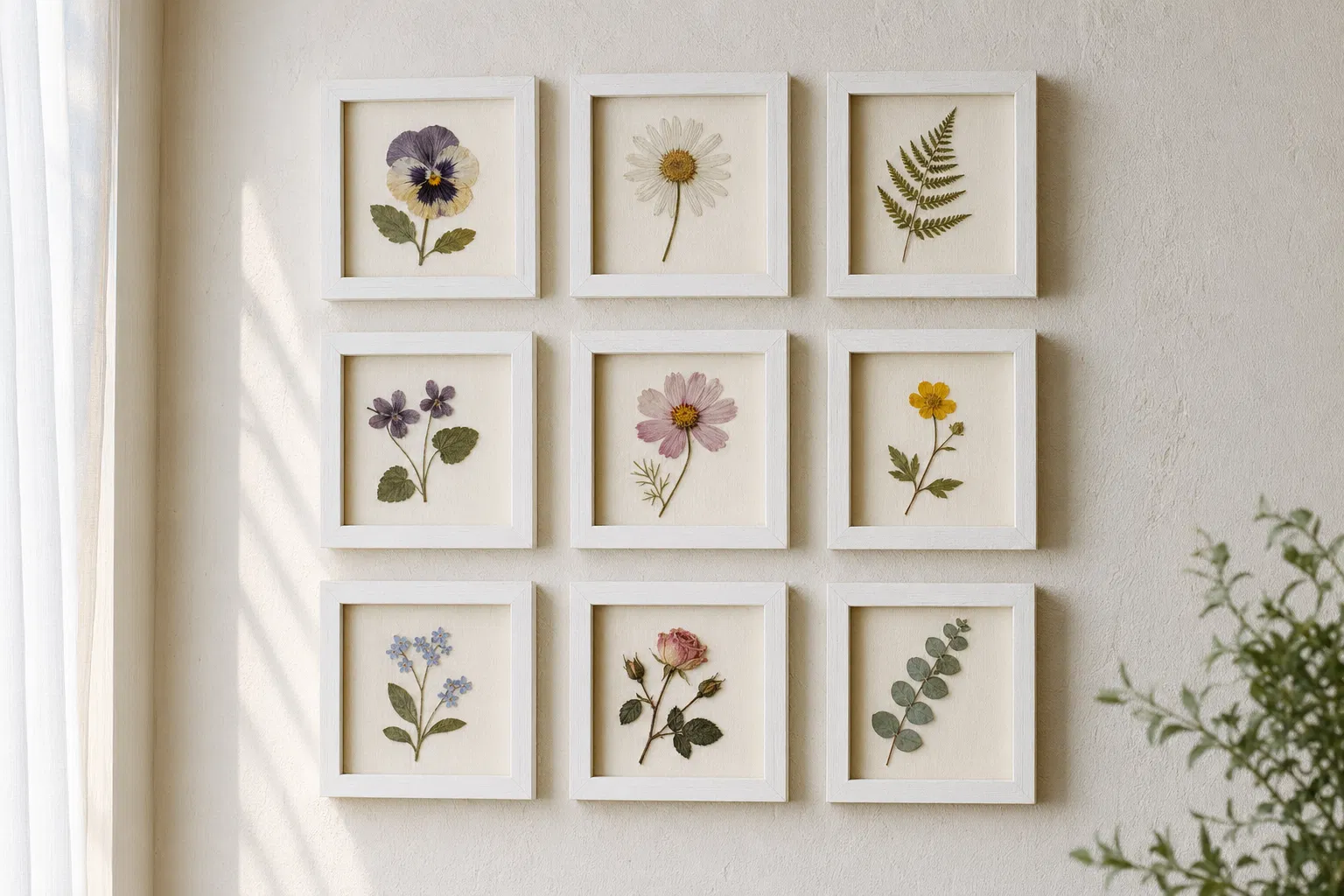
Before choosing a session, decide whether the group is considering a flower box, a dome or clear vessel, a framed decoration, a small table piece, or a material-exploration activity. Container depth, the need for adhesives, and any wire fixing can alter the number of steps, table space, and time involved. Available formats should be confirmed in the enquiry rather than assumed.
For a relaxed introduction, a limited palette and clearly sequenced composition may be more suitable. A design-focused group may instead wish to discuss proportion, negative space, focal flowers, supporting materials, and a short explanation of each piece. Naming the learning or gathering objective first prevents highly detailed techniques from being mismatched to a short, high-volume event.
Match materials and skills to the group
Flowers, vessels, and securing methods serve different roles
A discussion may include preserved roses, hydrangea, foliage, moss, dried accents, boxes, or transparent vessels, but availability, colours, and condition can change with the date. Instead of treating a particular bloom as guaranteed, share a preferred palette, theme, intended size, and whether the piece must travel home. That information makes it easier to discuss sensible substitutions.
Beginner skills are about observation as well as making
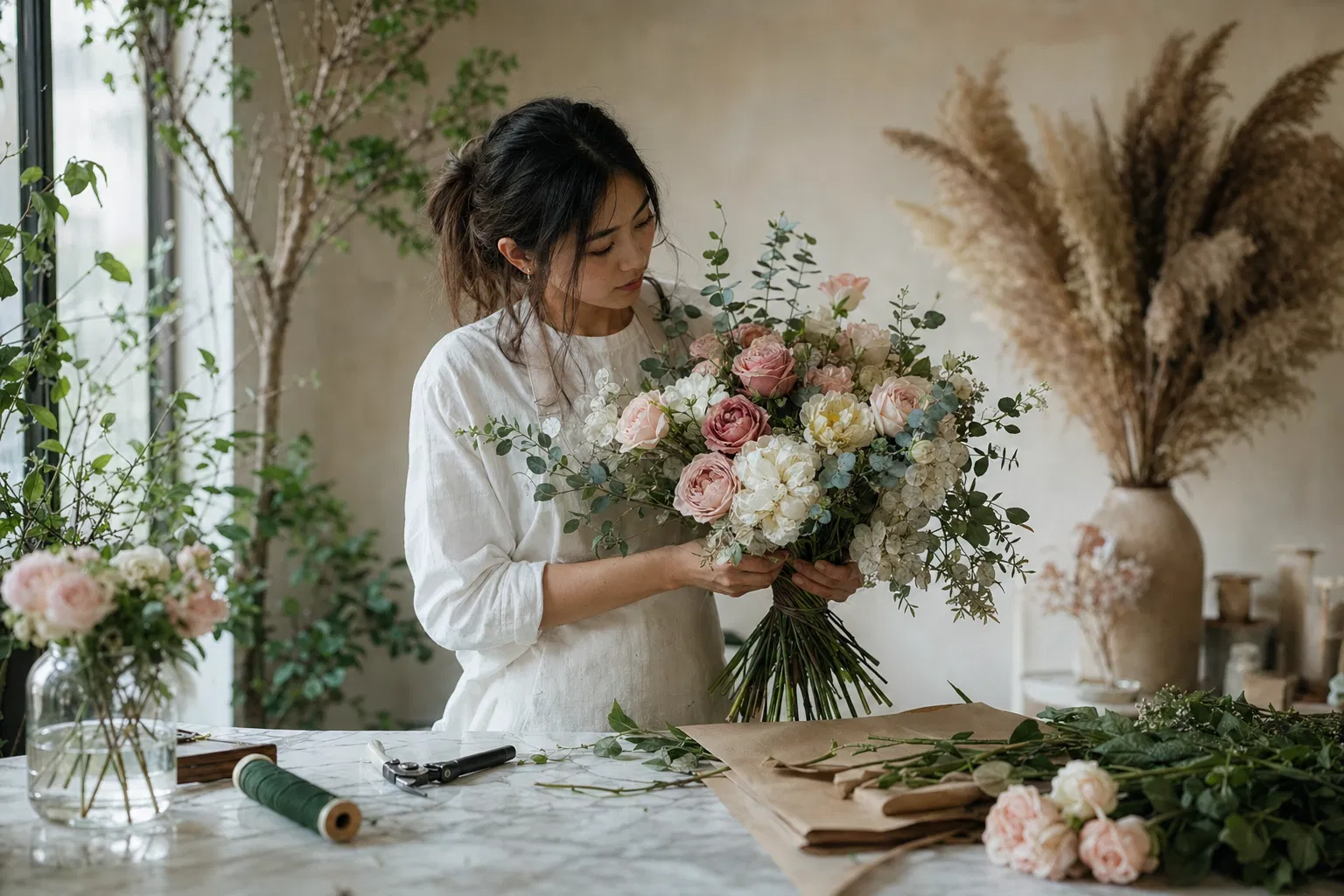
Introductory making can focus on identifying focal and supporting elements, arranging visual weight from larger to smaller shapes, leaving purposeful space, and using tweezers, cutters, wire, or adhesive only where appropriate. The value lies less in producing identical pieces than in noticing material pressure, vessel depth, and how a composition reads from several viewing angles.
Younger participants or first-time makers may benefit from fewer components, larger vessels, and time to watch a demonstration. A more experienced group may explore asymmetrical balance, texture contrast, or colour transitions. Teaching depth, tool types, and whether participants can select their own materials all require confirmation; organisers should share the group’s prior making experience when enquiring.
Choose around school, workplace, and family conditions
School planning needs a workable learning rhythm
For a school, begin with lesson length, class size, age range, furniture layout, and the need for group rotation, labels, or a brief reflection. If the activity supports visual arts, life education, or seasonal decoration, explain the learning intention and ask what materials and sequence could fit it. A finished piece’s apparent difficulty should not be the only selection criterion.
Workplace and family events need the right interaction style
For an internal workplace event, clarify whether the occasion is onboarding, a seasonal gathering, cross-team connection, or a quiet making interval. A sociable group may value shared palette choices, peer feedback, or a short display moment. Where people move through the venue at different times, confirm storage, table zones, and how completed pieces can be collected or carried.
At a family or parent-child gathering, consider whether adults can assist younger makers, whether siblings will work at different speeds, and how pieces will be transported. Related tasks with different levels can be more inclusive than demanding the same detail from everyone. Ask in advance about suitable ages, adult accompaniment, language, capacity, and the actual form of the session.
Prepare the venue and everyday safety measures
Plan tables, lighting, storage, and movement
A practical venue has stable table space, a cleanable work area, adequate lighting, and a place for personal belongings. If boxes, glass, or other breakable vessels are considered, ask about table protection, a holding area for pieces, and the route out of the room. Schools and offices should also follow their venue manager’s ordinary safety requirements.
Use a cautious approach to tools and materials
How cutters, wire, tweezers, and adhesive are used should depend on participant age, capability, and the materials selected for the day. Younger participants should handle sharp or small components with adult or on-site guidance. Anyone with concerns about botanicals, scents, or adhesives should raise them before booking and ask about practical options, not presume a material’s properties.
Finished preserved arrangements are generally best kept away from moisture, strong sunlight, crushing, and frequent handling to help maintain their appearance; this is ordinary care guidance, not a promise of a fixed lifespan. If pieces will be posted, carried far, or displayed publicly, confirm packaging, labelling, collection, and handover responsibilities separately according to the actual plan.
Compare participation formats, not just sample photos
Individual, shared, and demonstration-led approaches differ
Individual making gives each participant a personal item to take away and can suit occasions centred on colour choice or a keepsake. Shared making concentrates materials into a collective display and can support discussion of roles and a common theme. A short demonstration-based format may focus on seeing materials and basic combinations. Each approach has different needs for seats, material portions, and facilitation pace.
Time, budget, and choice create real trade-offs
When discussing cost, provide budget context as well as expected attendance, whether each person needs a vessel, preferred palette, venue location, and any need for separate time slots. These conditions may affect an arrangement. Dates, fees, minimum numbers, materials, and inclusions must be confirmed through an enquiry; an online illustration should never be treated as a fixed package.
If time is tight, narrow the material choice and select a more direct composition. With more time, the group may consider a design discussion, photographs of finished pieces, or sharing. Compare formats using the same brief—numbers, duration, venue, piece purpose, and language—so that differences are meaningful instead of based on unrelated examples.
Build a workable plan from enquiry to departure
List the non-negotiable conditions first
First list the acceptable date range, time window, estimated group size, age range, venue location, language needs, and primary purpose. Only then discuss the palette, piece type, and level of design exploration. This order helps an organiser assess whether the basic conditions can work and avoids promoting a particular outcome before the date and format have been confirmed.
Allow time to arrive, make, tidy, and leave
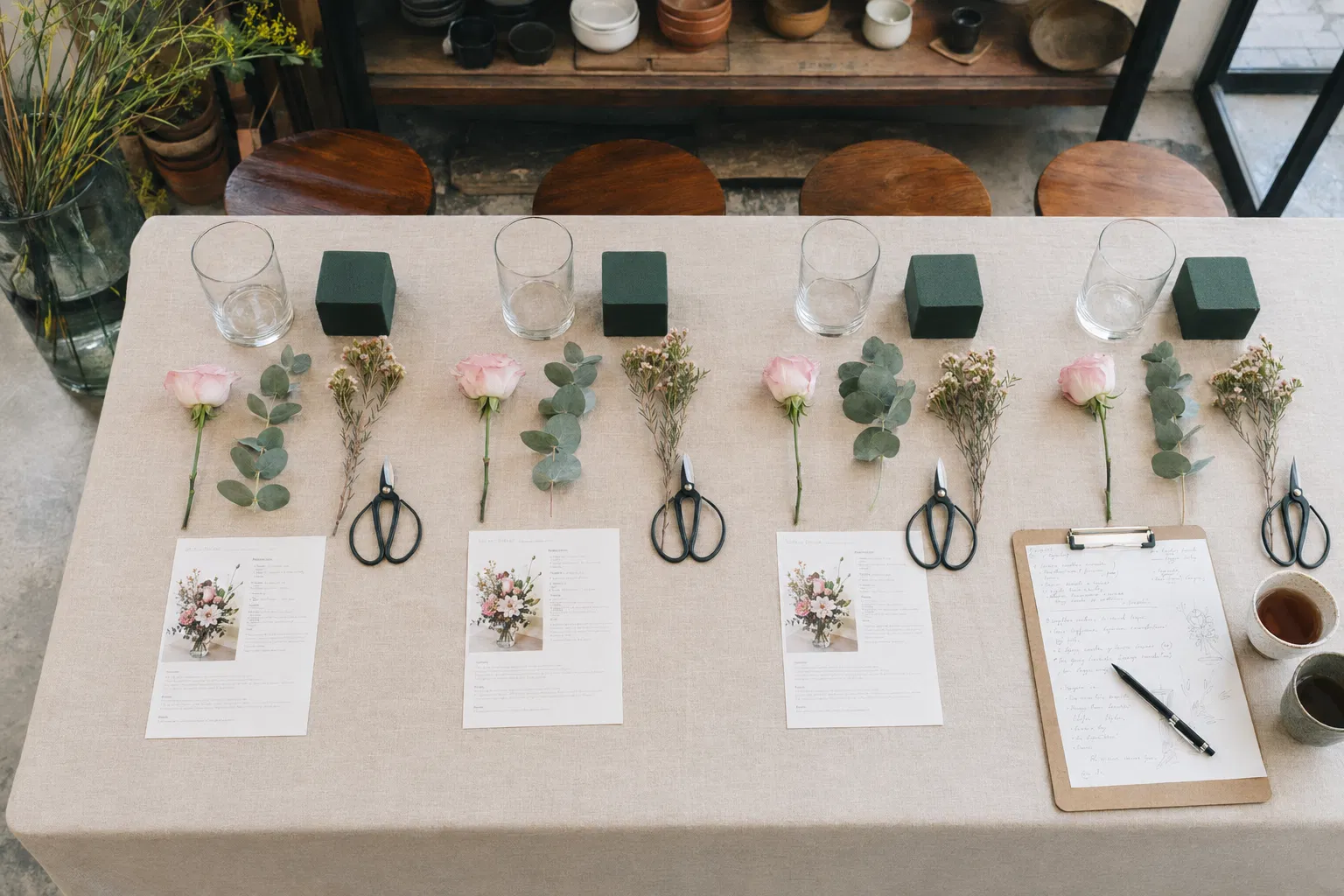
A session plan may need time for arrival, introduction, demonstration, material selection, making, table tidying, and collection of pieces. Larger groups should also consider washroom access, entry routes, table numbering, and how late arrivals can join. If external personnel enter a school or office, the responsible organisation should confirm visitor requirements beforehand.
Some participants need to watch a step again while others finish quickly, so ask whether clear step prompts or an assistance approach can be considered. Speed is not a measure of ability. A well-matched creative activity gives people room to choose, adjust, and pack safely instead of rushing everyone to copy a single reference item.
Use a complete enquiry checklist
Share the activity brief in one message
When enquiring about a preserved flower workshop Hong Kong session, provide date flexibility, group range, participant profile, preferred venue, and budget considerations. Ask about language, approximate session length, and whether tables, chairs, or power are needed. Dates, fees, facilitators, capacity limits, and venue feasibility must all be confirmed in the response rather than inferred from an earlier listing.
Confirm pieces, follow-up, and alternatives
For the finished item, ask whether the handover is per person or per group, whether it can be taken away immediately, and how vessels or packaging are handled. If you hope to include cards, message tags, or an organisational visual element, explain that early and check what you would need to supply yourself. Do not presume any customised material is available.
Finally, ask how practical changes such as a revised headcount, a venue restriction, weather affecting transport, or a participant who cannot handle tools should be communicated. Consolidating questions helps the organiser receive advice tied to real conditions. It also makes clear to participants which elements are agreed and which remain subject to confirmation.
For a school or family activity, ventilation and age range often deserve attention before the appearance of the final item.perfume-making workshop Hong KongA perfume-making workshop Hong Kong can be assessed for materials, language support, and group numbers under the actual conditions.
Before setting a family activity theme, ask how anart workshop Hong Kongwould fit the group’s ages, room conditions, and cleaning needs.
When a team needs a quieter transition during a busy event, compare creative options and consider astress-relief workshop Hong Kongthat fits the available time and venue.