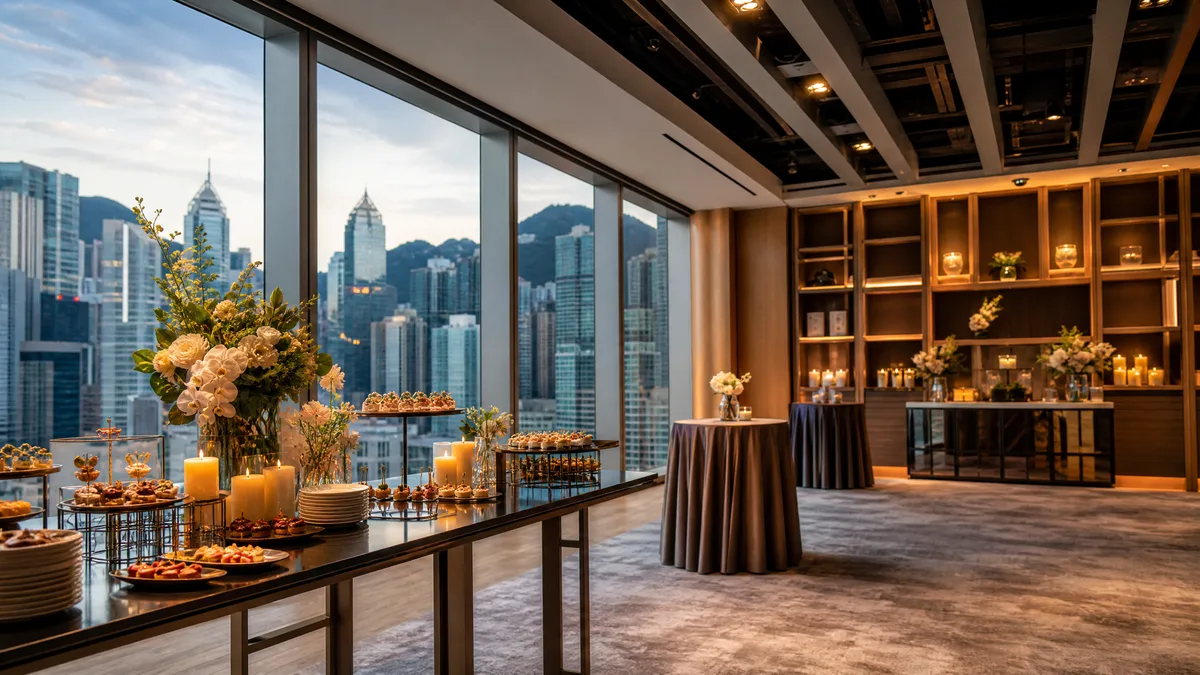
Quick answer
Start by confirming the event date, venue access, guest numbers and dietary requirements, then ask caterers for a written menu, itemised quote, delivery window and any minimum order. For Causeway Bay catering, check that the venue can receive and serve the food as planned; do not assume a supplier covers every building or setup. For a workshop, coordinate food breaks with the programme and confirm who handles serving, clearing and leftover food.
Plan the event before choosing Causeway Bay catering
Set the purpose, schedule and likely headcount
Begin with the event itself rather than a menu. An annual company gathering, birthday party, school activity and hands-on workshop have different rhythms, space needs and expectations. Note the date, start and finish times, likely guest count, format and any fixed programme elements. Treat attendance as an estimate until invitations are confirmed, and ask suppliers how changes to the final number affect the order.
Match the venue to the format
Venue choice affects what food can be delivered and served. Check the room’s capacity, access arrangements, available tables and the venue’s rules on outside food. Ask whether there is a suitable area for refreshments and whether staff can receive a delivery if the organiser is occupied. These are questions to confirm with the venue; the title of a room listing alone does not establish what facilities or services are included.
Keep venue decisions connected to Causeway Bay catering
When comparing Causeway Bay catering, share the same event brief with each supplier so their replies can be compared fairly. Include the venue address, event timing, expected headcount and the type of meal or refreshments you have in mind. If the venue is not confirmed, say so and ask what information the caterer needs before quoting. Avoid committing to a menu or delivery plan until both parties have confirmed the practical details.

Compare catering by location, access and service fit
Use the venue address as the starting point
A supplier’s district name is not, by itself, proof that it can serve a particular venue at the required time. When looking for Causeway Bay catering, give the provider the full venue address and ask whether delivery is available for your date, what the delivery window is, and whether building access restrictions affect the arrangement. Confirm any delivery charge separately rather than assuming it is included in the food price.
Compare Kwun Tong catering on the same basis
The same approach makes Kwun Tong catering a useful comparison when your event or workplace is in that district. Compare suppliers on the menu, serving quantities, delivery terms, minimum order, payment deadline and cancellation or amendment conditions. Do not assume a caterer serving one district covers another, or that a similar menu will have the same price or terms. Ask each provider to confirm its own service area and quote.
Ask what delivery and setup actually include
Clarify whether the quote covers delivery only or also includes setup, serving equipment, staff, collection or clearing. These details vary and should be checked directly. If the event is in a building with loading, lift or reception procedures, ask the venue what the supplier needs to know in advance. Put agreed timings and responsibilities in writing so the organiser, venue and caterer are working from the same information.

Choose a menu that works for your guests and event
Plan around meal timing and event length
A short session may need light refreshments, while a half-day event could call for a more substantial break. Decide whether food is a meal, a snack or an informal addition to the programme, then ask the caterer what the proposed quantities are intended to serve. Consider the event time and whether guests will have another opportunity to eat. Avoid relying on generic per-person estimates without checking the menu and serving sizes.
Confirm dietary requirements directly
Ask guests to share dietary requirements through the event registration process, then give the supplier a clear summary and request confirmation of what can be accommodated. Do not assume that vegetarian, halal, gluten-free or other alternatives are available, or that a dish is free from a particular ingredient. Ask how dishes will be identified and whether the supplier can provide ingredient information. Guests with specific requirements may need to confirm suitability with the caterer themselves.
Check portions, labelling and menu changes
Before approving the menu, check the final dish list, quantities, serving format and any agreed substitutions. Ask how late changes can be made, when the final headcount is due and whether changes affect the price. If you are comparing Sha Tin catering for an event in that district, use the same checks rather than assuming that menu options or terms match those elsewhere. Keep a written copy of the confirmed order for the event team.

Coordinate catering with workshop breaks and event flow
Place refreshments where they will not interrupt activities
For a two- to three-hour workshop, a break around the midpoint may be a useful starting point, but the right timing depends on the programme and participants. Build the break into the schedule and check that there is enough time for guests to take refreshments and return without rushing. For a half-day event, consider whether one or more food breaks fit the agenda. These are planning suggestions, not fixed rules.
Allow time for breaks and guest movement
Think about where food will be received and served in relation to the activity. A separate refreshment area may help keep a working space clear, but the venue must confirm what is permitted and available. Check whether the room layout allows guests to move comfortably and whether food service could overlap with a presentation or hands-on activity. Where a facilitator is involved, share the catering timings before finalising the run sheet.
Coordinate with facilitators and suppliers
If the programme includes creative sessions, connect the food break to the activity’s natural pause rather than letting service disrupt instructions or discussion. For example, organisers considering an art jamming workshop can ask the facilitator and venue how refreshments should fit around the session. A singing bowl experience may have a different schedule and room setup, so check the format with the provider rather than assuming the same catering plan will suit every event.

Request a clear quote and confirm responsibilities
Ask for an itemised proposal
A useful quote should let you understand what is being supplied and what remains your responsibility. Ask for the menu, quantities, price breakdown, delivery charge, minimum order if any, and any separately priced setup or staffing. Request confirmation of the delivery date and time window, and whether the quoted plan depends on a minimum or final guest count. Do not assume that a quote includes services that are not listed.
Check dates, deadlines and change terms
Before confirming, ask when payment is due, when the final headcount and menu must be submitted, and what happens if the event date, number of guests or order changes. Cancellation, refund and amendment terms vary by provider, so obtain the applicable terms directly in writing. Check the supplier’s accepted payment methods and conditions before placing an order rather than assuming a particular refund or change policy applies.
Confirm who handles each part of the service
Agree who will meet the delivery, direct the supplier to the serving area, lay out food, manage guests’ questions and deal with packaging afterwards. If the caterer provides any of these services, have that scope confirmed. For a wider event plan, an organiser may also be arranging corporate training; keep the facilitator, venue and catering provider aligned on timing, access and responsibilities rather than treating food as a separate last-minute task.

Prepare the venue and delivery plan for event day
Share accurate access information
Give the supplier accurate delivery instructions once the venue confirms them. This may include the building entrance, reception procedure, loading arrangements, floor or room details, and the name of the person receiving the order. Ask the venue what information can be shared and whether a delivery vehicle or visitor needs advance registration. Confirm these arrangements with both parties; do not rely on assumptions about building access.
Allow a practical arrival window
Coordinate the requested arrival time with the venue’s access window and the event schedule. Ask the caterer how much time it needs between delivery and service, and whether food will arrive ready to serve or require any setup. Confirm any equipment or serving items that are included rather than presuming they will be supplied. If the event starts early, check whether the building can receive the order before guests arrive.
Assign an event contact and contingency plan
Name a day-of contact who can answer calls and guide the delivery team, and share their details with the relevant parties. Decide how the organiser will respond if the supplier is delayed or a guest count changes, while recognising that options depend on the provider and venue. Keep contact information and the final order accessible to the event team. A clear plan reduces avoidable confusion without guaranteeing that every delivery will run exactly to schedule.
Review the event and improve future catering arrangements
Record what was ordered and what changed
After the event, record the final guest count, menu, delivery timing and any changes made on the day. Note whether quantities appeared suitable and whether the venue layout worked for serving and movement. These observations are more useful than relying on memory when planning a repeat event. Keep supplier quotes and written confirmations together so the team can understand which terms applied to that specific order.
Gather useful feedback without overclaiming
If you ask guests for feedback, make the questions specific: Was the timing convenient? Were the options clear? Was there enough time to eat? Distinguish individual preferences from practical issues such as late delivery or unclear labelling. Feedback from one event is not proof that a supplier will perform the same way at another venue, date or guest count, so treat it as one part of future decision-making.
Keep planning notes for the next event
When planning your next event, reconfirm availability, prices, delivery coverage and terms closer to the date, since these can change. Check the details for your specific venue and menu rather than assuming a previous arrangement still applies. Keep a short checklist of what to ask and share it with colleagues who arrange future functions. The same careful comparison applies whether you are reviewing Causeway Bay catering or options in another district.

Catering information to check with providers
If this option is relevant to your event, review causeway bay catering and confirm the menu, delivery arrangements, dietary information and booking terms directly with the provider.
If this option is relevant to your event, review kwun tong catering and confirm the menu, delivery arrangements, dietary information and booking terms directly with the provider.
If this option is relevant to your event, review sha tin catering and confirm the menu, delivery arrangements, dietary information and booking terms directly with the provider.
FlintHub and the linked partner website have common ownership. This link is not an independent endorsement, tested recommendation or confirmation of availability.
Questions about Causeway Bay catering
How far in advance should I book catering for an event?
There is no confirmed universal lead time for Causeway Bay catering. Contact suppliers as soon as you have a date, venue and estimated headcount, and ask about availability, menu deadlines and minimum notice. Busy periods and larger orders may need more advance coordination, but the provider should confirm what applies to your booking.
How do I choose a catering package for the number of guests?
Confirm the likely headcount, event length, meal timing and serving style, then ask the supplier what quantities its proposal is designed to serve. Tell the provider about children or other guest needs where relevant. Compare written menus and quotes, and check when the final number must be confirmed; do not rely on a district name or a generic package description alone.
How can I check food handling and delivery arrangements?
Ask the caterer how food will be packed, transported and delivered, and how long it can be held before service. Request any relevant information about its procedures or documentation rather than assuming a particular container, certification or temperature arrangement is provided. Confirm who receives the food and what the venue permits; no handling or safety outcome should be assumed from a supplier description alone.
When is the best time to schedule a workshop refreshment break?
For a two- to three-hour workshop, a midpoint break is a practical starting point, and 15 to 20 minutes may be considered if the programme allows. The right duration depends on guest numbers, the serving arrangement and how much time participants need to return to the session. A half-day event may need a different schedule; coordinate it with the facilitator, venue and caterer.
How should I handle vegetarian or other dietary requirements?
Collect requirements in advance and send them clearly to the caterer, asking which options it can confirm and how dishes will be identified. Do not assume that every supplier can accommodate vegetarian, halal, gluten-free or other needs, or that a dish is free from a particular ingredient. Confirm the final menu and any relevant ingredient information directly with the provider.
How is catering usually priced?
Pricing depends on the menu, quantities, service scope, delivery and any minimum order, so request an itemised quote for your event rather than relying on generic per-person figures. Ask whether setup, staff, equipment, collection or other charges are included, and confirm payment, change and cancellation terms in writing. The supplier should verify the price and conditions for your specific booking.
Prepared with AI assistance and local editorial adaptation. This is planning guidance, not a record of a delivered event. Confirm current arrangements directly; images are references and do not verify a particular class or event.
Before requesting a proposal for team building Hong Kong, list the venue limitations around space, access routes, materials and cleaning.
Before setting a family activity theme, ask how an art workshop Hong Kong would fit the group’s ages, room conditions, and cleaning needs.
When a company needs shared practice rather than only a social break, corporate training Hong Kong should begin with a real work situation and a clear participation goal.