
Quick answer
Start by confirming your date, venue, headcount, event length and budget range, then choose between a light spread and a more substantial meal. Ask suppliers what their Christmas party catering includes, whether delivery and set-up are available, how dietary requests are handled, and what deadlines apply during the festive period. Confirm the final menu, quantities, delivery window and any extra charges in writing before booking.
Plan your event before choosing Christmas party catering
Set the purpose and format
A company Christmas party might be a brief end-of-day gathering, a team celebration after a meeting, or a longer event with speeches and activities. Decide what the occasion needs to do before comparing menus. The answer affects how much time guests have to eat, whether they will be seated, and whether food should be a light accompaniment or the main meal.
Match Christmas party catering to the schedule
Make a short planning brief with the date, venue, estimated attendance, start and finish times, budget range and one contact person. Include any venue rules that could affect delivery or serving, such as access hours, lift arrangements, available tables or restrictions on outside food. These details help a supplier say what is possible; do not assume that delivery, set-up, serving staff or equipment are included.
Think about the programme as well as the menu. If the gathering includes a presentation or a group activity, place food at a point when guests can take a proper break rather than interrupting the main event. For a workshop or training session, a short refreshment break may be enough; a longer event may need a separate meal period. If you are also exploring corporate training, confirm that the activity provider and caterer can work to the same schedule, without assuming one arranges the other.

Choose between canapés and a fuller buffet
When canapé catering may fit
Canapé catering can suit a reception or a shorter social gathering where people are likely to mingle. Small portions are convenient to pick up, but a selection of bites is not automatically a substitute for a meal. Consider the event’s length, time of day and guests’ expectations before deciding that a light spread will be enough. Ask how portions are counted and whether the proposed quantity is intended as a snack or a meal.
When a buffet-style meal may suit
A buffet can be more suitable when the event overlaps with lunch or dinner, or when guests will be together for several hours. It may offer a clear meal break, but it also needs space for serving and for guests to move around. Check whether food is delivered ready to serve, whether any serving items are supplied, and who is responsible for arranging the table and clearing it afterwards.
There is no single best format for every office party. A mixed approach, such as light bites followed by a more substantial meal, may work where the schedule and budget allow, but it needs clear timing and quantities. Ask for an itemised proposal that explains what is included, how the supplier calculates portions and whether there are minimum-order requirements. Compare proposals on the same basis rather than choosing by dish count alone.

Estimate quantities for your guest list
Use headcount as a starting point
Begin with the most reliable attendance estimate available, then ask when the supplier needs a final number. The right quantity depends on more than the headcount: a short reception, a meal-time event and an all-afternoon gathering have different needs. Make clear whether guests will have eaten beforehand and whether other food or refreshments will be available.
Allow for the event’s duration
Age range, event timing and the style of service can also affect what people choose to eat. For a standing reception, guests may take food at different times; for a seated or buffet meal, they may expect a more defined serving. Share the event plan with the supplier and ask them to explain the assumptions behind their proposed portions. Treat any suggested quantity as a planning estimate until confirmed for your specific event.
Keep a record of the confirmed headcount and the date by which changes can be made. Ask whether adjustments affect the price, menu availability or delivery arrangements. If attendance is uncertain, find out how the supplier handles changes before the deadline rather than ordering against an unsupported guess. For a large gathering, begin enquiries early, particularly during the Christmas period when availability may be limited.

Clarify dietary requirements and menu details
Collect requests early
Ask attendees about dietary requirements through an appropriate internal channel and pass relevant information to the caterer early. Depending on the group, requests might include vegetarian choices or restrictions related to particular ingredients. Do not assume every request can be accommodated: ask the supplier which alternatives are available and whether they can confirm the ingredients for each dish.
Ask precise questions about the menu
Use precise questions rather than broad assurances. Ask how vegetarian items are identified, whether ingredient information can be provided, and what arrangements are possible for guests who have told you about a specific restriction. If the supplier cannot confirm an option, make that uncertainty clear to the guest rather than presenting it as suitable. The organiser should check the final menu against the information supplied by attendees.
Confirm the agreed menu and any substitutions in writing, including the number of portions for each option and how they will be labelled or separated at the event. If the guest list or requirements change, tell the supplier before the agreed cut-off. Menu descriptions and allergen information should come from the supplier; do not infer them from a dish’s name or appearance.

Confirm delivery, venue access and serving arrangements
Agree a realistic delivery window
A delivery time needs to work with both the venue and the event schedule. Confirm the address, access instructions, contact person and time window with the supplier, and ask what happens if arrival is delayed. If the venue has sign-in requirements or limited access, establish those details in advance. Do not assume a supplier can enter, set up or wait on site unless that has been agreed.
Check what the venue can provide
Check the venue for the practical space required to receive and present the food. Find out whether there are suitable tables, serving space and any restrictions on bringing in outside items. Ask the caterer whether packaging, serving pieces, set-up or collection are included, and identify any tasks that remain with the organiser. These details can affect the room layout and the time needed before guests arrive.
Plan where food will be placed in relation to entrances, speeches and activities, leaving clear routes for guests to move around. If an activity forms part of the party, keep its materials and the food service from competing for the same space. Ideas such as a candle workshop or a leather workshop may be part of a separate activity plan, but their availability and requirements should be checked with the relevant provider; they should not be treated as part of a catering order.

Compare quotes and book with clear terms
Compare like with like
Catering prices can depend on the menu, portion count, service level, delivery and any minimum order. Rather than relying on generic per-person price examples, request a quote based on your own date, location and attendance. Ask for a breakdown of what is included and whether delivery, set-up, serving items or collection carry additional charges. A low headline figure may not cover the same items as another proposal.
Confirm deadlines and changes
Before accepting, check the order summary for the date, delivery window, venue details, confirmed menu, quantities, dietary options, total charge and payment deadline. Ask how long the quote remains valid and when the final headcount is due. Clarify the supplier’s terms for changing or cancelling an order; policies vary, so do not assume that changes or refunds are available on particular terms.
Festive dates can be busy, but lead times and availability differ between providers. Enquire as soon as your date and venue are reasonably clear, and ask the supplier how far ahead it recommends booking for your event size. For a large party, give yourself time to compare suitable proposals and coordinate venue access. Once confirmed, share the final schedule and supplier contact details with the person managing the event.
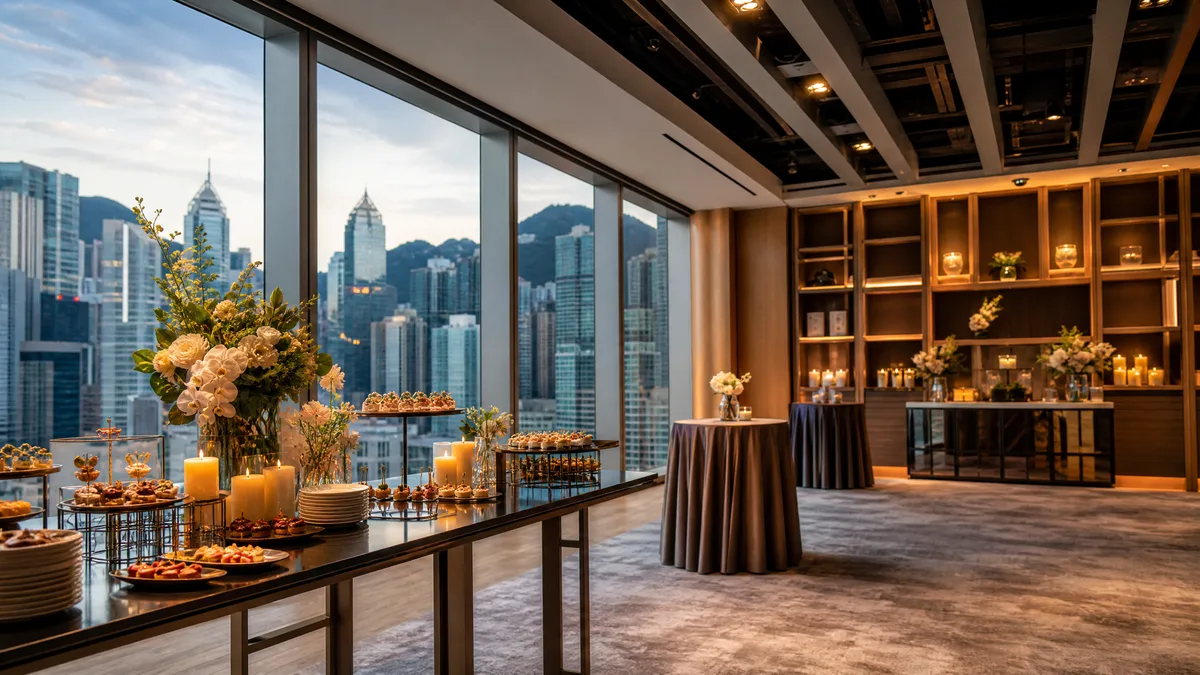
Coordinate food with the Christmas party programme
Build in a proper break
Food works best when its timing is part of the programme rather than an afterthought. For a two- to three-hour workshop or company session, organisers often consider a break around the middle, but the suitable length depends on the activity and venue. For a half-day event, you may need to plan distinct refreshment and meal times. Confirm the timing with the supplier instead of assuming a standard schedule.
Keep a simple event-day checklist
Give guests a clear indication of when food will be available and where to find it. If there are speeches, presentations or a team activity, check that the serving period does not clash with the parts of the programme guests should attend. For a buffet, allow time for guests to serve themselves; for a reception spread, consider whether food should be replenished at agreed intervals, if the supplier offers that service.
On the day, the organiser can use a brief checklist: confirm the room is ready, make sure the supplier has the correct contact and access details, verify that the delivery has arrived, and check the order against the agreed menu. Keep the final schedule and supplier contact details accessible. These checks support coordination but are not a guarantee of delivery or food quality; raise any discrepancy with the supplier promptly.

Catering information to check with providers
If this option is relevant to your event, review christmas catering and confirm the menu, delivery arrangements, dietary information and booking terms directly with the provider.
If this option is relevant to your event, review finger food catering and confirm the menu, delivery arrangements, dietary information and booking terms directly with the provider.
If this option is relevant to your event, review buffet catering and confirm the menu, delivery arrangements, dietary information and booking terms directly with the provider.
FlintHub and the linked partner website have common ownership. This link is not an independent endorsement, tested recommendation or confirmation of availability.
Time Refreshments Around the Programme
For Christmas Party Catering, decide whether colleagues will eat standing between games or sit down for a meal before asking for menus. Send the caterer your speech and activity schedule, then ask: can serving pause during speeches and resume in the planned breaks, and what staff would that require? If a seated meal is preferred, confirm the serving space and access needed before committing to the room layout. Request written details of who sets out dishes, replenishes food and clears tables afterwards; otherwise, your organising team may need to cover those tasks instead of joining the celebration.
Prepared by FlintHub Academy with AI assistance from public information for event catering, gifting, baking and floristry planning and enquiries, not first-hand service testing or real client cases. YumYum and FlintHub Academy have the same owner; links are relevant service resources, not independent third-party endorsements. AI-generated concept illustrations do not depict actual YumYum products, services, venues, instructors or clients. No professional author credentials or guarantees of safety, price, availability or outcomes are claimed. Confirm allergies, materials and storage requirements, scope, fees and availability with the actual provider.
Questions about Christmas party catering
How far in advance should I book Christmas party catering?
Lead times depend on the supplier, date, menu and event size. Christmas is a busy period, so enquire once your date and venue are reasonably clear. Ask the supplier when it needs confirmation, the final headcount and any dietary requests. Do not rely on a fixed number of days without checking current availability.
How do I choose a catering package for the number of guests?
Share your expected headcount, event length, timing and whether the food is a snack or a meal. Ask the supplier to explain portion assumptions and any minimum order. Canapé catering may suit a shorter reception, while a buffet may be more appropriate for a meal-time event, but the right choice depends on your programme and the supplier’s proposal.
How can I check how food will be handled during delivery?
Ask the supplier how the food is packaged and transported, when it should be served, and what instructions apply after delivery. Confirm who receives the order and whether the venue has suitable arrangements. Do not assume particular packaging, temperature controls or food-safety credentials; request details directly from the provider.
When is the best time to schedule refreshments during a workshop?
For a two- to three-hour session, a break around the middle is one option, but the programme and participants’ needs should determine the timing. A half-day event may need separate refreshment and meal periods. Agree the schedule with the activity organiser, venue and caterer, and confirm the delivery window.
How should I handle vegetarian or other dietary requirements?
Collect requests early and ask the supplier which options and ingredient details it can confirm. Agree substitutions, quantities and labelling in writing, and update the supplier if requirements change before its deadline. Do not assume that every provider can accommodate every restriction or that a dish is suitable based on its name alone.
How are catering costs usually calculated?
The quote may depend on menu choices, quantities, service, delivery, minimum orders and other inclusions. Ask for an itemised proposal for your date, venue and headcount, and confirm any extra charges and payment deadlines. Generic per-person figures may not match the supplier’s current offer or your event requirements.
Prepared with AI assistance and local editorial adaptation. This is planning guidance, not a record of a delivered event. Confirm current arrangements directly; images are references and do not verify a particular class or event.
Before setting a family activity theme, ask how an art workshop Hong Kong would fit the group’s ages, room conditions, and cleaning needs.
When a company needs shared practice rather than only a social break, corporate training Hong Kong should begin with a real work situation and a clear participation goal.
Before requesting a proposal for team building Hong Kong, list the venue limitations around space, access routes, materials and cleaning.