Quick answer
Start by confirming the event date, venue, estimated guest count, budget range and style of meal. Ask potential caterers about menu options, dietary requirements, minimum order or spend, delivery and set-up arrangements, staffing, equipment and cancellation terms. Check that the service fits your programme and venue access, then obtain the final details in writing. Book early for popular dates, but verify lead times directly rather than relying on a general rule.
Set the purpose, guest list and format before seeking catering recommendations
Decide what the anniversary should feel like
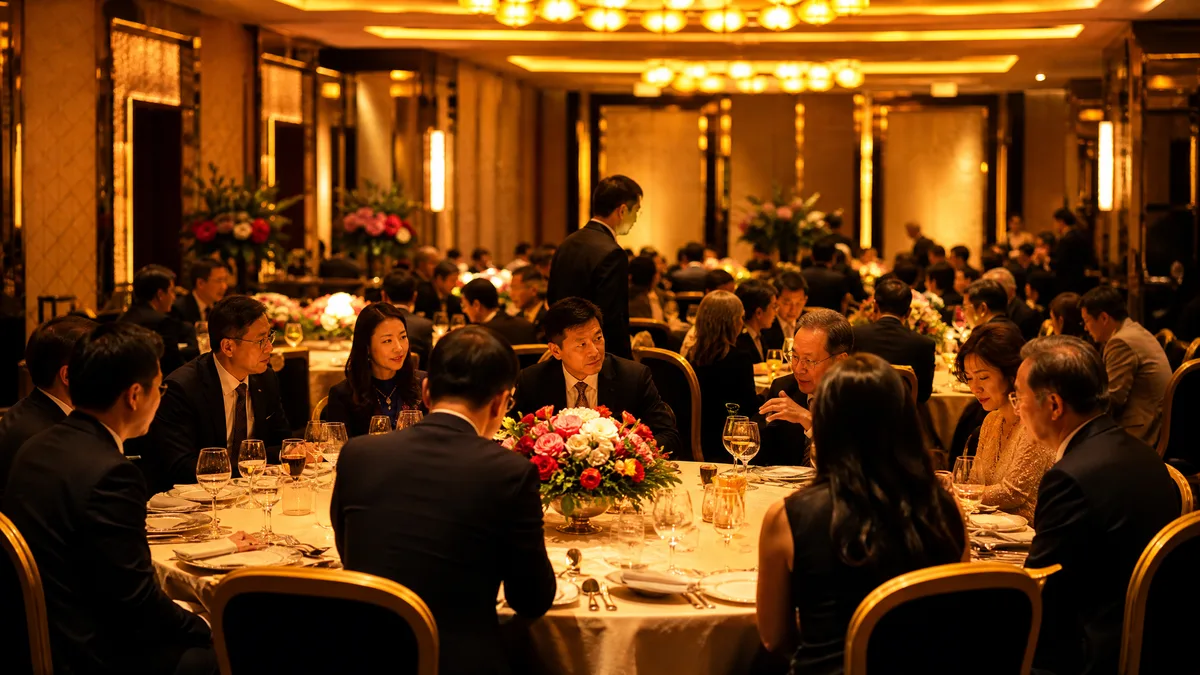
Begin with the event itself, not the menu. A formal anniversary dinner, a relaxed staff gathering and a client reception each call for a different pace and atmosphere. Consider who is being invited, whether guests will be seated or standing, and how much time the programme leaves for eating and conversation. A clear brief makes it easier to compare suppliers on relevant details instead of being drawn to attractive but unsuitable options.
Estimate attendance and meal requirements
Build an attendance estimate from confirmed invitations, likely guests and any plus-ones, then decide when the final number can realistically be supplied. Ask the venue whether its usable capacity, furniture layout and access arrangements suit your preferred format. The room’s shape and circulation matter: a buffet may need space for queues, while plated service needs suitable seating and a workable route for staff. Avoid committing to a menu or service level before these practical constraints are understood.
Compare catering recommendations for a service style that fits the venue
The event’s purpose can also guide the level of formality. Premium catering may be worth exploring for a milestone dinner where the meal is a central part of the occasion, but the label alone says little about menu, staffing or presentation. Ask what is included and what would be an additional charge. If your anniversary includes a workshop or team session, treat catering and the learning programme as separate parts of the brief and confirm how their timings will fit together.

Check the venue and service logistics before choosing corporate anniversary catering
Confirm access, facilities and restrictions
A menu can look right on paper and still prove impractical at the venue. Before requesting quotes, find out when suppliers can enter, where they can unload, whether lifts or stairs affect access, and what facilities are available. Ask the venue about restrictions on outside food, cooking, open flames, waste disposal and the use of its tables or power supply. These are questions to verify with the venue and caterer; do not assume that any particular facility or service is included.
Match the meal to the room layout
Plan how guests will move through the room. For a buffet, consider queue length, serving space and whether guests can reach tables without crossing the main programme area. For a seated meal, establish the table plan, service route and timing for speeches or presentations. If guests will be standing, check that food can be eaten comfortably and that suitable places to set down plates and drinks are available. The best format is the one that works in the actual room and schedule.
Agree delivery, set-up and collection details
Agree logistics in writing with the supplier. Confirm the delivery window, who will receive the order, what set-up is provided, when equipment or serving items will be removed, and what the venue expects to be left clean. Clarify whether staff, tableware, linens, drinks, signage or rubbish removal are part of the quoted service. If floral arrangement is part of your event design, coordinate its placement with serving tables and guest circulation; this is a separate design consideration, not something to assume the caterer supplies.

Plan a menu around guests, dietary needs and the occasion
Collect dietary information early
Ask invitees to share relevant dietary requirements through the RSVP process, with a clear deadline for responses. Depending on the group, this may include vegetarian or vegan choices, religious dietary requirements, allergies or other restrictions. Share the information with the caterer as early as possible and ask which requests it can accommodate. Do not treat a general statement that a supplier can cater for dietary needs as confirmation that every individual requirement can be met.
Compare premium catering options by suitability, not labels
When comparing menus, consider the length and format of the event, the likely appetite of guests and whether the food needs to be eaten while standing or seated. Ask for enough detail to understand what each dish contains and how alternatives will be identified and served. A tasting may be available from some providers, but check whether it is offered and whether any fee or conditions apply. Do not assume that a particular menu, tasting or customised option is available without confirmation.
Ask how substitutions and allergens are handled
Clarify how the supplier manages ingredient information, substitutions and the separation of special meals. Ask how the final dietary count should be submitted, when the menu becomes fixed and what happens if attendance changes. If the provider cannot confirm a requirement clearly, discuss other suitable options with the guest and organiser rather than making promises on the provider’s behalf. Keep the final agreed menu and dietary notes accessible to the event lead and the person receiving the delivery.

Build catering into the dinner programme without disrupting the event
Map food service against speeches and activities
Draft a simple running order that includes guest arrival, welcome remarks, meal service, speeches, presentations and any entertainment. Share it with the venue and prospective caterer so they can comment on whether the proposed service timing is workable. Avoid scheduling important announcements while guests are queuing or being served. For a seated dinner, establish when courses are expected to arrive and how long each part of the meal is likely to take, then confirm these details with the provider.
Choose sensible break times
For a workshop or training event linked to the anniversary, place refreshments where they create a natural pause rather than competing with a key session. A mid-session break can suit a two-to-three-hour workshop, while morning refreshments and lunch may suit a half-day event. Treat these as planning prompts, not fixed rules: the right timing depends on the session, venue and participants. A calligraphy workshop or other activity may need its own agreed start and finish times, with food planned around them.
Plan for late arrivals and programme changes
Build a little flexibility into the schedule. Guests may arrive over a period rather than all at once, and speeches can run longer than expected. Ask the supplier how long food can be held or served, what happens if the programme shifts, and who should be contacted on the day. Confirm what the venue permits and what the caterer has agreed, rather than assuming that additional waiting time, staffing or equipment will be available.

Compare catering quotes and manage the event budget clearly
Request comparable, itemised proposals
Ask each supplier to quote against the same brief: date, venue, estimated guest count, service style, menu needs and delivery window. Request an itemised breakdown that makes clear what is included, such as food, delivery, set-up, staff, tableware and collection. A headline per-person price may not represent the total cost, and indicative price ranges should not be treated as current or generally applicable. Obtain up-to-date quotations directly from providers.
Check minimum orders and extra charges
Check whether there is a minimum order or minimum spend, and whether delivery, staffing, equipment, overtime, service charges or taxes are charged separately. Ask when the quote expires and which details could change the final amount. Compare proposals on the same basis: a lower food price may not include the same service or equipment as another quote. If a provider uses packages, request a clear description of the contents and any limits before selecting one.
Allow for attendance changes
Agree how final numbers will be confirmed and whether there is a deadline for changes. Ask what happens if attendance rises or falls, whether additional portions can be ordered, and what charges apply if quantities change after confirmation. Do not assume a particular refund, cancellation or amendment policy. Record the agreed price, payment schedule and relevant terms in the supplier’s written confirmation, and keep a contingency in the overall event budget for costs that are genuinely not yet settled.

Book early, verify supplier details and confirm the agreement in writing
Enquire with a complete event brief
When making an enquiry, include the date, venue, likely guest count, event format, service timing, dietary needs and budget range. Ask the supplier to confirm availability and explain what information it needs to prepare a suitable proposal. Earlier enquiries can give you more time to compare options, particularly for popular dates, but the lead time needed varies. If you are considering booking five to seven working days ahead, or two to three weeks around Christmas and New Year, check whether that gives the supplier enough notice. Larger events or more complex menus may require earlier confirmation.
Check availability and what the supplier can deliver
Before accepting a proposal, make sure the provider has understood the venue’s access arrangements and the event schedule. Ask who will be your contact before and on the day, how the final guest count should be sent, and what happens if the delivery is delayed or the agreed plan changes. If you require particular equipment, staffing or service support, ask whether it is available and whether it is included in the quote. These are matters to verify, not standard features to assume.
Keep one final event checklist
Keep a single checklist with the signed-off menu, final numbers, dietary notes, delivery time, venue contact, supplier contact, invoice and written terms. Share the relevant details with the event lead and venue. If floral arrangements or other décor are being arranged separately, make sure their delivery and set-up do not conflict with catering access. A clear record helps everyone work from the same plan without suggesting that any provider guarantees a flawless event.

Prepare for the event day and review the catering afterwards
Assign a point of contact
Choose one organiser to be the main contact for the venue and caterer on the day. Give them the confirmed timings, delivery instructions, guest-count update, dietary notes and a copy of the written agreement. Make sure the person knows where the food should be set up and whom to contact if there is a change. This simple division of responsibility reduces duplicated instructions and gives suppliers a clear route for questions.
Check the agreed details on arrival
On arrival, check the delivery against the agreed order and clarify any immediate discrepancy with the supplier’s representative. Confirm where items should be placed and when service or collection is expected to take place. Do not improvise changes that conflict with venue rules or the supplier’s terms. If the programme shifts, contact the relevant provider and agree what is practical rather than assuming that service can automatically be extended or altered.
Use feedback to improve future planning
After the event, note what worked and what should change next time: quantity, menu suitability, timing, access, communication and how smoothly the service fitted the programme. Where appropriate, gather feedback from guests without presenting a small number of comments as a definitive rating of a supplier. Save the final invoice and event notes together. This record gives your organisation a more useful starting point for its next anniversary dinner than relying on memory alone.

Catering information to check with providers
If this option is relevant to your event, review catering recommendations and confirm the menu, delivery arrangements, dietary information and booking terms directly with the provider.
If this option is relevant to your event, review premium catering and confirm the menu, delivery arrangements, dietary information and booking terms directly with the provider.
If this option is relevant to your event, review annual dinner catering and confirm the menu, delivery arrangements, dietary information and booking terms directly with the provider.
FlintHub and the linked partner website have common ownership. This link is not an independent endorsement, tested recommendation or confirmation of availability.
Coordinate the Cake Cutting Moment
Before adding an Anniversary Cake to the dinner programme, ask whether it is included in the catering proposal or needs a separate order. Who will approve the milestone wording and company logo artwork before production? Agree that approval route before committing to the design, then ask the venue and supplier whether the proposed cutting time fits speeches and dessert service. Confirm the selected cake’s storage requirements, whether suitable storage is available until presentation, and who will move, cut and serve it. If those arrangements cannot be confirmed, revise the presentation timing rather than planning an extended display.
Prepared by FlintHub Academy with AI assistance from public information for event catering, gifting, baking and floristry planning and enquiries, not first-hand service testing or real client cases. YumYum and FlintHub Academy have the same owner; links are relevant service resources, not independent third-party endorsements. AI-generated concept illustrations do not depict actual YumYum products, services, venues, instructors or clients. No professional author credentials or guarantees of safety, price, availability or outcomes are claimed. Confirm allergies, materials and storage requirements, scope, fees and availability with the actual provider.
Questions about catering recommendations
How far in advance should I book catering for a company anniversary dinner?
There is no single lead time that applies to every supplier or date. If you are considering booking five to seven working days ahead, or two to three weeks around Christmas and New Year, ask whether the supplier can accommodate your guest numbers and menu requirements within that timeframe. Enquire as early as practical and confirm the supplier’s current booking deadline directly.
How do I choose a suitable catering package for the number of guests?
First confirm the likely guest count, meal format, event duration and venue layout. Ask the supplier to recommend quantities and explain any minimum order, serving assumptions or limits. If you are considering premium catering, check whether the package suits your group size and service needs; do not assume that the label determines the right choice.
How can I check food handling and transport arrangements?
Ask the caterer how food will be packed, transported and served, and what information it can provide about its handling arrangements. Verify any relevant documentation or claims directly with the supplier rather than assuming that particular packaging, temperature controls or certifications are provided. Confirm the delivery window and discuss any venue requirements before booking.
When should I schedule a refreshments break during a workshop?
For a two-to-three-hour workshop, a 15–20-minute break around the middle can be a useful starting point; a half-day session might include a refreshments break and a meal. Adapt this to the programme, venue and participants, and confirm the service timing with the caterer. These timings are planning prompts, not rules.
How should I manage vegetarian or other dietary requirements?
Collect requirements during RSVPs, give the supplier the details by its stated deadline and ask which needs it can accommodate. Request clear ingredient information and confirmation of how alternative meals will be identified and served. Do not assume every provider can meet every requirement; confirm each arrangement before communicating it to guests.
How are catering costs usually calculated?
Suppliers may quote per person, by package or through a combination of food and service charges. Ask for an itemised, current quote that identifies delivery, staff, equipment, minimum spend and any other charges. Do not rely on indicative price ranges as current market rates; obtain quotations directly and compare them using the same event brief.
Prepared with AI assistance and local editorial adaptation. This is planning guidance, not a record of a delivered event. Confirm current arrangements directly; images are references and do not verify a particular class or event.
When a company needs shared practice rather than only a social break, corporate training Hong Kong should begin with a real work situation and a clear participation goal.
Before requesting a proposal for team building Hong Kong, list the venue limitations around space, access routes, materials and cleaning.
Before setting a family activity theme, ask how an art workshop Hong Kong would fit the group’s ages, room conditions, and cleaning needs.