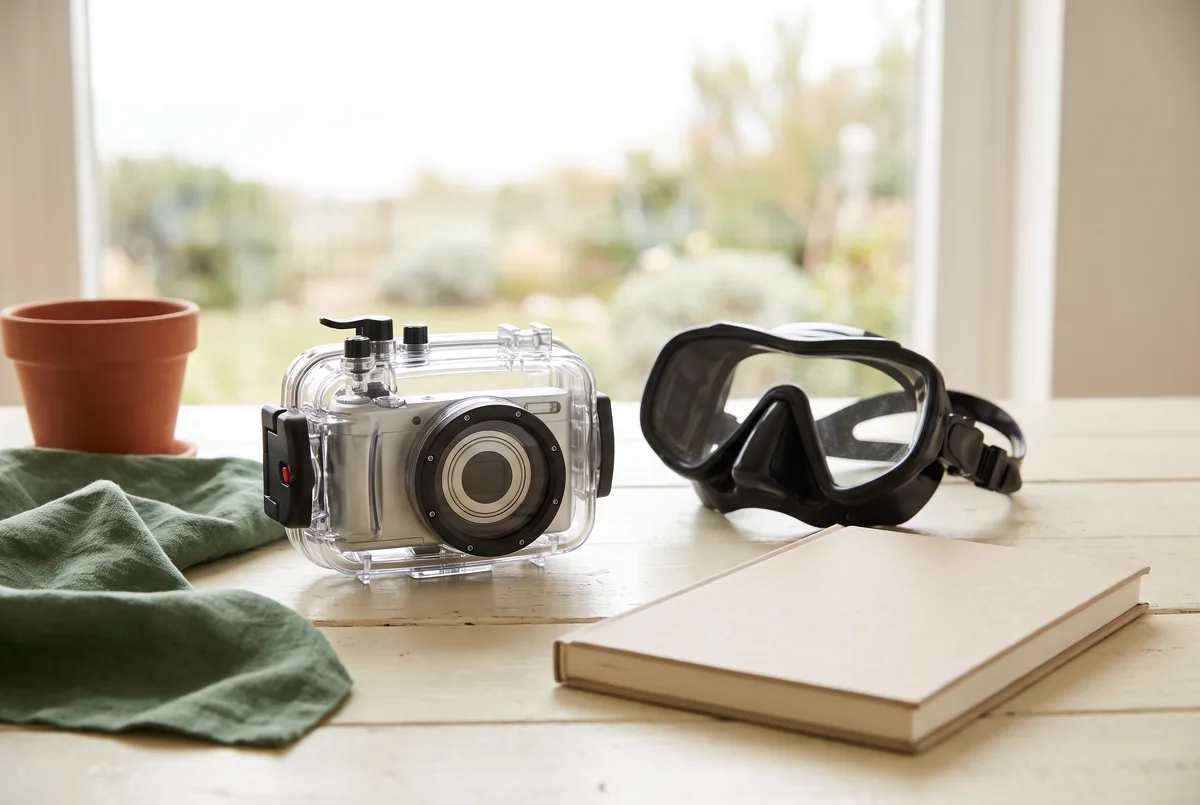
A boat activity quotation is not a promise to deliver an underwater film. A filming group may be buying transport and an activity while its producer expects clear footage, specific wildlife and permission to publish commercially. Unless those expectations are separated and confirmed, everyone can agree to the same booking while imagining a different result.
Before paying, audit the proposed deliverables rather than simply comparing totals. Identify who owns each responsibility, what depends on conditions and which shots have a credible shore-based replacement. This is especially useful when one person books for colleagues who have different diving experience or no shared understanding of the production brief. A smaller, achievable film can be a better purchase than a larger brief built on unsupported assumptions.
Separate a filming commission from a boat activity enquiry
Start with two documents: an activity enquiry and a production brief. The first describes participants, transport needs and the proposed activity. The second identifies the intended film, audience, desired shots and delivery responsibilities. A provider can respond to the activity enquiry without accepting responsibility for shooting, editing or obtaining every permission the production might need.
Use the Hong Kong boat dive price page as an enquiry starting point, not evidence that a filming package has been purchased. Ask the provider to identify the current included services and exclusions in writing. Then compare that response with the production brief. An unanswered requirement belongs in the unresolved column; it should not become an inclusion merely because somebody expects it to be necessary.
The scope-ownership comparison below prevents a transport provider from silently becoming a production contractor. The proposed owner is a role to assign, not a statement about any particular operator’s policy.
| Requirement | Responsibility to assign | Evidence to request | Assumption to reject |
|---|---|---|---|
| Boat transport and activity arrangements | Activity provider | Written description of the agreed service and constraints | Booking a boat guarantees every location on the shot list |
| Participant learning needs | Relevant training provider | Confirmation of the learning scope and participation requirements | Bringing a camera establishes readiness |
| Filming permission and intended use | Producer, with the relevant authority or rights holder | Applicable permission requirements and any written approval | Activity access automatically permits the whole production |
| Recording and editing footage | Production lead or separately commissioned filmmaker | Agreed deliverables, responsibilities and acceptance criteria | An activity quotation includes a finished film |
A crew member’s willingness to help does not resolve an ownership gap. If an essential task has no named owner, either arrange it separately or reduce the brief. That decision is more useful than asking whether a package is broadly “suitable for filming”.
Identify shots that depend on unconfirmed conditions
Separate a desired shot from a promised shot. “Wide underwater view” is a creative preference until the group knows whether the activity, participant capabilities and conditions support attempting it. “A particular animal in the foreground” adds another dependency that cannot be solved by reserving transport. Give each shot an importance level so that one uncertain image does not hold the whole story together.
Weather is a changing input, not a booking-day fact that remains valid until departure. Hong Kong Observatory thunderstorm guidance identifies risks relevant to outdoor and marine activities 1. Use current official information when planning, and ask the activity and boat providers how actual conditions affect their decisions. A forecast does not individually establish that a particular dive site or filming attempt is appropriate.
Use this shot-dependency table as the first page of the filming deliverable audit. Every entry needs a permission query, a participant-training query, provider-scope evidence and a shore fallback. These are planning questions, not instructions for conducting an underwater shoot.
| Desired shot and dependency | Permission query | Participant-training query | Provider-scope evidence | Shore fallback |
|---|---|---|---|---|
| Underwater establishing image; conditions and access | Is the proposed filming use permitted at the intended location? | Who assesses whether participants can join the proposed activity? | Written response on access and whether any filming assistance is included | Harbour establishing image from a permitted shore position |
| Colleague using a camera underwater; capability and consent | Has the participant agreed to the planned recording and use? | Is photography learning needed before this activity? | Confirmed training scope, if separately arranged | Camera-housing demonstration on a table |
| Specific wildlife close-up; natural presence | What habitat and wildlife restrictions apply? | Can the learning plan prioritise observation without disturbance? | Explicit acknowledgement that an encounter is not guaranteed | Diagram or narration explaining the observation goal |
| Boat-based interview; working space and usable sound | Who must approve the filming arrangement on board? | Does the interview conflict with the participant’s activity responsibilities? | Written agreement about filming support, if any | Interview at an agreed shore venue |
The fallback should perform the same storytelling job, not imitate an underwater result. A shore interview can explain motivation; it cannot honestly be presented as evidence of an encounter that never happened.
Ask about permissions without assuming access rights
Treat permission as a separate enquiry with an accountable owner. Ask who controls the proposed location, vessel or facility, whether the intended filming use needs additional approval and what restrictions apply. Include the intended audience and publication channels in the enquiry. Do not assume that a provider’s acceptance of an activity booking answers every question about commercial recording or later publication.
Separate location questions from people’s consent. A colleague may agree to join an outing without agreeing to appear in a public campaign. Ask what participation is voluntary, what uses are proposed and whether someone can remain outside the production. For questions involving legal rights or contracts, obtain advice appropriate to the project rather than treating this audit as a legal determination.
“Permission requested” and “permission confirmed” must remain different statuses. Record who replied, what they approved and any conditions stated. If a response only covers filming on the boat, do not extend it to a protected marine location. If nobody can establish the relevant approval route, keep the affected shot out of the promised deliverables.
An unanswered permission query also affects spending. There is little value in committing to a production element that depends on access nobody has established. Resolve the central location first, or choose a concept that works at a confirmed shore venue. This reduces creative uncertainty without making claims about any provider’s cancellation or refund terms.
Distinguish photography training from camera ownership
Owning a camera housing does not establish underwater readiness. Equipment familiarity, participation requirements and photography learning are separate questions. Ask the relevant provider what experience is expected for the proposed activity and what learning is actually included. A production deadline should not be used to bypass a participant assessment or assume that everyone in the group progresses together.
The underwater photography diving course Hong Kong resource provides a route for asking about photography-specific learning. Request the current prerequisites, course scope and how it relates to the proposed activity. Do not infer that booking a course supplies a production crew, secures a location or guarantees usable campaign images. A learning outcome and a commissioned film need different descriptions of success.
For the broader creative brief, FlintHub’s photography workshop planning resource can help frame an enquiry about group learning rather than filming guarantees. A shore-based session could be proposed around composition, story sequence and reviewing images, subject to the workshop provider’s confirmation. That is a different scope from preparing someone to participate in an underwater activity.
Ask each participant what they want to learn, without asking a coordinator to invent their experience. Some may prefer shore photography or an interview role. This can improve the film’s coverage while respecting different choices. It also makes the quotation clearer: participant learning belongs in a named learning scope, not hidden inside a vague request for “camera support”.
Compare charter and boat scope without inventing amounts
Compare written scopes before comparing totals. A shared boat activity and a private charter may address different transport needs, but the labels alone do not explain filming access, working space or crew responsibilities. Ask what is included, what is excluded and which requests require separate agreement. Do not add hypothetical charges to fill gaps in the quotation.
Use the Hong Kong private speedboat dive charter page to enquire about the proposed charter scope. Explain the filming group’s needs rather than assuming privacy provides unrestricted production control. Ask whether the requested arrangement is available, what the provider is accepting responsibility for and what remains outside the service. A private booking does not, by itself, turn uncertain footage into a contractual deliverable.
Normalise the comparison around the same brief. If one response covers transport alone and another mentions separately arranged learning, their totals answer different questions. Note the mismatch and request clarification. Unspecified camera assistance, footage handling or editing should stay unresolved until the party responsible describes the service and its terms.
The tradeoff is not simply “cheaper activity versus better film”. A separately scoped charter might fit a particular group’s transport requirements while leaving the production unchanged. A shore-based brief might remove the boat requirement entirely. Compare the expenditure against the story each confirmed scope can support, rather than paying for flexibility that the provider has not actually offered.
Use the audit to remove unsupported deliverables
Convert the shot table into a decision record. For each desired shot, retain the permission query, participant-training query, provider-scope evidence and shore fallback. Add a status: confirmed within scope, conditional creative target, or unsupported promise. Only the first category belongs in the description of agreed services. Conditional targets can remain aspirations, clearly separated from what someone has undertaken to deliver.
Evidence needs to match the promise. A reply confirming boat arrangements supports a transport statement, not a wildlife shot. A response about photography learning supports that learning scope, not filming permission. Record the exact part of the reply that answers the query, alongside its date and sender. Avoid upgrading a general expression of interest into a specific commitment.
In a hypothetical corporate film, the draft brief promises “colleagues filming a named species, followed by a finished underwater promotional video”. The activity response confirms only transport and activity arrangements. No relevant permission response is recorded, participant learning needs remain unanswered and nobody has accepted editing responsibility. The audit therefore identifies three unsupported promises: the named-species encounter, an assured underwater filming result and delivery of the finished video.
Remove those promises from the approval request before payment. A revised hypothetical brief could describe a group story using confirmed shore interviews and preparation images, with underwater material considered only if the separately agreed activity and conditions allow it. Assign any editing commission explicitly. Share this version with the budget approver and participants so that internal expectations match the scope being purchased.
Protect habitat and accept a shore-based production
Conservation restrictions belong in the creative brief from the beginning. AFCD’s Hoi Ha Wan Marine Park visitor guidance calls for protecting natural habitat, including avoiding damage to coral and not touching, feeding or collecting marine life 2. It is not evidence of filming permission at every location. Check the relevant current visiting and protection arrangements for the place actually proposed.
Do not build a shot around handling an animal, feeding it into frame or disturbing habitat to improve the background. Ask for an observation-based concept instead, and accept that a desired subject may not appear. The audit should remove wildlife choreography as an unsupported production promise rather than passing it to a provider as an ordinary special request.
A shore fallback is strongest when developed before the booking decision. In a hypothetical learning film, a permitted harbour view can establish place, a table scene can show preparation and a consenting participant’s interview can explain the photography goal. Clearly identify these scenes for what they are. They can tell a coherent story without pretending to document an underwater encounter.
If confirmed access, learning scope and conditions cannot support the central film concept, change the production rather than pressuring the activity to deliver it. Choosing shore-based work, postponing a decision or dropping an uncertain shot can be a sound editorial outcome. The point of the audit is not to preserve every ambition; it is to stop unsupported promises entering the purchase approval.
FAQs
Does a charter guarantee footage?
No. A charter enquiry concerns the service the provider agrees to supply. Footage depends on recording responsibilities, participant capability, access and conditions. Ask whether any production service is separately included, then describe its deliverables explicitly. Treat desired shots as conditional unless an appropriate party has accepted a clearly defined commitment.
Is filming permission automatic?
Do not assume so. Establish the requirements for the proposed location, vessel, participants and intended use. Keep each approval within its stated scope. An activity booking or a general welcome to bring a camera should not be treated as confirmation of every permission a production might require.
Does a camera establish underwater readiness?
No. Camera ownership does not answer the provider’s participation or training questions. Describe the planned activity and ask what experience and learning are expected. Keep photography tuition separate from production delivery, and allow group members to choose suitable shore-based roles rather than assuming everyone should appear underwater.
Can wildlife be arranged for a shot?
Do not make a wildlife encounter a promised result or request disturbance to create one. Natural presence remains uncertain. Plan observation-based material that respects the applicable habitat rules, and prepare a truthful alternative such as narration explaining the intended subject. Do not imply that a fallback image records a real encounter.
Is the public price a final production quote?
Not by itself. A public activity price does not establish the full scope of a filming commission. Request current written inclusions, exclusions and responses to the audit’s unresolved questions. Approve only the services actually described, while separately arranging any permissions, learning or production work the brief still requires.
References
- [1] Hong Kong Observatory: Thunderstorm Warning and precautions
- [2] AFCD: Hoi Ha Wan Marine Park visitor and habitat guidance
Author note
FlintHub Academy prepared this article with AI assistance using verified public-source information. It is planning guidance, not a qualified instructor’s assessment, legal advice or a firsthand account of a filming trip. DiveHarbour and FlintHub Academy have the same owner; related resource, not an independent recommendation. Current services and project-specific arrangements require confirmation from the relevant providers and authorities.
FlintHub Academy · AI-assisted editorial prepared from public information for learning and enquiry planning. The author is not a diving instructor or medical expert. This is not first-hand course testing, a real student case or medical clearance. DiveHarbour and FlintHub Academy have the same owner.