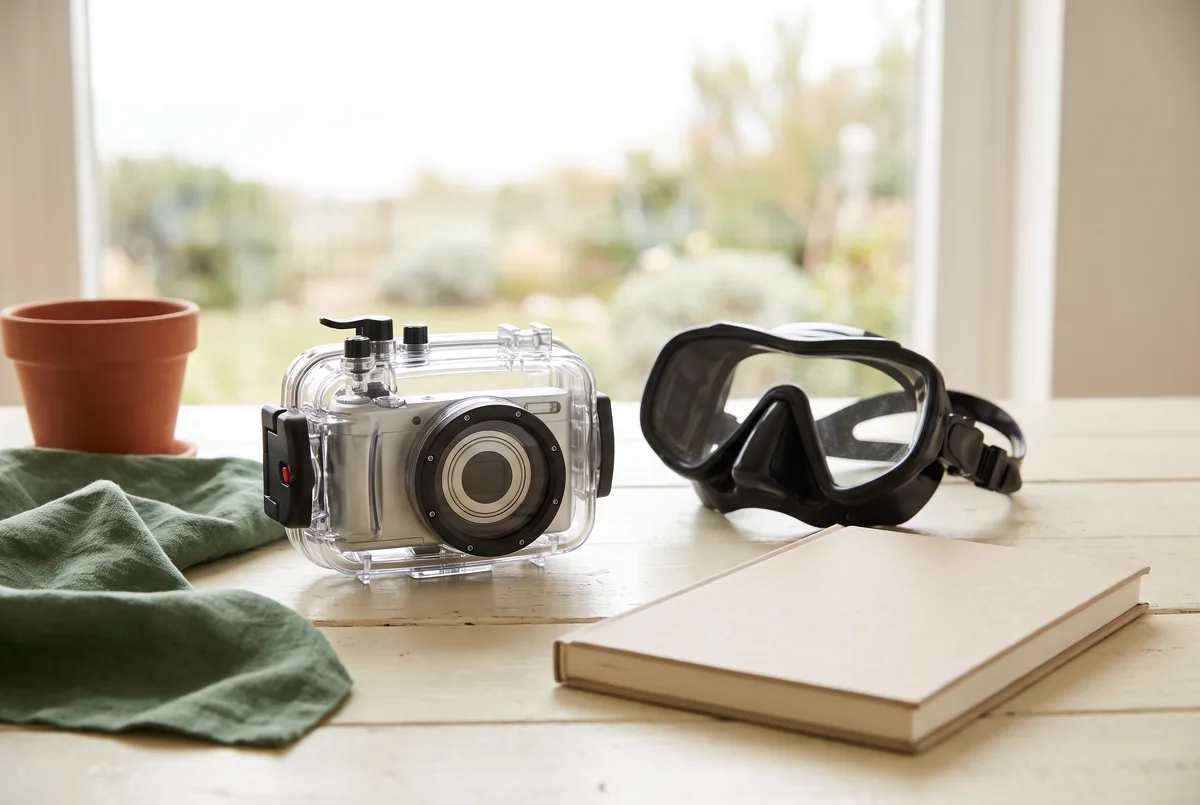
A low-light coastal story does not need an underwater night scene to feel complete. Reflections, a changing skyline and the relationship between people and the shore can carry a narrative without entering the water. Start by deciding what the photographs should communicate, then build a version that works entirely on land.
That sequence matters because photographic ambition can make an optional image feel compulsory. A storyboard should reveal which shots are replaceable, not create pressure to attempt them. Specialised diving instruction belongs in a separate learning decision; it is not a production shortcut for finishing a photo essay.
Write a narrative objective without requiring night diving
Write one sentence about the audience's understanding, rather than the conditions you want to photograph. “Show how the coast changes as daylight fades” leaves several creative routes open. “Capture a marine animal underwater after dark” makes one setting and one encounter the project's success condition before their appropriateness has been considered.
A useful objective has a subject, a change and a limit. For example: “Show the transition from an active waterfront to a quieter evening landscape, using images taken from permitted shore locations.” The limit is part of the brief, not an apology for a less adventurous project. It makes the story achievable without a water-based ending.
In a hypothetical four-image essay, the opening might establish the waterfront, the second show a change in reflected light, the third explore a shore detail, and the final frame return to the wider view. Each image has a job. None depends on seeing a particular organism or receiving approval for a night dive.
Test the objective by removing the most dramatic proposed photograph. If the story collapses, ask whether the objective is really about a coastal transition or only about obtaining that image. Rewriting the objective now is more useful than discovering later that the entire project depends on an unsuitable activity.
Explore shore images as a complete creative route
Treat the shore version as a finished work, not practice footage awaiting an underwater centrepiece. A complete sequence needs relationships between images: an opening that establishes place, details that develop the idea and an ending that changes how the opening is understood. A wide view and a close detail can provide that progression without changing environments.
The creative trade-off is specificity. Shore images cannot honestly document underwater behaviour that the photographer has not observed. They can, however, communicate changing light, human presence, distance and curiosity about the sea. Captions should state what is visible rather than imply that a reflection reveals conditions beneath the surface.
| Story option | What it can communicate | What it cannot establish | Useful trade-off |
|---|---|---|---|
| Waterfront transition | Changes in light and human activity | Underwater animal behaviour | A complete land-based sequence with a clear time theme |
| Shore textures and reflections | Colour, repetition and the sea's visual influence | Conditions at a dive site | Strong visual continuity without entering the water |
| Desk-to-shore learning story | Questions, preparation and creative decisions | Completion of a diving qualification | Makes learning visible without staging an achievement |
| Future underwater chapter | A possible later expansion of the subject | Permission or readiness to undertake it | Keeps ambition separate from the current deliverable |
For feedback on sequencing and visual intent, the photography workshop is a related FlintHub resource to explore. A useful brief would ask how to make a shore-only sequence coherent, not how to turn a photography session into diving instruction. Keep the workshop enquiry focused on image selection, narrative and captions.

Separate low-light photography from water competence
Being comfortable composing photographs in dim light does not demonstrate competence in a different physical environment. Camera confidence concerns making images; diving competence concerns the relevant training and demonstrated abilities for the activity. Neither an attractive portfolio nor familiarity with photographic equipment should be presented as evidence that specialised water training is unnecessary.
NAUI describes its entry-level Open Water Scuba Diver certification as developing basic knowledge and skills. Its description also places subsequent diving within conditions, activities and equipment similar to those encountered during training. That is an agency concept about the scope of entry-level preparation, not confirmation that any particular photographer is ready for a proposed night activity. 1
If image-making underwater remains a genuine learning interest, use the underwater photography diving course Hong Kong page as an enquiry starting point. Ask how photography learning relates to existing diving preparation and what the provider requires before participation. Do not infer from a course title that it includes night-diving training or that two areas of learning are interchangeable.
| Evidence or claim | What it may show | What it does not show |
|---|---|---|
| Low-light photography portfolio | Experience making images in limited light | Competence for underwater night activities |
| Entry-level diving certification | Completion of the relevant entry-level programme | Unrestricted readiness for different environments or activities |
| Photography course information | A published description of photography learning | Approval for a separate night-diving activity |
| Fun-dive enquiry response | Information about a recreational diving request | Admission to specialised night training |
Use this distinction when writing to a provider: describe your photography experience and diving background separately. Combining them into “experienced low-light photographer” obscures the very information needed to discuss the water-based learning request.
Ask about specialised course scope and current prerequisites
A course enquiry should seek a clear account of learning scope, not a promise that your intended photograph can be achieved. The Night Diver specialty course Hong Kong page is a relevant place to begin that conversation. Request current prerequisites and the provider's assessment process in writing before attaching any underwater night scene to a production plan.
Ask which certification system and current standards apply, what prior certification or experience is required, and how the provider decides whether a participant's preparation is appropriate. Also ask what the programme is intended to teach and what sits outside its scope. These are separate questions: meeting an entry requirement does not make every proposed photographic activity part of the course.
Explain the storyboard without presenting its optional shot as a demand. A useful enquiry might say: “My project can be completed on shore. I am separately interested in learning about night diving. Which current prerequisites apply, and is photography included, excluded or considered only after discussion?” This gives the provider room to distinguish the learning programme from your creative preference.
Ask who would deliver the instruction and how their relevant credentials can be verified. This article does not verify an individual instructor, current authorisation or a provider's operational arrangements. If a reply leaves scope unclear, keep the project shore-based while asking for clarification. A published description is not a substitute for a current answer to your particular enquiry.
Protect habitat rather than chase a dramatic image
An image loses its documentary value if the subject or habitat has been manipulated to produce it. Write the conservation boundary into the brief before deciding on close-up subjects. The question is not simply whether an intervention improves the photograph, but whether the photograph depends on interference that should not happen.
AFCD's visitor guidance for Hoi Ha Wan Marine Park asks visitors to avoid damaging natural habitats. Its guidance includes not standing on fragile corals, touching or feeding marine organisms, or collecting them. These are conservation responsibilities, not techniques to negotiate for a better composition. The source concerns a named marine park; check the current access and protection arrangements for whichever location you actually consider. 2
For the storyboard, exclude images that depend on moving an organism, provoking a reaction, collecting something as a prop or approaching through fragile habitat. A land-based project can also fail this test if its proposed viewpoint requires entering an area visitors should not access. Replace the frame rather than treating the boundary as a production inconvenience.
In a hypothetical “hidden coastal life” essay, a photographer might initially want a close animal portrait. If obtaining that image would require disturbing the subject, the shot is dropped. A permitted shore view paired with a carefully worded caption can communicate curiosity instead. It cannot claim to document the missing encounter, and that honesty is part of the creative choice.
Use the storyboard to identify dispensable shots
The shore-first storyboard has four fields: narrative beat, shore image alternative, water-training query and shot-to-drop boundary. Fill them in for every proposed beat, including scenes that already look straightforward. The output is a visual sequence that can be completed on shore, with separate questions for any later water-based learning interest.
Copy this compact entry for each beat:
Narrative beat: What should the audience understand here?
Shore image alternative: What visible land-based subject can carry that meaning?
Water-training query: What would need clarification if a later version involved water? Write “none” if it does not.
Shot-to-drop boundary: What dependency would make this image dispensable rather than compulsory?
In a hypothetical first entry, the narrative beat is “introduce the coastline at day's end.” The shore alternative is a wide waterfront view from a permitted public location. The water-training query is “none for this version.” The boundary is “drop this viewpoint if access is restricted; choose another permitted view.” This entry works without an underwater substitute.
A second hypothetical entry might read: “develop curiosity about what is unseen”; “photograph a reflection with a caption distinguishing observation from imagination”; “ask separately whether future photography learning would require additional diving preparation”; “drop any animal image that depends on disturbance or on training that has not been arranged.” The query stays outside the shot list.
Now order the shore alternatives by their narrative jobs. The resulting sequence could be: wide coastal view, changing reflection, land-based texture, then a return to the wider scene. Check whether each caption describes evidence in its own frame. If two images do the same job, remove one rather than adding an underwater frame simply for variety.
Keep unresolved water-training queries on a separate page. That separation is the tool's main benefit: the story remains deliverable while the learning questions remain genuinely open. It provides no underwater lighting procedures, equipment configurations or directions for night diving.
Keep fun-dive enquiries distinct from night-training approval
A recreational outing enquiry and a specialised training enquiry have different purposes. Do not combine them into one request and assume that a positive reply settles both. Your storyboard can inform the discussion, but it cannot convert an available activity into a training programme or establish that a participant meets its requirements.
The Hong Kong fun dive page provides a separate enquiry route for recreational diving or refresher information. State which of those you are asking about and describe your existing diving background accurately. If night training is also of interest, ask about it explicitly through the relevant course discussion rather than treating a fun-dive response as permission.
Keep the answers distinct in your notes: what activity was discussed, what information remains outstanding, and which storyboard shots are unaffected. A reply about a recreational dive should not be copied into a project brief as “night scene approved.” Nor should a photography workshop reply be interpreted as a water-training decision.
The practical outcome can be simple: finish the shore sequence now and investigate specialised learning separately. Choosing not to add an underwater chapter is a complete creative decision. It protects the narrative from becoming dependent on an activity whose requirements have not yet been established.
FAQs
Is low-light camera skill dive competence?
No. It shows experience with image-making, not the relevant diving abilities for a particular activity. Present your camera experience and diving background separately so a provider can discuss the learning request without confusing the two.
Does a fun-dive enquiry permit night diving?
No. An enquiry, or a reply about a recreational outing, does not establish approval for night diving or admission to specialised training. Ask explicitly about the proposed activity and its current requirements; keep that answer separate from the fun-dive discussion.
Will this teach underwater lighting procedures?
No. The storyboard helps with narrative choices and enquiry preparation. It does not explain underwater lighting, equipment setup or night-diving procedures. Its usable output is a shore-based image sequence and a separate set of learning questions.
May organisms be disturbed for a story?
No. Do not move, touch, feed or otherwise manipulate organisms to obtain a frame. The project should work without that image. Follow the relevant location's conservation and access guidance, and replace a shot whose appeal depends on interference.
Can the whole project stay on shore?
Yes. Write a shore-based objective, assign a narrative job to each image and use captions that describe what was actually observed. A coherent essay about changing coastal light does not require underwater photographs or a later diving chapter.
References
- [1] NAUI Open Water Scuba Diver: entry-level learning and scope of subsequent diving
- [2] AFCD Hoi Ha Wan Marine Park: visitor guidance and habitat protection
Author note
FlintHub Academy prepared this article with AI assistance using verified public-information summaries. It is editorial learning-planning guidance, not qualified-instructor advice, firsthand dive experience or an independent endorsement. DiveHarbour and FlintHub Academy have the same owner; the linked pages are related resources, not independent recommendations. Current course requirements and provider arrangements must be confirmed directly.
FlintHub Academy · AI-assisted editorial prepared from public information for learning and enquiry planning. The author is not a diving instructor or medical expert. This is not first-hand course testing, a real student case or medical clearance. DiveHarbour and FlintHub Academy have the same owner.