A strong Sai Kung photo essay does not need a particular fish, clear water or a completed boat outing. It needs a visual question that several kinds of photograph can answer. Start with something observable: how water changes a surface, where a shoreline becomes a habitat, or what respectful observation leaves untouched. Then give every essential frame a land-based alternative.
This changes the assignment from collecting promised sightings to making a coherent account of what was actually available. A named location can inspire that account, but it does not establish current access, an operating activity or permission to photograph everywhere. Plan the story first; confirm the proposed visit separately.
Choose a visual question rather than a species promise
Ask a question that remains interesting when a subject never appears. “What does the meeting of land and water look like?” can produce a wide view, a surface detail and an image of people observing from an allowed position. “Can I photograph a particular animal?” makes the whole essay depend on an encounter you cannot arrange. The first question gives you editorial choices; the second gives you a missing shot.
Define the question in one sentence, then identify what each photograph contributes. An opening frame establishes place. A middle frame develops a pattern or contrast. A closing frame changes the reader's understanding rather than merely repeating the prettiest image. You can draft these roles before deciding whether any photographs will be made underwater.
| Essay route | Visual question | Useful evidence | Main trade-off |
|---|---|---|---|
| Edges and transitions | Where does land become water? | Broad shoreline view, reflected boundary, surface detail | Less animal drama, stronger continuity across locations |
| Changing light | How does water alter familiar shapes? | Reflections, colour differences, shadow patterns | Results depend on available light, not a promised underwater view |
| Observation and restraint | What does respectful looking leave untouched? | Distant habitat context, permitted viewing position, an unaltered scene | Care must be explained without staging an interaction |
Choose one route rather than trying to include every possible theme. A useful test is to remove the imagined wildlife photograph from your draft sequence. If the remaining frames still ask and answer something, the essay has a workable structure. If nothing remains except scenery, sharpen the question or change the role of those photographs.
Separate regional inspiration from confirmed access
Use the Sai Kung diving Hong Kong information page as a starting point for a regional enquiry, not proof that your chosen activity is available. Ask the provider to identify the proposed location, explain the current access arrangements and confirm whether photography fits the activity being discussed. Keep those answers distinct from your creative preferences. A place name is not a booking confirmation or a description of conditions on your intended day.
The same distinction applies to a more specific option such as a Hoi Ha Wan boat dive. Before building an essay around that possibility, request written confirmation of the activity, applicable participation requirements and who will communicate changes. Also ask what happens to your proposed photography plan if the location or activity changes. The linked page is an enquiry resource; this article does not confirm an operating trip, space or departure.
Separate regional inspiration, provider-confirmed arrangements and unanswered questions in your notes. A reflective surface is inspiration; a written meeting arrangement is confirmation. Wildlife, visibility and future weather remain uncertain. A provider's expectation should not become a caption written in advance.
AFCD's Hoi Ha Wan Marine Park information provides conservation context, not a promise of photographic results. Its guidance calls for avoiding damage to natural habitats and respecting protected marine life.1 Read that context alongside current access information. It can shape what you decide not to photograph, even when the actual visit differs from your original regional idea.
Distinguish camera interest from underwater training
Being comfortable with exposure, composition or a waterproof camera housing does not establish underwater ability. Photography adds another demand on attention, and an image brief should not determine whether somebody participates in a water activity. Discuss the proposed activity and your relevant experience with the appropriate provider before deciding whether a camera belongs in the plan. This essay is not an underwater operating guide.
If a learning enquiry is relevant, the underwater photography diving course Hong Kong page can help you frame questions about the advertised subject. Ask what prerequisites currently apply, what the instruction covers and how camera work is kept secondary to the activity's requirements. Do not infer enrolment eligibility, instructor credentials or a suitable environment from the course name. Obtain the provider's current written information before making a decision.
Separate the learning briefs. Photography work might concern selecting a sequence or writing precise captions; the water-activity discussion concerns participation and relevant training. Progress in one does not establish progress in the other. Remaining on shore can preserve the project's editorial purpose.
For work on framing and visual storytelling, FlintHub's photography workshop is a related internal resource. Use it to explore the photographic side of the assignment, not as a substitute for underwater instruction or evidence of dive competence. Ask whether the learning format suits your intended project rather than assuming the workshop is a confirmed component of a coastal outing.
Apply habitat respect to image ambitions
Let the habitat determine the limit of the photograph, not the other way around. AFCD's visitor guidance advises against standing on fragile coral, touching or feeding marine organisms, and collecting marine life.1 A photographic objective does not create an exception. If making a frame would require contact, disturbance or an inappropriate viewing position, remove that frame from the brief rather than trying to justify it as educational.
A non-contact idea describes what you hope to observe without arranging the living scene. Examples include an overall habitat view or a pattern visible from an appropriate position. They do not include moving an animal into better light, lifting something to reveal a subject or directing another person to touch the habitat. The fact that an interaction would make a clearer photograph is a reason to find another image, not to stage it.
Use distance honestly in the final edit. A small subject within a broad scene can communicate scale and context. If a close image is unavailable, do not crop until the photograph appears to prove details it does not show. Avoid identifying a species from an uncertain image merely because that name makes the caption more appealing. A descriptive caption such as “small fish visible in the frame” can be more accurate than a confident but unsupported identification.
Your enquiry can be simple: “What observation limits apply here, and would this image idea involve anything we should avoid?” Keep room for the answer to be no. The project should reward restraint through its story structure, not treat restraint as the reason the essay failed.
Read weather information without judging a site safe
Weather information helps you recognise that plans may need to change; it does not let you pronounce a dive site safe. The Hong Kong Observatory's thunderstorm warning guidance addresses risks associated with thunderstorms and outdoor or marine activity.2 Consult the latest official information near the proposed activity, rather than relying on an old screenshot or the conditions shown in somebody else's photographs.
Ask the appropriate provider and boat personnel how current conditions affect the actual proposal and who will communicate a change. Do not use the absence of one warning as proof that a particular location or activity is suitable. A regional forecast, a shoreline observation and an underwater scene are different kinds of information. None should be quietly substituted for a site-specific decision by those responsible for the activity.
Keep weather out of the essay's essential image requirements. Instead of writing “sunlit underwater opening,” write “opening frame that establishes the relationship between land and water.” That role can be filled later by an available photograph. The uncertainty remains real, but it no longer forces the story to depend on a particular sky, water colour or viewing distance.
A shore alternative is also conditional. If outdoor activity is unsuitable or access is unavailable, move the project indoors or postpone it. An indoor editing session, a photographed planning notebook or a clearly labelled study of the unused camera housing can document the changed assignment. Do not turn “we stayed out of the water” into “the shore was therefore suitable.”
Use the fallback grid to protect the story structure
The photo-essay fallback grid records four things for each planned frame: its theme, a non-contact image idea, a shore substitute and the uncertain condition. The condition column stops an attractive possibility from becoming a promised outcome. The substitute column protects the role of the frame, not its exact appearance. Use the grid before the visit so that disappointment does not dictate hurried choices later.
The following is a hypothetical planning example, not a record of an actual trip. Every outdoor substitute still depends on permitted access and suitable arrangements. If those are unavailable too, the appropriate result may be an indoor process essay or a postponed assignment, rather than a coastal shoot.
| Theme and sequence role | Non-contact image idea | Shore substitute | Uncertain condition and editorial response |
|---|---|---|---|
| Boundary: opening | Broad underwater context, only if the activity and image are appropriate | Land-and-water boundary from an allowed viewpoint | Water activity cancelled: use shore context without implying a completed dive |
| Repetition: development | Naturally visible rock or seaweed patterns without disturbance | Reflections or repeated shoreline shapes | Underwater detail unavailable: develop the same visual pattern on land |
| Observation: middle turn | Habitat seen from an appropriate distance, without arranging subjects | An unaltered coastal scene from permitted access | Wildlife absent: retain habitat context and remove the species claim |
| Restraint: closing | Broad view that leaves the habitat untouched | Notebook and unused housing photographed indoors | All outdoor activity unavailable: change the essay to planning and postponement |
If water activity is cancelled but a permitted shore visit remains appropriate, the output sequence is straightforward: open with the land-water boundary, develop a repeated shape, show an unaltered scene and close with the planning note. The essay becomes about observation from land. It does not need an old underwater photograph inserted to make the day look more eventful.
If the whole outing is cancelled, revise the question openly: “How was a coastal photo essay planned and changed?” Photograph the brief and unused equipment indoors, then use a clear caption to explain the postponement. This is a different essay, not fabricated evidence of a visit. Alternatively, keep the original question and wait for another confirmed opportunity. The grid makes that choice visible instead of disguising it.
During editing, compare photographs with their assigned roles and remove duplicates. Check whether the closing image adds meaning. Four purposeful frames can tell a stronger story than a collection held together by location labels.
Label conceptual images and hypothetical examples honestly
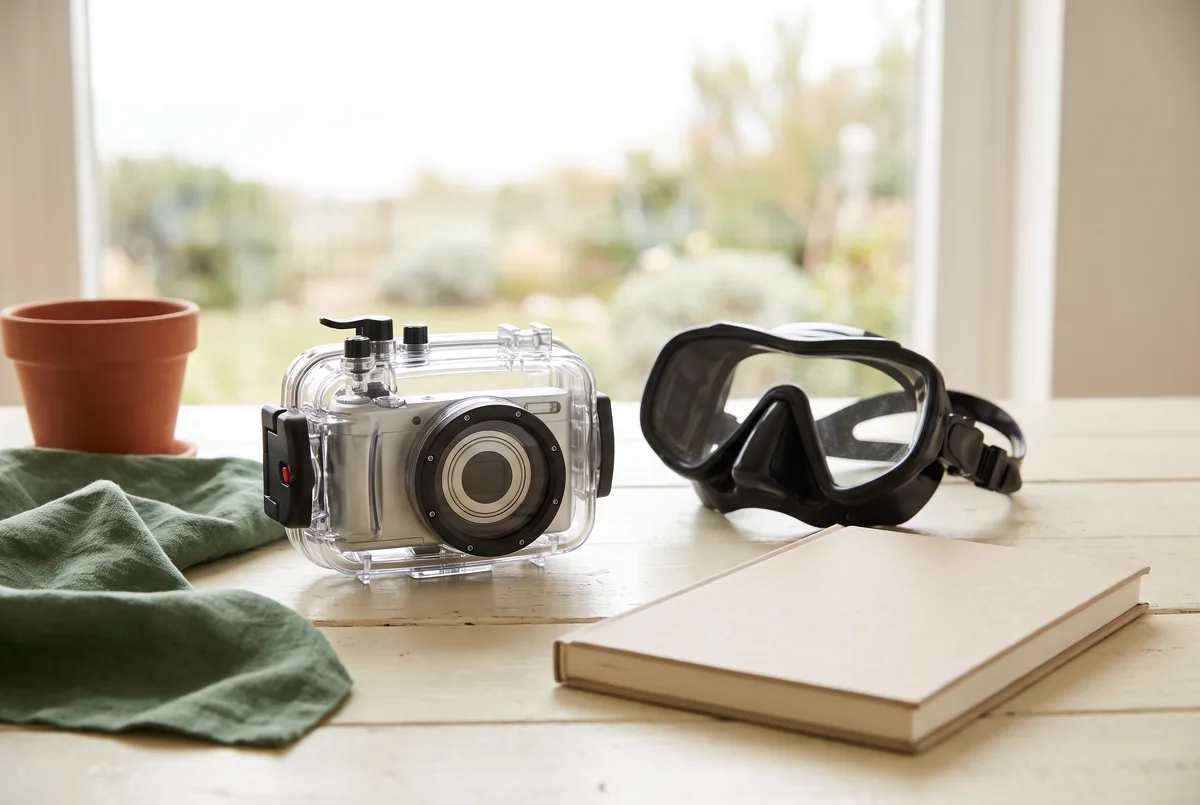
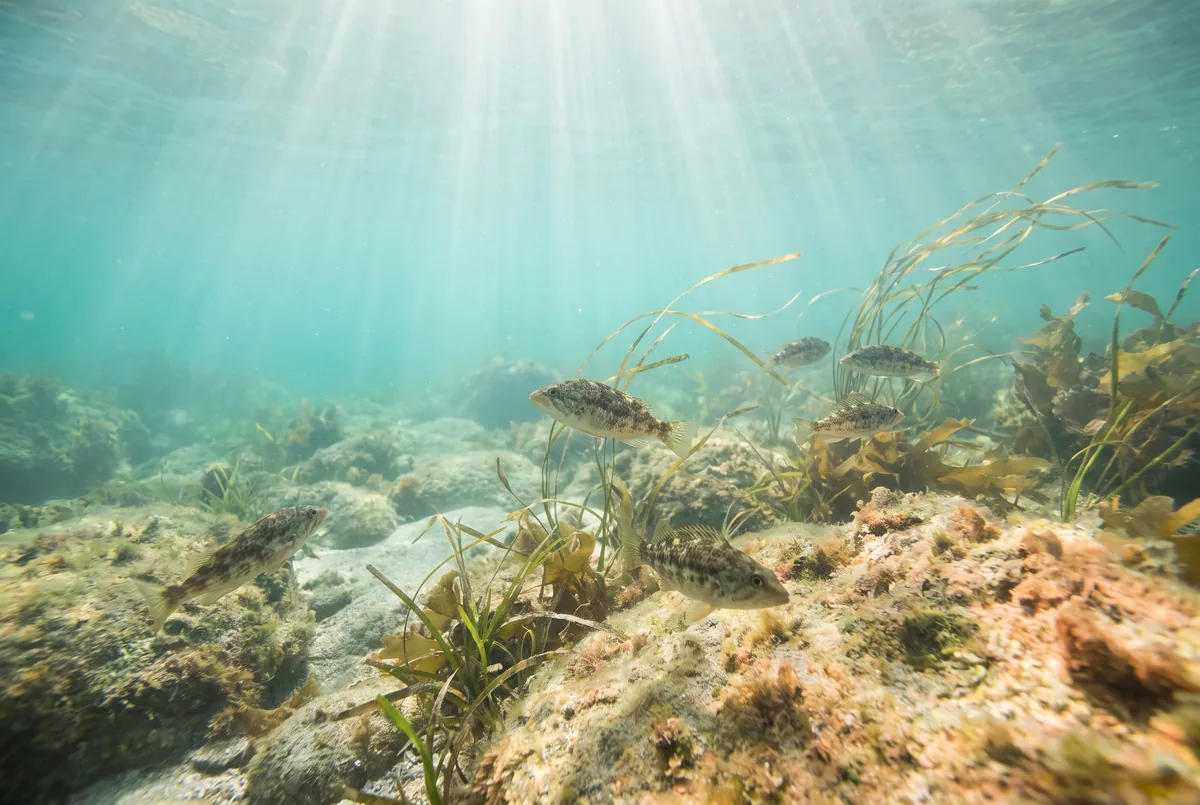
The concept images associated with this article are illustrations, not documentary evidence of Sai Kung conditions or a DiveHarbour activity. The photography scene shows a camera housing, mask and blank notebook on a table. The marine scene depicts rocks, seaweed and small fish. Those subjects explain the article's planning themes; they do not prove that particular animals were present, that water was clear or that anybody completed a dive.
Keep three image categories separate in your own essay: photographs from the actual assignment, older photographs with their original context, and conceptual illustrations. If you use an older image, state that it was made on another occasion. If you use an illustration, label it as such. Do not place either beneath a caption that invites readers to interpret it as evidence from a cancelled outing.
A documentary caption identifies the visible subject, actual location and relevant limitation. In the hypothetical shore-only example: “Shoreline reflection photographed during the land-based assignment; no underwater photographs were made.” Add a precise location only when verified. Do not imply conditions beyond the frame or future access.
Before publication, read the captions without looking at the photographs. If they promise wildlife, imply a completed activity or blur illustration with observation, revise them. Then review the sequence itself: does it still answer the visual question? An honest essay can be modest in its claims and still specific, visually engaging and complete.
FAQs
Can wildlife be guaranteed?
No. Build the sequence around observable themes rather than a particular encounter. If wildlife appears and can be photographed without disturbance within the activity's limits, it may contribute to the essay. If it does not appear, use habitat context or another planned frame without inventing a sighting.
Does Sai Kung mean confirmed access?
No. A regional name describes inspiration, not a current arrangement. Confirm the specific proposed location, applicable access arrangements and activity with the relevant provider. Keep any unanswered points visible in your planning notes rather than treating a general information page as confirmation.
May animals be moved for a photograph?
No. Do not move, touch or feed animals to improve a frame. AFCD's conservation guidance requires respect for marine life and avoidance of habitat damage.1 Replace the image idea with an unaltered scene or a land-based substitute; the photograph is not more important than the habitat.
Does camera experience establish dive ability?
No. Camera skills and underwater participation are separate matters. Discuss your actual background, relevant training and the proposed activity with the appropriate provider. A photography course title, camera purchase or good portfolio does not establish that an underwater activity is suitable for you.
Can the essay work on shore?
Yes, when the question concerns something shore photographs can genuinely show and the visit is permitted and appropriate. Boundaries, reflections and observation can all support a land-based sequence. If outdoor activity is unavailable, revise the project transparently, work indoors or postpone it rather than implying a completed visit.
References
- [1] AFCD: Hoi Ha Wan Marine Park and visitor conservation guidance
- [2] Hong Kong Observatory: Thunderstorm Warning and precautions
Author note
FlintHub Academy prepared this article with AI assistance using public information and the cited official guidance. It is editorial planning material, not instruction from a qualified dive instructor, a firsthand activity report or an individual participation assessment. DiveHarbour and FlintHub Academy have the same owner; this is a related resource, not an independent recommendation. Current access, activities and provider arrangements require separate confirmation.
FlintHub Academy · AI-assisted editorial prepared from public information for learning and enquiry planning. The author is not a diving instructor or medical expert. This is not first-hand course testing, a real student case or medical clearance. DiveHarbour and FlintHub Academy have the same owner.