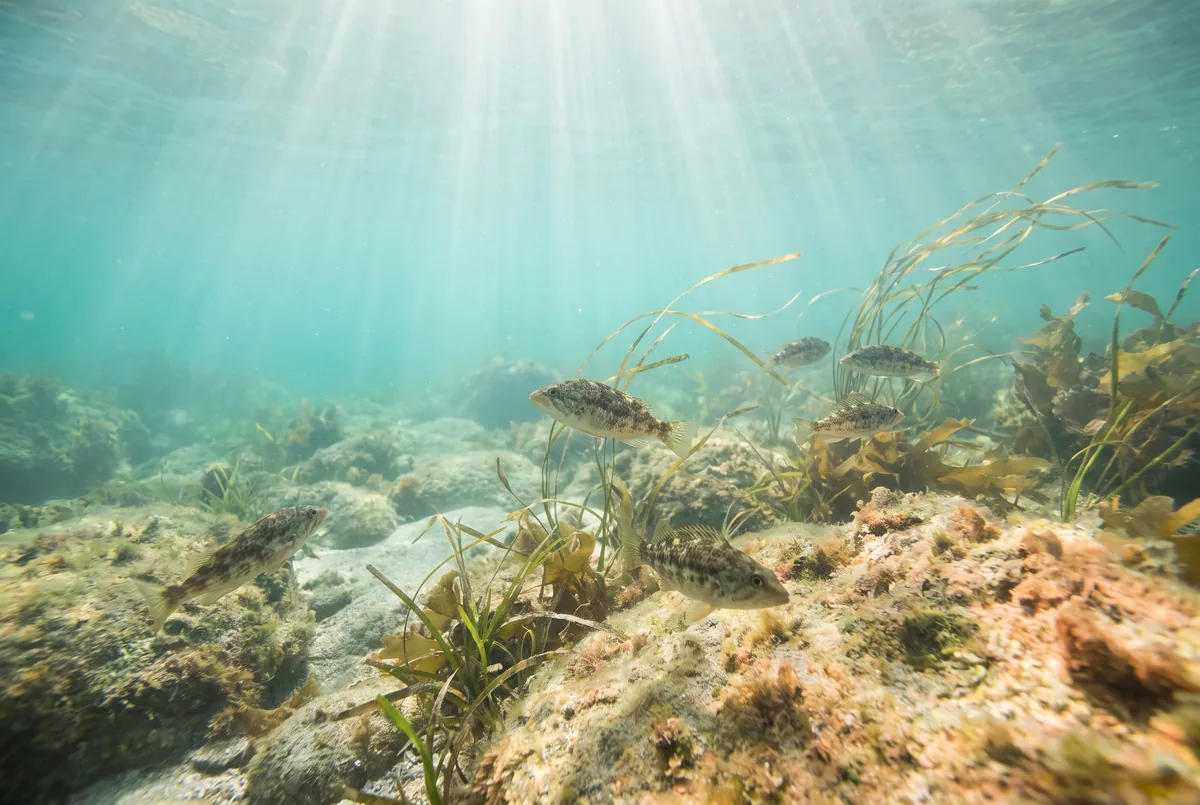
A useful observation notebook records what you could see, what you could not establish and what you want to ask later. It does not require touching habitat or confidently naming an organism. For anyone considering a boat-based visit to Hoi Ha Wan, that distinction matters: a personal record is neither a verified scientific finding nor evidence that a particular activity or departure is available.
Build each entry around five fields: observation, confidence, source consulted, image context and unverified inference. The result should be labelled observations and questions, not species diagnoses. A photograph can help you remember a scene without settling what it means.
Define personal observation rather than scientific authority
Personal observation begins with a bounded statement. “A small fish with dark markings crossed the frame” says what the observer noticed. “This species is thriving here” adds an identification and a claim about population condition that a brief encounter cannot establish. Keep those statements separate, even when a photograph looks convincing.
“Citizen-observation” describes an individual's careful record here; it does not imply participation in an official monitoring programme. Scientific projects may have their own methods, review processes and submission requirements. Unless you have joined such a project and followed its requirements, do not label your notebook a survey, validated dataset or conservation assessment.
The tradeoff is a less dramatic caption but a more useful record. Someone reviewing an uncertain entry can see which features were actually visible. A confident name without supporting context may conceal the very information needed to question it. Confidence should describe the strength of a particular observation, not give an impression of scientific authority.
Choose a modest question before a visit: “What visible features can I describe without disturbing the scene?” is more appropriate than “How many species can I prove are present?” The first can produce worthwhile notes even if views are brief. The second can create pressure to pursue subjects, overstate identifications or treat incomplete coverage as comprehensive evidence.
Check official habitat and visitor guidance
Use the Agriculture, Fisheries and Conservation Department's Hoi Ha Wan Marine Park information as a conservation reference. Its visitor guidance calls for avoiding damage to natural habitat, including not standing on fragile coral, touching or feeding organisms, or collecting them. These limits remain relevant when the purpose is identification or photography, rather than recreation alone. 1
Before discussing a visit, read the current official guidance and note questions about permitted activity and visitor arrangements. Separate those questions from a provider's activity description. An official habitat page explains conservation expectations; it does not confirm a commercial departure, available place, viewing conditions or an encounter with a particular organism.
The Hoi Ha Wan boat dive page is a relevant enquiry starting point for boat-diving arrangements. Ask the provider to confirm the proposed activity, participation requirements and current access arrangements in writing. A named destination on a webpage should not be copied into your notebook as a confirmed itinerary before those details are settled.
Leave space for constraints alongside interests. “Would like a photograph of visible seabed life; no subject repositioning or habitat contact” is a clearer brief than an unrestricted species wish list. FlintHub's eco-tourism resources offer a broader context for planning observation-led outdoor learning. Use that interest to organise questions, not to assume permission for an activity.
Keep certified-diver enquiries separate from general access
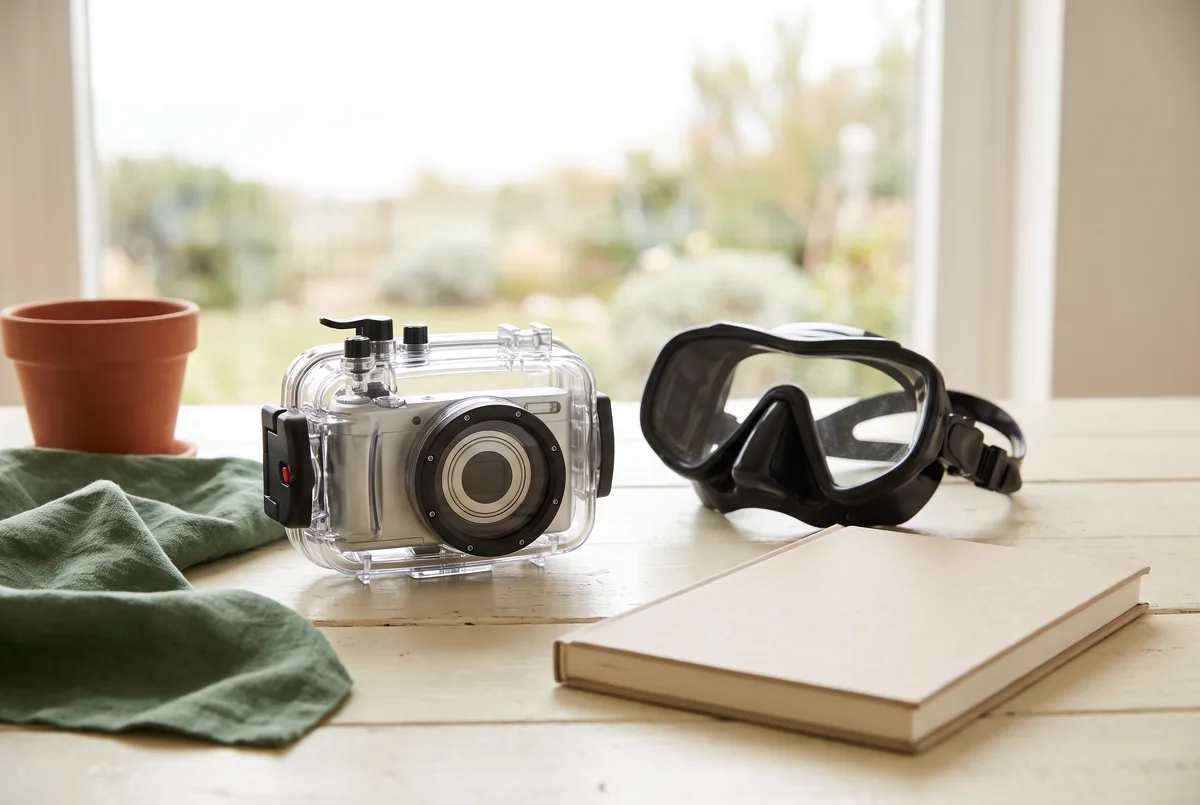
A visitor interested in marine life is not automatically a participant in a certified-diver outing. Nor does holding a certification settle whether a proposed activity suits someone's training, experience or current readiness. Describe your intended participation clearly rather than sending only a destination name and asking whether you can “join.”
For someone enquiring specifically about certified-diver participation, certified-diver fun dive Hong Kong is the relevant resource to discuss with the provider. State your certification and recent experience, then ask what further information they need to assess the proposed activity. The page is not personal clearance, a guarantee of acceptance or confirmation that every photography goal can be accommodated.
The following comparison keeps interests from being mistaken for permissions. These are enquiry categories, not statements that all the listed arrangements are offered at Hoi Ha Wan.
| Participation interest | What it does not establish | Question to resolve before making plans |
|---|---|---|
| General marine-park visit | Boat access or inclusion in a dive outing | What visitor arrangements apply to my intended visit? |
| Certified-diver outing | Suitability for every activity or environment | What requirements and experience expectations apply to this proposal? |
| Photography learning | Permission to approach, touch or reposition organisms | How is photography learning kept within habitat rules? |
| Accompanying a participant | A place aboard or an alternative activity | Can this role be accommodated, and under what current arrangements? |
This separation also helps mixed-interest groups. One person may want to dive while another wants to review images afterwards. Ask about each role independently. If a proposed arrangement is unsuitable or unavailable, changing the plan is more useful than stretching the meaning of an activity page to cover everyone.
Use photography interest without disturbing organisms
Photography can preserve visible details for later review, but getting a more identifiable image is not a reason to alter the subject or its surroundings. AFCD's no-touch and no-collection guidance applies even when a person believes contact would be brief or educational. A missing detail belongs in the notebook as a limitation, not as a justification for disturbance. 1
If structured learning is your interest, the underwater photography diving course Hong Kong information page provides a separate enquiry route. Ask about prerequisites, how learning activities respect habitat and whether the proposed setting suits your experience. Do not assume a photography course includes Hoi Ha Wan access, an identified subject or a particular photographic result.
Record image context as carefully as the caption. Keep the original file and connect it to an entry with a simple filename or reference. Note whether the subject was partly hidden, the frame was cropped or colour was changed during editing. A brightened or tightly cropped image may be helpful for viewing while removing context needed to interpret it.
The practical tradeoff is accepting an incomplete photograph rather than forcing a complete one. Do not describe an image as proof of species identity simply because it is sharp. An absent feature, an unfamiliar angle or uncertain scale can still limit interpretation. Reviewing images afterwards also avoids making identification the central task during participation.
Record uncertainty instead of naming confidently
Use ordinary confidence labels with a written reason. “Clear,” “limited” and “uncertain” can describe how well a feature was observed; they are not calculated probabilities. Apply them to individual details. You might be clear that a fish crossed the frame but uncertain about its markings because it was partly obscured.
A source consulted is a separate field. Record its title or URL, the date you checked it and what it actually helped establish. AFCD visitor guidance can support your understanding of conservation rules, but it does not validate your own identification. Similarly, another person's suggested name remains a suggestion unless the basis and review status are known.
In a hypothetical entry, the observer writes: “Several dark marks visible on one side; tail partly outside frame.” Confidence is “limited because the image is incomplete.” A later comment suggesting a species goes under unverified inference, attributed as a suggestion. The original description stays unchanged. The follow-up question becomes “Which visible features would distinguish the suggested organism from alternatives?”
Avoid turning absence into a stronger finding. “No fish visible in this selected photograph” is not “no fish present in the area.” Likewise, several images may show the same individual, so they do not automatically represent several individuals. If you cannot determine whether encounters were distinct, write that limitation rather than adding them into a count.
Use the notebook to separate observation and inference
Make the notebook easy to complete after participation, using recollection and images while acknowledging gaps. One entry per scene or question is usually clearer than a running list of species names. The five-field structure below compares evidence with its limitations and shows what a usable entry might contain. All example entries in the table are hypothetical.
| Notebook field | Useful entry | Boundary or tradeoff |
|---|---|---|
| Observation | “One fish crossed the left side of frame A.” | Describes the visible event, not a population count. |
| Confidence | “Clear crossing; markings uncertain because of blur.” | Confidence is tied to a feature, not scientific validation. |
| Source consulted | “AFCD visitor guidance checked; relevant to no-touch rules.” | A habitat source does not verify species identity. |
| Image context | “Original A retained; crop B removes surrounding seabed.” | A crop may aid viewing but loses environmental context. |
| Unverified inference | “Possibly the same individual as in frame C.” | Keep this as a question unless evidence resolves it. |
A completed entry should output two visibly different parts. Under Labelled observation, include the description, feature-specific confidence and image reference. Under Questions and unverified inference, include possible interpretations and what remains unresolved. Do not combine these into a single fluent caption that makes a tentative idea sound established.
For a hypothetical example, the output might read: “Labelled observation: one fish beside branching seaweed in image A; position clear, body markings unclear.” Its question could be: “Is the shape in image B the same fish, or another individual?” The notebook preserves something useful without deciding either identity or abundance.
If another person comments on the image, add a dated note rather than silently replacing the original entry. Keep “observer description,” “suggested interpretation” and “later review” distinguishable. This helps readers understand how a claim developed and whether the uncertainty was genuinely resolved or merely repeated by several people.
When sharing notes publicly, describe them as personal observations and retain their limitations. Do not imply that a marine-park authority checked them. If you want to contribute to a formal project, first ask whether the project accepts this kind of record and what information it requires. A notebook can prepare useful questions without automatically becoming research evidence.
Review weather and current arrangements before departure
Weather information and provider confirmation answer different questions. The Hong Kong Observatory's Thunderstorm Warning information is relevant to outdoor and marine planning, and current official warnings should be consulted near departure. A weather graphic or the absence of a particular warning is not an individual judgement that a proposed dive site is suitable. 2
Keep a small planning record outside the organism entries. Note when you checked official weather information, when the provider last confirmed arrangements and which questions remain open. This is a record of decisions and communications, not a homemade forecast. Do not use an old screenshot as if it describes conditions at departure time.
Ask who will communicate any change to the proposed plan, when arrangements should be reconfirmed and what activity is actually being considered. Appropriate providers and boat personnel need to make decisions using actual conditions. This article cannot establish a departure, access permission or suitability from a destination name, qualification or weather page.
An observation-led plan can still be worthwhile if the outing changes or does not proceed. Reviewing existing photographs or preparing questions from official habitat information is a different activity and should be labelled accordingly. It must not be presented as observations from a visit that never happened. Keep “planned,” “confirmed” and “completed” separate in the notebook.
Before setting out, reduce the brief to an achievable aim: record visible details without touching habitat, preserve image context and leave uncertain interpretations open. If the proposed participation no longer fits current arrangements, postponing or choosing not to participate is a reasonable outcome. The notebook's value lies in honest records, not in completing a promised encounter list.
FAQs
Are these verified scientific findings?
No. They are personal observations unless a relevant project has reviewed them through its own process. The word “citizen” does not supply scientific authority. A photograph, suggested name or confidence label does not validate an identification, population estimate or habitat assessment. State the record's status wherever you share it.
Can habitat be touched for identification?
Do not touch organisms, stand on fragile coral, feed marine life or collect material to improve a notebook entry. AFCD's habitat guidance sets the conservation boundary. 1 If a feature cannot be seen without disturbance, record it as unknown and ask a question later rather than manipulating the scene.
Does a named boat page guarantee departure?
No. Treat it as an enquiry resource. Ask for current arrangements and reconfirm them before departure. Official habitat information and HKO weather guidance do not confirm a provider's itinerary or place availability. Keep an unconfirmed plan separate from both a confirmed arrangement and an activity that actually took place.
Does certification confirm every activity is suitable?
No. Certification alone does not resolve the demands of a particular activity, environment or photography task. Give the provider accurate information about your training and experience, and ask what requirements apply. A general activity description should not be treated as an individual assessment or permission to participate in every setting.
How should uncertainty be recorded?
Name the uncertain feature and explain why it is uncertain: blur, a brief view, missing context or an incomplete frame. Keep possible interpretations in the unverified-inference field. Link the entry to its original image and record sources consulted. If someone proposes an identification later, preserve its attribution and review status.
References
- [1] AFCD Hoi Ha Wan Marine Park habitat and visitor guidance
- [2] Hong Kong Observatory Thunderstorm Warning information
Author note
FlintHub Academy prepared this AI-assisted article from public information for observation and enquiry planning. It is not a first-hand dive report, qualified-instructor guidance or verified scientific study. DiveHarbour and FlintHub Academy have the same owner; these are related resources, not an independent recommendation. Current participation and departure arrangements require direct confirmation.
FlintHub Academy · AI-assisted editorial prepared from public information for learning and enquiry planning. The author is not a diving instructor or medical expert. This is not first-hand course testing, a real student case or medical clearance. DiveHarbour and FlintHub Academy have the same owner.