1. Decide what the workshop needs to deliver
A floral workshop decision starts with the experience you want participants to have. Is the priority learning a technique, making a decorative object, or spending time creating together? Those aims can point to different materials and different expectations of what will be finished during the session. Before comparing activities, write down the audience, the setting, the time available, and whether each person should leave with a completed piece or a work in progress. For a material-focused enquiry, Preserved flower workshop is a page label to consult, not evidence of any particular workshop's materials or inclusions; ask the provider to confirm the proposed project and take-home outcome in writing.
A useful distinction is between materials that arrive ready to arrange and processes that need time to dry or settle. Pressing fresh flowers, for example, is not automatically a same-session route to a finished pressed-flower card. The Royal Horticultural Society's school activity guidance describes a book-pressing process that can take around two to four weeks; that timing is specific to its guidance, not a universal promise for every flower or method 1. Ask whether a proposed activity uses prepared material, includes a later finishing step, or has a different take-home outcome.
2. Coordinate access, handover and exceptions
A workable plan considers how people will participate, not only what the finished object looks like. Ask the organizer to describe the actual sequence: demonstration, material selection, making time, finishing, packing, and handover. If people have limited time, are arriving in groups, or may need to leave early, establish which steps are essential and what can be completed later. These are planning questions, not assumptions about what any particular workshop includes.
For a Hong Kong planning context, confirm the venue, access arrangements, and who is responsible for any materials or tools brought into the space. Hong Kong is a location for planning only; this article does not identify a local branch or make claims about local legal requirements. If participants include children, ask what tools are involved and what adult assistance the organizer expects. The RHS guidance calls for care around tools and says its iron-based pressing method should be operated by adults or older children, without defining a specific age threshold 1. Do not treat a general activity description as confirmation of suitability for every participant.
3. Compare practical workshop formats
The options below describe different ways to organize a floral activity, not services verified as available from a particular provider. Match the format to your goal and ask the organizer to confirm exactly what is supplied, taught, and taken home. A demonstration-led session can be appropriate when the group wants to observe a technique; a guided individual project may suit participants who want hands-on making. A collaborative piece can encourage shared decisions, but it may not give each person an individual finished item.
| Format | What participants mainly do | Useful fit | Confirm before choosing |
|---|---|---|---|
| Demonstration-led | Watch a process, ask questions, and perhaps try selected steps | A group focused on learning or observing | Whether participants handle materials and whether anyone makes an individual piece |
| Guided individual project | Follow a shared set of steps to create a personal item | A group wanting a defined take-home object | Project dimensions, materials, finishing time, and packing arrangements |
| Collaborative group piece | Contribute to one shared design or display | A group prioritizing teamwork over individual keepsakes | Who keeps the completed work, how contributions are divided, and what happens if time runs short |
A clear format description helps avoid a mismatch between “workshop” as a learning session and “workshop” as a guaranteed finished-product arrangement. For a deeper planning route, use the FlintHub learning resource floral workshop comparison to reconnect this choice to activity planning; it is a learning resource, not confirmation of any merchant's scope or inclusions. If considering Dried flower workshop, treat that page name as an enquiry starting point, not a verified description of a provider's offer; ask which materials are used and whether the project is completed during the session.
4. Turn enquiries into specific requirements
When you contact a provider, replace broad requests such as “something suitable for beginners” with questions that can be answered in writing. Ask which materials are used, whether they are fresh, pressed, dried, or otherwise treated, and whether participants can choose colours or forms. Ask what tools are involved, who demonstrates their use, and whether the organizer expects adult assistance. If the activity depends on a prepared component, ask how it was prepared and whether that changes what participants do during the session.
The Natural History Museum's paper-pressing guidance notes that thick plant material may press unevenly, some material dries slowly and can mould, and pressed plants may be brittle. It also recommends PVA glue rather than tape for attaching pressed specimens to card 2. Those observations concern the museum's paper-based activity; they do not establish the right materials for every craft or any provider's specific kit. A practical enquiry should therefore ask what adhesives and finishing materials are actually proposed, rather than assume a general guide applies.
If an answer is important to the decision, request written confirmation rather than relying on a label or a photograph. Clarify the number of projects per participant, what happens to unfinished work, how it will be packed, and whether the venue has any handling or clean-up expectations. Leave open details marked as questions until the provider answers them.
5. Compare materials with the take-home project
The material can shape both the activity and the result. Pressed flowers tend to suit flat compositions such as cards or framed displays; dried stems can work in dimensional arrangements or wreaths; “preserved” foliage may be treated differently from dried or pressed material. These categories are not interchangeable, and a label alone does not verify how a particular batch was sourced or processed.
| Material approach | Possible project direction | Planning consideration | Question to ask |
|---|---|---|---|
| Pressed plant material | Card, picture, or other flat composition | Freshly pressed plants may need a separate drying period; brittle pieces need careful handling | Is the material already pressed and dry, and what adhesive or backing is used? |
| Air-dried flowers or foliage | Small arrangement, wreath, or decorative grouping | Drying time and suitability vary by plant and conditions | Which parts are prepared in advance, and how is the finished piece packed? |
| Preserved foliage | A foliage-focused arrangement or decorative composition | The term can cover different processes; do not assume it means fresh-looking petals or a particular lifespan | What does “preserved” mean for these materials, and what care information is provided? |
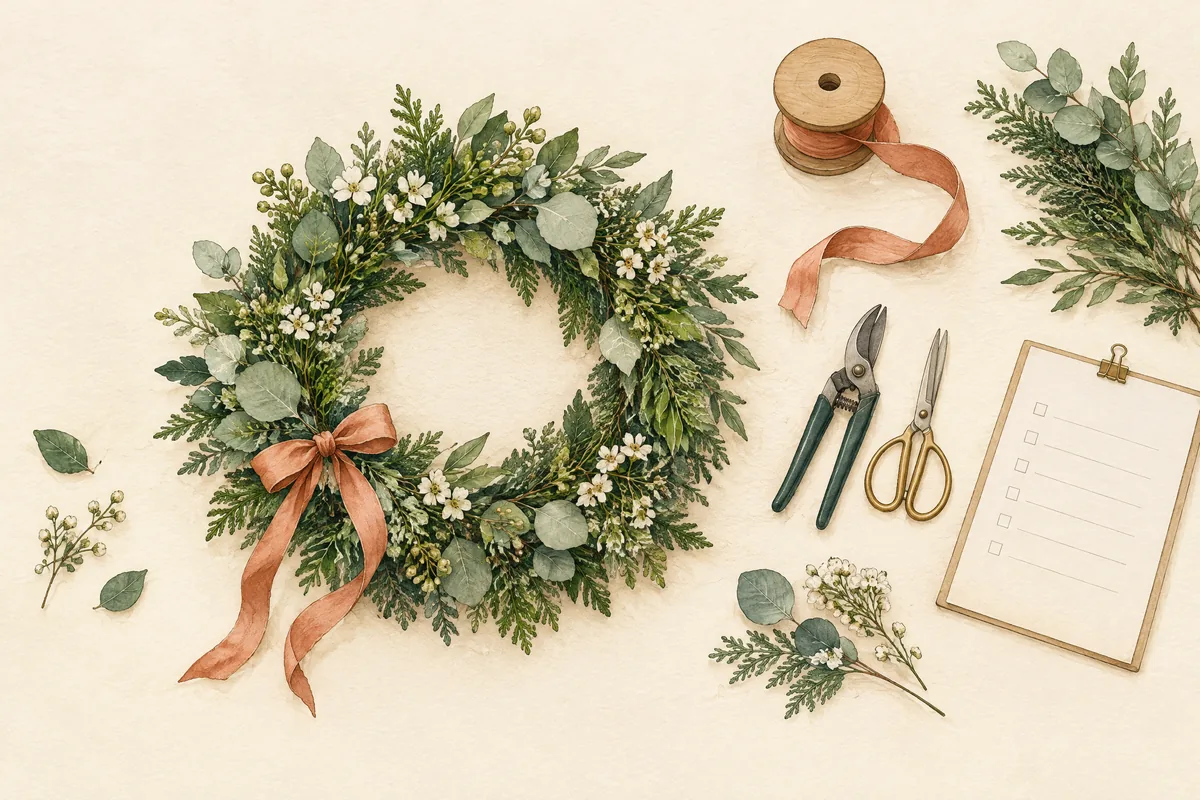
The RHS explains that flowers and foliage may be air-dried by hanging them in a low-light, ventilated place, with timing varying by moisture and material; it also advises keeping dried displays away from direct sun and damp rooms 3. This is general gardening guidance, not a guarantee of colour, durability, or any commercial preservation method. If a wreath is your intended project, ask what its base and fixing materials are and how the finished piece should be handled.
6. Map participant needs to the experience
Make a short participant profile before selecting a format: likely experience level, interest in learning versus making, dexterity or access considerations to discuss with the organizer, and how much time people can commit. This is not a medical assessment. It is a way to raise practical questions early, so a provider can explain whether the activity can be adapted and what that would mean for the project. Avoid assuming that a single format will suit everyone in a mixed group.
For beginners, a simple sequence with visible steps may be easier to follow than a project that depends on choosing among many materials. For a group interested in plant observation, a pressed-flower activity can include recording where and when a specimen was collected. The Natural History Museum recommends recording location and date for plant records and advises collecting only where permitted, without damaging other flowers or taking excessive quantities 2. Its collection guidance concerns its own context; it does not establish the origin or sourcing of any workshop materials. Ask the provider for sourcing information if that matters to your decision.
A relevant FlintHub learning route is flower arrangement class Hong Kong, which reconnects floral making to activity learning and planning. The label is a learning-page title, not a claim that a specific class, venue, schedule, or take-home item is available. Keep that distinction clear when comparing a learning idea with an actual provider's written offer. For a seasonal project enquiry, Christmas wreath workshop is a page label rather than confirmation of a particular activity; ask the provider to specify the wreath materials, construction steps, and take-home arrangements.
7. Use a decision worksheet before approval
Use this worksheet in an enquiry or planning meeting. Fill in what is known, and keep unconfirmed details as questions rather than turning them into promises. A good decision is not necessarily the most elaborate project; it is the option whose process, materials, and take-home expectations are clear enough for your group.
Floral materials and take-home project worksheet
- Purpose: What should participants learn, make, or experience together?
- Participants: Who is attending, what experience can be assumed, and what access or assistance questions should be raised?
- Material: Is it pressed, air-dried, described as preserved, or another material? What written explanation supports that description?
- Process: Which steps happen during the session, and which are completed beforehand or afterward?
- Take-home: Does each person leave with a finished item, a work in progress, or a contribution to a shared piece?
- Tools and handling: What tools, adhesives, and finishing materials are used? Who demonstrates them and what assistance is expected?
- Logistics: Where is the activity held, what access and handover arrangements apply, and how is work packed?
- Open questions: What remains unconfirmed about inclusions, sourcing, timing, participant suitability, or care instructions?
- Decision: Which option best matches the group's purpose, and what must be confirmed in writing before approval?
Before agreeing, compare the written response with your worksheet. If the description says “take-home project,” ask whether that means a completed object for every participant or simply materials to continue working with. If timing, sourcing, tool use, or care matters, keep the decision open until the answer is specific. That modest step makes the final choice more transparent without implying a guaranteed result from any provider.
Frequently asked questions
Is a pressed-flower piece always completed in one session?
No. A fresh flower may require drying before it can be used in a finished paper composition. The RHS school activity guidance describes a book-pressing process of around two to four weeks, but that is not a fixed duration for every method or material. Ask whether the workshop uses prepared material and what participants actually take home.
Are pressed, dried and preserved flowers the same thing?
No. Pressing flattens plant material, air-drying removes moisture under suitable conditions, and “preserved” can refer to other treatments. The word alone does not confirm a material's process, origin, colour retention, or lifespan. Ask the organizer to explain the materials and any care information in writing before deciding.
What should I ask if children may attend?
Ask for the activity sequence, the tools used, and the adult assistance expected, then confirm how the organizer handles the actual participant group. The RHS guidance calls for care with tools and limits its iron-based method to adults or older children without defining an age. Do not infer universal suitability from that example.
Can a floral workshop include an individual take-home item?
It may be planned around an individual project, but the label “workshop” does not establish that every attendee receives a finished item. Confirm the number of projects per person, whether completion occurs during the session, and how unfinished work is handled. Request written answers for any detail that affects your decision.
What makes a wreath project different from a flat pressed-flower project?
A wreath is a dimensional arrangement, while a pressed-flower card or picture is a flat composition. Their materials and construction questions differ, so ask about the wreath base, fixings, and packing, or the pressed work's backing and adhesive. Do not assume either form has a particular durability or safety guarantee.
Editorial disclosure
FlintHub Academy and YumYum have the same owner. This article was prepared with AI assistance on 2026-11-10; that is its editorial preparation date, not a confirmed publication date. It is not an independent recommendation or a verified description of any merchant's current offer. It uses general educational references for planning context; those organizations do not endorse FlintHub Academy or YumYum. Open details, including materials, sourcing, tools, timing, suitability, and take-home arrangements, require written confirmation from the relevant provider. FlintHub Academy does not claim medical, veterinary or professional qualifications.
References