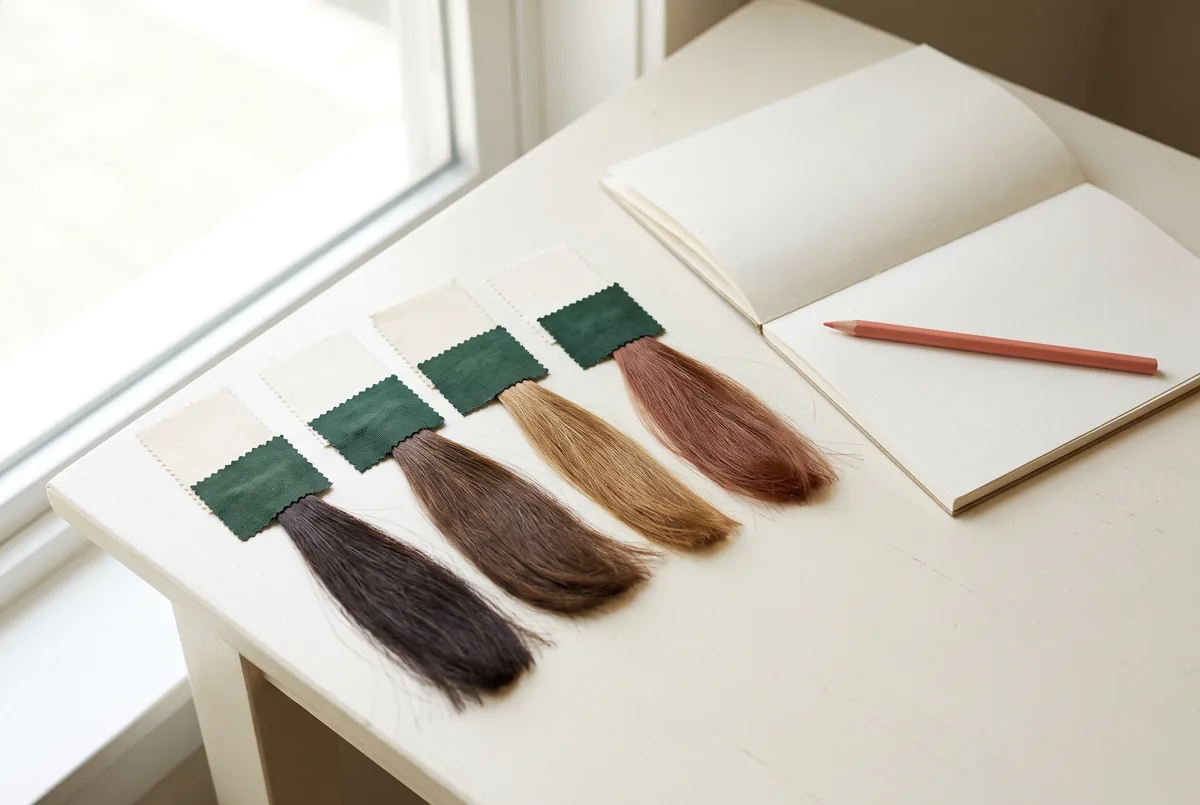
Build a male character portrait by agreeing on the story, the performer's colour preferences and the limits of any appearance change separately. Use a character intent and consent grid to describe what the image should communicate without treating greys as decline or brown hair as proof of youth.
For adult performers and image-makers, the useful question is not “How many years should we remove?” It is “What does this character do, and what visual information helps the audience understand that?” A portrait can establish setting, relationships and mood through performance, costume and composition without turning someone's natural hair into a problem.
1. Replace age labels with observable creative choices
Words such as “tired”, “past it” and “still youthful” can conceal several unrelated requests. A director might mean a brighter exposure, a different expression or a less formal costume. If the team converts that vague instruction straight into a colour change, it may alter the wrong thing while implying that the performer's appearance needs correcting.
Ask the person giving the note to name something visible. “Keep the eyes readable under this lighting” is actionable. “Make him younger” leaves the performer guessing what is being judged. Equally, “distinguished greys” should not become a compulsory identity for a man who simply likes another colour.
| Story purpose | Unhelpful appearance assumption | More useful direction |
|---|---|---|
| Show a character listening carefully | Greys automatically signal wisdom | Choose a listening pose and clarify the relationship in the scene. |
| Suggest an informal social setting | Brown hair automatically looks youthful | Compare costume, posture and background before discussing colour. |
| Show authority within an organisation | Older-looking hair proves seniority | Establish role through the script, props and interaction. |
| Distinguish two fictional roles | One must have more greys | Give each role a different silhouette, expression or framing. |
This does not forbid portraying a character of a stated age. It asks the team to establish that age through the story rather than claiming that a hair colour reliably communicates personality, ability or worth. If age matters, record the narrative reason and check that the surrounding image supports it.
2. Separate the character brief from the performer's identity
Keep three distinct statements in the brief: what the performer likes personally, what the production needs fictionally and what changes the performer permits. Agreement with one statement does not imply agreement with the other two. Someone may enjoy brown colour in daily life but prefer visible greys in a role, or accept a costume test while declining dye.
For a Hong Kong staged reading or cultural portrait project, references may move between Cantonese discussion and English production notes. Do not translate a shorthand age label into an appearance instruction without checking its meaning. The performer should be able to read the final wording and correct it before it reaches the photographer or service provider.
FlintHub's Chinese culture and performing arts page provides a relevant educational context for thinking about performance and representation. A character brief should still explain its own story; neither a cultural label nor a course link establishes what every production requires.
If the performer independently wants to explore a lasting change, the men's hair colour page can help frame a service enquiry about current colour, desired direction and maintenance. Take the agreed brief, not an instruction to “look younger”. A service category does not establish that a particular shade is achievable on this person's hair, and the production's approval cannot replace the individual's consent.
3. Describe brown by depth and tone, not promised age
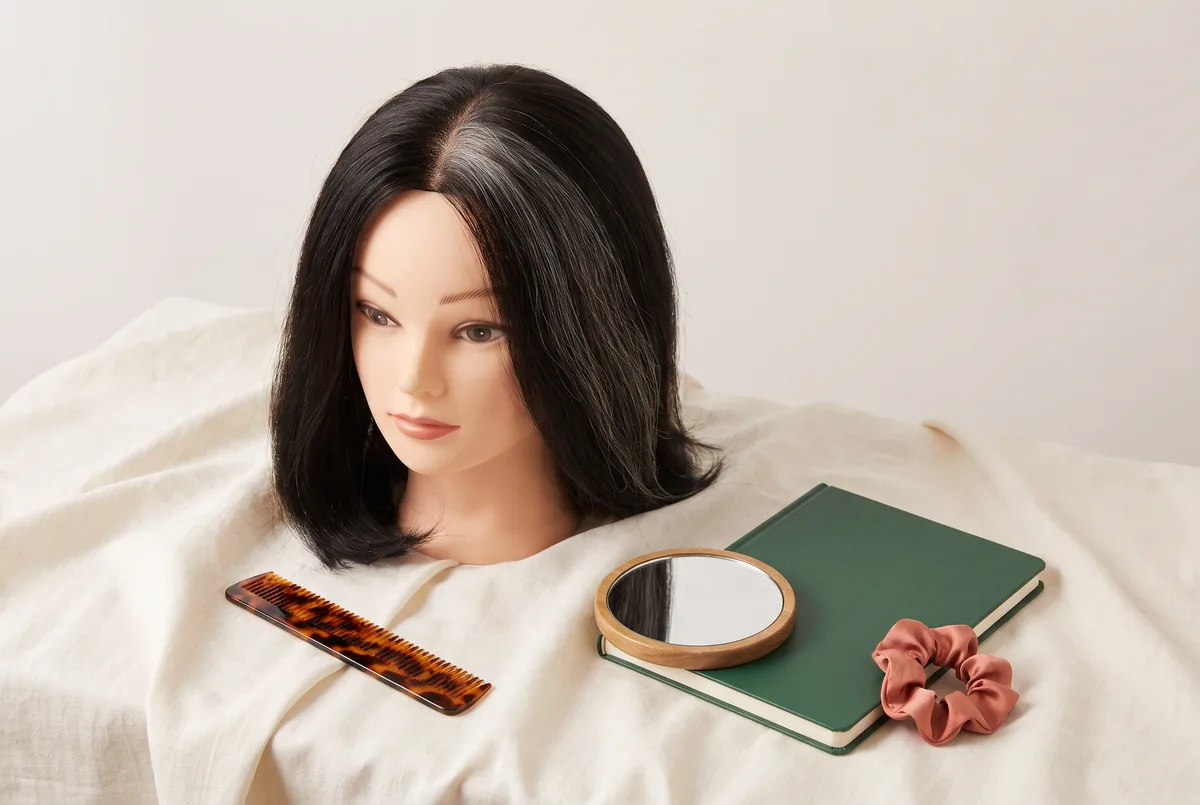
“Brown” is a broad visual direction, not a single camera result. Describe how dark or light the reference appears and whether it seems warmer, cooler or relatively neutral. Note whether you are responding to the hair itself or to the photograph's overall treatment. A warm background can make a reference feel warm even when the hair is difficult to judge.
Choose a modest reference set rather than a collage of incompatible finishes. For each image, write one thing you want to discuss and one thing you are not requesting. For example: “Discuss the restrained warm tone; do not copy the model's hairline or claim the same result.” This keeps preference specific without making another person's photograph a guarantee.
Vit So's guide to brown hair colour is a useful starting point for discussing brunette depth rather than attaching a youth claim to the shade. Any service conversation still needs the person's existing colour and chemical history. If the requested appearance depends mainly on warm lighting, test the lighting first instead of assuming the hair must change.
The tradeoff is between a repeatable personal choice and a production-only effect. A lasting colour may serve several planned portraits, but it also continues outside the role. A camera or costume adjustment affects this image instead, although it may not satisfy a performer who genuinely wants another everyday colour.
4. Make grey coverage an optional, precisely defined choice
Visible greys can remain part of the portrait without a caption praising bravery or commenting on age. Coverage can also be a legitimate personal preference without being described as hiding decline. Neutral language protects both choices: “retain visible temple strands” and “discuss reducing contrast at the roots” describe intentions rather than judging the person.
Map the areas separately. Temples, the parting and roots may be visible from different angles, so “cover everything” can be less useful than an agreed priority. Specify what should remain visible, what may change and what must not be altered in editing. The same boundaries should apply to proofs and publicity crops, not just the initial styling conversation.
For a performer who chooses to enquire about men's grey hair coverage, bring that distribution map and discuss the desired visibility of greys, upkeep and service suitability. This is a narrower preference within the colour discussion, not evidence that all men need coverage. Keeping the existing pattern remains an available creative decision, and no production brief can guarantee uniform coverage or a maintenance schedule.
Avoid treating a close portrait as permission for silent retouching. Removing greys digitally changes the agreed appearance even when no physical product is used. Obtain approval for that edit separately and keep an unaltered reference for comparison.
5. Test the portrait before changing the hair
Make an initial reference image with the current hair, planned costume and intended pose. Keep framing and camera settings consistent when comparing an alternative. If the team changes lighting, posture and colour treatment together, it cannot tell which adjustment answered the original note.
Start with story-bearing elements. Does the prop establish the character's work? Does the expression match the scene? Is the background competing with the face? Those questions often reveal a clearer task than an age-coded colour request. This is a planning method, not a promise that photography can solve every styling preference.
For practical learning, the Photography and image workshop offers a relevant FlintHub route into image-making. Keep responsibilities explicit: the photographer documents lighting and framing; the performer approves representation; a hair service provider assesses the requested service. An image workshop is not a chemical consultation.
In Hong Kong, record whether the final image is for a rehearsal-room screen, a printed programme or a small mobile poster. Review at that actual viewing size as well as close up. Also plan a continuity photograph after the performer arrives at the venue, especially if travel, changing clothes or wearing a headset could disturb the arrangement.
6. Complete a hypothetical character intent and consent grid
The following is a fictional planning exercise, not a client case or a transformation result. An adult male performer is preparing a poster portrait for a Hong Kong staged reading. He plays an archivist handling a disputed document. The team's stated goal is focused attention and uncertainty, not an impression of youth or old age.
| Decision area | Hypothetical preference or story need | Permission and service boundary |
|---|---|---|
| Personal colour preference | The performer likes a restrained brown reference. | Discussion only; no chemical change has been approved. |
| Visible greys | Temple strands may remain visible. | Do not remove them from proofs without further permission. |
| Fictional storytelling | The archivist examines a document cautiously. | Test pose and prop position before proposing hair changes. |
| Colour feasibility | Current colour and treatment history are not yet assessed. | A provider must assess suitability; the reference is not a promised result. |
| Publication | The selected image is intended for the reading's poster. | Ask separately before using it as a personal headshot or a colour-service promotion. |
Step 1: Write the character objective. Use an action, such as “examines a document while withholding a judgement”. Add the image's intended use and the decision-maker for its final selection.
Step 2: Record appearance boundaries privately. Ask what the performer wants to retain, would consider changing and declines. Do not require a public explanation for a refusal. Keep personal treatment history out of general production notes.
Step 3: Test the least intrusive option. Photograph the permitted pose, prop and costume combination with existing hair. Review whether the story is clear before opening a separate service discussion.
Step 4: Resolve conflicting notes. If someone asks for darker hair to imply confidence, ask what confidence looks like in this scene. A change can still be considered if the performer wants it, but the stereotype is not sufficient justification.
Step 5: Approve the selected representation. Record the agreed editing limits and caption alongside the final image. A materially different crop, recolour or use should prompt a new discussion rather than relying on a vague earlier “yes”.
The grid's limitation is important: consent establishes permission, not chemical suitability or artistic success. It also does not settle contractual image rights. Those terms need their own clear agreement.
7. Build care and a fallback into the production handover
If dye is under consideration, the creative brief must not override product precautions. The US Food and Drug Administration advises following product directions and explains that a reaction remains possible despite previous uneventful use or a skin test showing no reaction. It also advises against dyeing an irritated or damaged scalp and recommends contacting a healthcare provider after a reaction.1
Discuss relevant treatment history and previous reactions with the service provider. Do not invent a universal safe interval between chemical services or compress precautions to meet a poster deadline. A sensitive scalp is not something the production team should diagnose, and a colour consultation is not medical treatment. FDA guidance here informs precautions; its US regulatory provisions are not Hong Kong law.
A non-colour fallback still needs thoughtful handling. The American Academy of Dermatology recommends gentle combing, avoiding pulling and using lower heat and heated tools less frequently. Its guidance also identifies colouring and other chemical treatments as potential sources of damage.2 For rehearsals, avoid repeatedly forcing the same arrangement with heat simply because several departments want separate reference photographs.
Name a permitted fallback in advance: existing hair with the approved costume and lighting, for example. Confirm appointment feasibility, service scope and communication needs directly if a service is pursued. An English website does not establish English-language consultation. Keeping the fallback usable prevents an unconfirmed service from becoming pressure on the performer.
FAQ
Can a character's age still be mentioned in the brief?
Yes, when it is relevant to the story. State the script information separately from the performer's identity, then explain the visual purpose. Do not assume greys establish age accurately or that brown colour automatically changes how old someone appears.
What if the performer wants complete grey coverage?
Respect that preference without describing natural greys as a flaw. Clarify the desired areas, discuss feasibility with a provider and keep publication language neutral. A personal choice does not need to become a claim about what other men should do.
Is digital recolouring a harmless alternative to dye?
It avoids a physical colour service, but it still changes representation. Agree on recolouring and grey removal before editing. Also consider whether the portrait must match a live appearance; a heavily altered poster can create a continuity problem.
Who should decide when the director and performer disagree?
The director can explain the narrative need, but that does not authorise a physical change. Find a permitted alternative or revise the concept. Separate approval for the final image from permission to change the performer's hair.
Can one approval cover a character poster and personal headshot?
Do not assume so. The contexts may communicate different identities even when the photograph is identical. Ask about both uses, captions and editing limits, and record the answer before publication.
About the author: FlintHub Academy prepares educational editorial content for creative learners. This article was organised with AI-assisted institutional editing. FlintHub Academy and Vit So share common ownership; this is not an independent endorsement, a hairstylist-authored review or medical advice. The planned illustrations are original topic scenes, not Vit So portfolio images or client results.
References
- [1] US Food and Drug Administration: Hair Dyes
- [2] American Academy of Dermatology: 10 hair care habits that can damage your hair
FlintHub Academy · AI-assisted editorial prepared from public information. FlintHub publishes creative-learning and activity-planning resources. This is not a first-hand salon test, a real client case or a claim of hairdressing, clinical or medical credentials.