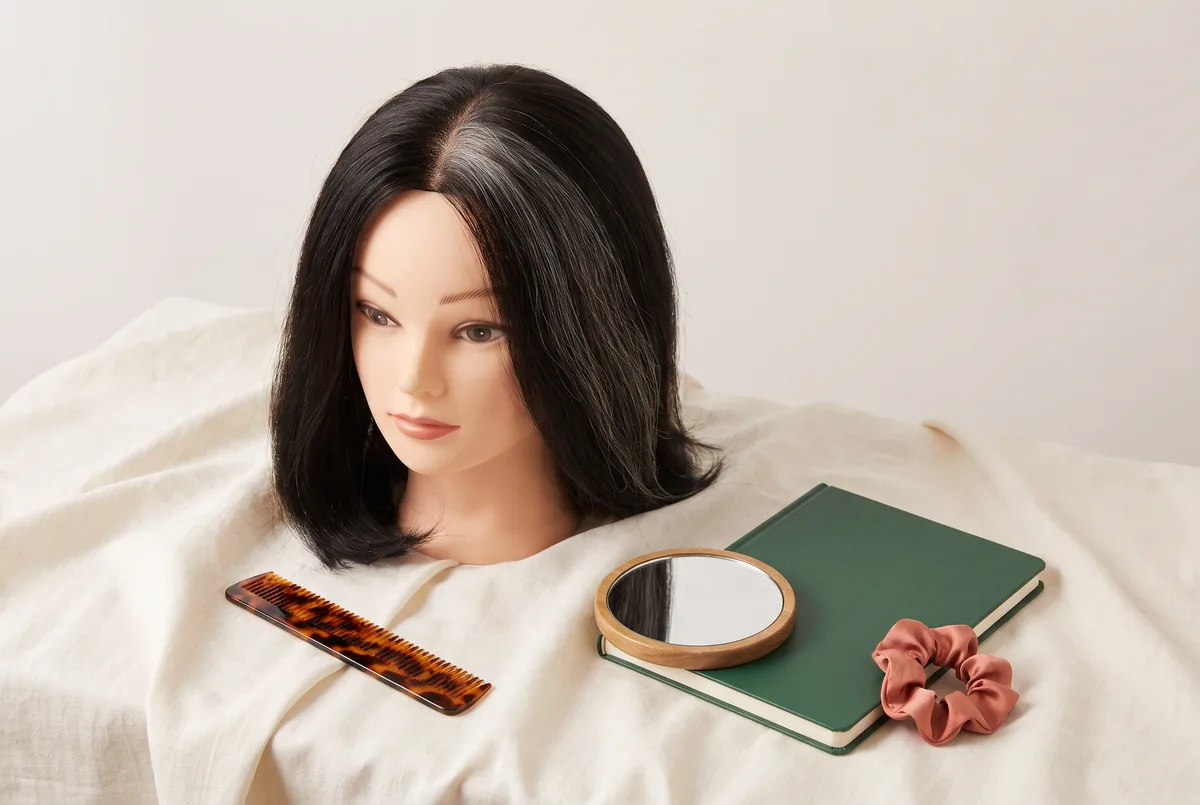
Track roots and lighting separately before requesting a colour refresh for an episodic portrait series. Repeat a simple reference setup, record where changes appear, and use that evidence to distinguish a local root concern from an overall colour goal before seeking professional assessment.
Adult creators may film introductions, interviews and musical portraits across several Hong Kong locations. A parting that looks unobtrusive in a rehearsal room can become prominent beneath a brighter overhead light. Continuity means choosing a consistent visual approach, not automatically colouring before every episode. A useful log supports that choice without treating grey hair as a fault or a production deadline as proof that a chemical service is suitable.
1. Decide what continuity actually needs to preserve
Start with the series rather than the salon menu. Are episodes presented as one conversation, or are viewers meant to recognise the passage of time? An interview edited from separate sessions may need closer matching than a monthly creative diary. Natural growth can be part of the latter's visual story.
Identify the shots that matter: a close portrait, a wide seated interview, or a moving performance. Root contrast may be visible in the close shot but insignificant in the wide one. Review both at the intended viewing size rather than judging only a magnified still. Do not promise that audiences will or will not notice; make the editorial decision from the material you have.
Write one sentence describing what should remain stable. For example: “Keep the same parting and overall brown impression in seated close shots; natural grey at the temples is acceptable.” This narrows the brief and prevents an undefined request to “look fresher” from becoming a larger colour change.
Assign someone to maintain the record, even if the creator does that work alone. Store approved reference frames with the relevant episode, not among unrelated inspiration photographs. A flattering image is not necessarily a useful continuity reference if its lighting cannot be reconstructed.
2. Capture a repeatable root-and-lighting reference
Make two kinds of images: a neutral comparison set and the actual production look. The comparison set helps you observe change; the production set shows whether that change matters on screen. Keeping both avoids confusing an attractive lighting effect with evidence about the hair itself.
For the comparison set, use the same camera position, distance, parting and reasonably consistent light. Photograph the front, the usual parting and both temples. Record whether the hair is dry and whether styling or temporary colour products are present. A changed parting exposes different strands, so it can create an apparent change without establishing new growth.
Record the light source, its position and the camera's white-balance setting where available. Avoid beauty filters and automatic enhancements in comparison images. A neutral reference card can help identify inconsistent capture, but a phone photograph does not establish an exact salon colour match. Screens, exposure and reflections still affect appearance.
Hong Kong shoots can move between window-lit rooms and venues with mixed lighting. Label these conditions rather than treating every frame as equivalent. FlintHub's Photography and image workshop is a relevant internal resource for developing capture and lighting skills; this article's log keeps those image-making decisions separate from professional hair-colour assessment.

3. Separate local root contrast from changes in the lengths
Describe locations before using service names. Is the difference concentrated beside the scalp, visible mainly at the temples, or spread through the mid-lengths and ends? Compare the same views under the reference setup. Write “contrast more visible along the parting” instead of claiming that a photograph proves a particular growth rate.
When the concern is confined to new growth and the existing lengths still fit the series, Vit So's root touch up page is a relevant service starting point. Bring the matched reference views and explain which areas concern you. The page cannot determine from a service label whether local treatment will blend with your existing colour, what product is suitable, or whether any treatment should proceed; those questions require assessment of the actual hair and history.
A change across the lengths asks a different question. The overall impression may be warmer, duller or lighter than the approved reference, but first check whether clothing reflections, exposure or lighting changed too. If the difference persists under comparable conditions, report it as an observation, not a diagnosis of why the colour changed.
For a broader goal, Vit So's root touch up vs full head colour comparison is useful when framing the consultation. State whether you want the old appearance retained or a new overall colour. Do not assume that treating more hair produces better continuity: an overall change can create a larger mismatch with episodes already filmed, and suitability depends on previous processing and current condition.
4. Use an episode worksheet instead of a treatment calendar
The following is a hypothetical planning example, not a client history, trial or recommended interval. An adult creator is making three short musician portraits. Episode labels describe production stages, not the number of days between services. The creator wishes to retain a familiar appearance while accepting some visible grey.
| Episode or check | Lighting and styling record | Observed change | Next decision |
|---|---|---|---|
| Episode A: approved reference | Soft frontal light; usual side parting; dry hair | Grey visible at temples; lengths fit the brief | Save front, parting and temple views |
| Episode B: venue preview | Overhead venue light; same parting | Parting contrast appears stronger; lengths also look warmer | Repeat the neutral setup before attributing either change to hair |
| Episode B: neutral comparison | Reference light and camera position restored | Local contrast remains more visible; lengths appear similar | Ask whether a local approach is suitable, or retain natural growth |
| Episode C: proposed new look | New overall colour requested for a different chapter | Creative goal changes rather than merely restoring continuity | Assess a broader colour brief and identify shots needing a new reference |
Copy these columns into a shared document and add the capture date, file name and upcoming shot requirements. Keep the last approved production frame alongside the neutral comparison. Each answers a different question: “What should the edit look like?” and “What changed under comparable conditions?”
Record uncertainty explicitly. “Different light; not comparable” is more useful than a confident but unsupported description. If no suitable reference exists, establish one now rather than reconstructing earlier colour from memory. Obtain the subject's permission before sharing close-up images with a service provider, and exclude unrelated personal information from the brief.
5. Compare quotations for the same colour goal
A quote for a local root service and one for an overall change may describe different work. Compare the proposed area, intended outcome and included finishing before comparing totals. Neither option is automatically the economical choice for a series if it creates extra filming or editing work.
Use Vit So's root touch up price destination to check published pricing information, then request confirmation against your continuity brief. The phrase is a pricing enquiry, not a promised individual quote. Ask which area is covered, whether the existing lengths would receive any separate work, and what washing, finishing or other items are included. Do not assume a cut, additional colour work or a shooting-ready finish is bundled into a named service.
| Scope to clarify | Localised root goal | Overall colour goal |
|---|---|---|
| Intended result | Reduce specified contrast near the scalp while retaining the lengths | Change or refresh the overall impression, with the target clearly described |
| Areas involved | Identify parting, temples and any other relevant zones | Identify roots, mid-lengths and ends; ask whether their needs differ |
| Additional work | Ask whether blending into existing colour is separate | Ask whether old colour or uneven appearance changes the proposed scope |
| Included finishing | Confirm washing, drying and styling rather than assuming inclusion | Confirm the same items so quotations remain comparable |
| Assessment and approval | Note what remains provisional until the hair is assessed | Note possible scope changes and agree how additional work is authorised |
Hong Kong Customs explains that the Trade Descriptions Ordinance covers specified unfair practices, including false descriptions of services and misleading omissions.2 For this worksheet, the practical lesson is to seek clear descriptions and payment conditions. It does not establish that a particular quote is unlawful or create a general refund entitlement.
Keep “confirmed,” “excluded” and “not yet assessed” separate in your notes. If a proposal changes after consultation, ask for the revised scope before approving it. Also account for production consequences: a new overall look may require new introduction footage, whereas accepting visible growth may require no hair service at all.
6. Let product guidance and assessment govern timing
The episode schedule tells you when images are needed; it does not tell you when another chemical service is appropriate. Share previous colouring, bleaching, perming or straightening history, including uncertainty about products used. Ask the professional to assess current condition and explain the actual product's instructions and precautions before fixing treatment plans.
The U.S. Food and Drug Administration advises following hair-dye directions and carrying out the instructed skin test before each use. It notes that reactions can occur after previous uneventful colouring and that a negative preliminary test does not guarantee no reaction during dyeing.1 This is consumer safety guidance, not a Hong Kong regulatory rule or an endorsement of a salon or product.
Do not proceed on an irritated, sunburned or damaged scalp; FDA guidance specifically warns against this.1 If a reaction occurs, seek healthcare advice rather than asking a continuity log to identify the cause. A stylist's cosmetic assessment and a clinician's medical evaluation serve different purposes. Do not interpret scalp discomfort as something to tolerate for the episode.
Build the production plan around the assessed requirements, with the possibility that colouring is deferred or declined. Confirm availability and your consultation language directly; an English website does not establish English-speaking consultation. If visiting Vit So, use the single verified reception address at 252 Hollywood Road, Sheung Wan, and confirm appointment details rather than assuming walk-in access.
7. Lock the production look and retain alternatives
Before approving a change, identify which episodes remain unfinished and which shots might be reused. Film any essential matching pickups while the existing look is still available, if practical. This is an editing decision, not a reason to hurry a chemical service. A new colour may be easier to introduce deliberately at a chapter boundary than to disguise within one conversation.
Non-chemical continuity choices include restoring the agreed parting, repeating the lighting arrangement and choosing framing that fits the series. These choices have tradeoffs. Reframing may alter composition; concealing a parting may conflict with the subject's preferred appearance. If considering temporary cosmetic colour, confirm its instructions and suitability, record its use, and do not treat “temporary” as a guarantee against reaction or transfer.
For musician portraits, coordinate the appearance record with performance requirements through Live-band performance planning. A rehearsal still and a stage close-up may reveal different areas when the performer turns towards a microphone. This internal resource concerns performance planning; it does not imply a combined hair-service package or shared appointment arrangements.
Finish each session by saving a new approved frame and noting any deliberate departure from the original brief. Give the editor the record before colour grading begins. Grading can help reconcile capture differences, but it cannot make a poorly documented physical change easy to match in every shot.
FAQ
Should roots be coloured before every episode?
No. Review comparable images and the series' continuity needs first. A capture session can trigger a log update without triggering treatment. Any chemical plan should follow professional assessment and the actual product guidance, not an episode count.
How can I tell whether grey roots increased or the light changed?
Repeat the usual parting, views and neutral light before comparing. If the contrast appears different only in the venue setup, record that limitation. Photographs can support a location-based observation, but they do not establish an exact growth rate or chemical cause.
Do warmer-looking ends mean I need full-head colour?
Not necessarily. Check the same reference conditions and clarify whether your goal is restoration or a new look. The professional can assess the existing lengths. An overall change may be unsuitable or unnecessary, and it may complicate matching earlier footage.
What should accompany a quotation request?
Send a brief describing the areas of concern, approved appearance and upcoming shot types. Include comparable photographs and an honest processing history. Request the proposed area of work, included finishing, provisional items and how additional work would be approved.
Can I keep filming if colouring is postponed?
Often there are production alternatives, but their suitability depends on the project. Discuss retaining visible grey, repeating the lighting or marking a deliberate chapter change. Do not apply unfamiliar products or tolerate scalp discomfort merely to keep a filming date.
About the author: FlintHub Academy publishes practical creative-learning resources. This article was prepared with AI-assisted institutional editing. FlintHub Academy and Vit So share common ownership; the links are not independent endorsements. This is not a hairstylist-authored review, expert-reviewed advice or medical guidance. The planned illustrations are explanatory scenes, not Vit So work, products or client results.
References
The FDA source supports the product-precaution discussion.1 The Hong Kong Customs source supports the limited explanation of service-description transparency.2 Neither authority endorses Vit So or FlintHub Academy.
- [1] U.S. Food and Drug Administration: Hair Dyes
- [2] Hong Kong Customs and Excise Department: Unfair Trade Practices
FlintHub Academy · AI-assisted editorial prepared from public information. FlintHub publishes creative-learning and activity-planning resources. This is not a first-hand salon test, a real client case or a claim of hairdressing, clinical or medical credentials.