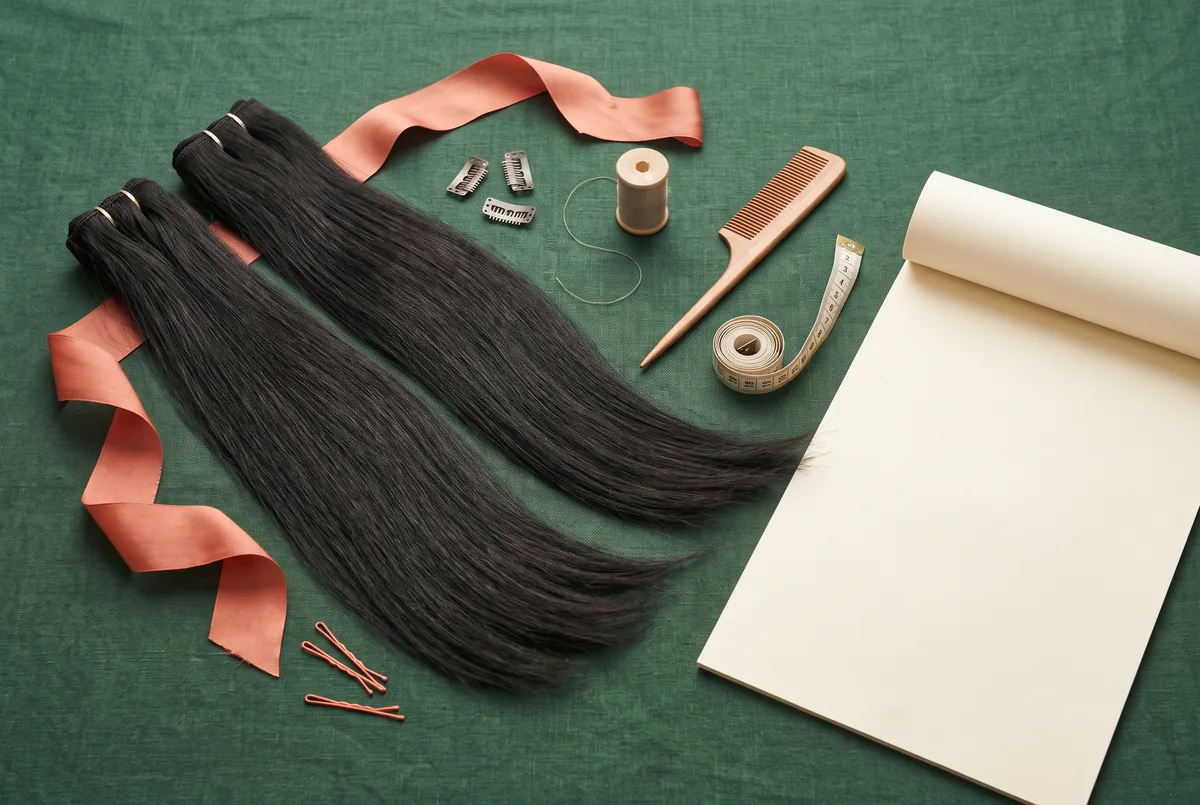
Choose added length only when its contribution to your dance repertoire justifies the fitting, care and removal commitment; otherwise, compare removable presentation or keep your current hair. Use a commitment ledger to separate what the routine needs from what your hair can support, and never treat a packages page as confirmation of extension availability, inclusion or a discounted bundle.
An adult dancer may alternate between a filmed cover, a partner routine and ordinary classes while also managing work and travel across Hong Kong. A dramatic length change for one number affects the days between performances too. The useful question is not simply whether longer hair looks appealing, but whether that particular change earns its place in your week.
1. Define the length cue each routine actually needs
Describe the visible purpose before naming a hair service. Does the choreography need a loose outline behind the shoulders, a ponytail that reads clearly from the back, or simply an unobstructed face? These requests are different. More hair will not necessarily improve a routine whose main requirement is seeing the dancer's expression.
For adults exploring KPOP dance learning, separate the reference video's hair from its lighting, camera cuts and costume. A close-up may make hair movement prominent even when a wide rehearsal view does not. Identify the moment where length matters, then record whether that moment appears in your actual presentation.
Use the viewing conditions you expect. For a filmed routine, examine an ordinary rehearsal recording at the intended framing. For a live number, ask someone to observe from the expected audience direction. This checks a visual requirement; it does not assess attachment safety or guarantee how a finished hairstyle will move.
Write one sentence for each routine: “I need this outline during this movement, but I can change these other features.” Keep your everyday preference alongside it. If you want your natural layers untouched and your familiar work hairstyle retained, those are constraints, not details to negotiate away after fitting.
2. Compare reversible presentation with added length
There are three distinct choices: retain your hair and change its arrangement, use a removable item for selected appearances, or discuss an attachment intended for wear between events. Removable does not mean risk-free. Clips, a tight base style or an ill-fitting piece can still pull, and their placement needs assessment for the movements involved.
| Routine requirement | Lower-commitment comparison | What added length would need to justify |
|---|---|---|
| Clear face during fast direction changes | Rearrange existing hair without a tight pull | No loss of visibility or new attachment interference |
| Longer loose silhouette for one filmed number | Discuss a removable piece, if appropriate and available | A meaningful visual benefit beyond the single appearance |
| Ponytail movement across several routines | Compare a comfortable current-length tie-back | Suitable support and placement in the actual tied style |
| Different looks in a mixed repertoire | Change parting or accessories within a comfortable style | Enough versatility to outweigh ongoing care |
Vit So's hair extensions page is useful for preparing questions about materials, attachment, blending and future removal. It does not establish that your preferred method or colour is available, or that fitting can be completed for your performance date. Use it to define an enquiry about the proposed work, not to replace confirmation of supply and scope.
Keeping your hair can be the strongest option when the reference effect is optional or the repertoire changes frequently. It avoids an attachment commitment, although it cannot create actual extra length. A removable approach may offer selected-day flexibility, but fitting, storage and preparation remain work. Compare complete routines rather than the most flattering still photograph of each option.

3. Make fine-hair support a condition, not a label
Fine strands and a recent loss of density are not interchangeable concerns. Explain whether you have always had delicate strands, have noticed a new change, or are mainly dissatisfied with the ends. A cosmetic consultation can discuss appearance and attachment suitability; it cannot diagnose unexplained thinning or scalp symptoms.
The American Academy of Dermatology explains that repeated pulling from weaves or extensions can cause traction alopecia, a form of hair loss that can be permanent. It advises asking the stylist to loosen the affected area if the hairstyle hurts or feels too tight. Pain or a headache during fitting is not a milestone to endure for a performance look.1
When considering hair extensions for fine hair, distinguish concealment from support. An attachment hidden under loose hair may become visible in a ponytail, while looking discreet says nothing about the natural hair carrying it. Ask how the proposed amount, placement and added weight relate to your hair and tied styles; a guide cannot establish personal suitability.
Names such as seamless, feather or 6D describe marketed approaches, not freedom from traction. A small component does not describe the total load. Ask what fixes the added hair, which natural sections carry it and what happens when you turn, bend or tie it back. Keep a smaller change and a no-extension option in the conversation.
If you have persistent scalp discomfort, visible breakage or unexplained hair loss, seek appropriate healthcare advice rather than using extra hair to postpone assessment. Dance ambition does not make those concerns a styling problem alone.
4. Confirm fitting scope before counting costs
Separate the supplied hair from fitting and the cut used to blend it. Ask which hair would be trimmed and whether the natural shape would still suit you after removal. Preserving natural length is not the same as preserving every layer. Agree on what may change before any work begins.
The page labelled hair salon packages lists specified combinations, but it does not confirm extensions availability, their inclusion in a package or a discounted extension bundle. Do not transfer a cutting or colour package price to your length plan. Request a quotation for the assessed extension scope and distinguish initial work from later checks, replacement materials and removal.
Start the money comparison only after the work is clear. Record each item as confirmed, excluded or awaiting assessment. An unanswered line is not a zero-cost line. Ask about any supply commitment or payment before agreeing, including what happens if the assessment changes the proposed plan. There is no need to invent prices to make this comparison useful.
For a Vit So enquiry, the single reception address is 252 Hollywood Road, Sheung Wan, Hong Kong. Confirm the appointment and whether it is an assessment or fitting visit before arranging travel. The English website does not prove English-language consultation; confirm your preferred communication language separately so questions about care and removal can be understood.
5. Put everyday maintenance and removal in the same ledger
Consider your busiest ordinary day, not an ideal day after a salon finish. If class ends late and work starts early, explain when you can wash, dry and organise your hair. Hong Kong humidity and a journey home after a sweaty session belong in the practical brief, without assuming a particular finish will last.
AAD guidance recommends gentle handling, avoiding tight pull-back styles and reducing heat exposure. Its detangling advice differs between straight hair and textured hair or tight curls, so a single “always brush wet” rule is inappropriate.2 Ask for instructions specific to both your natural texture and the actual attachment; general care guidance does not determine which products may touch a fixing.
| Ledger entry | Confirmation to request | Decision if still unresolved |
|---|---|---|
| Supplied hair and fitting | Actual fibre, colour, attachment and agreed amount | Do not plan around a sample or method name |
| Blending | Which natural and added lengths may be cut | Preserve your stated cutting boundaries |
| Post-class care | Washing, drying, detangling and product restrictions | Compare with the time you can realistically provide |
| Checks and maintenance | Review arrangements and separately charged work | Treat future work as unconfirmed, not included |
| Removal and possible reuse | Who can remove the system and what reuse requires | Keep removal separate from an assumed refit |
| Package or other inclusions | Written items covering the assessed proposal | Do not infer an extension bundle |
Plan the exit while choosing the entrance. Ask who can assess and remove the attachment, and how to request an earlier check if it becomes uncomfortable. AAD also recommends breaks from extension wear.1 Discuss a personalised review and removal plan rather than converting a general recommendation into a guaranteed safe wearing period.
Do not pull or cut unfamiliar connections, or improvise with household solvents. A removable item's instructions and a professionally fitted system's removal process are not interchangeable. The ability to stop comfortably is part of the commitment, not a problem reserved for after the last show.
6. Rehearse the fallback through the whole sequence
Develop a current-hair fallback before committing to a new outline. For adults pursuing Social dance learning, consider partner proximity as well as the solo silhouette. Check whether hair crosses your eyes, catches around costume details or enters a partner's working space during turns. Agree on changes with the instructor rather than assuming extra length is required.
A practical rehearsal sequence is:
- Record the baseline with your current hair in a comfortable arrangement and the relevant costume neckline.
- Identify the actual passage where the outline is insufficient. Distinguish a visual preference from interference with dancing.
- Discuss proposed presentation options and their fitting limits with the appropriate professional before trying an unfamiliar item.
- If an option is suitable to try, rehearse the sequence, including transitions, with attention to comfort and visibility. Stop for pain or pulling; do not tighten it to force a pass.
- Keep a workable current-hair version and tell anyone coordinating the performance which appearance changes remain optional.
A rehearsal can reveal movement and costume problems, but it cannot certify scalp safety or predict wear over weeks. A pleasing recording is only one decision input. If an item slips, pulls or interferes, return to assessment or the fallback rather than treating stronger fastening as the automatic solution.
7. Apply the worksheet to a hypothetical three-routine repertoire
Consider a hypothetical adult dancer with shoulder-length fine hair, an office job and three planned appearances: a filmed cover, a partner routine and a class showcase. This is a planning example, not a client case or a reported result. The filmed cover has a preferred longer silhouette; the other two need clear vision and comfortable turns.
The dancer writes a ledger with four headings: visual benefit, hair-support questions, weekly care and exit plan. The non-negotiables are keeping the natural layers and avoiding extra morning preparation. Longer hair is a preference for one appearance, not a requirement of all three.
The next step is to check the filmed framing and compare a current-hair version. If it communicates the routine adequately, the length preference may not justify ongoing attachment. If a removable item is considered, its fitting and movement limits still need clarification. Neither outcome depends on finding a package that sounds comprehensive.
Suppose an assessed extension proposal requires changes to natural layers or a care routine the dancer cannot sustain. That creates a specific conflict with the ledger, even if the outline is attractive. The dancer could reduce the goal, defer it or retain current hair. This is a decision method, not a prediction of what a consultation will recommend.
Use three categories: acceptable, needs confirmation and unacceptable. Move to commitment only when relevant questions have answers and the tradeoffs remain acceptable. Do not average discomfort against appearance, and do not let an attractive initial price erase an unresolved removal plan.
FAQ
Do I need longer hair to make a dance cover convincing?
Not necessarily. Identify what the length contributes in your actual framing and choreography. If expression, timing and body lines carry the presentation, a reference hairstyle may be optional. Ask the instructor about performance needs rather than treating an artist's appearance as a requirement.
Are removable pieces automatically better for fine hair?
No. They reduce continuous wearing commitment, but clips, placement and a tight underlying style can still pull. Discuss suitability for your hair and movements. A removable choice is useful only if its fitting and preparation demands are acceptable too.
Can a small attachment guarantee that my hair will cope?
No. Component size alone does not establish suitable support. Added amount, placement, existing fragility and tied styles matter. Ask for an explanation of the proposed design, and keep a lower-commitment alternative available rather than relying on a marketing name.
Can I assume removal is included when fitting is quoted?
No. Ask whether removal is included or separately quoted, who can perform it and whether assessment is required first. Reuse and refitting are additional questions. Keep these answers in the ledger before purchasing supplied hair or agreeing to installation.
What should I do if the hairstyle hurts during rehearsal?
Stop rather than complete the routine through pain. Contact the fitting professional promptly about loosening or changing the arrangement, consistent with AAD guidance.1 Seek medical advice for persistent symptoms or concerns about hair loss. Passing a visual rehearsal does not make discomfort acceptable.
About the author: FlintHub Academy prepares learning-focused editorial guides for adult creative and activity participants. This article was organised with AI-assisted institutional editing. FlintHub Academy and Vit So share common ownership; this is not an independent endorsement, a hairstylist-authored review or medical advice.
References
- [1] How to prevent hair damage from a weave or extensions
- [2] 10 hair care habits that can damage your hair
FlintHub Academy · AI-assisted editorial prepared from public information. FlintHub publishes creative-learning and activity-planning resources. This is not a first-hand salon test, a real client case or a claim of hairdressing, clinical or medical credentials.