
Choose hair length for returning to adult dance by checking which sections reach a comfortable tie, stay clear of your face and work with your ordinary routine. Before shortening the perimeter or adding layers, complete a length-reserve worksheet using your own hair, accessories and everyday clothing.
The aim is not a prescribed “dancer's haircut”. It is a clear account of what you need to retain and what you could change. A useful cut can reduce unwanted hair adjustments, but it cannot guarantee better turning technique or prevent dance injuries. Your class instructions and movement practice remain separate from hair planning.
1. Start with the dance week you will actually live
Returning after a break can mean rebuilding a routine rather than preparing for a performance. Write down your intended class, the journey there and what follows. An office-to-studio evening may require a different arrangement from a weekend session followed by lunch. Plan around those transitions before choosing a reference photograph.
For a Hong Kong after-work routine, consider your MTR journey, work collar and changing facilities. Would you arrive with your hair down and tie it in the studio, or keep it gathered throughout the evening? Does your bag contain the accessory you intend to use? These questions reveal whether the arrangement is practical beyond the mirror at home.
Use Social dance learning to explore that learning context, then ask about the requirements of your chosen class. Do not assume every dance setting requires a bun, or that loose hair is acceptable everywhere. Partner proximity, floorwork and costume instructions may change the arrangement you need.
Choose one essential hair function and one fallback. For example, the essential function might be a full low tie without loose eye-level pieces; the fallback could allow a headband. Distinguishing the two stops an occasional preference from controlling every length decision.
2. Map the sections that need a length reserve
A length reserve is enough retained reach for a section to stay in your chosen arrangement without being pulled harder. It is a planning description, not a standard number of centimetres. The shortest section needed in the tie may matter more than the longest ends visible down your back.
Check the front, sides and nape separately. Front pieces travel backwards into a low tie; nape pieces travel upwards into a higher one. Passing one check does not imply passing the other. Begin with hair in its ordinary dry shape rather than stretching it into a longer outline.
Use this table as the first part of your worksheet. Replace the example functions with your own needs and record what happens, not what a haircut label suggests.
| Functional zone | Movement or everyday need | What to check | Length boundary to record |
|---|---|---|---|
| Face-side pieces | See the teacher without repeated sweeping | Turn gently with your usual parting | Must reach the chosen tie or accepted accessory |
| Ear-side sections | Keep sides gathered during direction changes | Compare ear tuck with a full tie | Keep enough reach for the essential arrangement |
| Crown and upper layers | Avoid repeated loose-section adjustments | Look for pieces escaping after movement | Discuss the shortest internal lengths separately |
| Nape | Gather lower pieces if using a higher tie | Raise the tie only to your normal position | Retain upward reach, or choose a lower arrangement |
| Perimeter and ends | Wear hair down after class and with a collar | Compare forward and behind-shoulder placement | Mark the preferred dry landing point |
For each zone, write comfortable, conditional or not workable. Conditional means it depends on an accessory or adjustment you genuinely accept. Hair that reaches only when you pull harder is not a comfortable result. Note any difference between sides instead of forcing a symmetrical assessment.
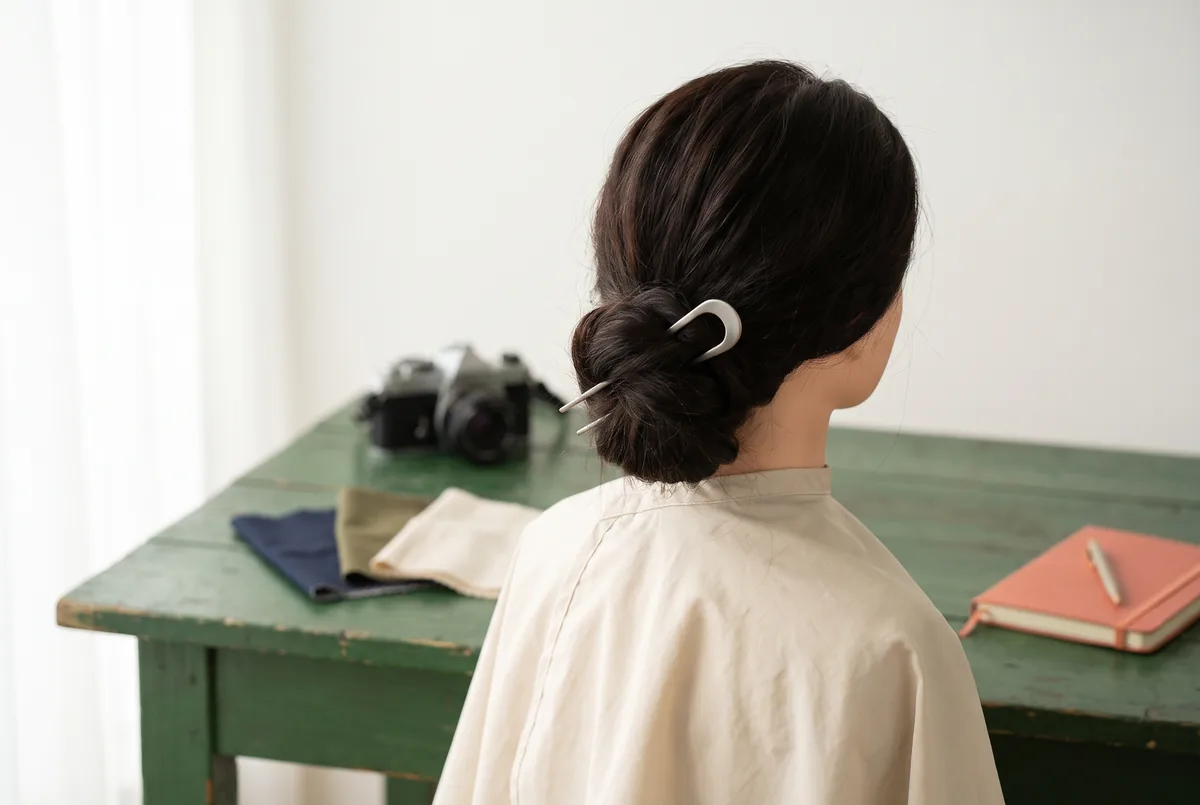
3. Compare layers by placement, not by stereotypes
Layers introduce different lengths within a cut. They can change the distribution of hair without moving the longest back edge very far, but the shorter pieces still need their own boundaries. “Keep the overall length” is therefore incomplete if you want every useful front section inside a ponytail.
Separate the change you want from the function you must protect. You might want less hair resting against your collar while retaining ear-side reach. Alternatively, you may welcome loose front pieces when wearing your hair down but not during class. Those preferences can conflict, so decide which takes priority before choosing a strongly shortened front section.
Vit So's layered haircut guide distinguishes the outer edge, shorter internal lengths and front pieces. Use it to prepare questions about where proposed layers would finish, rather than treating a photograph as proof of tieability. Bring your zone notes and ask which changes preserve your essential arrangement; the guide does not establish how your hair will behave in a dance session.
Do not describe layers as automatically more youthful, more feminine or better for dancing. The useful comparison is whether each shortened area supports your chosen routine. Nor should layers become an assumed remedy for every sensation of heaviness. Identify where the inconvenience occurs before asking for a change throughout the whole cut.
4. Treat medium length as a landing point, not a promise
“Medium” does not specify where the dry ends will sit on your body. Compare an edge that clears the shoulders with one that touches them or rests near the collarbone. Then check the shortest front and internal sections. A lower perimeter can coexist with front pieces that do not gather.
Put on a top with a collar similar to the one you wear to work. Look ahead, turn naturally and let the hair settle. Notice whether contact with the collar or shoulders changes where the ends sit. Decide whether that variation bothers you or simply differs from a carefully styled reference.
The guide to medium length haircuts for women offers shoulder and collarbone comparisons for a length discussion. Its category name is not a rule about who can use the worksheet. Use the dry landing-point questions alongside your tying notes; choosing the longer label alone cannot confirm that your face-side or nape pieces will reach.
If you normally wear waves or curls, show that ordinary dry pattern. A stretched section or straightened inspiration image is not the shape you necessarily intend to maintain. Agree on the resting position you actually want to wear, not only a length visible while the hair is held taut.
5. Test the arrangement gently before deciding what to cut
Use your usual accessory and a clear space. This is a hair-management check, not a turning drill: keep movement familiar and comfortable, and leave unfamiliar spins or choreography to class instruction. Test the arrangement you can make yourself, rather than one that requires someone else's hands.
- Record the baseline. With your ordinary parting, identify which sections already fall across your face or catch against clothing.
- Make the essential arrangement. Gather it at your usual position, without tightening to capture the last short pieces.
- Add simple movement. Look left and right, change direction while walking and raise your arms comfortably. Observe escaping strands and accessory contact.
- Try the fallback. Change only one element, such as adding the headband you would actually carry. Record what improves and what remains inconvenient.
- Check the transition back. Release the arrangement and consider what you would do before travelling home or returning to another activity.
The American Academy of Dermatology recommends loosely pulled-back styles, covered hair bands and gentle handling rather than tight pulling. Its care guidance also favours less heat and the lowest heat setting when heat tools are used.1 These principles support a manageable routine; they do not prescribe a dance haircut.
Do not treat discomfort as evidence that a style is secure. Loosen or remove an arrangement that hurts or pulls. Persistent scalp symptoms, noticeable thinning or hair loss require medical advice rather than diagnosis through this worksheet. Repeated readjustment is also useful information: record it before assuming that a shorter cut is the only solution.
6. Apply the worksheet to a hypothetical return-to-class plan
The following example is hypothetical, not a learner testimonial or a tested result. An adult is considering one after-work class and wants to wear their hair down at work. Their current back edge rests below the shoulders, while shorter front pieces sometimes escape a low tie. They prefer not to carry several clips.
Their worksheet might record the face-side zone as conditional, the ear-side zone as comfortable and the nape as comfortable in a low tie but not workable in a higher one. The perimeter suits their work shirt. That pattern suggests that the main decision concerns front reach and tie position, not automatically the entire back length.
Use this second table to compare proposed changes against the same observations. It describes possible trade-offs to discuss, not predicted outcomes for an individual cut.
| Option to discuss | Functional advantage sought | Trade-off to examine | Worksheet decision |
|---|---|---|---|
| Retain perimeter and useful front lengths | Keep the existing low-tie option | Less change to the current outline | Prioritise if accessory simplicity matters most |
| Keep medium length with restrained layers | Change the outline while protecting selected reach | Shortest layers still need checking | Accept only with zone boundaries agreed |
| Add shorter face-side layers | Change how the front sits when loose | May require containment during class | Conditional on an acceptable fallback |
| Shorten the perimeter above the shoulders | Reduce length around the collar | Could remove a familiar full-tie option | Reconsider if full tying is essential |
| Keep the cut and change the arrangement | Explore a reversible solution first | Accessory may need carrying and resetting | Compare before committing to shortening |
For this imagined adult, a sensible brief could prioritise the low tie and leave the shortest front pieces to grow, while discussing a limited perimeter refresh. Another person might accept a headband and choose shorter front layers. The worksheet does not rank one appearance above another; it makes the cost of each choice visible.
If your class plans are still unsettled, explore Dance course options before making one imagined performance requirement the basis of a permanent cut. Hair planning should follow the activities you intend to do, not replace that decision.
7. Turn the findings into a short cut brief
Prepare three statements: what must remain, what may change and what you do not want to add to your routine. Attach an ordinary dry-hair photo showing the relevant zone. A useful brief says, “Keep the front and ear-side pieces long enough for my low tie; I am open to changing the back edge; I do not want daily hot-tool shaping.”
For a women's haircut enquiry, Vit So's service page provides a starting point for discussing retained length and everyday styling. Send the functional brief rather than just a style name, and ask what work and charges apply. If planning a visit, confirm the appointment arrangements at its Sheung Wan address, 252 Hollywood Road. An English website does not establish spoken-English consultation, so confirm communication needs too.
Keep your cut boundaries separate from the service agreement. Confirm whether the request involves the perimeter, existing layers or a new front shape, and clarify any additional work and payment conditions. Hong Kong Customs identifies false service descriptions and misleading omissions among the practices covered by the Trade Descriptions Ordinance.2 That supports careful scope questions, not a promise about prices, availability or refunds.
Before work begins, ask to review the proposed shortest points against your essential arrangement. If the desired shape cannot preserve it, choose knowingly between changing the design, accepting the fallback or postponing the change.
Frequently asked questions
Does collarbone length mean I can tie every section back?
No. The front, ear-side and internal layers may be much shorter than the perimeter. Check each useful section in your normal tie position without pulling harder. The longest visible edge is only one part of the worksheet.
Are layers unsuitable when returning to dance?
Not necessarily. Placement matters more than the label. Longer useful front sections can coexist with layers elsewhere. If you accept a headband or loose sections under your class requirements, shorter pieces may also work. Make that acceptance explicit rather than discovering it after cutting.
Should I choose a higher ponytail for turning?
Do not choose a tie position as a substitute for movement instruction. A higher tie asks different sections, especially at the nape, to travel further. Compare comfort and containment, then follow your teacher's activity requirements. No tie position guarantees turning performance or injury prevention.
What if my hair only just reaches a low tie now?
Mark the relevant zones as conditional and tell the stylist that there is little spare reach. Consider retaining those pieces, changing an accessory or delaying substantial shortening. A tighter elastic is not a useful length reserve and should not be the plan for capturing short sections.
Must I change my haircut before the first class?
No. First establish the class requirements and whether an existing comfortable arrangement works. A reversible accessory change may answer the immediate need. If you later choose a cut, bring specific observations about escaping sections or collar contact instead of assuming dance requires a new appearance.
About the author: FlintHub Academy prepares practical learning and activity-planning articles. This article was organised with AI-assisted institutional editing; it is not a hairstylist-authored review, an expert-reviewed assessment or medical advice.
Ownership disclosure: FlintHub Academy and Vit So share common ownership. The linked pages provide service and haircut-planning information, not independent endorsement. The authoritative references below do not endorse either organisation.
References
- [1] American Academy of Dermatology: 10 hair care habits that can damage your hair
- [2] Hong Kong Customs and Excise Department: Unfair Trade Practices
FlintHub Academy · AI-assisted editorial prepared from public information. FlintHub publishes creative-learning and activity-planning resources. This is not a first-hand salon test, a real client case or a claim of hairdressing, clinical or medical credentials.