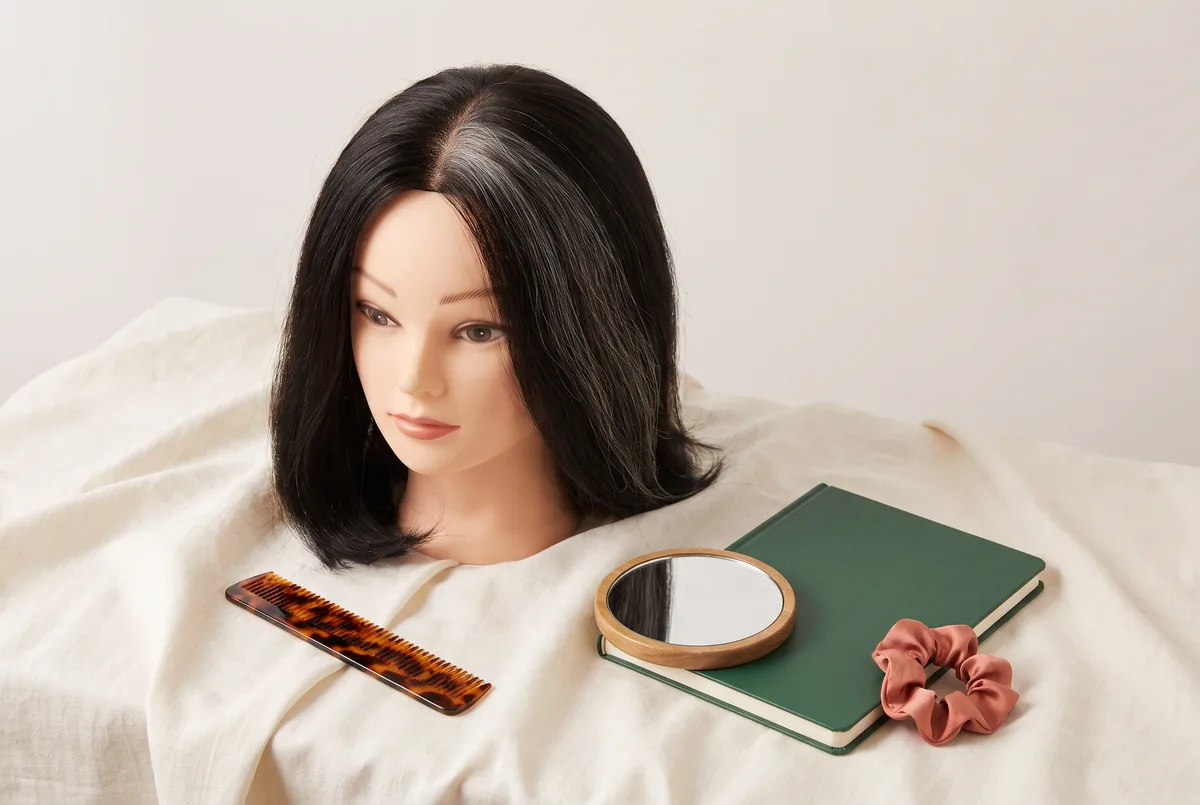
Choose how much grey to keep by marking the strands you value, the contrast you would like softened and the areas where you prefer more consistent colour. Check those choices in both a close-up and a stage view before discussing a method: the goal is your preferred appearance, not looking younger.
For a mature adult hosting a Hong Kong corporate panel, community celebration or banquet, a portrait and a live audience can show different aspects of the same hair. A silver temple may be a detail you enjoy in a headshot yet barely notice in a wide stage photograph. Neither view makes it a defect. This guide turns those differences into a brief you can control.
1. Put your preference on a continuum, not an age scale
The grey retention preference continuum runs from keeping your present grey unchanged, through softening selected contrasts, to seeking a more uniform colour. It is not a ranking of professionalism. More coverage is not automatically more polished, and more visible silver is not automatically more authentic.
Place each visible area separately on that continuum. You might want to keep a distinctive silver temple while reducing scattered bright strands at the parting. That combination is not contradictory. A single whole-head instruction can erase a detail you wanted to retain because it fails to explain where your preferences differ.
Separate your own reaction from other people's language. If a producer says the hair should look “fresh”, ask what observable change they mean. Do they want a clearer outline, fewer flyaways, a different parting or darker colour? These are different requests. Do not let a vague adjective become permission to remove grey.
Write one sentence that would still make sense without a camera: “I want to recognise my silver temples, while the top reads as a quieter brown-and-grey mixture.” This protects everyday preferences when event preparations become rushed. Cosmetic colour does not reverse greying or establish anything about your ability to host.
2. Map the visible zones before selecting references
Start with recent, unfiltered photographs in ordinary, even light. Include the front, both temples, your usual parting and a wider view showing the lengths. Add the position you use while hosting, such as hair tucked behind an ear or loosely pulled back. Do not assess only the side you prefer photographing.
Use three instructions: keep, soften and change. “Keep” identifies a boundary to protect. “Soften” means you want less visual contrast but accept visible grey. “Change” permits discussion of a more consistent appearance; it does not authorise an unconfirmed method or unlimited lightening.
| Visible zone | What to observe | Useful personal-priority note |
|---|---|---|
| Front hairline | What appears when looking down at cue cards | Keep silver beside the face; do not darken it by default. |
| Left and right temples | Whether turning exposes different patches | Record each side separately rather than assuming symmetry. |
| Usual parting | The contrast between new growth and existing lengths | Soften the contrast, but allow individual grey strands to remain. |
| Crown and lengths | Whether the overall colour looks mixed or solid | Preserve the depth already liked; discuss any mismatch separately. |
| Underneath or tied-back areas | What becomes visible in the hosting hairstyle | Include this view only if it matters to the actual event look. |
The notes in this table are prompts, not recommendations for every host. Replace them with your own preferences. If you cannot decide on a zone, mark it “undecided” rather than silently giving permission to change it.
Choose references for their visible pattern, not the apparent age of their subjects. Identify the feature you like and one you would reject. A silver streak, overall lightness and a softly mixed parting are different details; a photograph cannot establish how any of them was achieved.
3. Distinguish colour intentions from treatment methods
If your priority is a more consistent colour in specified zones, Vit So's grey coverage page provides a starting point for describing that intention. Specify whether you mean the front, parting or whole visible shape, and how much variation you accept. The service description does not establish complete concealment for your hair or guarantee that every strand will match.
If you want some silver to remain visible while its contrast feels quieter, the same service page also describes grey blending. Bring your “keep” zones into that discussion, along with the depth you do not want to lose. A mixed appearance is the goal here; it is not proof of a particular product, gentler chemistry or a maintenance-free result.
These two links lead to one service URL because the intentions belong to a shared colour discussion. They do not document two independently proven treatments. The proposed products, placement and suitability still need assessment against your actual hair, previous dye and scalp history.
Ask the stylist to translate the preference into a proposed scope before agreeing. Which zones would change? Which would remain untouched? Would the surrounding hair become lighter or darker? Keeping grey visible and creating an all-over silver fashion shade are not the same request. Avoid approving a method solely because its name sounds subtle.
4. Check a close-up and a stage view separately
A headshot invites attention to the hairline and individual strands. A wider stage view places hair beside clothing, a backdrop and other speakers. A strong reflection may make silver more noticeable without showing a colour problem. Conversely, a wide photograph can hide a detail that matters greatly to you in person.
Take one close-up and one wider rehearsal photograph with the intended parting and clothing. Keep camera position and lighting reasonably consistent when comparing alternatives. First ask whether the difference comes from colour, hairstyle or illumination. Changing several things together makes it difficult to know what you actually prefer.
For a hotel panel with an LED backdrop, ask the production team which camera views will appear on the screen and whether portrait photographs are also planned. Event hosting and MC planning is relevant to clarifying that running context. It does not imply a bundled hair service or that the host must meet an age-based appearance standard.
When a photograph feels too bright, discuss exposure and reflections with the photographer before requesting darker hair. Any image adjustment should still preserve a believable overall portrait rather than solve one strand by making the face or background unsuitable. FlintHub's Photography and image workshop offers a related learning context for separating photographic choices from physical appearance choices.
Agree who can approve a change. The host should retain control over grey-retention boundaries; the photographer handles the image, and the event team handles production requirements. A close-up reference should not become permission for someone else to redefine your whole appearance.
5. Compare the in-between appearance, not just event day
The useful question is not simply how long a colour will last. Ask what you would be comfortable wearing as new growth appears or the existing colour changes. A result you enjoy immediately may demand attention sooner than your diary allows, particularly if the exposed parting is your highest-priority zone.
Vit So's discussion of grey blending vs full coverage can help frame the trade-off between retained variation and greater consistency. Use it to prepare questions, not predict a result: a softer-looking boundary can still need upkeep, and a uniform finish does not promise identical colour until your next appointment. Your old dyed lengths remain part of the decision.
| Intention | Appearance you would accept | Question about future work |
|---|---|---|
| Keep existing grey | The present distribution remains visible. | Can the event goal be met through styling and photography alone? |
| Soften selected contrasts | Some silver stays recognisable within a mixed finish. | What would need attention later: growth, tone or placement? |
| Seek greater consistency | Less visible grey in the agreed zones. | How would new growth look beside the chosen depth? |
| Protect a distinctive streak | Its position and visibility remain important. | How will its boundary be discussed alongside nearby colour? |
Separate the first appointment's scope from possible upkeep. Ask what is included, what would require separate work and what total charge needs confirmation. Do not select a plan on the assumption that blending is always cheaper or coverage always quicker.
Give actual diary constraints, such as travel or several consecutive hosting commitments. Ask whether the proposed work and required preparation fit them. There is no universal touch-up calendar or chemical waiting interval in this worksheet; suitability depends on the products, condition and professional assessment.
6. Work through a hypothetical portrait-and-panel brief
Consider a hypothetical mature adult host preparing a speaker portrait and a bilingual business panel in Hong Kong. This is a planning example, not a client case or reported result. The host likes silver at both temples, dislikes a sharp contrast along the parting and wants to retain dark lengths.
Complete the brief in this order:
- Record the baseline. Photograph both temples and the usual parting, then make a wider image in the intended jacket. Label the pictures with the date and lighting context.
- Set protected zones. Write “keep visible silver at both temples” before discussing what could change at the parting. Add “preserve the current depth through the lengths”.
- Describe the acceptable middle. Write “a mixed parting is acceptable; a solid dark front is not”. This makes the meaning of softening clearer without inventing a coverage percentage.
- Separate the deliverables. Ask for a believable portrait with retained silver and a stage hairstyle that works when turning towards panellists. These are two viewing requirements, not two colour prescriptions.
- Set the approval point. Request discussion of any method that would affect a protected zone or substantially change the surrounding depth before proceeding.
The resulting brief might read: “Keep my silver temples recognisable. Discuss whether the parting contrast can be softened without changing the lengths I like. Show me how the proposed appearance relates to both portrait and stage views.”
If assessment suggests that the desired change would compromise another priority, return to the continuum. The host could keep the present colour, revise the parting or accept more visible contrast. Deferring colour is a valid outcome, not a failed consultation. The worksheet succeeds when it clarifies consent and trade-offs, not when it produces a purchase.
7. Keep product safety and rehearsal care separate
A subtle appearance does not prove a low-risk product. The FDA explains that a reaction can occur after previous trouble-free dye use, and a negative preliminary skin test does not rule out a reaction during colouring. Follow the actual product directions and discuss past reactions or current scalp irritation before arranging colour. Seek healthcare advice for a dye reaction. 1
That source supplies product-safety precautions, not Hong Kong regulatory rules or an endorsement of Vit So. A preference map cannot diagnose scalp symptoms or determine chemical suitability. Do not use “sensitive scalp” as a reason to select a softer-looking finish without addressing the concern separately.
Rehearsal styling also deserves restraint. The American Academy of Dermatology identifies colouring and excessive heat or pulling among practices that can damage hair. Its advice includes reducing heat, using the lowest heat setting and handling hair gently. 2 Avoid repeatedly restyling the same section just to chase a photograph's texture; daily care is not permanent repair.
For an enquiry with Vit So, the listed location is 252 Hollywood Road, Sheung Wan, Hong Kong. Confirm appointment arrangements and any language needs before travelling. An English website does not itself establish English-language consultation availability. Allow space to reconsider the plan rather than treating the event date as permission to skip necessary preparation.
Frequently asked questions
Does visible grey make a host look less professional?
Grey alone does not define professional presentation. Judge the requirements you can describe: a clear silhouette, workable microphone placement and an appearance you are comfortable wearing. Do not turn another person's preference for darker hair into a universal hosting rule.
Can I ask for different intentions at my temples and parting?
Yes. Record each area separately and identify what must remain visible. Whether the combination is achievable, and by which method, needs assessment. A clear boundary is more useful than asking for a vaguely natural finish.
Is blending always the easier maintenance choice?
No. Retained silver may suit your tolerance for variation, but colour tone, placement and growth can still need attention. Describe the in-between appearance you accept, then ask what upkeep the proposed plan would involve.
What if the stage photograph looks fine but I dislike the close-up?
Identify the specific difference first. Check framing, light and the hairstyle before deciding it is a colour issue. If you still want a change, update the relevant zone rather than replacing the entire brief.
Should I make a last-minute colour change before hosting?
Do not assume an event deadline makes a new colour plan suitable. Confirm assessment, product preparation and availability. If those cannot be accommodated, retain the current colour and discuss non-chemical presentation choices instead.
By FlintHub Academy. This article connects creative education and event-image planning with personal appearance decisions. It was organised through AI-assisted institutional editing. FlintHub Academy and Vit So share common ownership; this is not an independent endorsement, a hairstylist-authored review or medical advice.
References
1 U.S. Food and Drug Administration: hair-dye directions, allergy precautions and limitations of preliminary skin testing.
2 American Academy of Dermatology: damaging hair-care habits and gentler styling practices.
FlintHub Academy · AI-assisted editorial prepared from public information. FlintHub publishes creative-learning and activity-planning resources. This is not a first-hand salon test, a real client case or a claim of hairdressing, clinical or medical credentials.